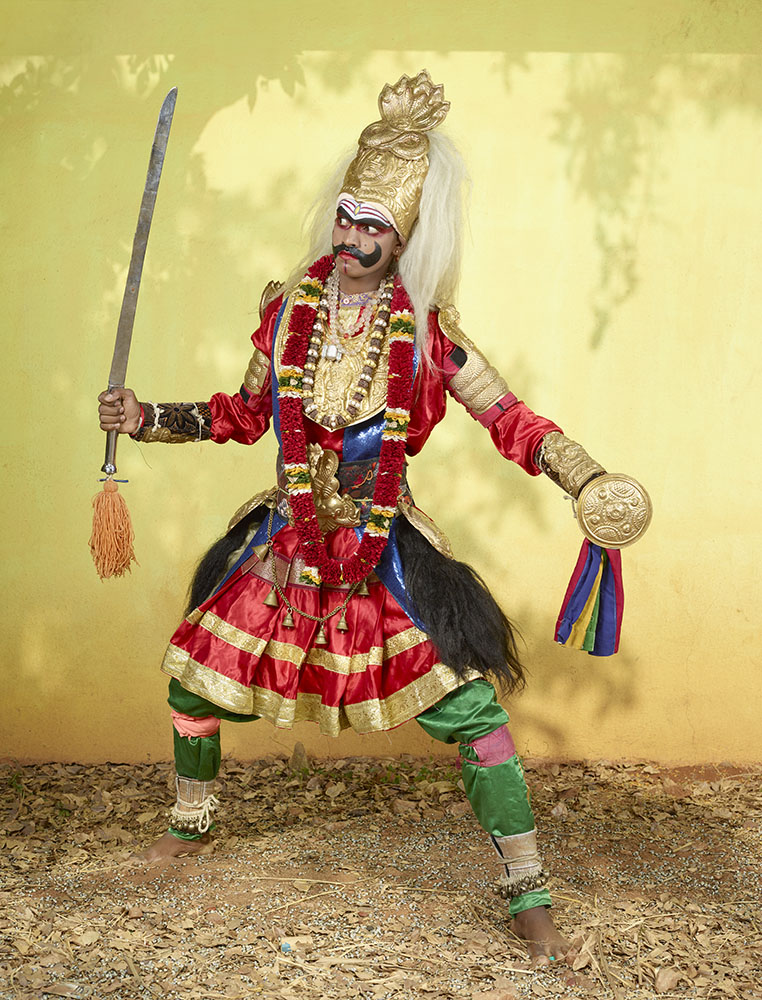
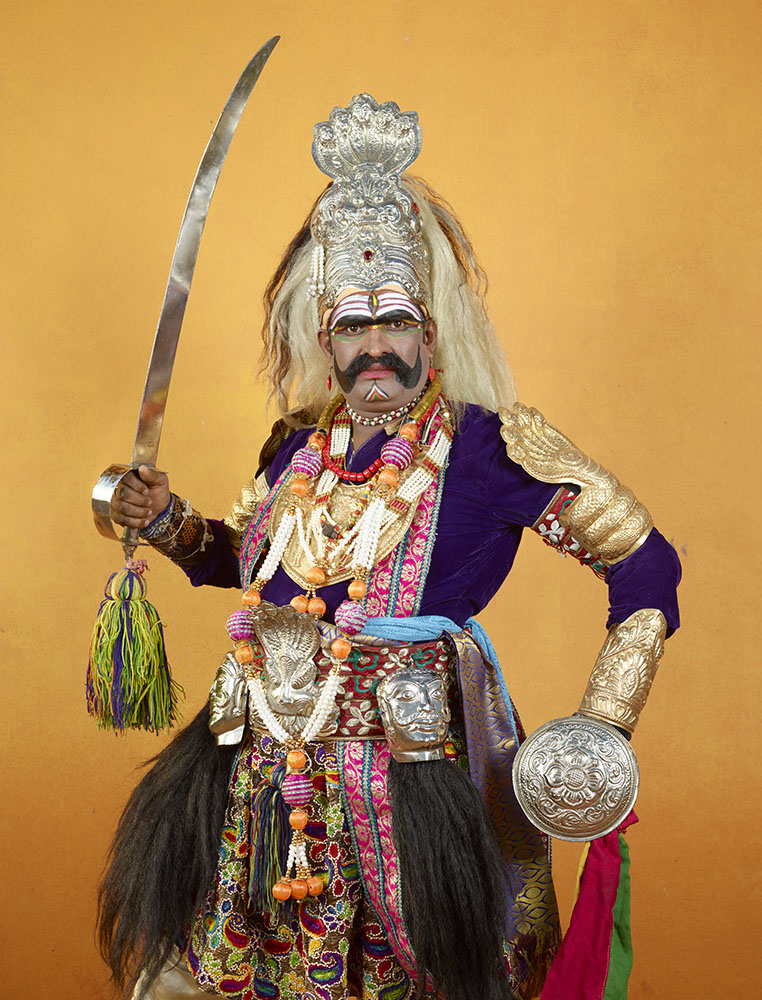
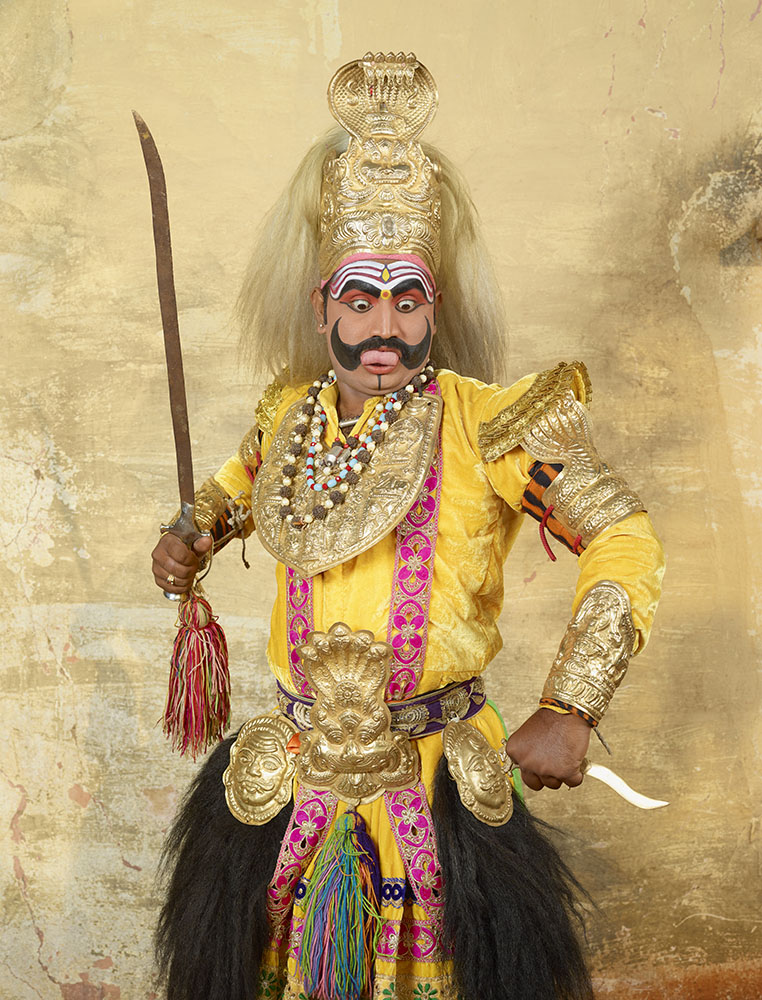
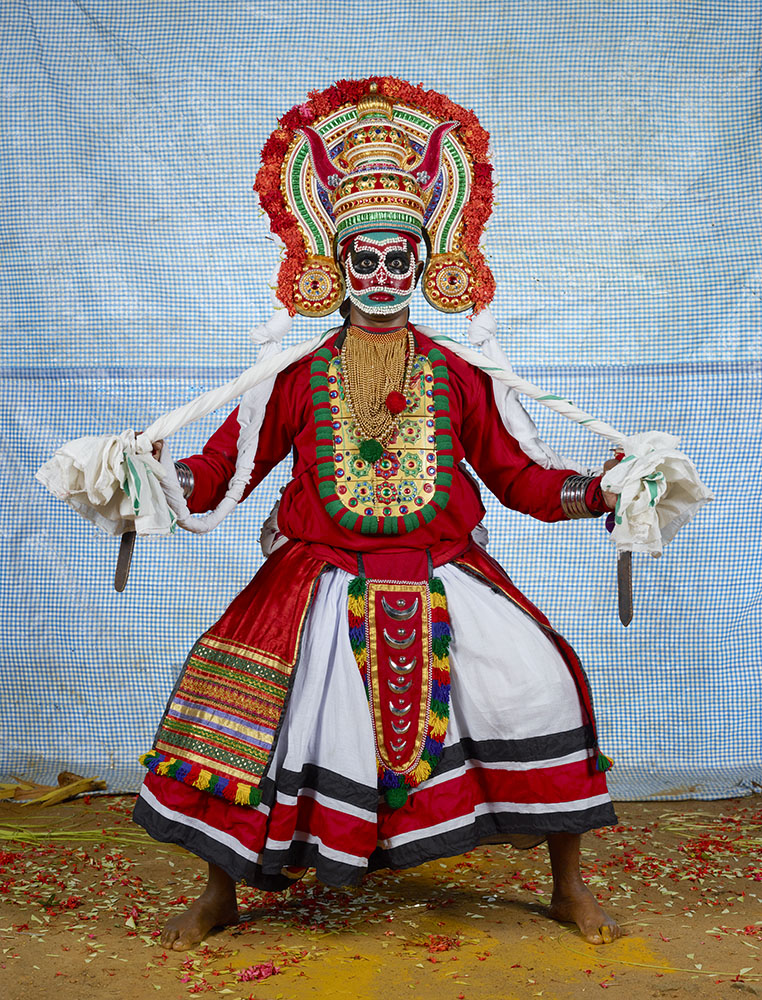
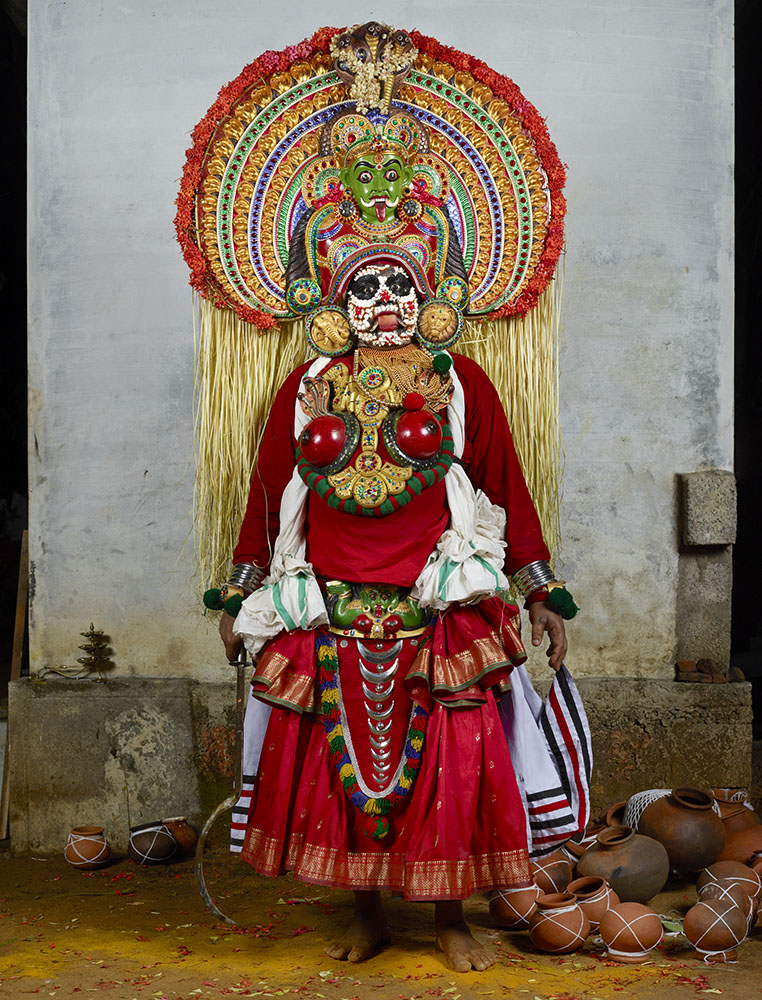
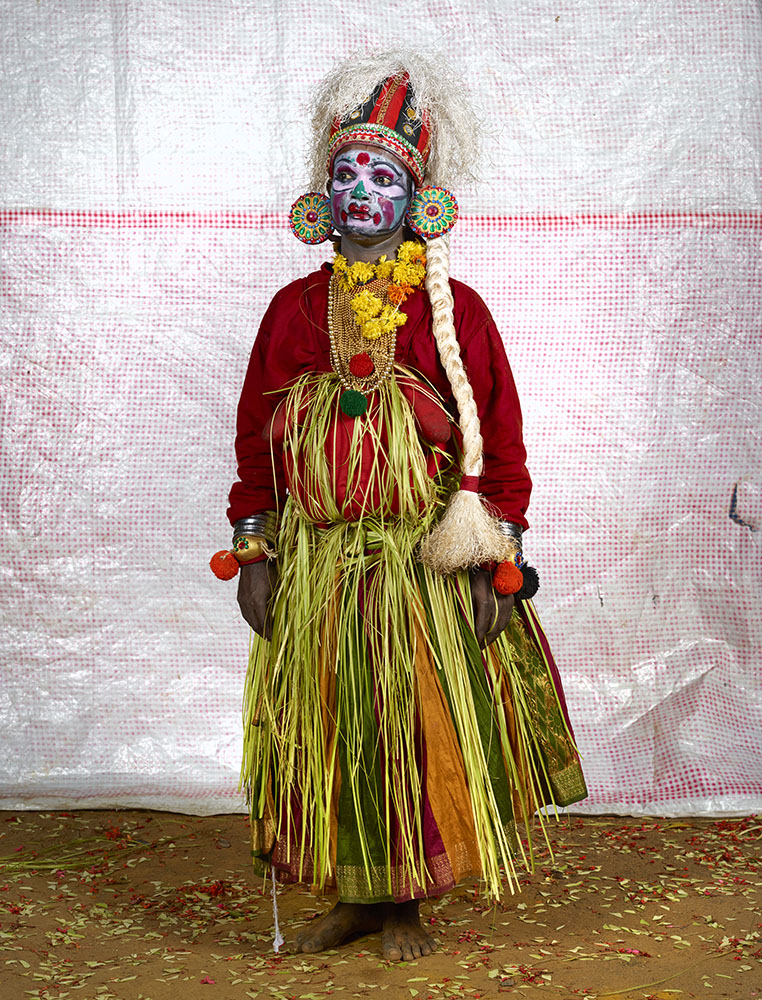
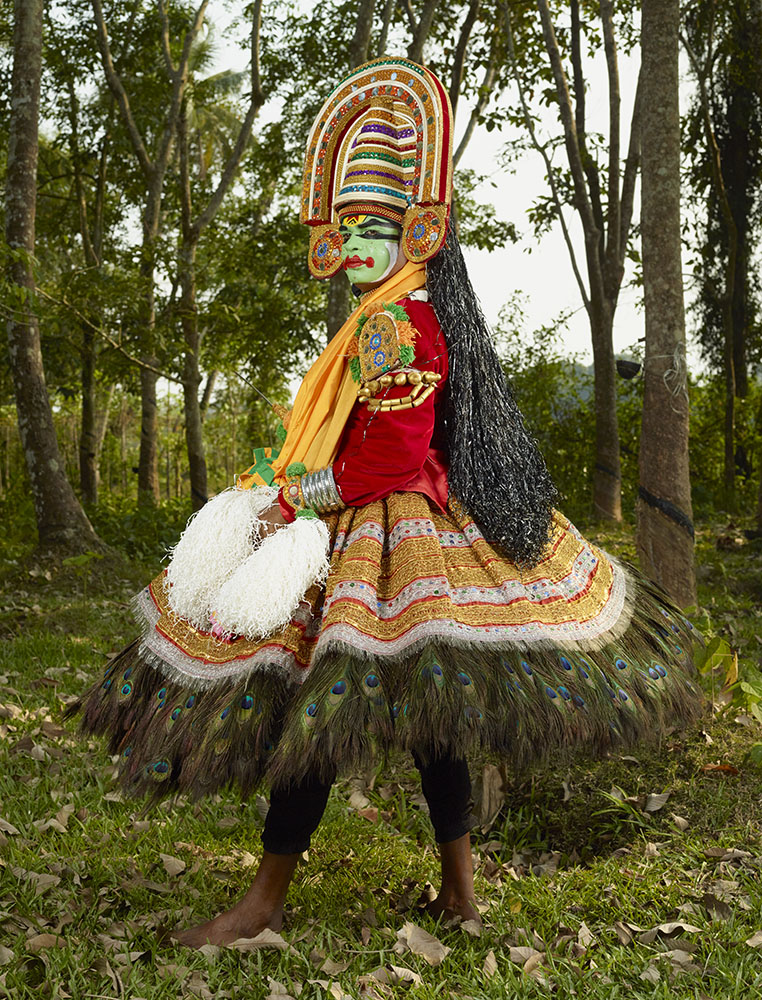
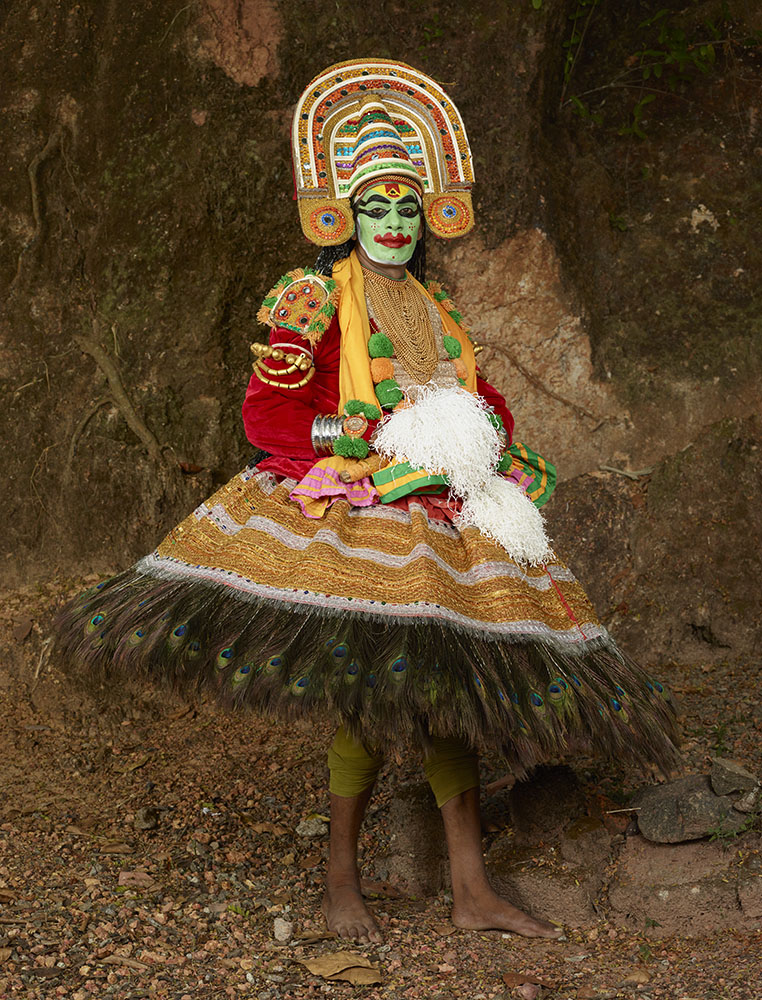
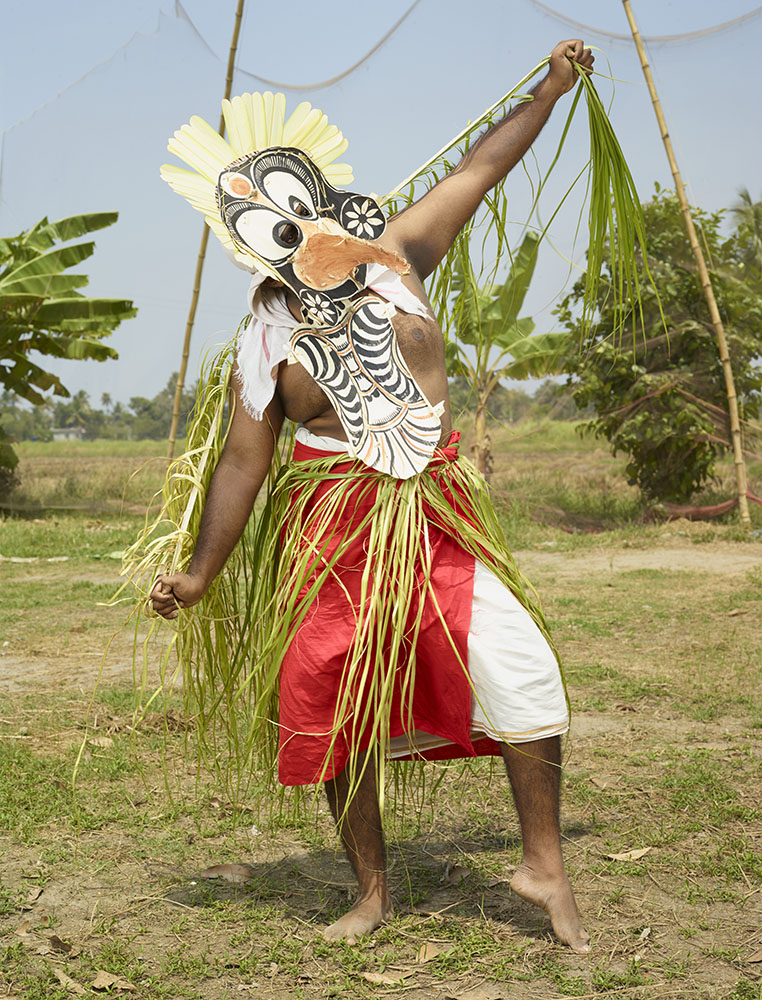
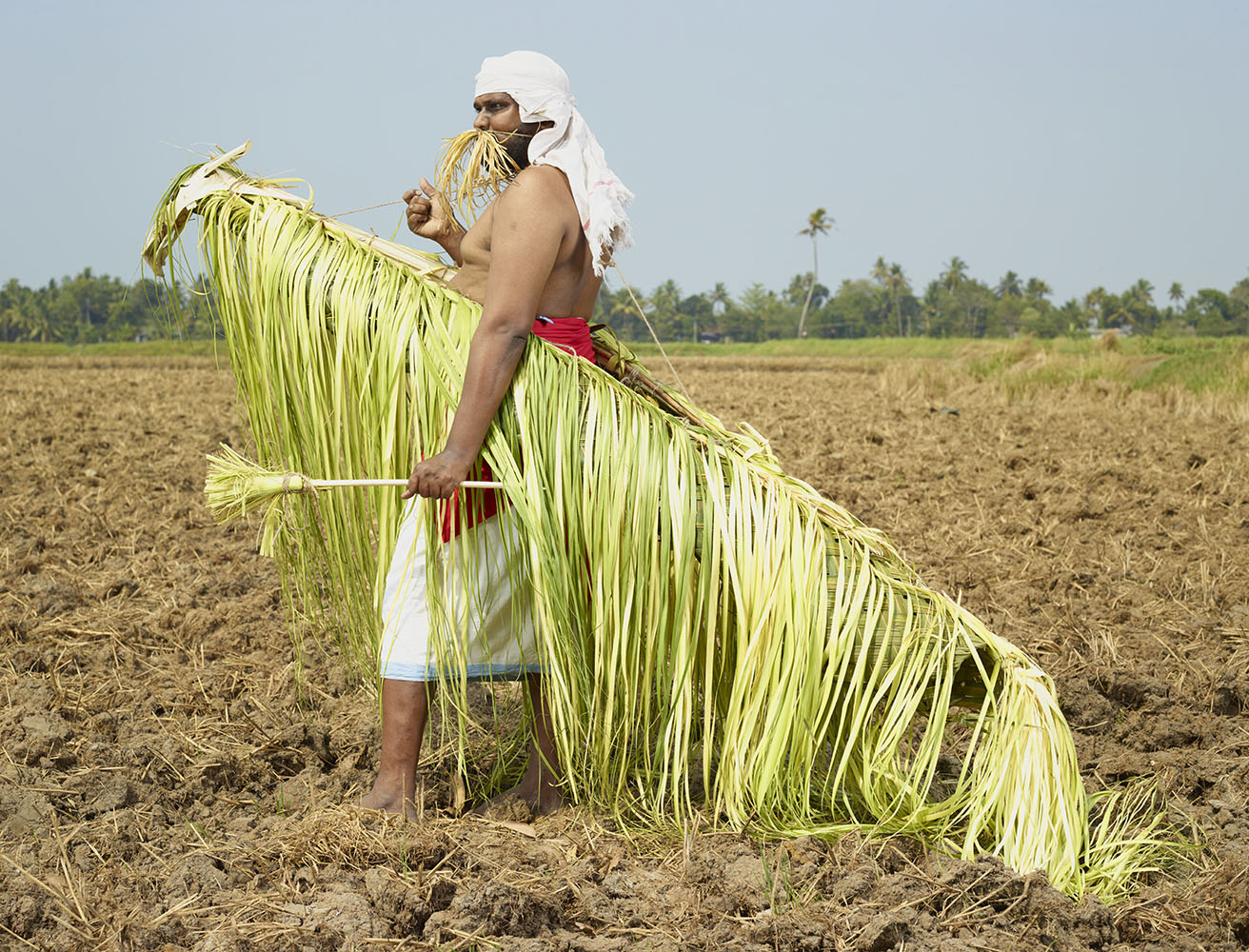
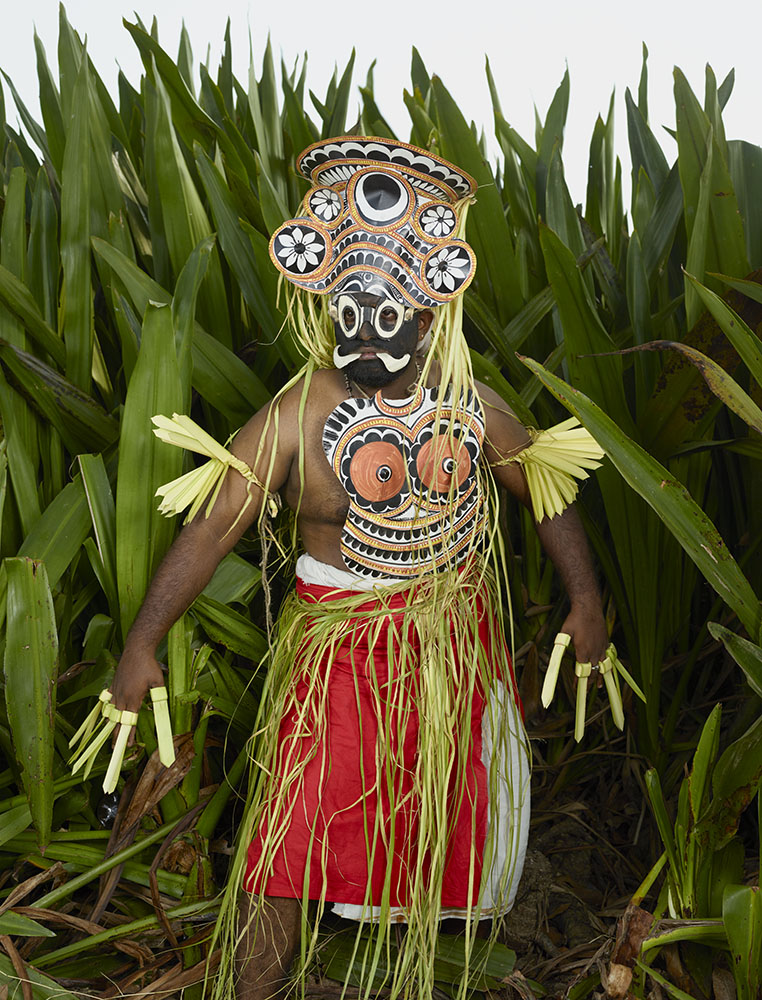
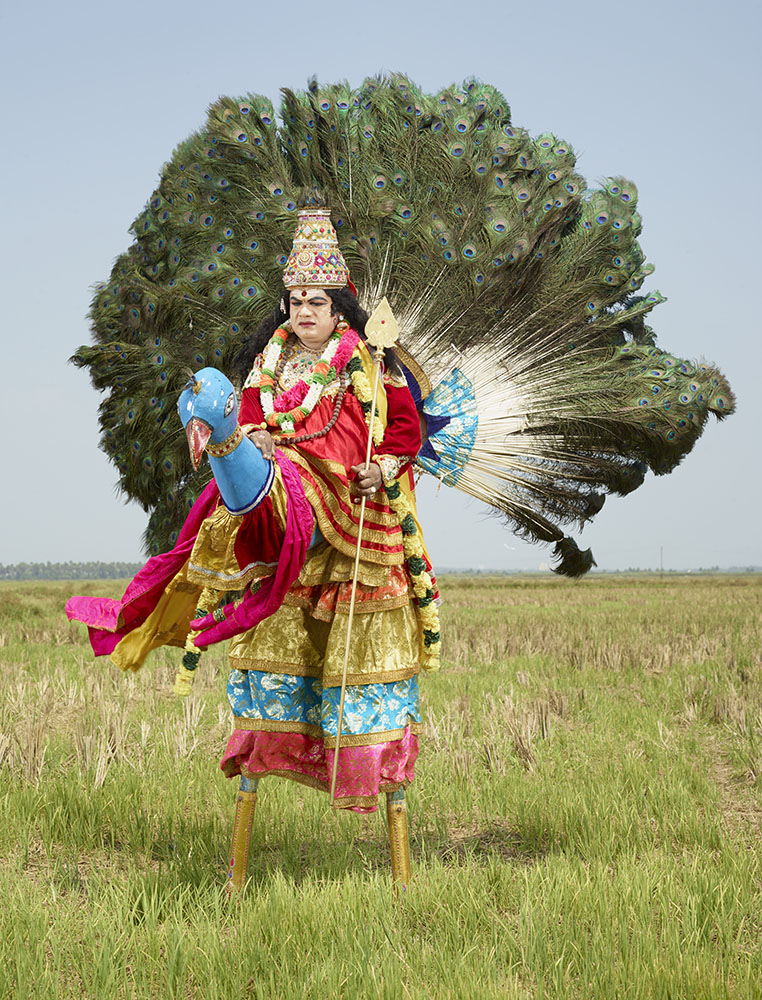
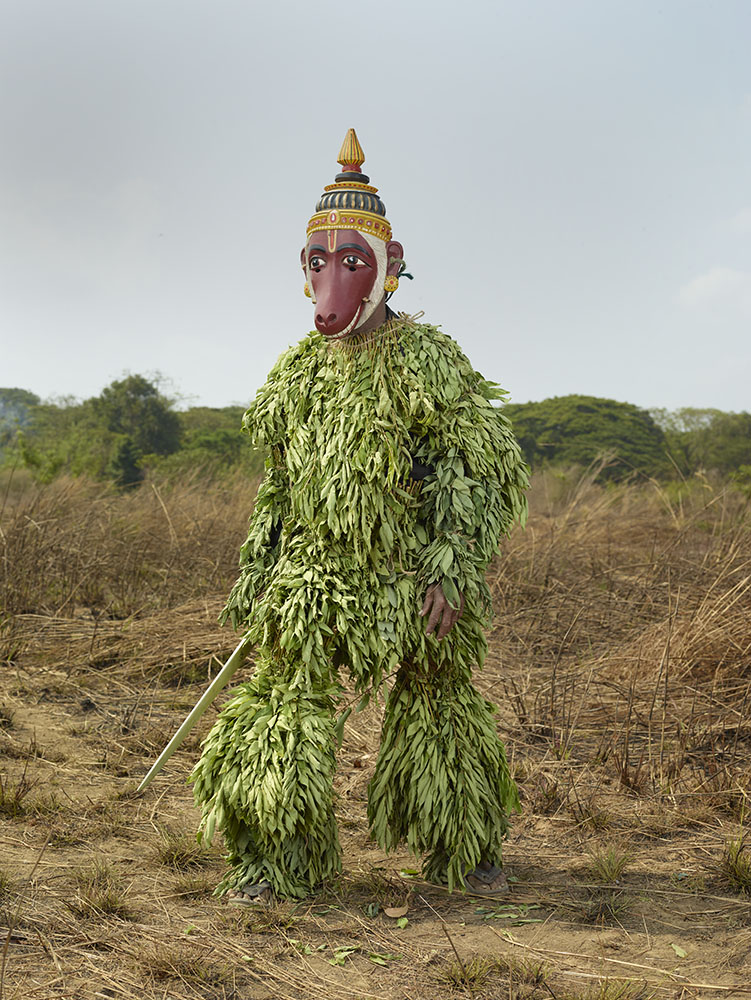
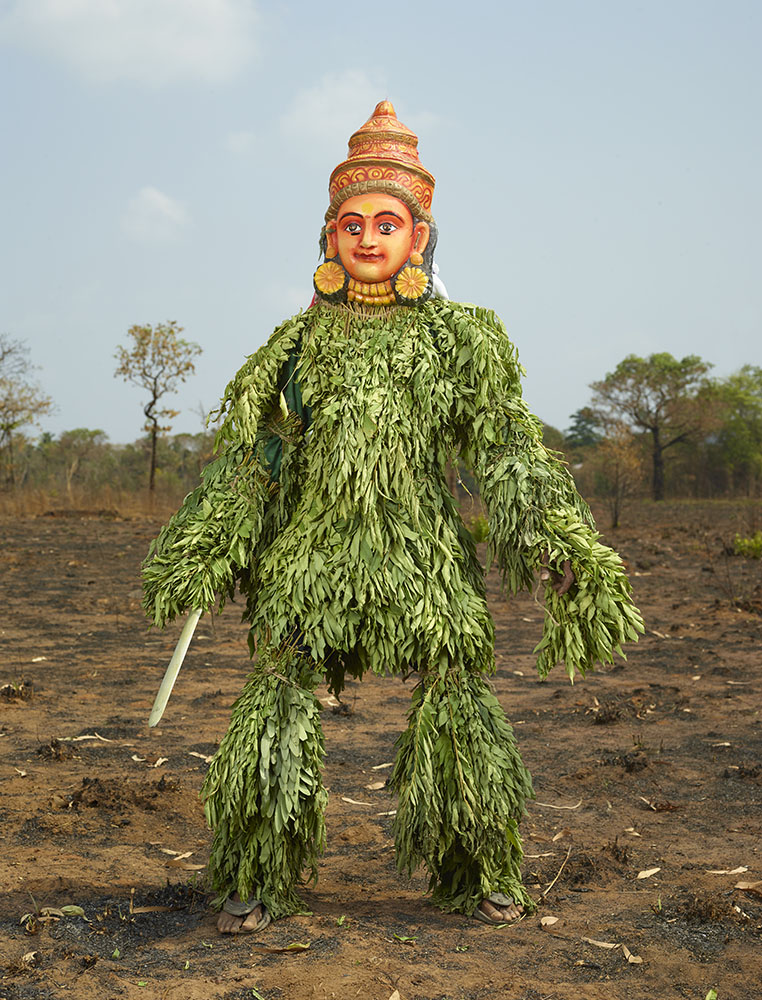
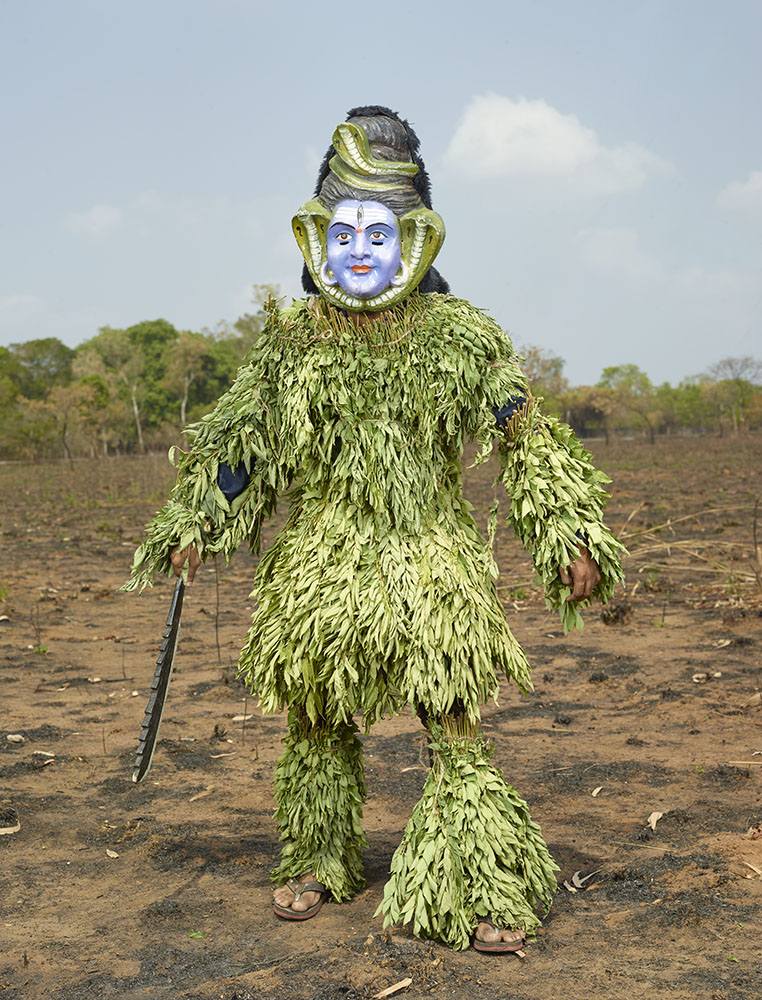
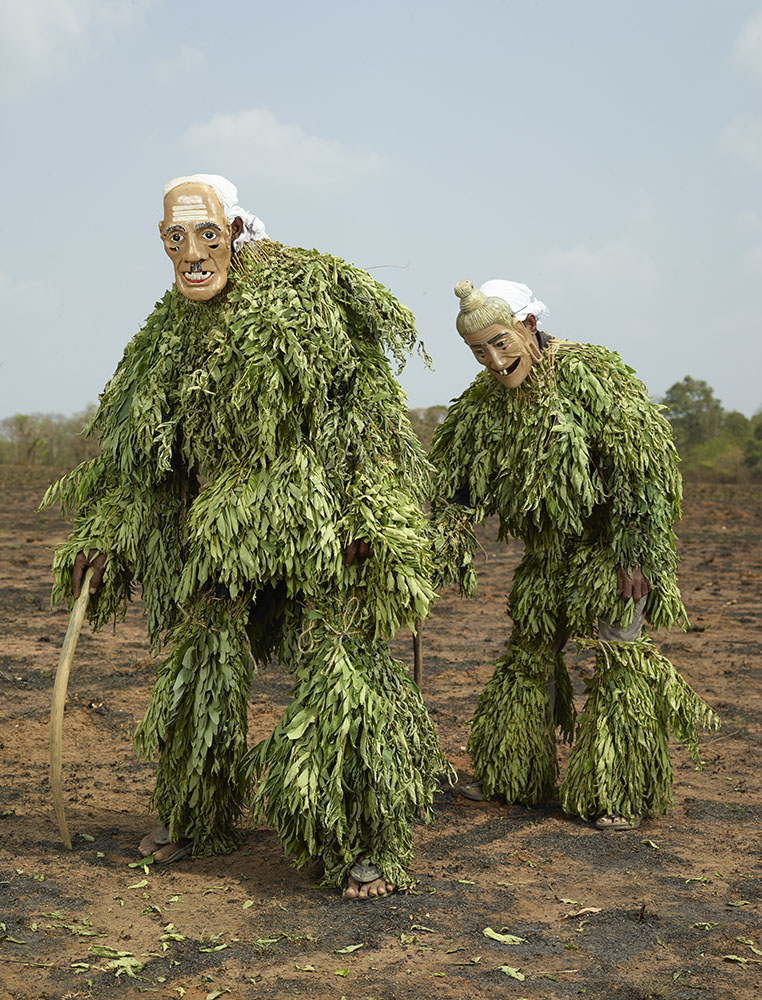
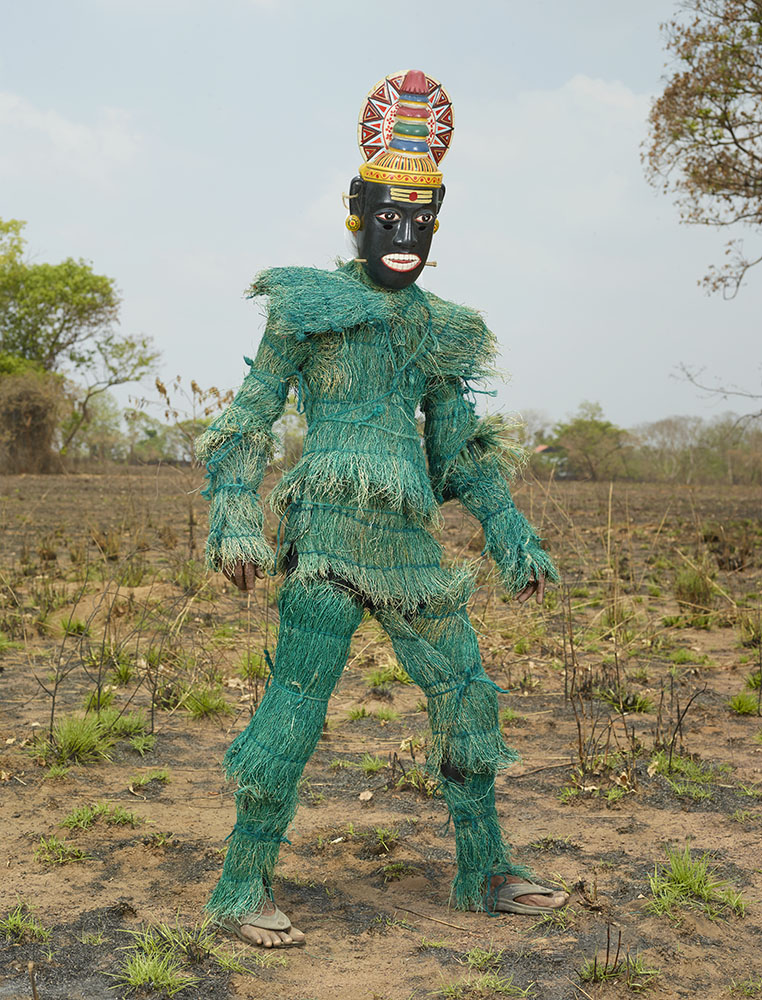
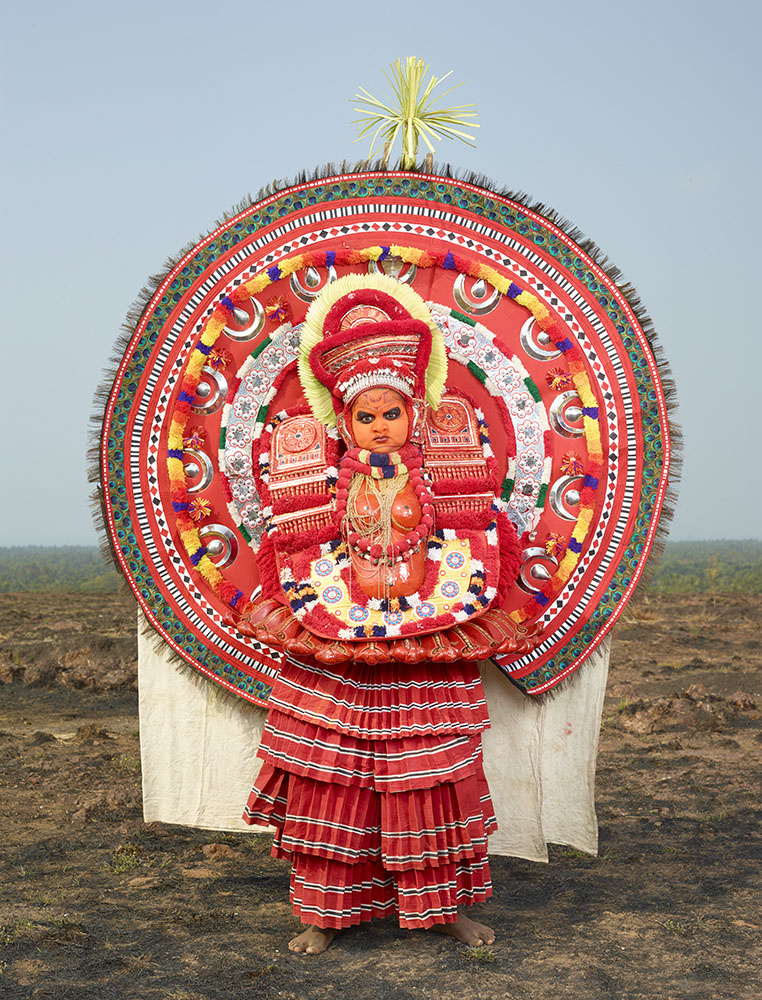
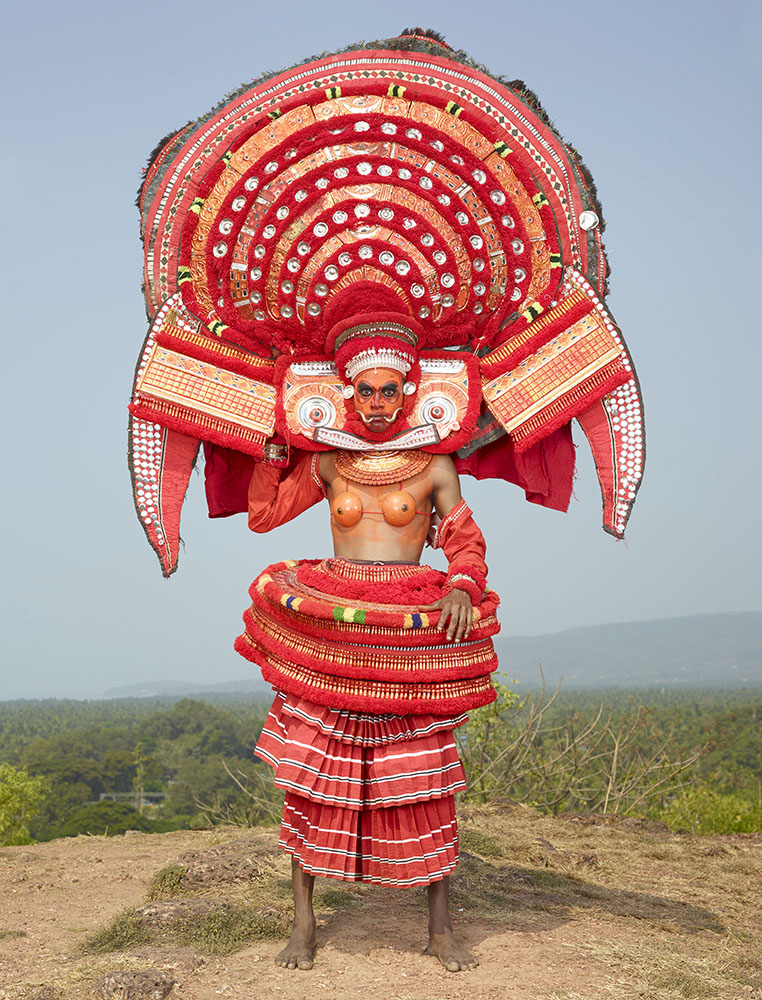
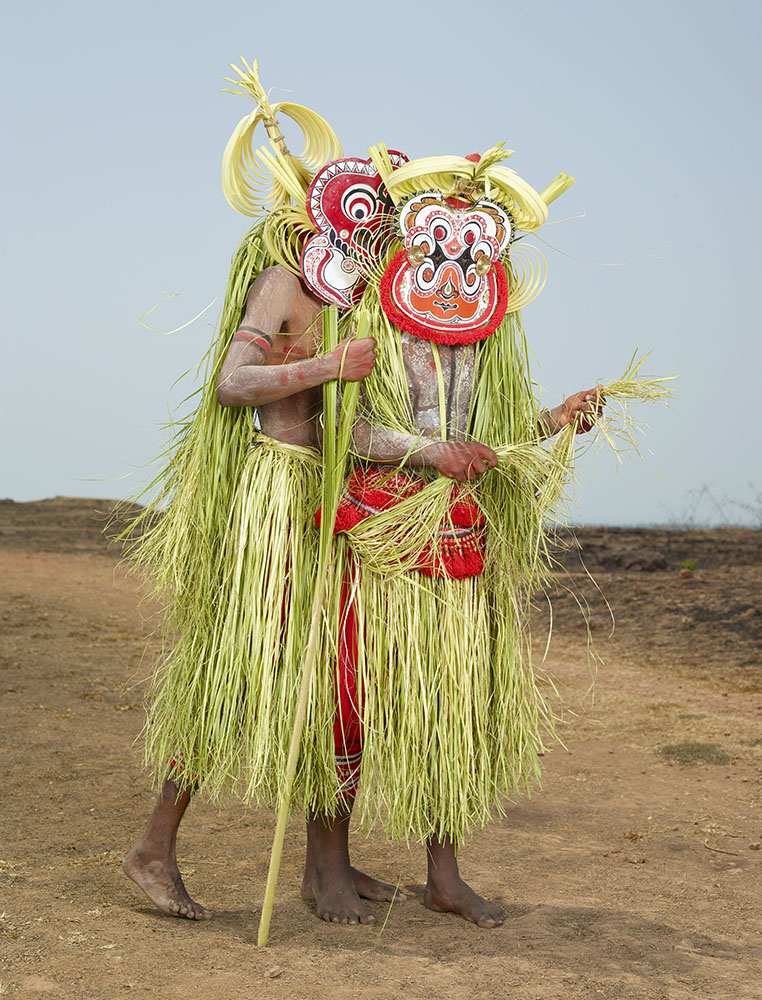
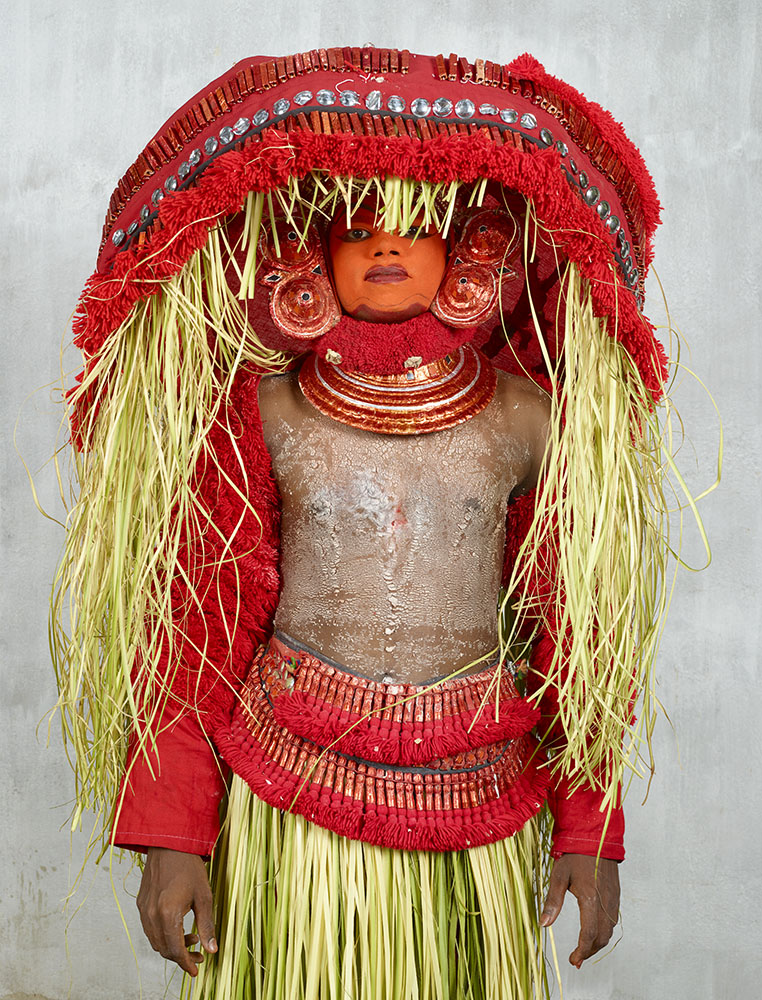
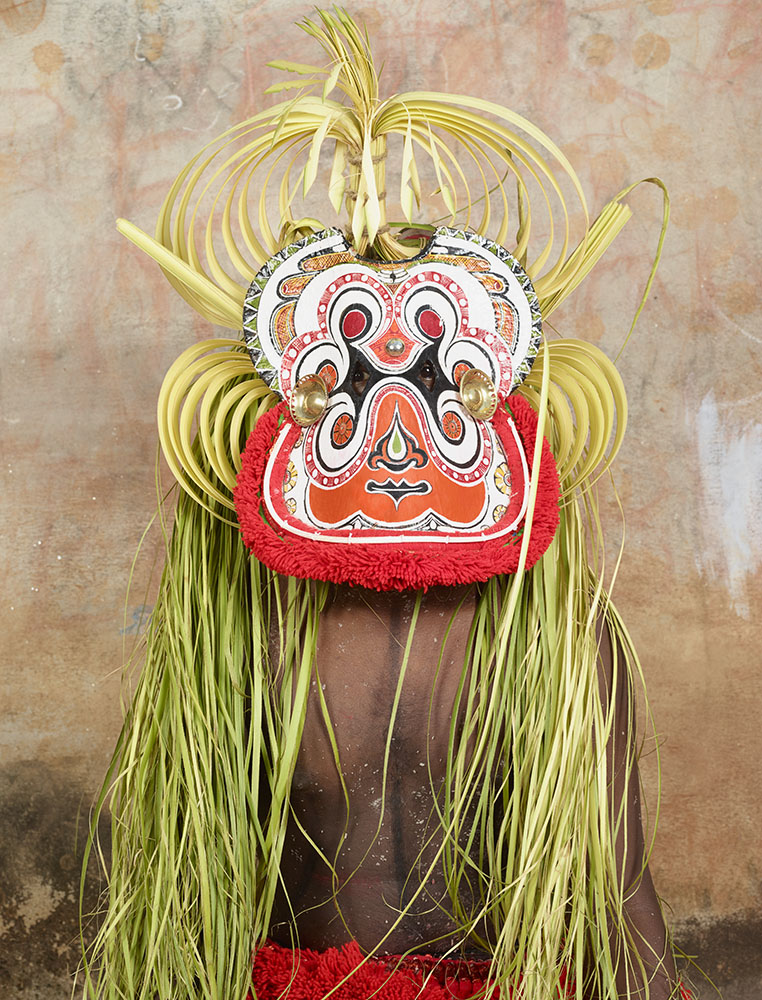
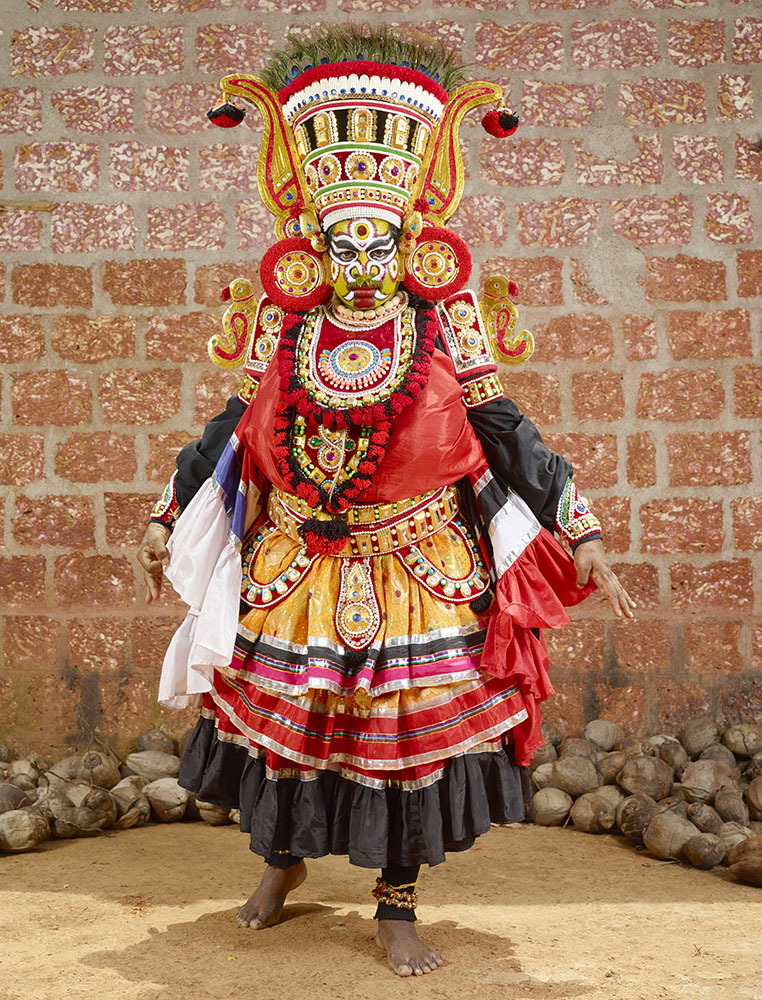
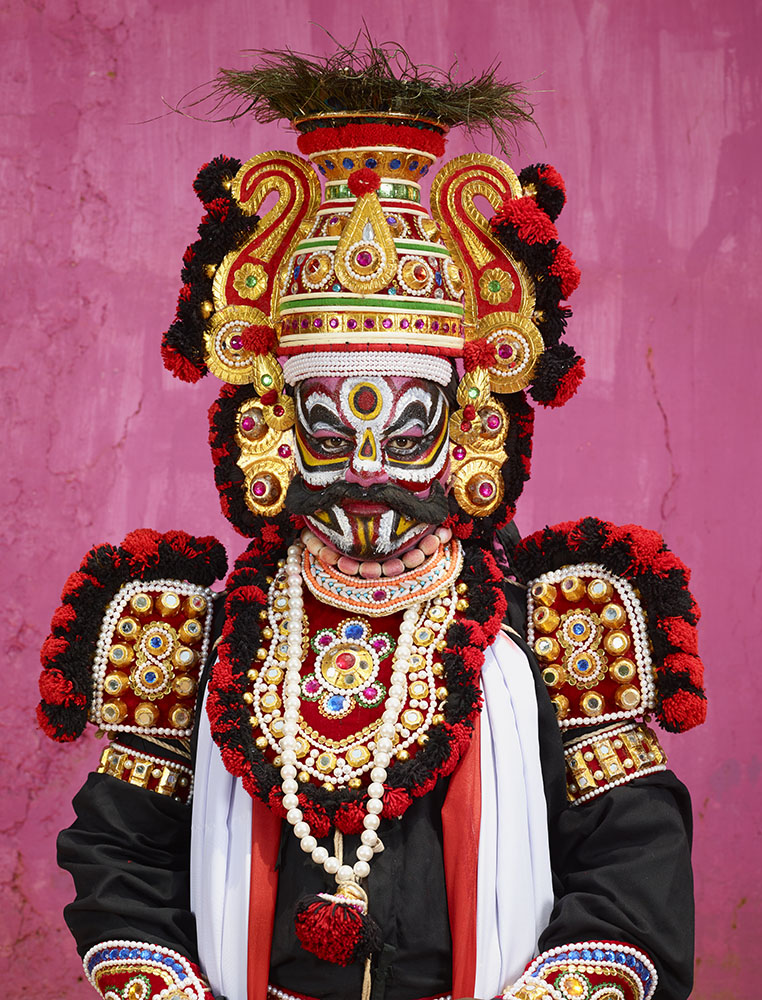
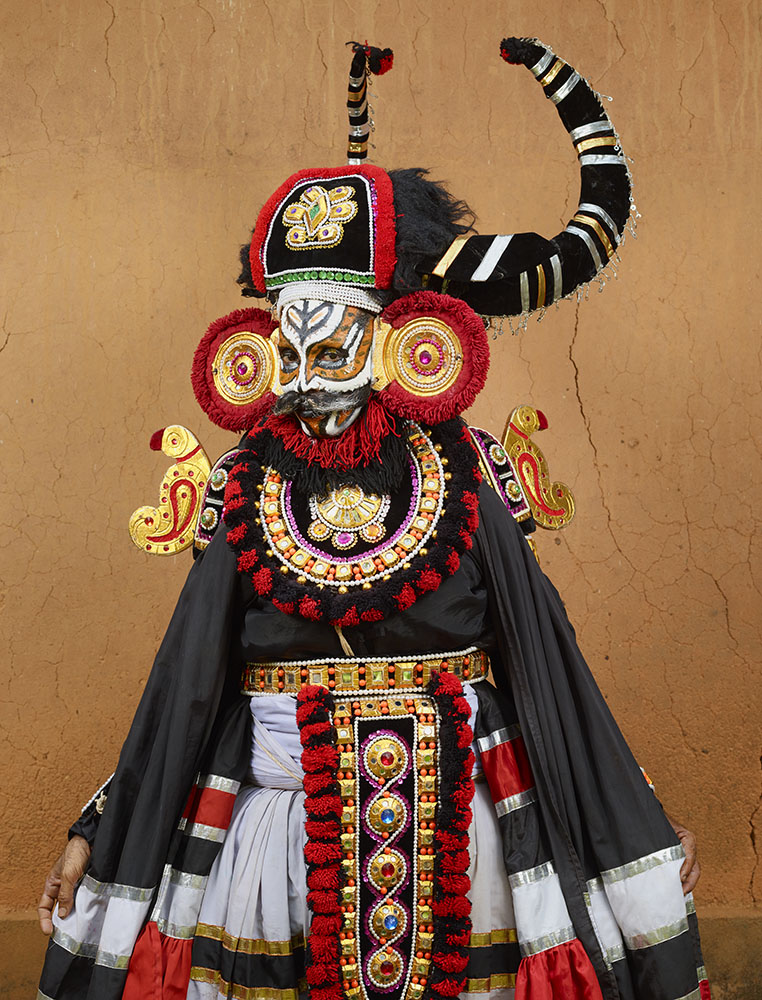
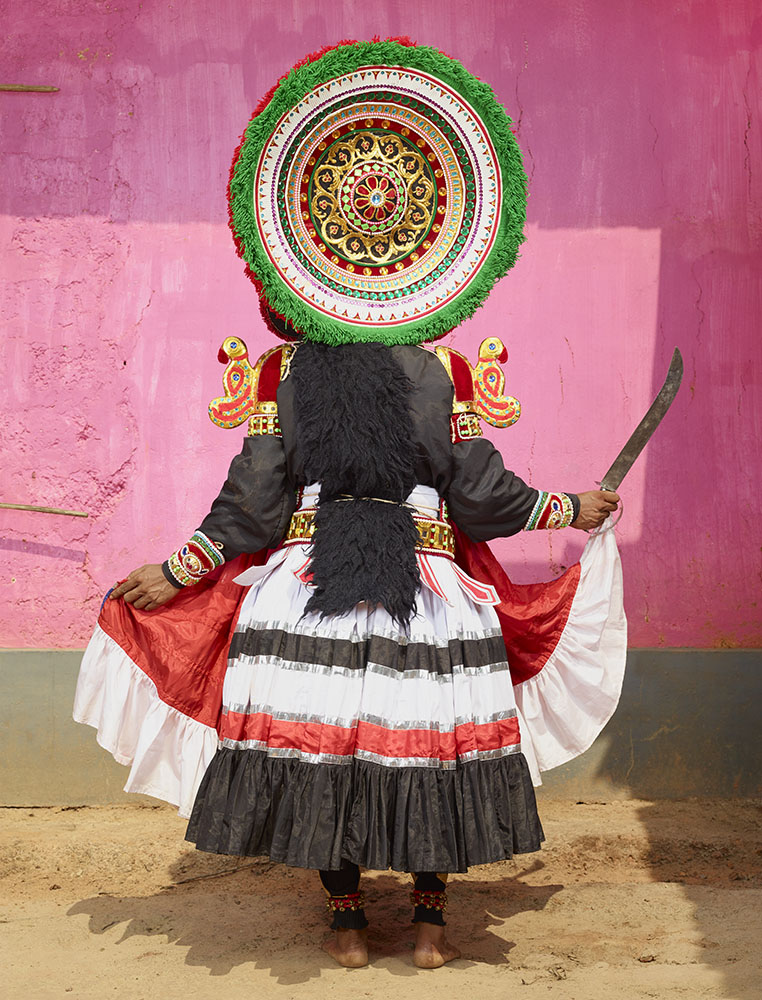
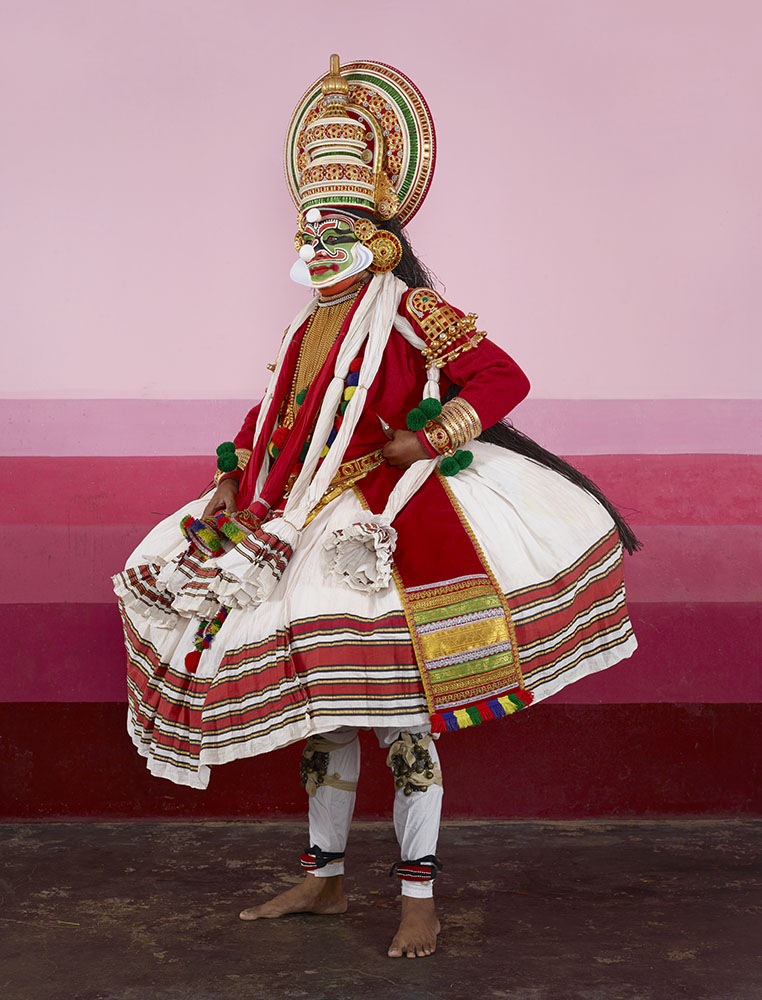
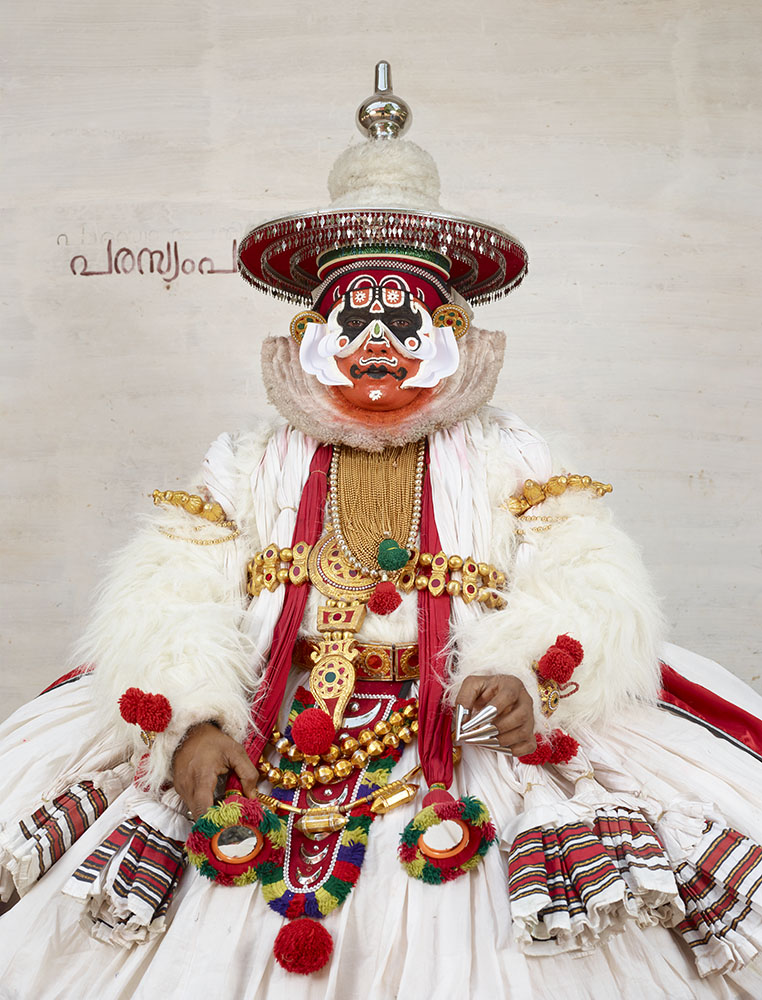
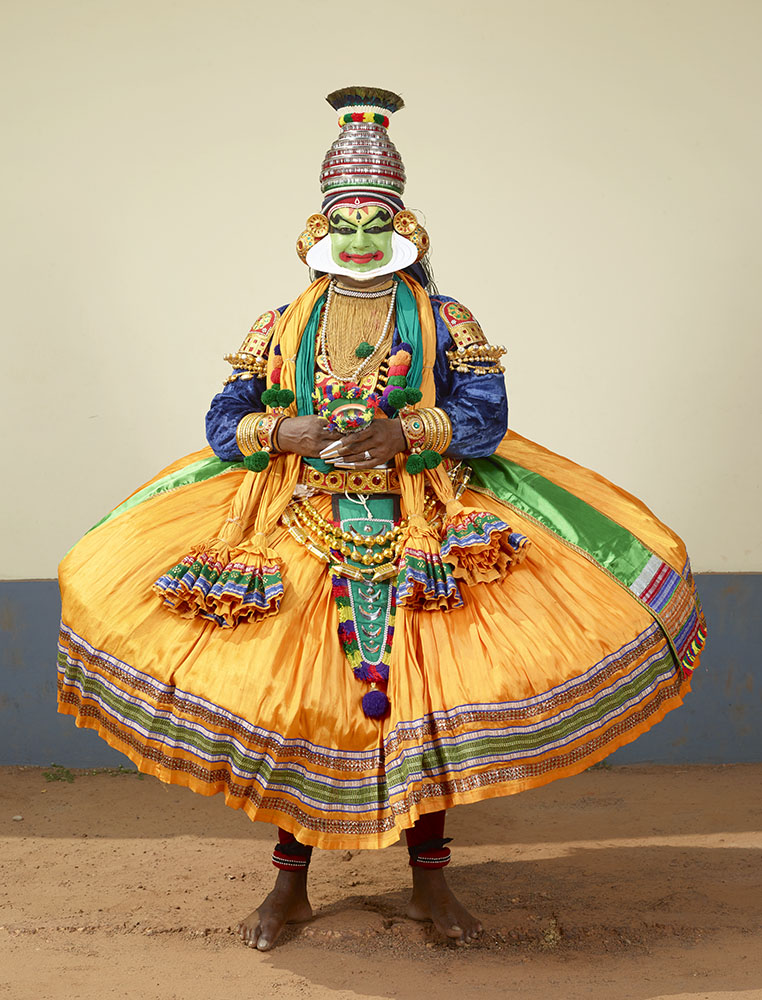
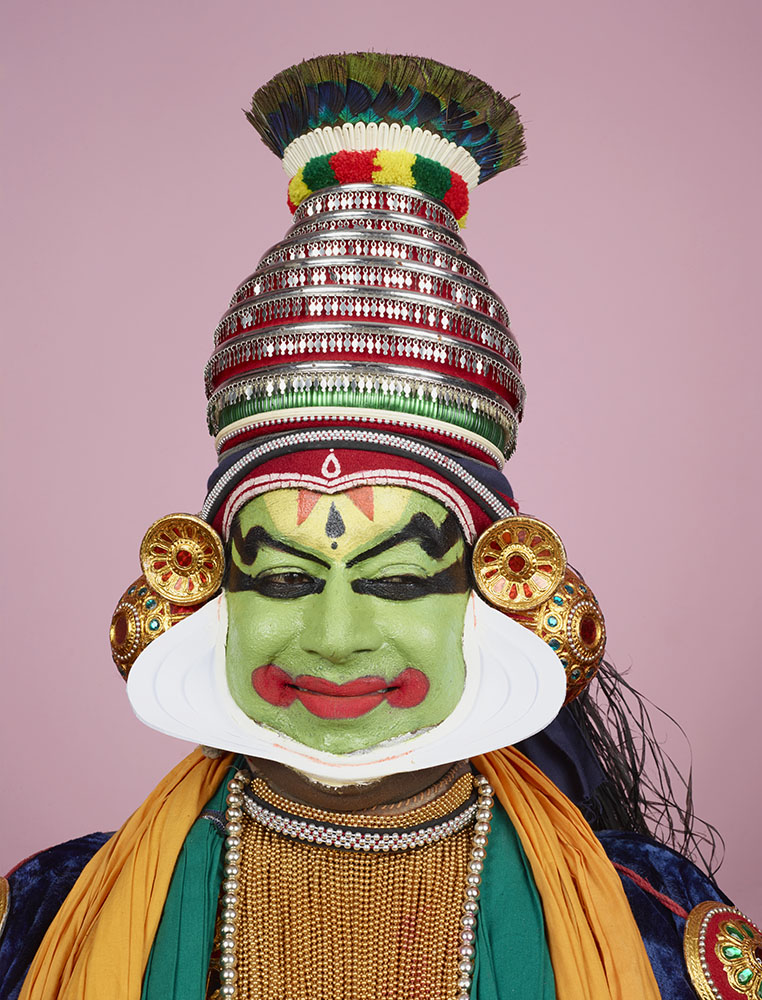
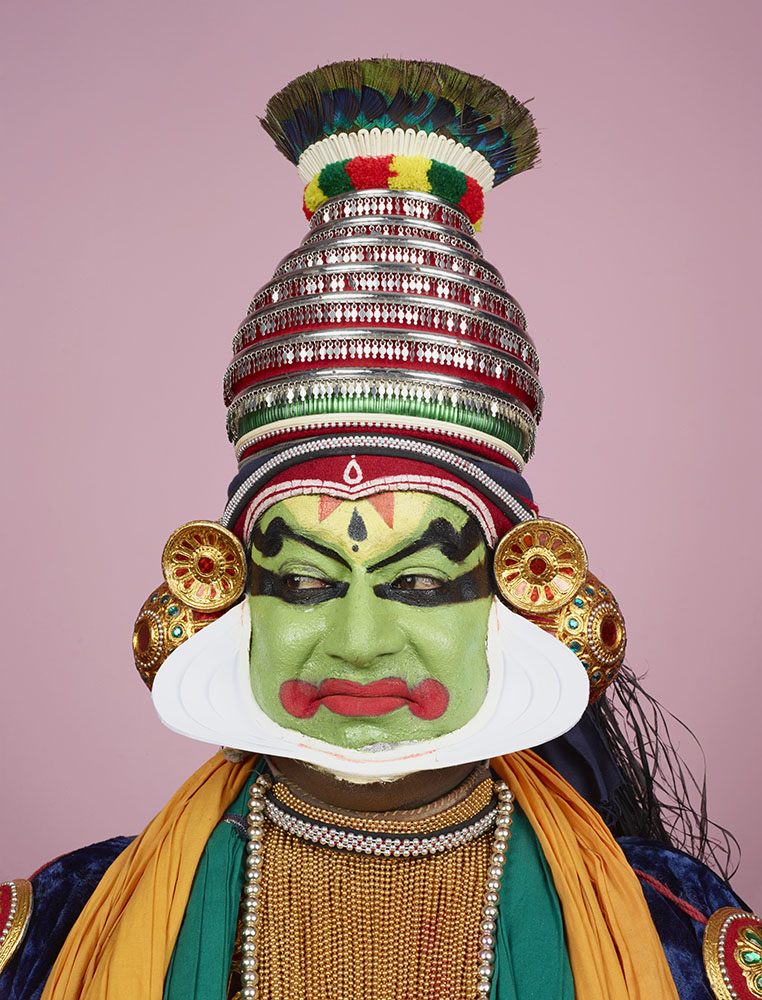
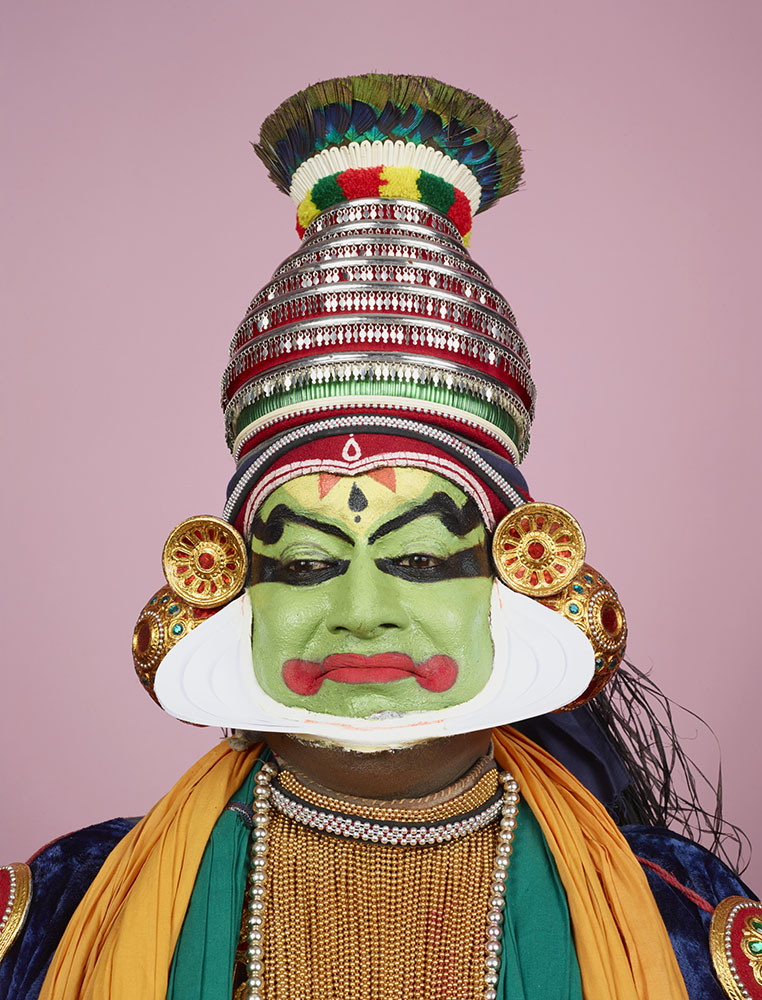
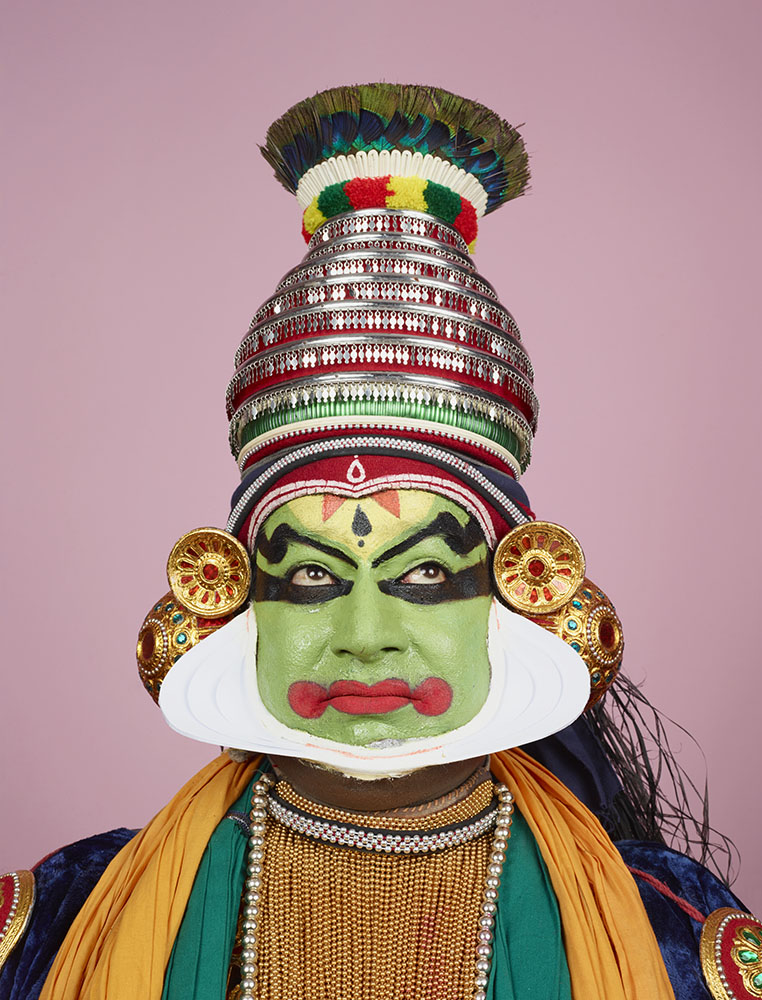
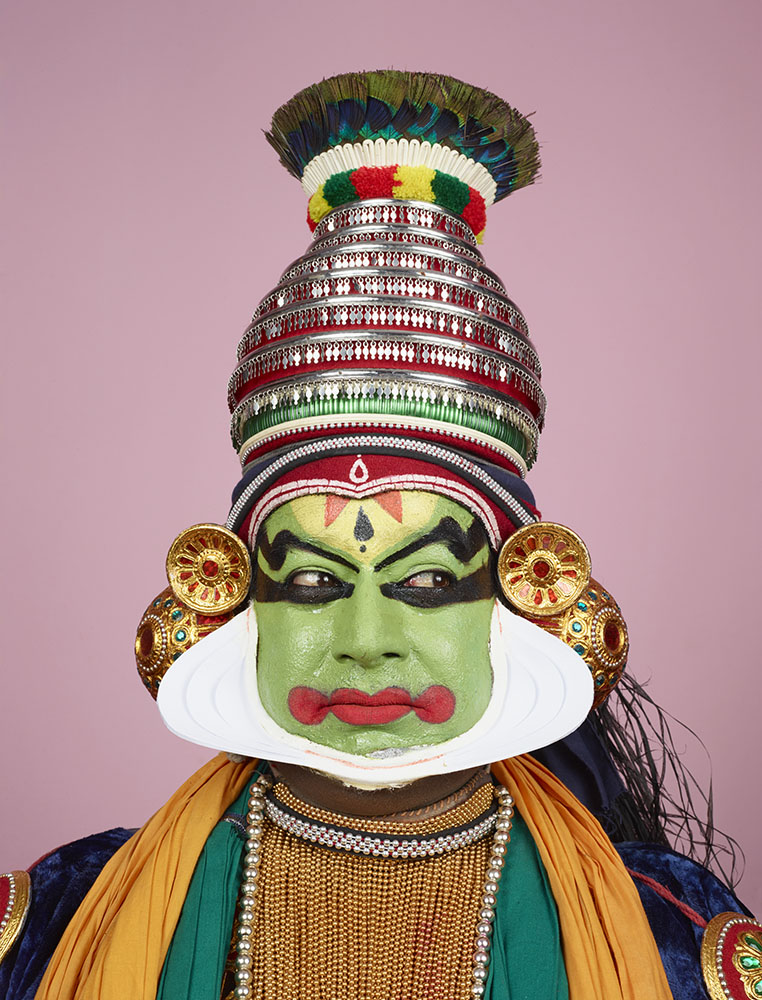
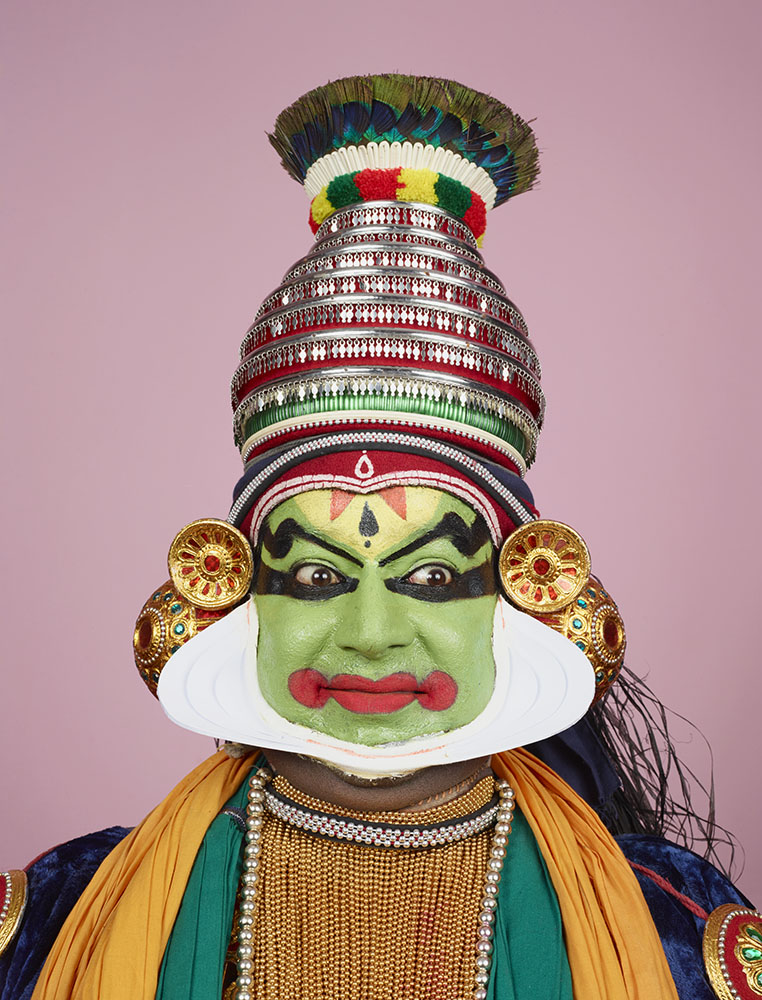
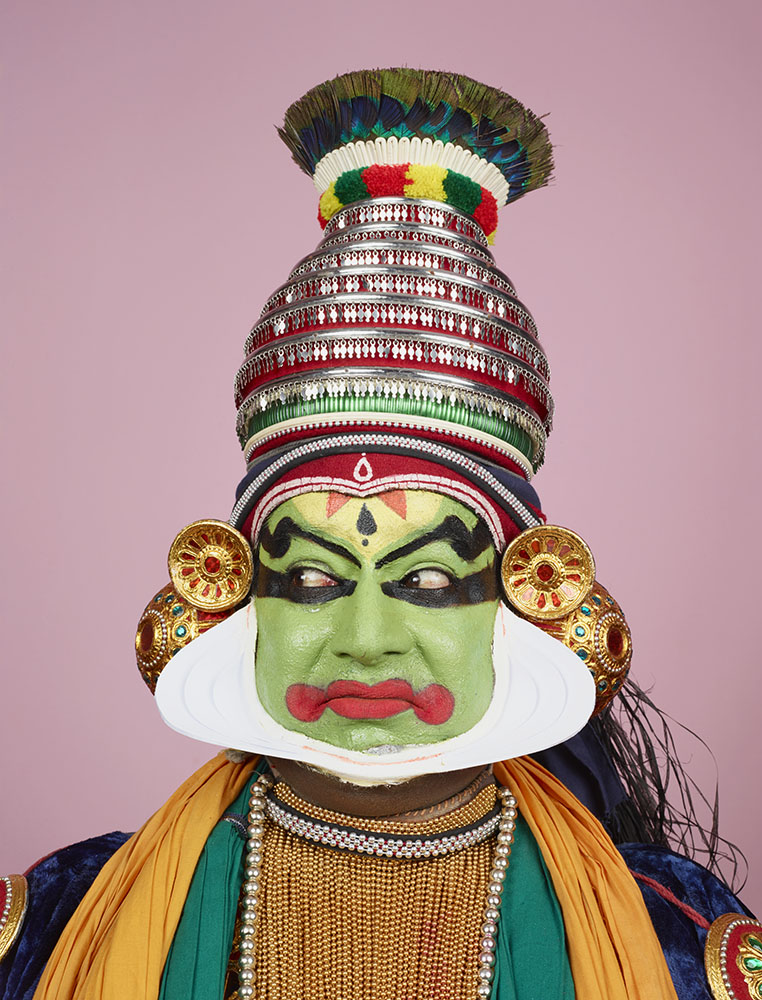
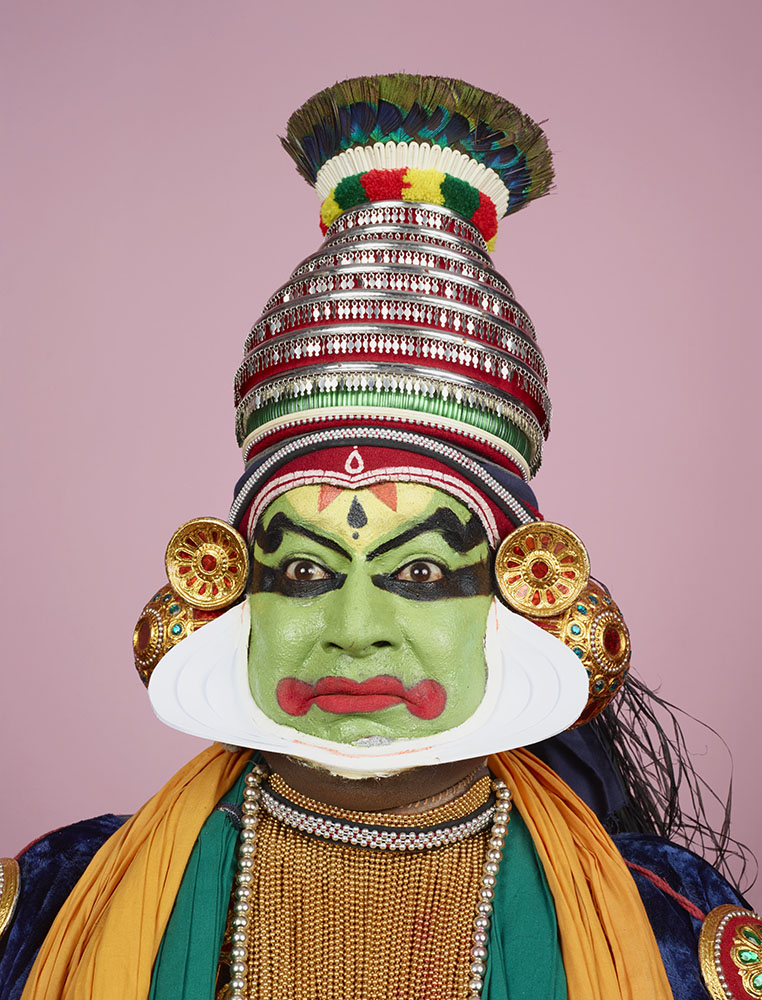
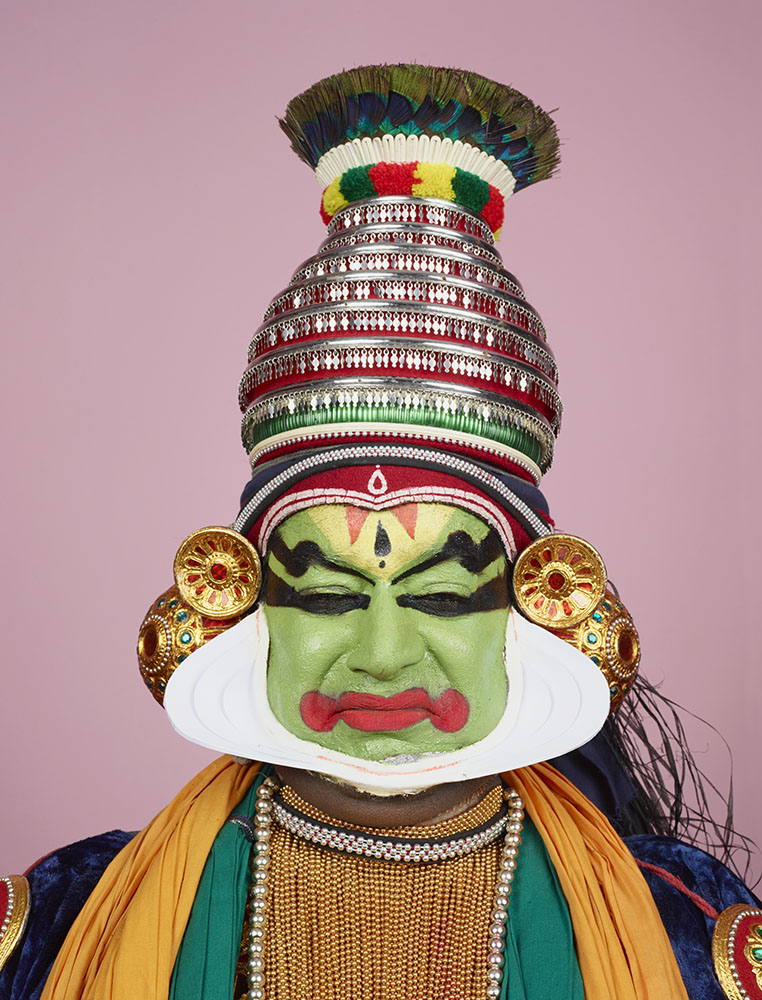
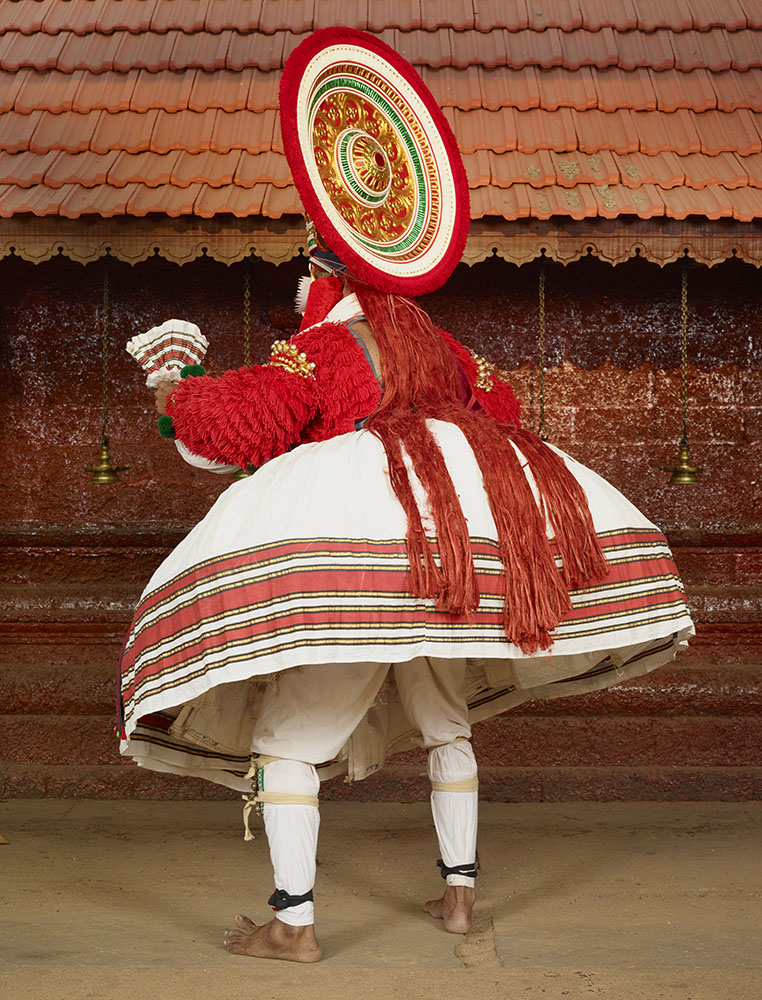
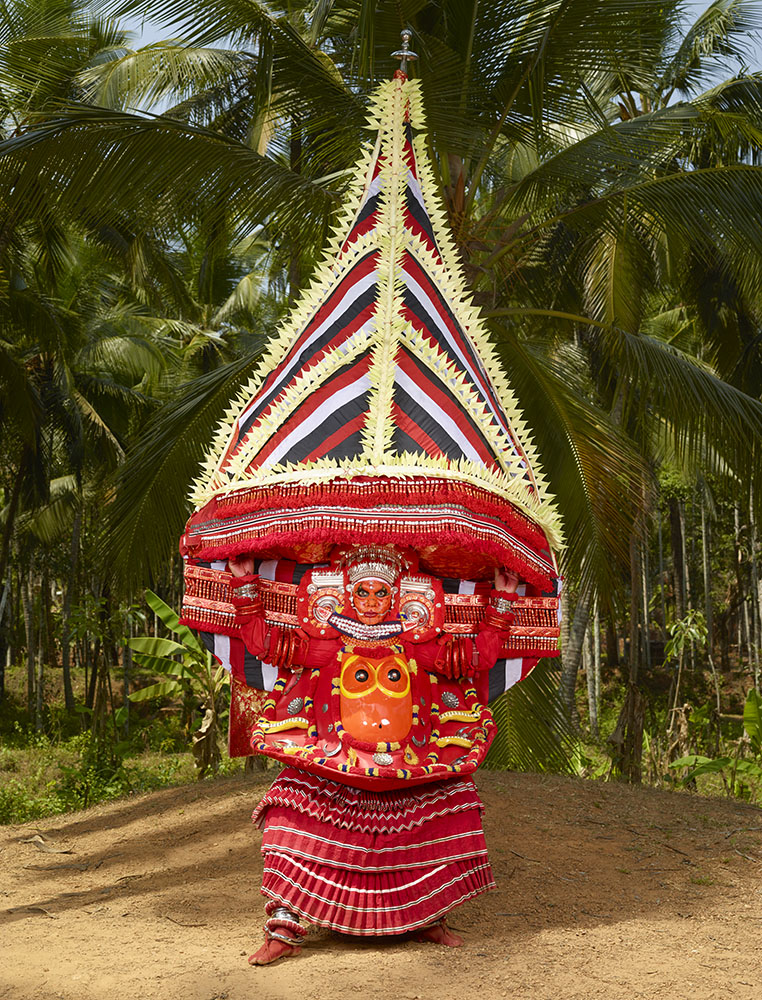
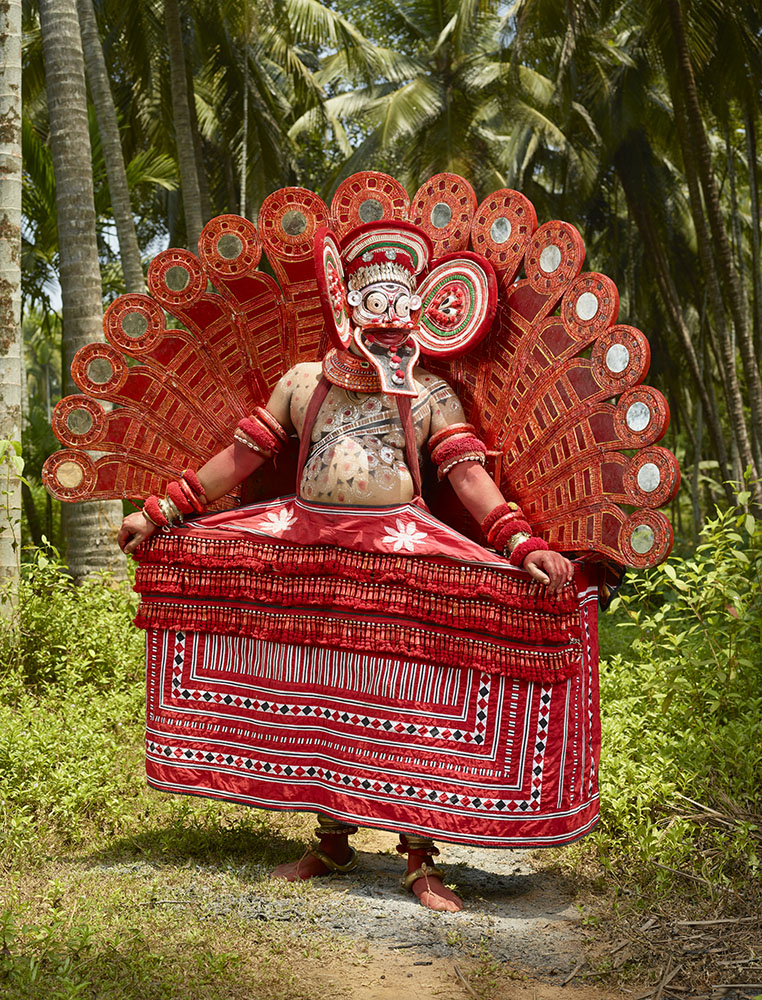
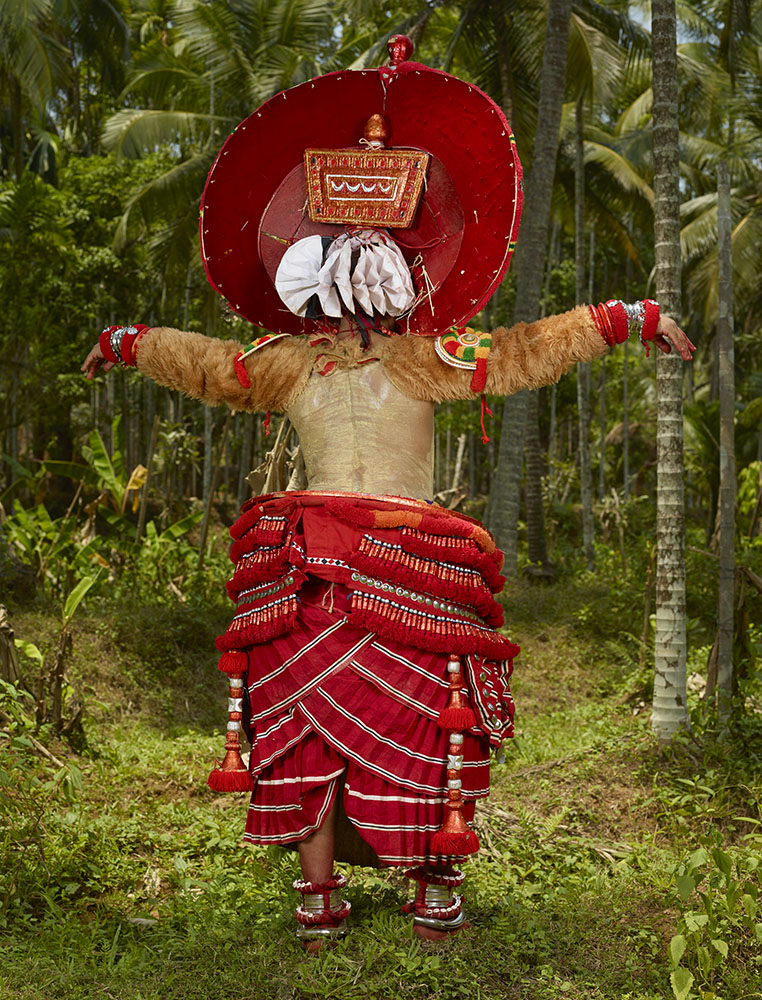
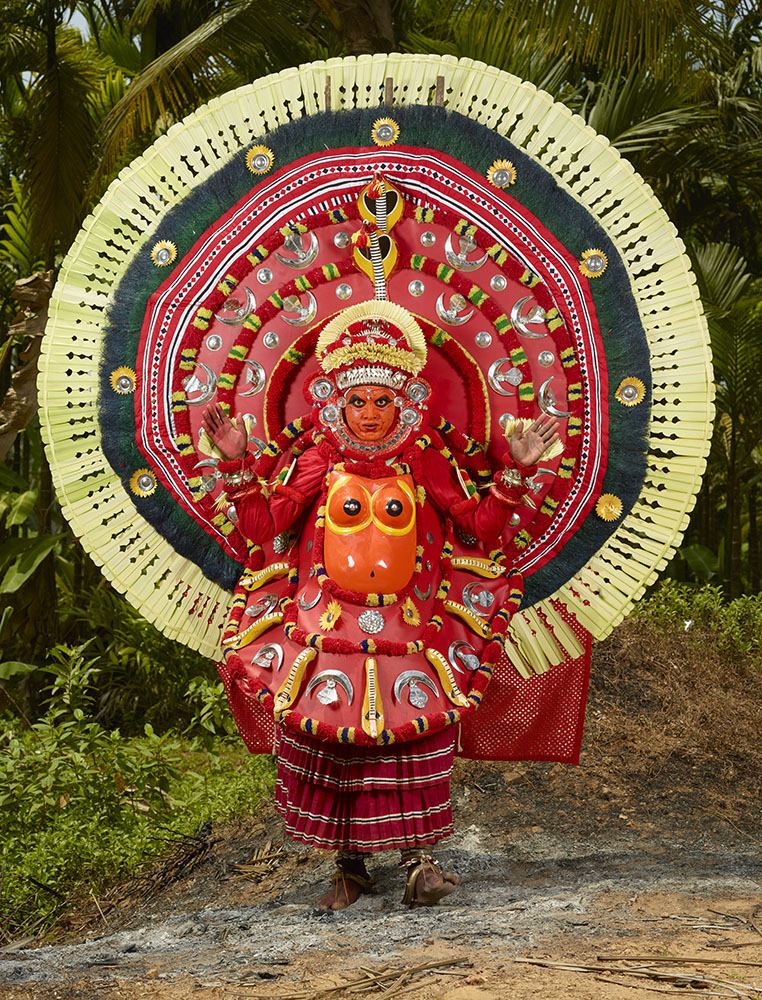
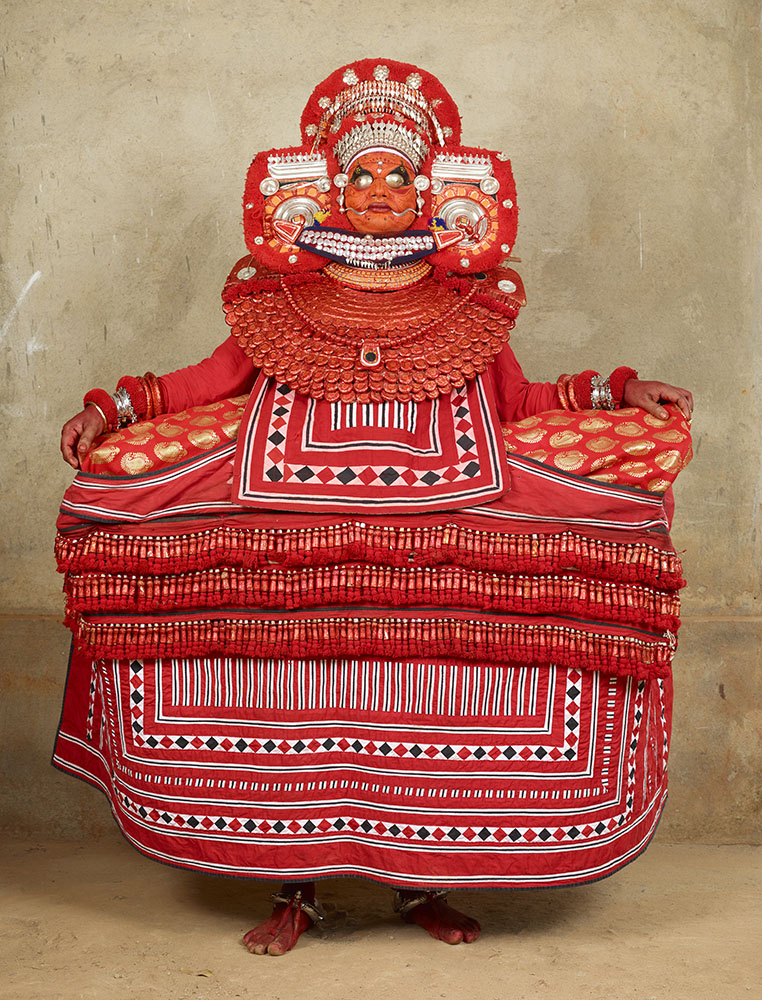
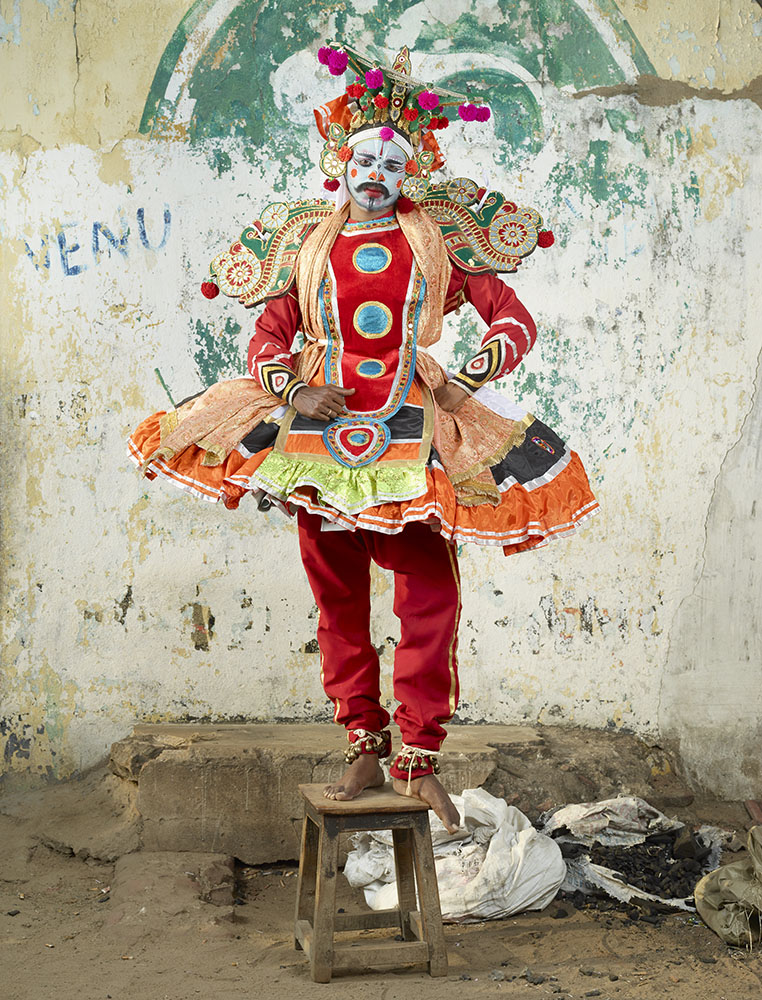
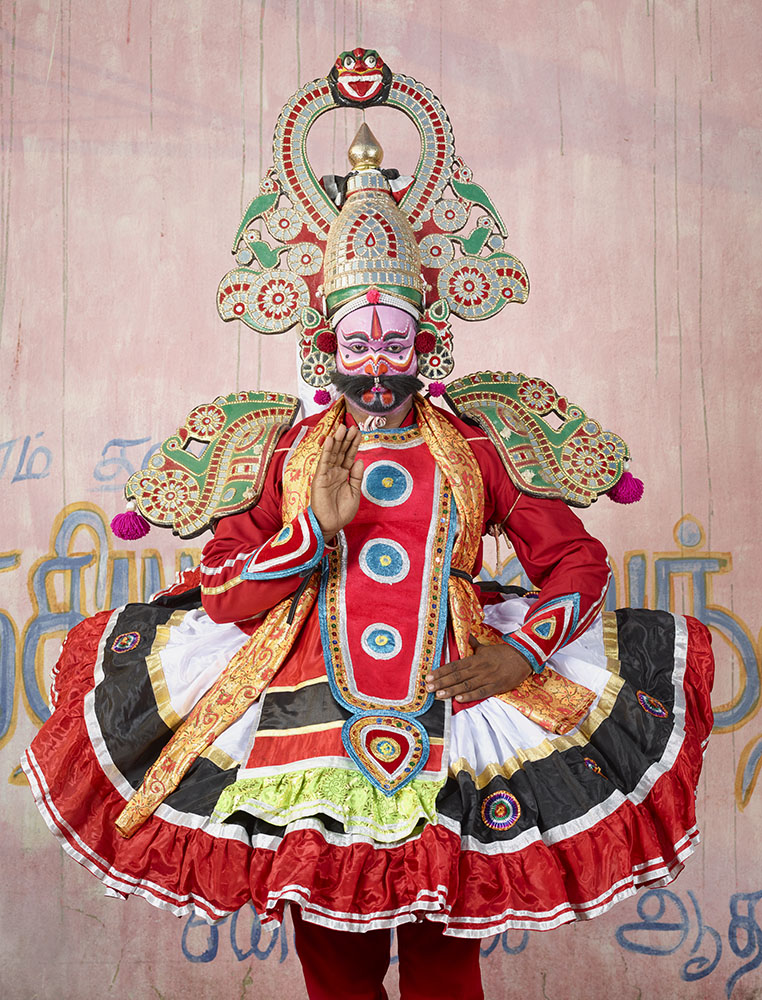
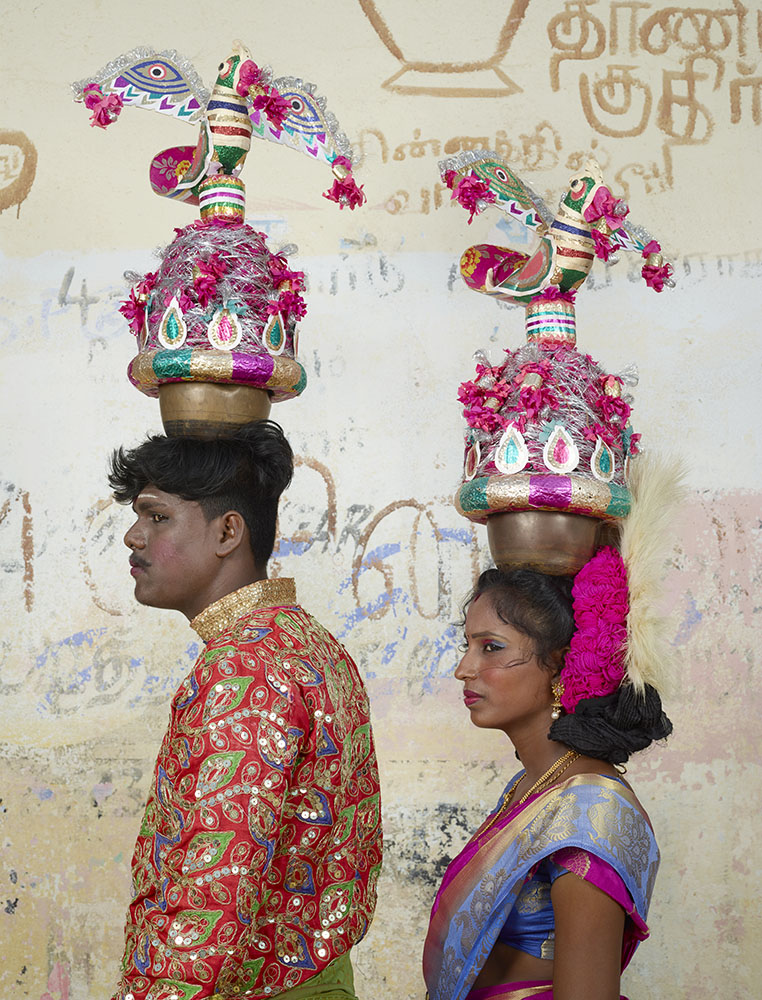
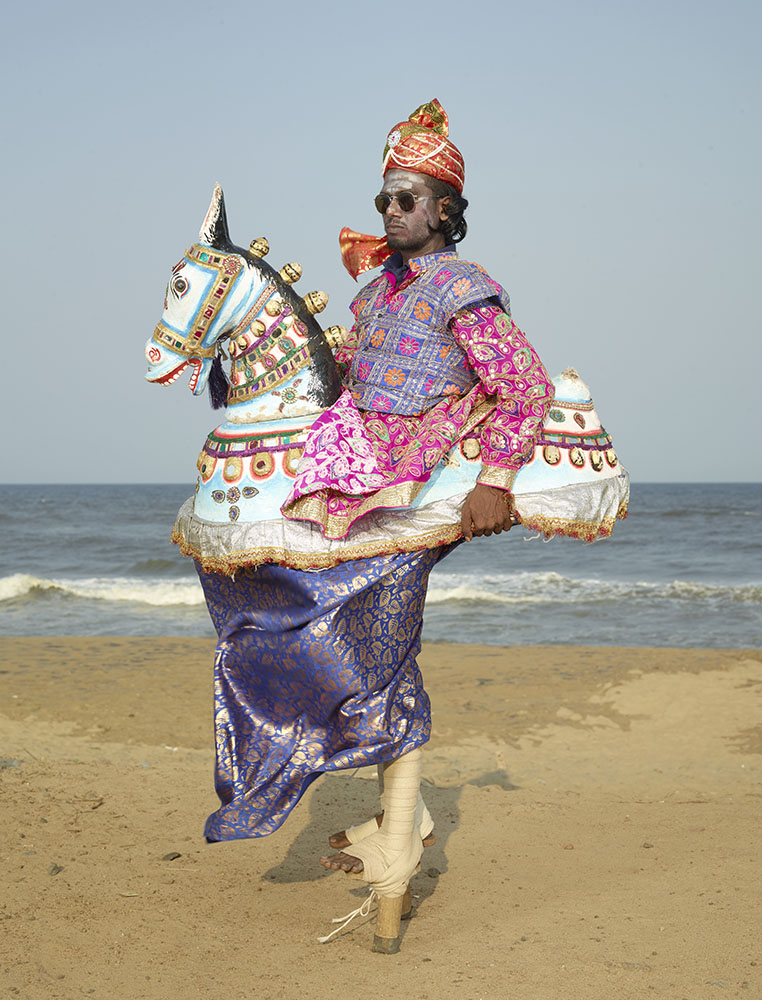
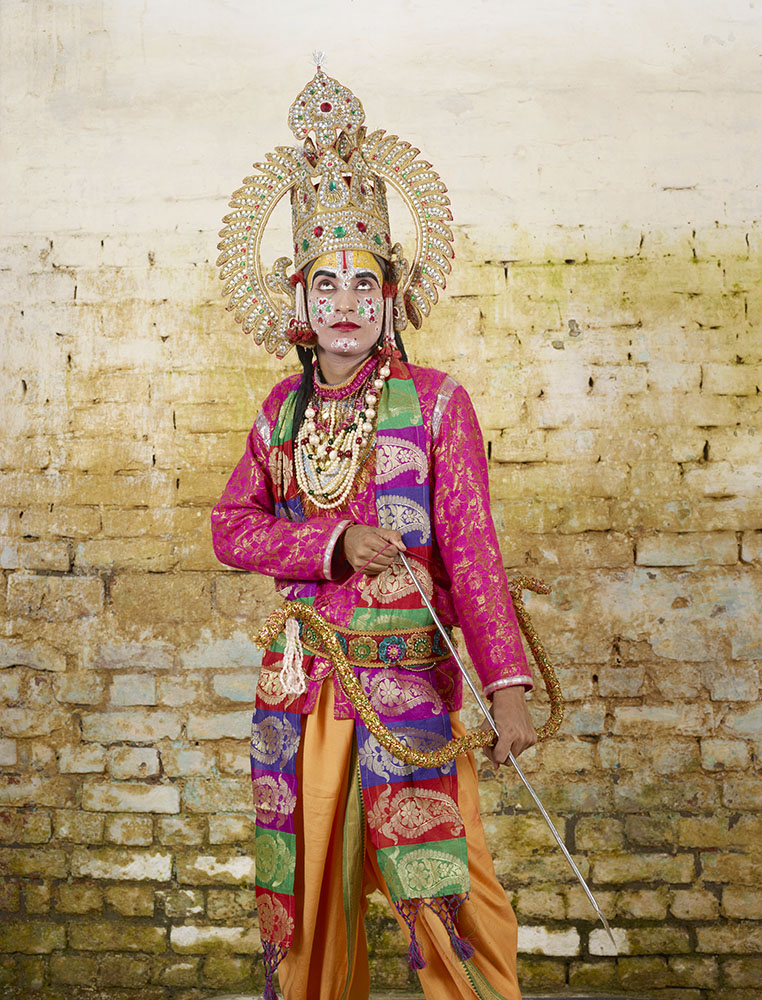
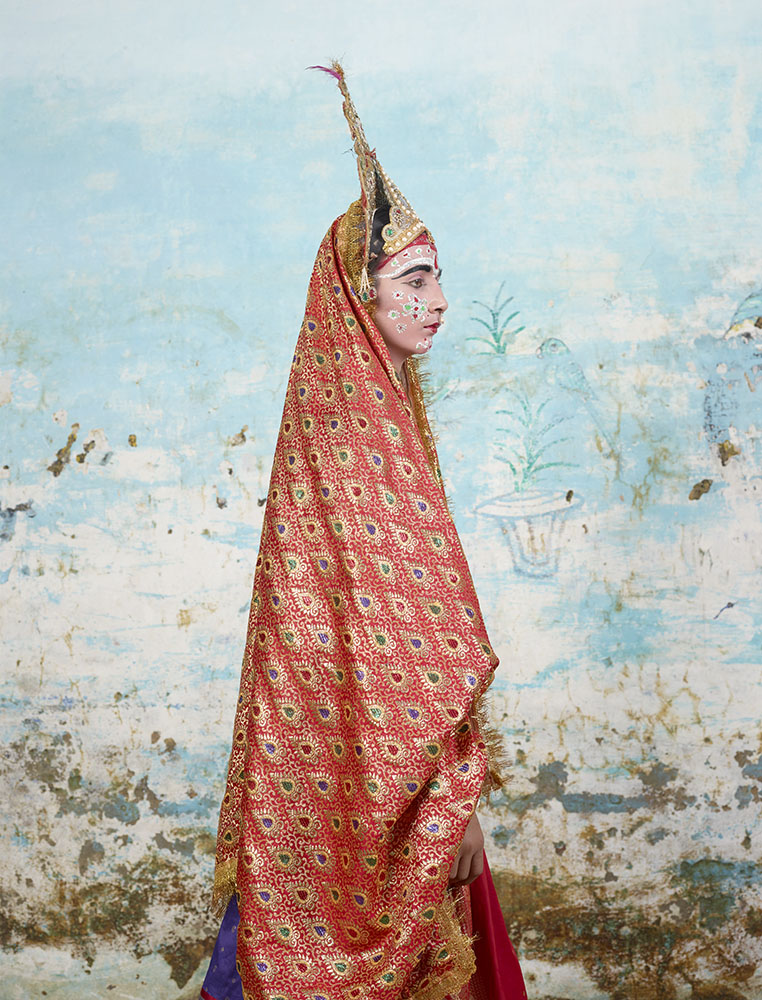
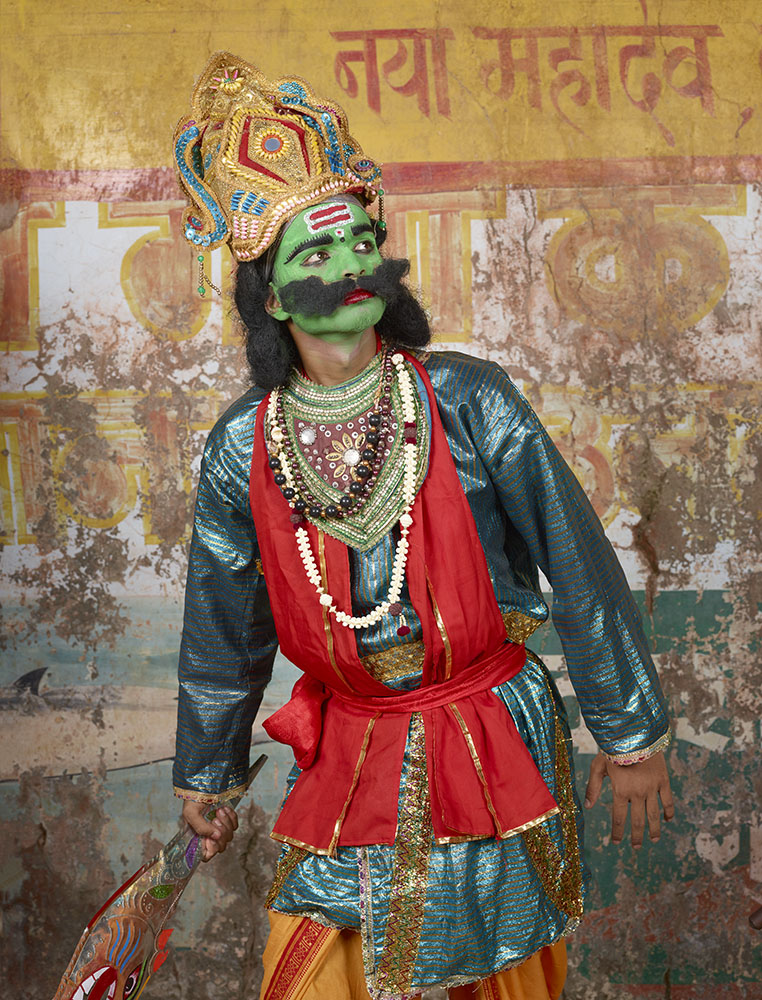
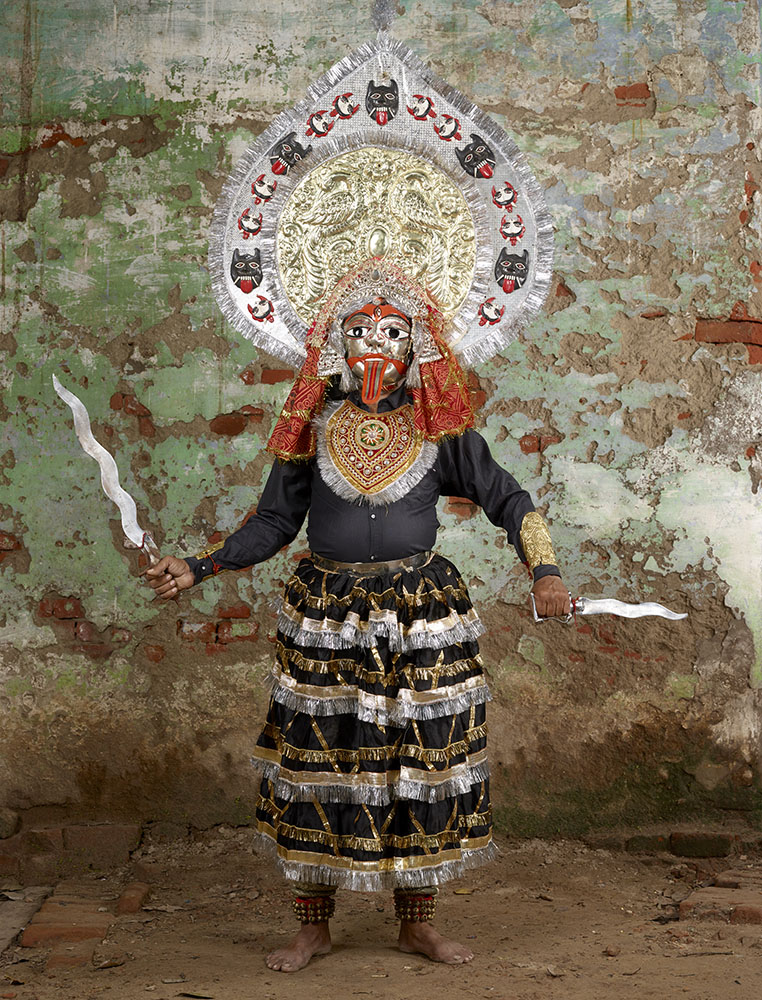
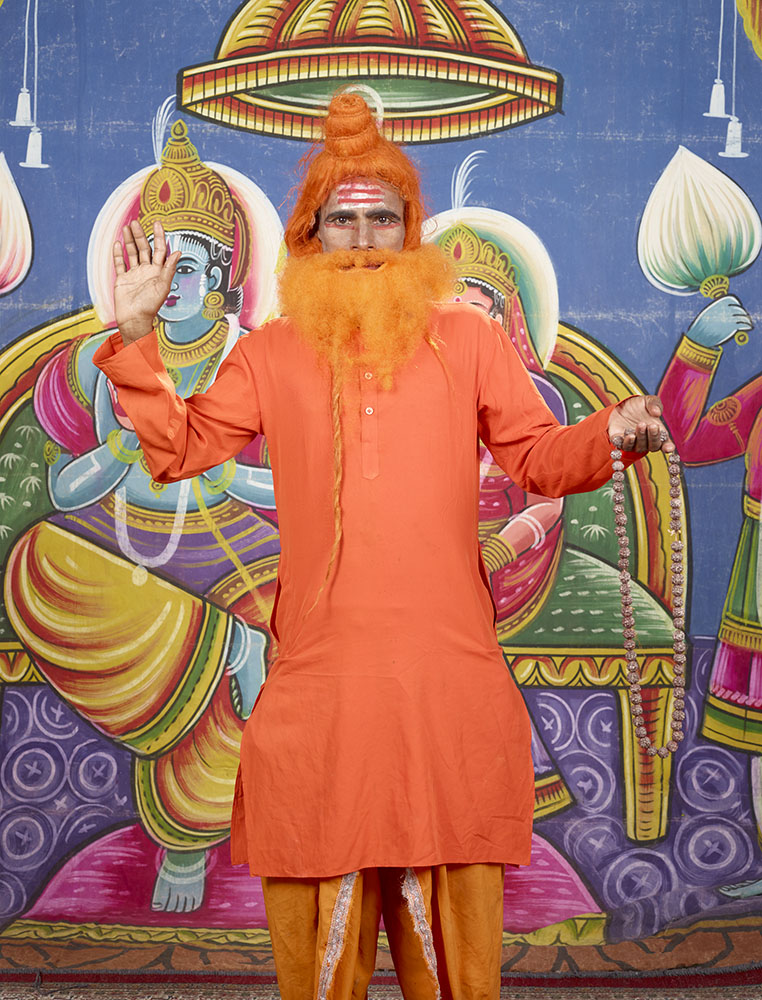
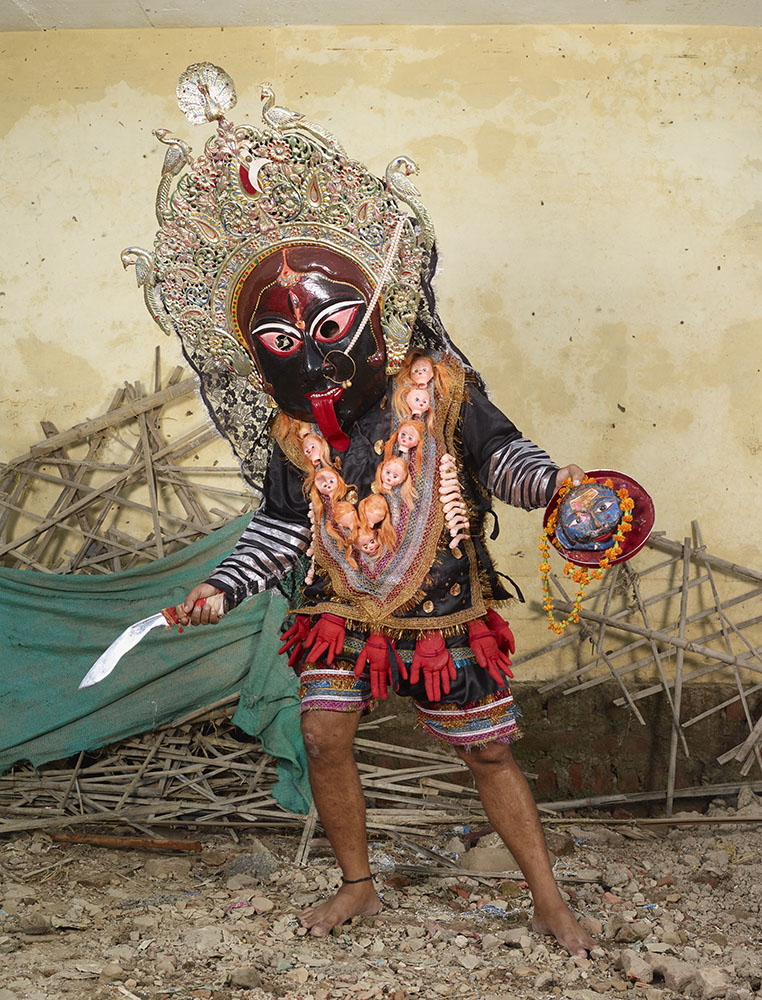
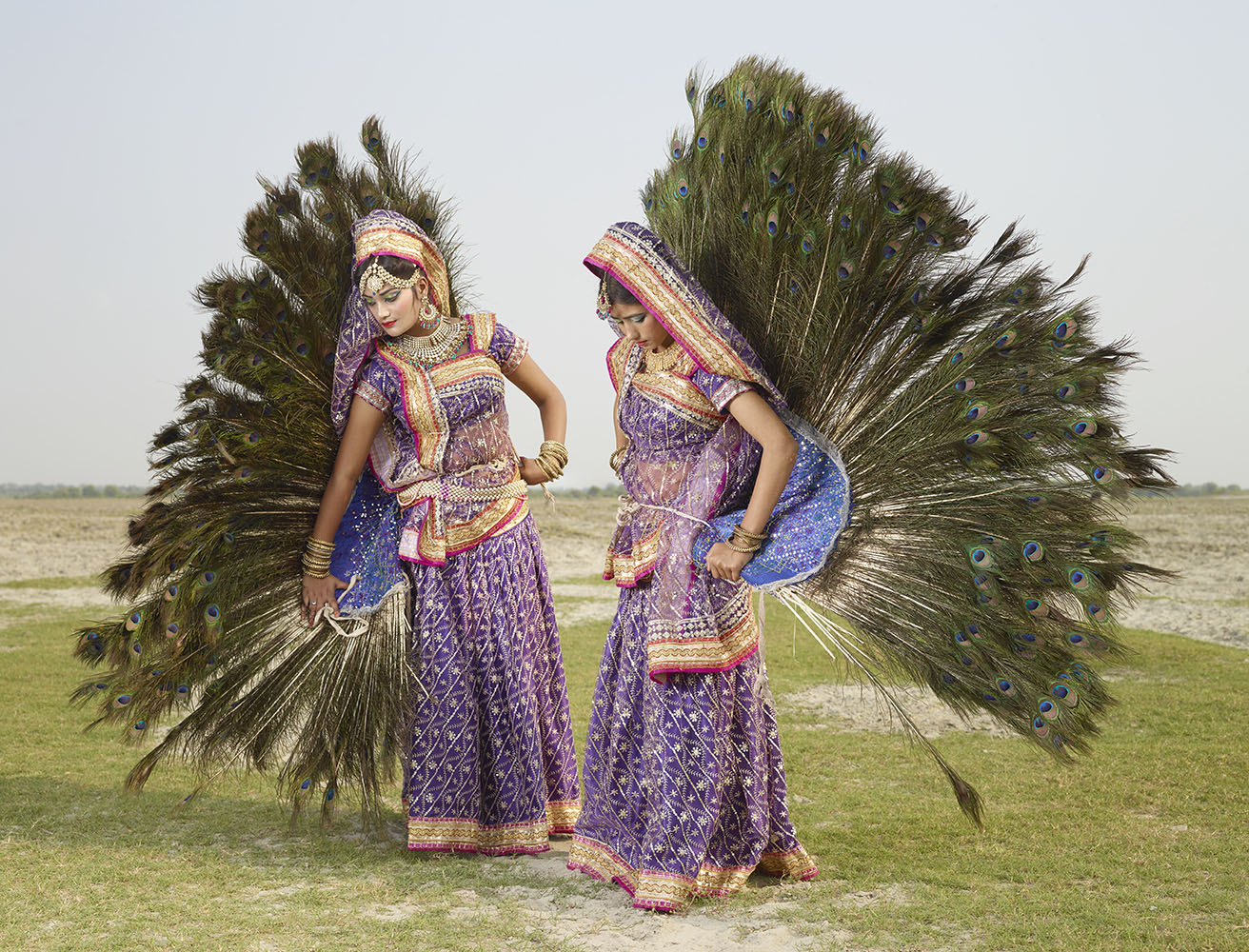
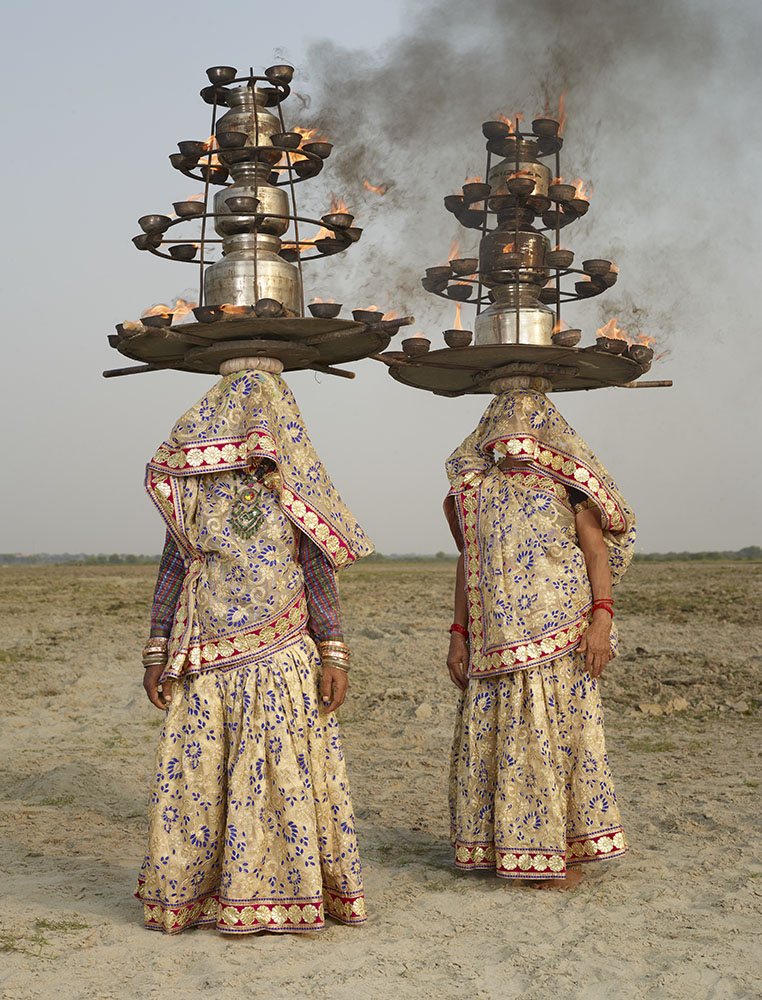
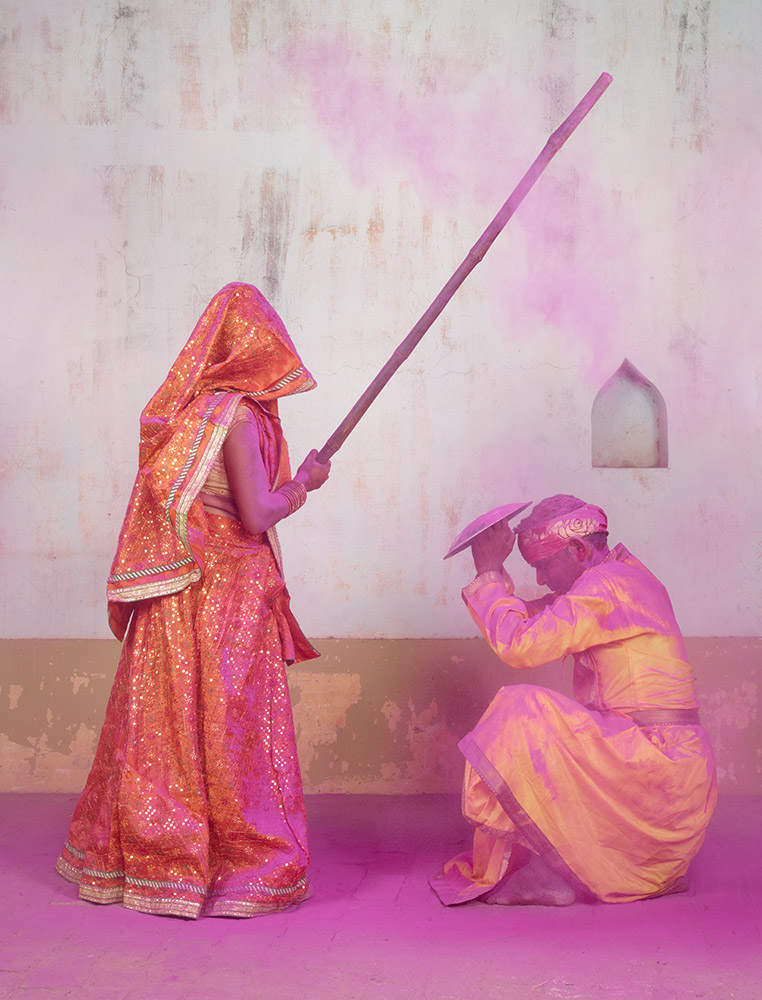
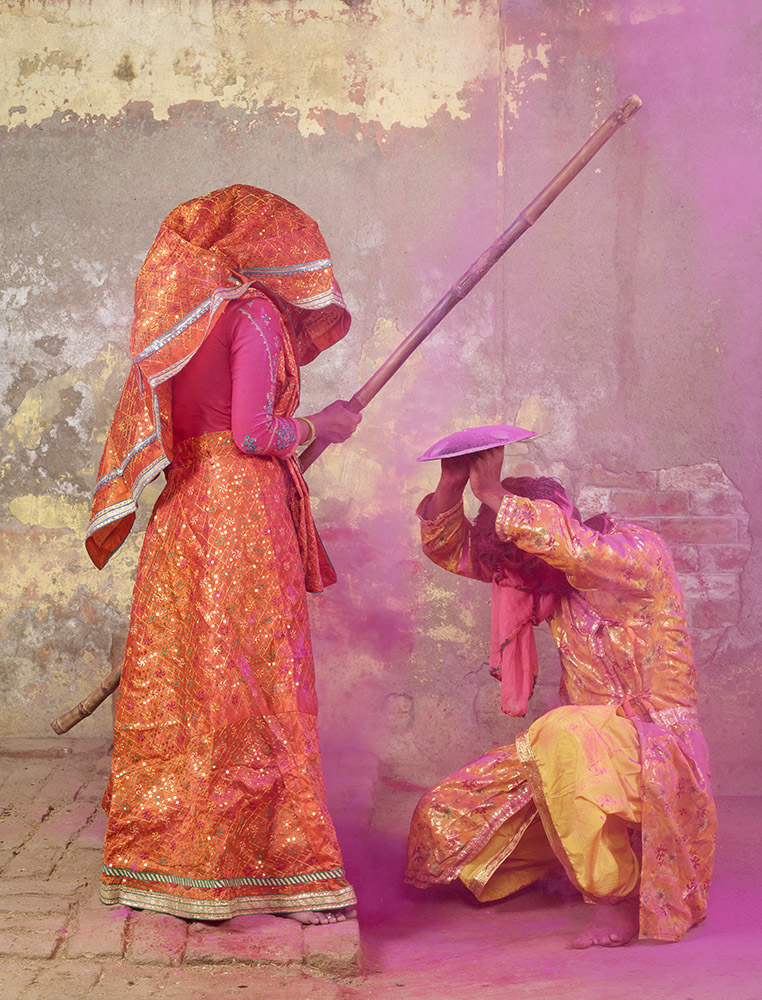
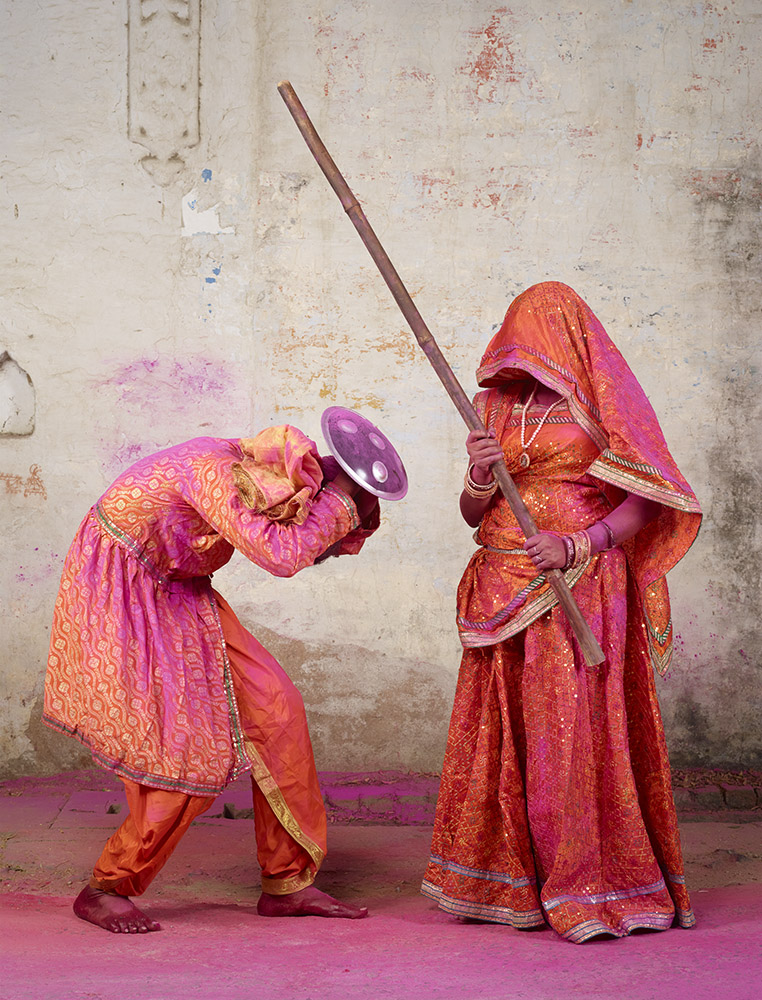
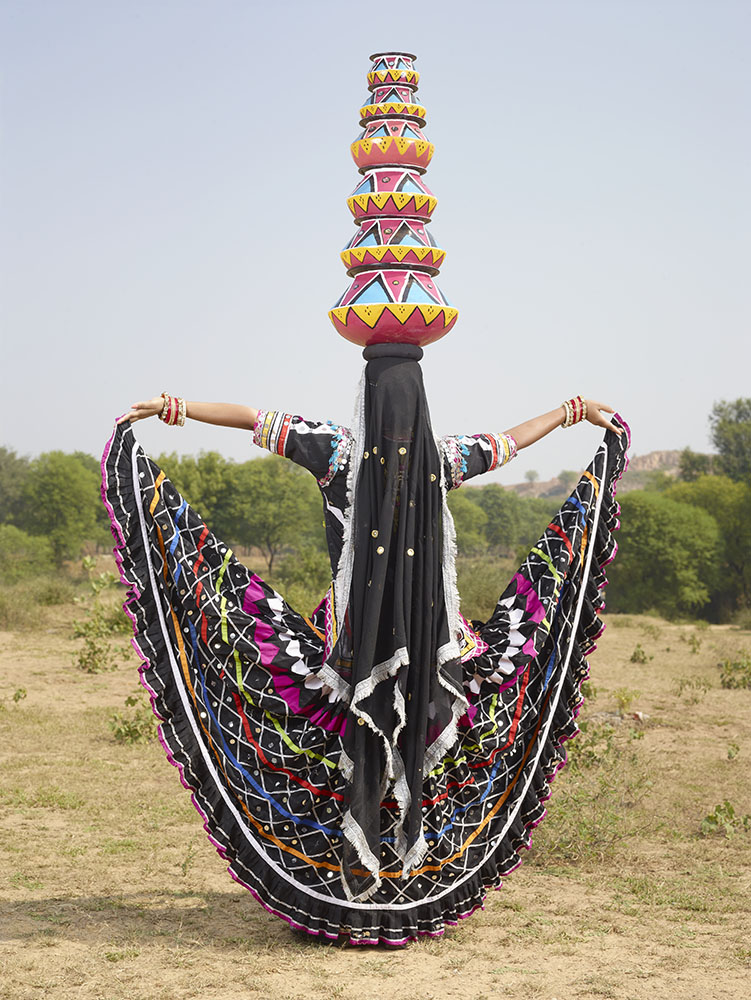
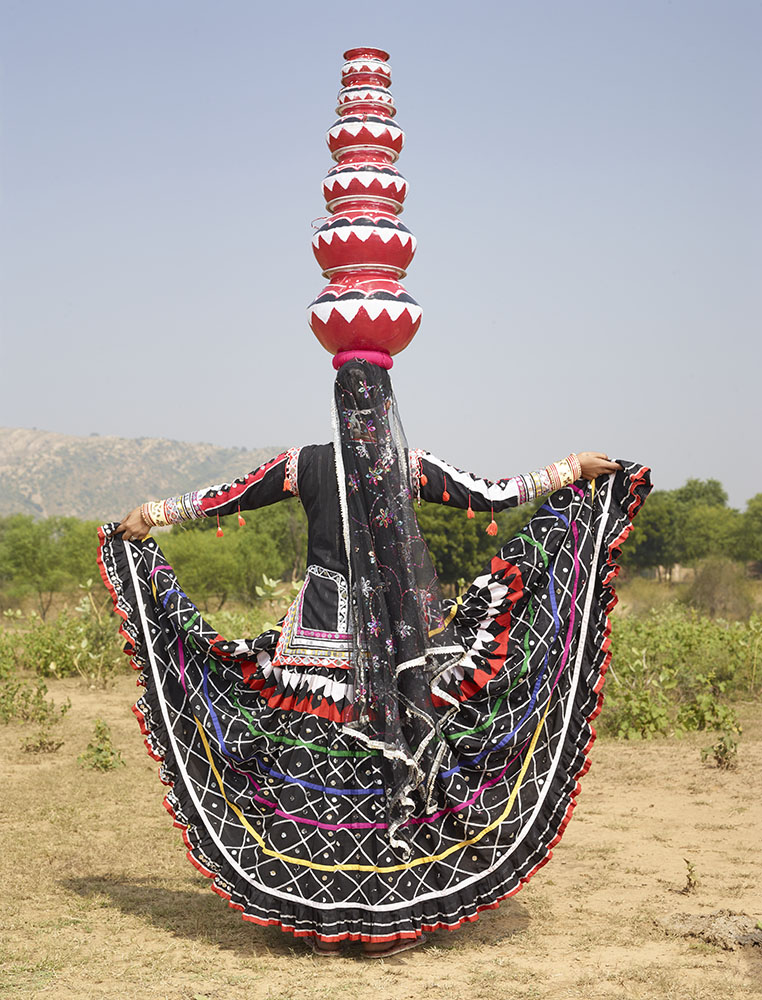
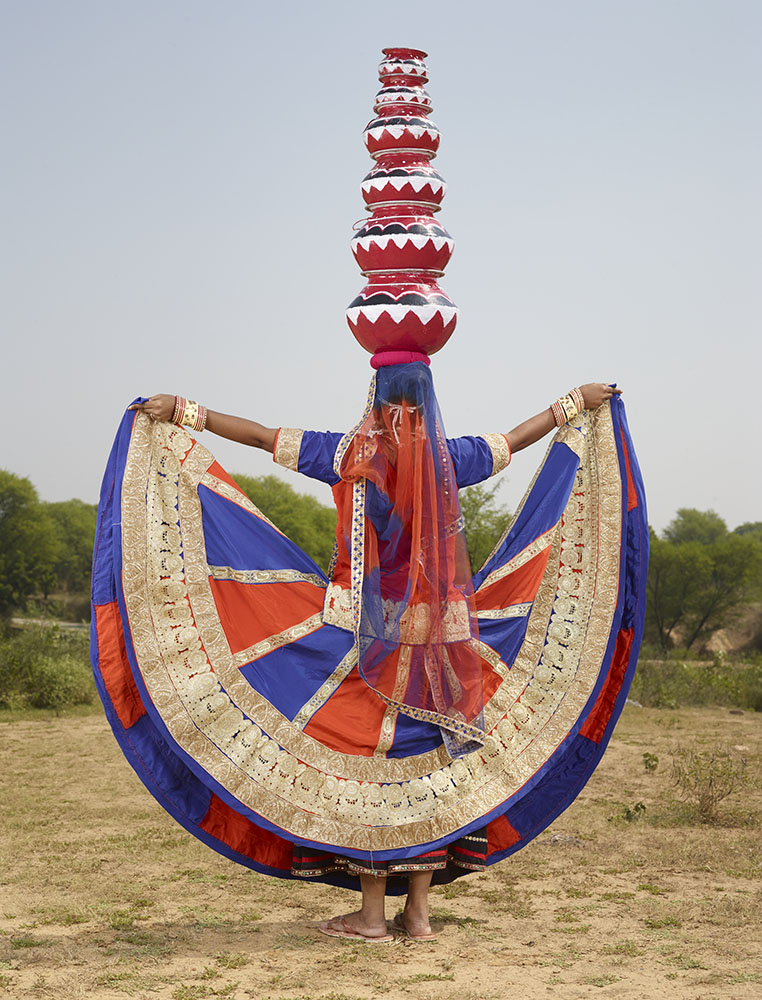
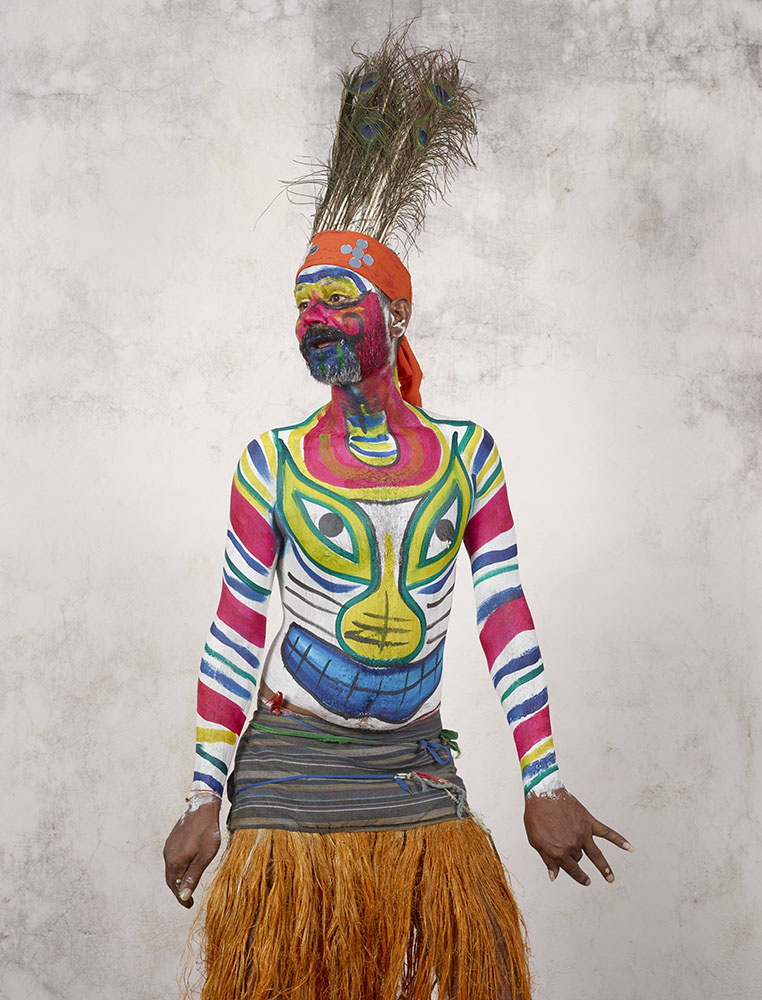
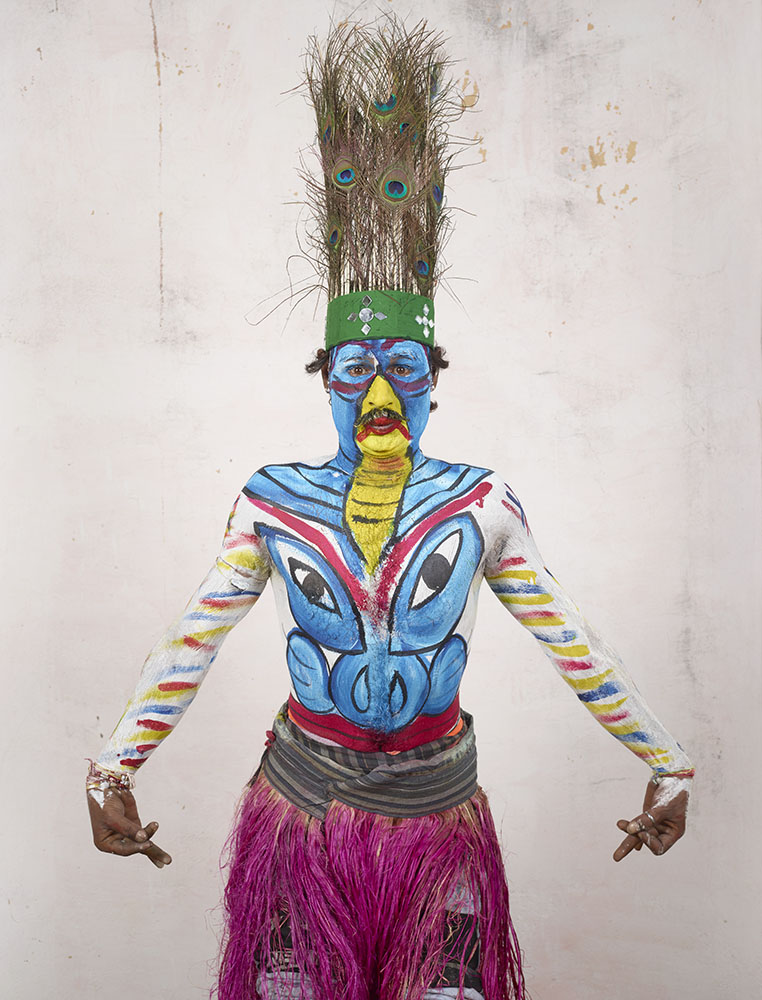
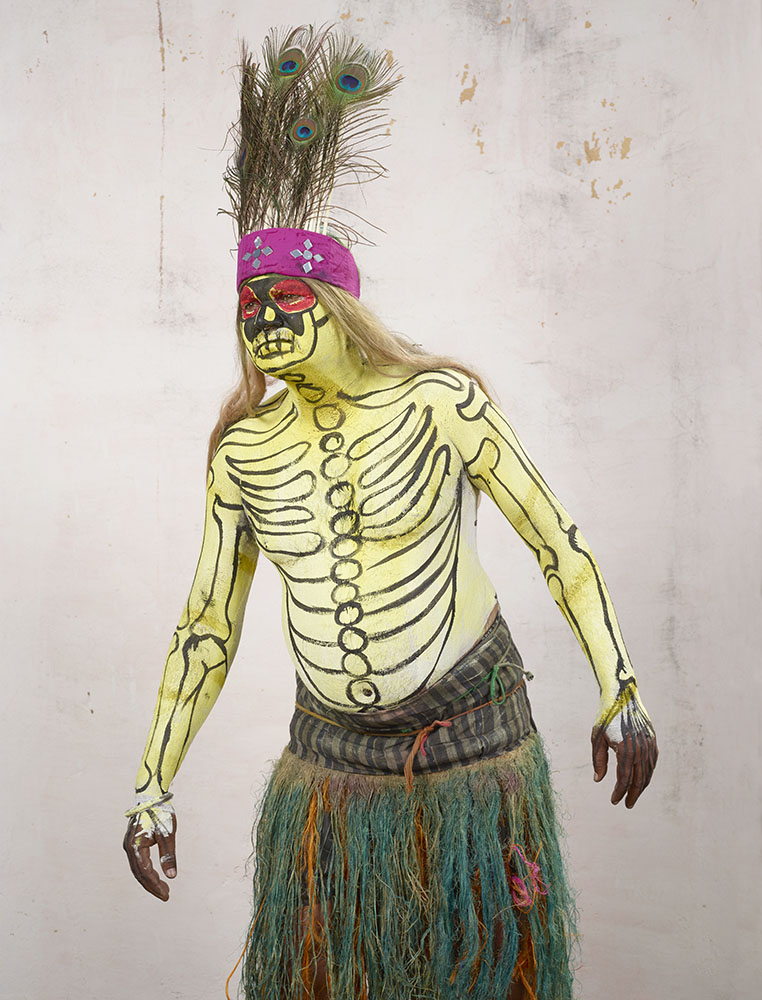
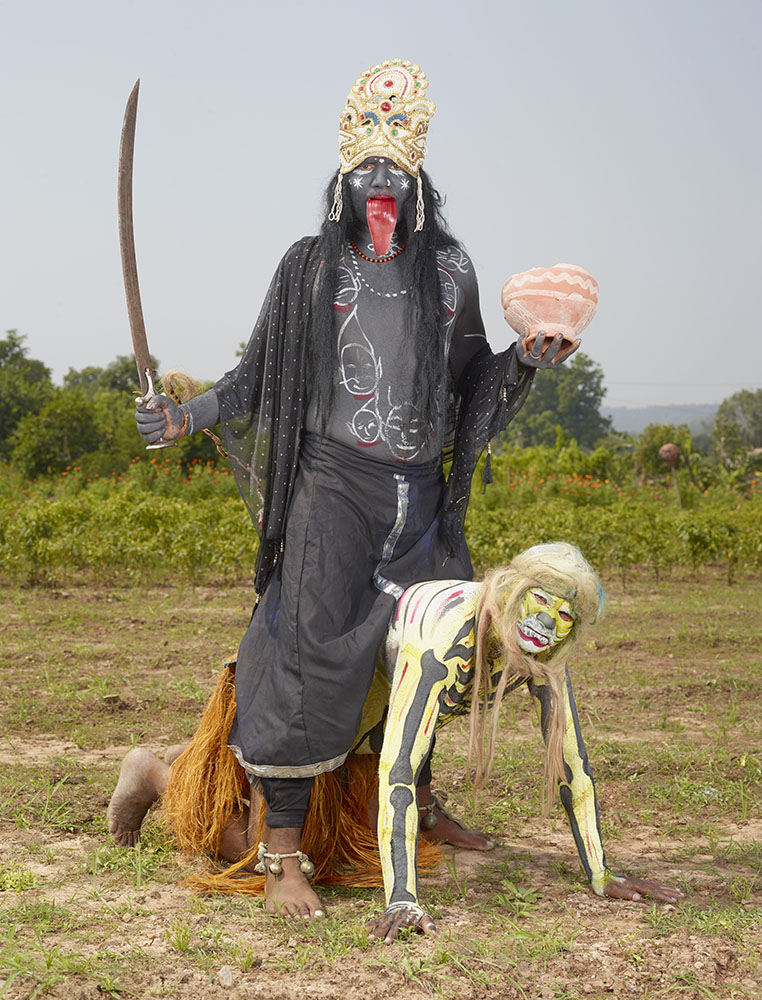
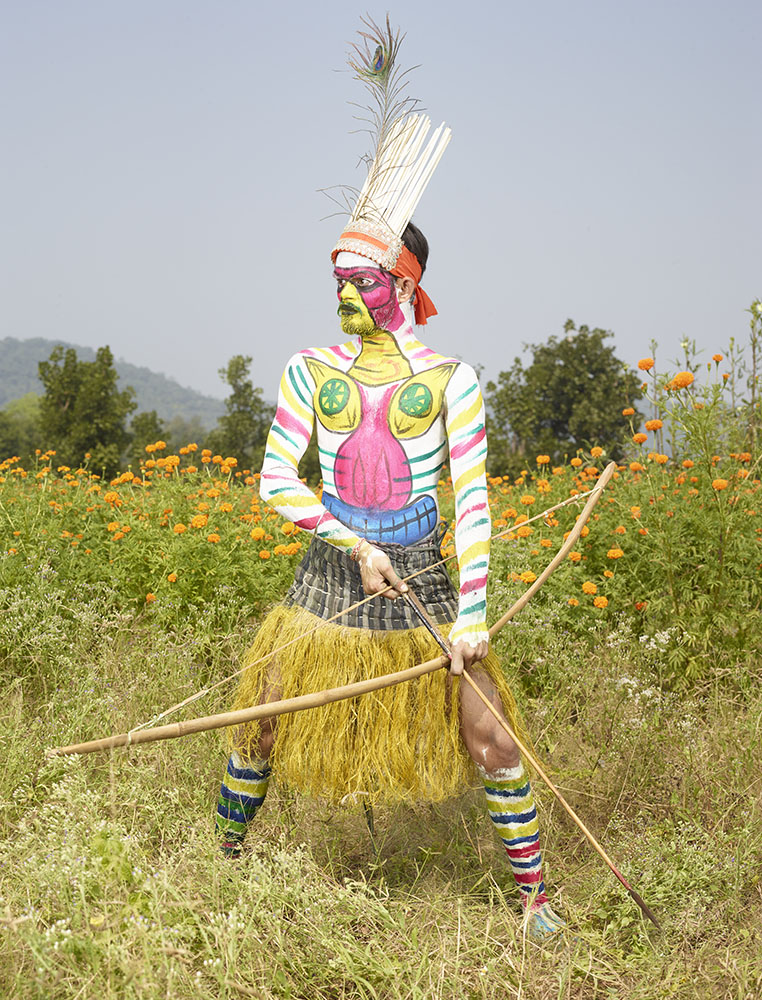
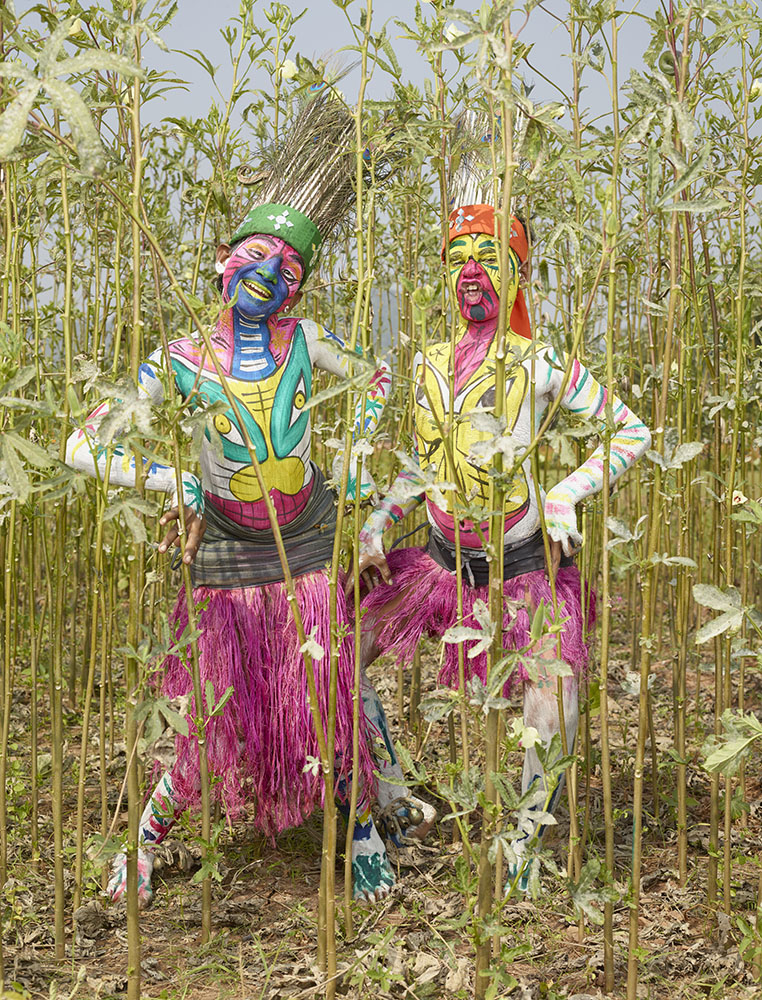
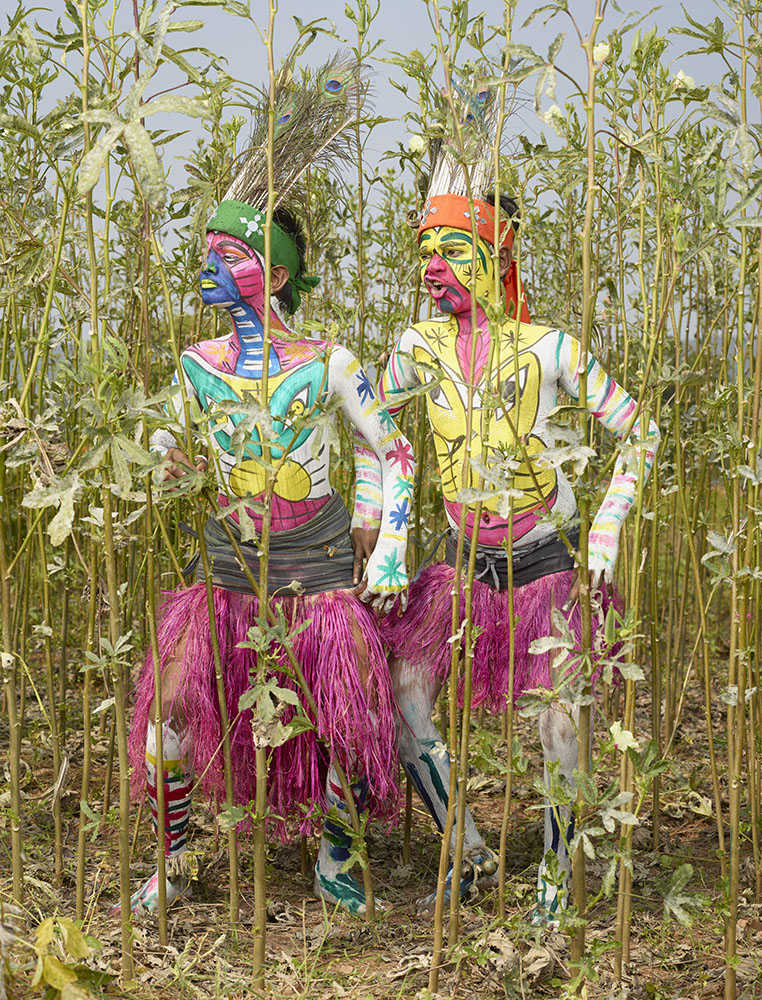
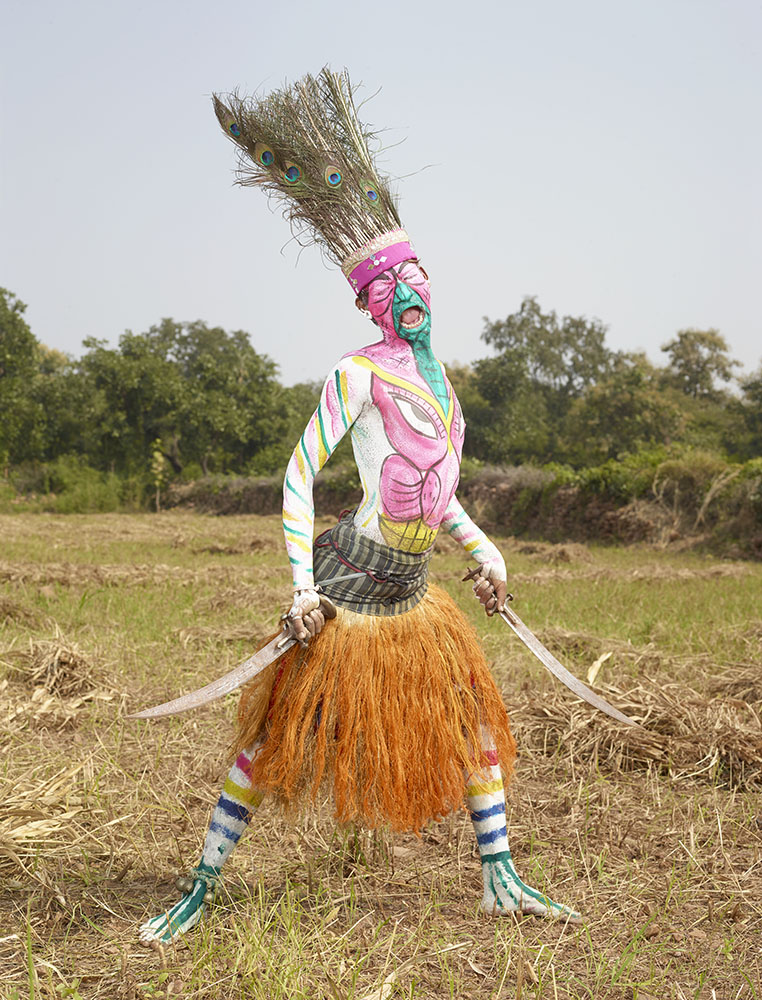
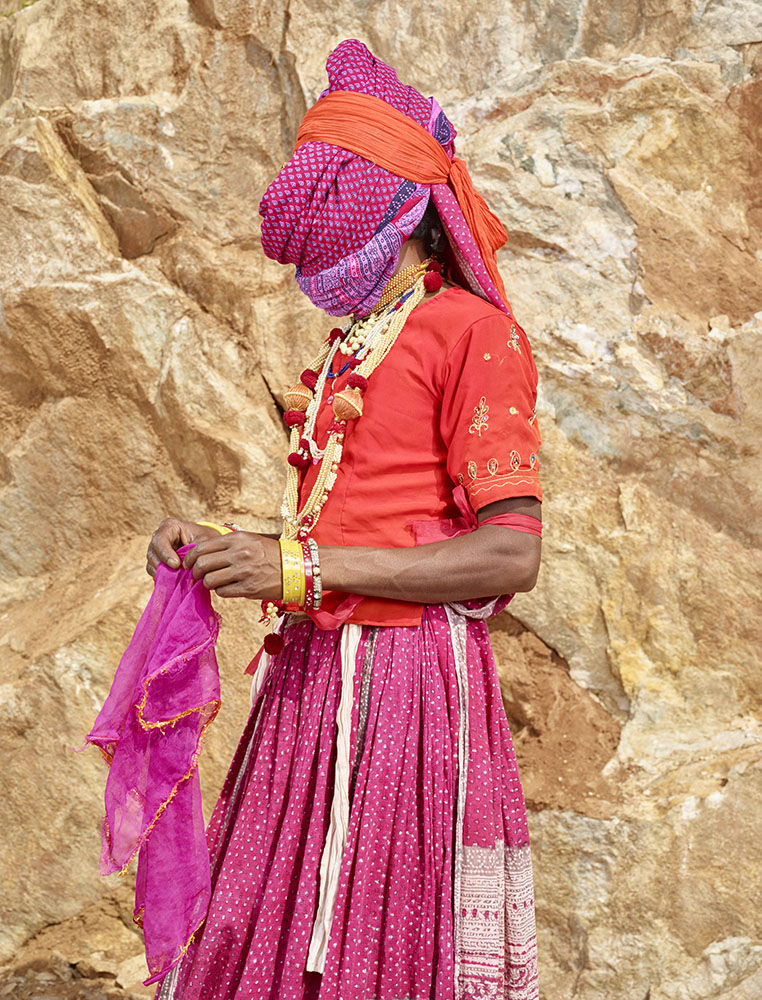
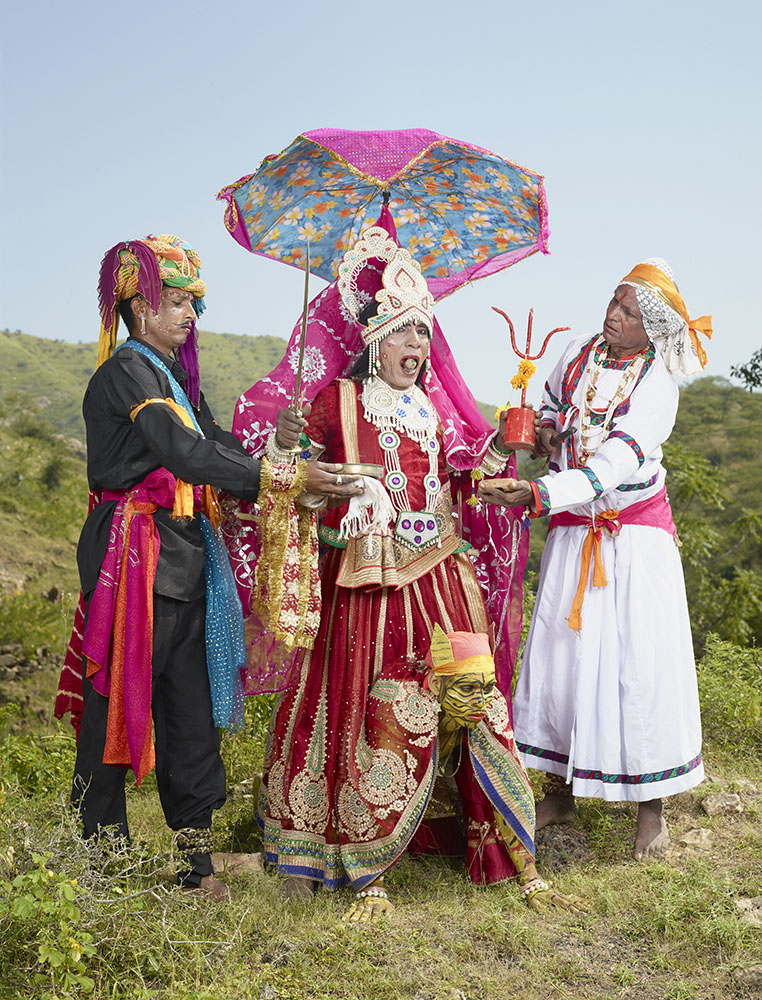
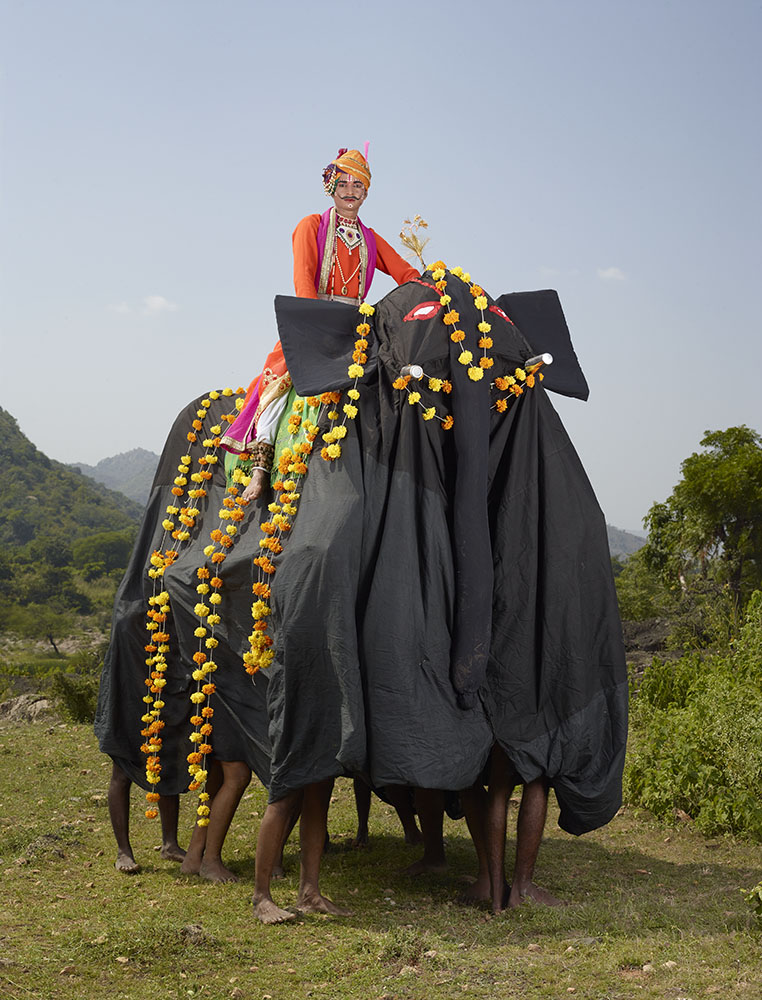
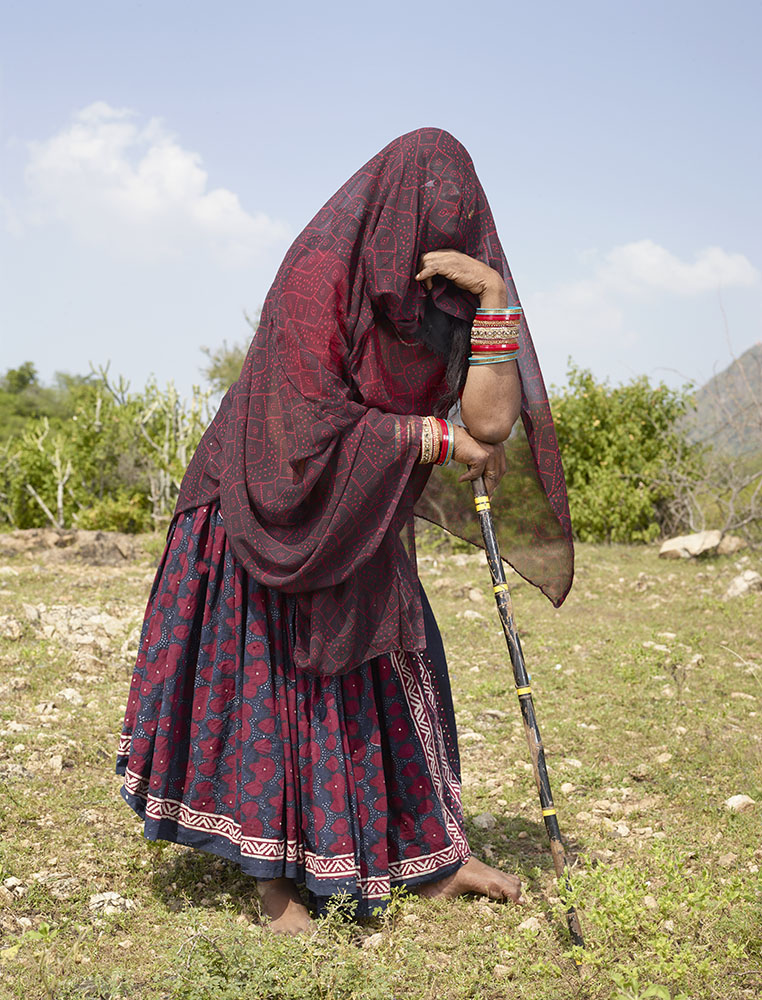
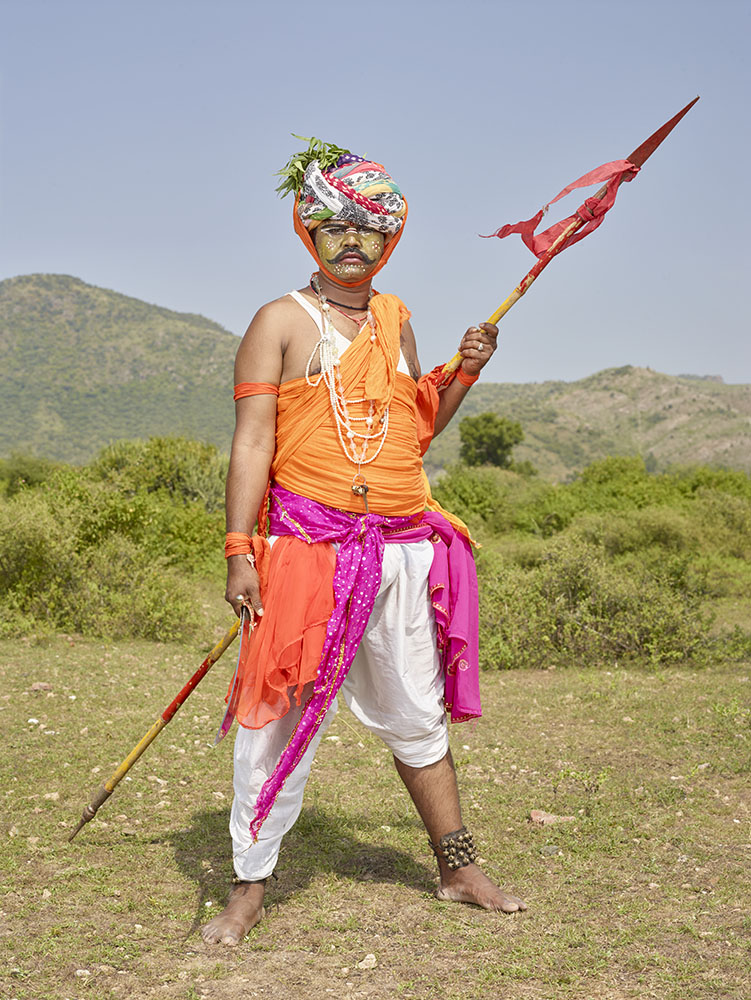
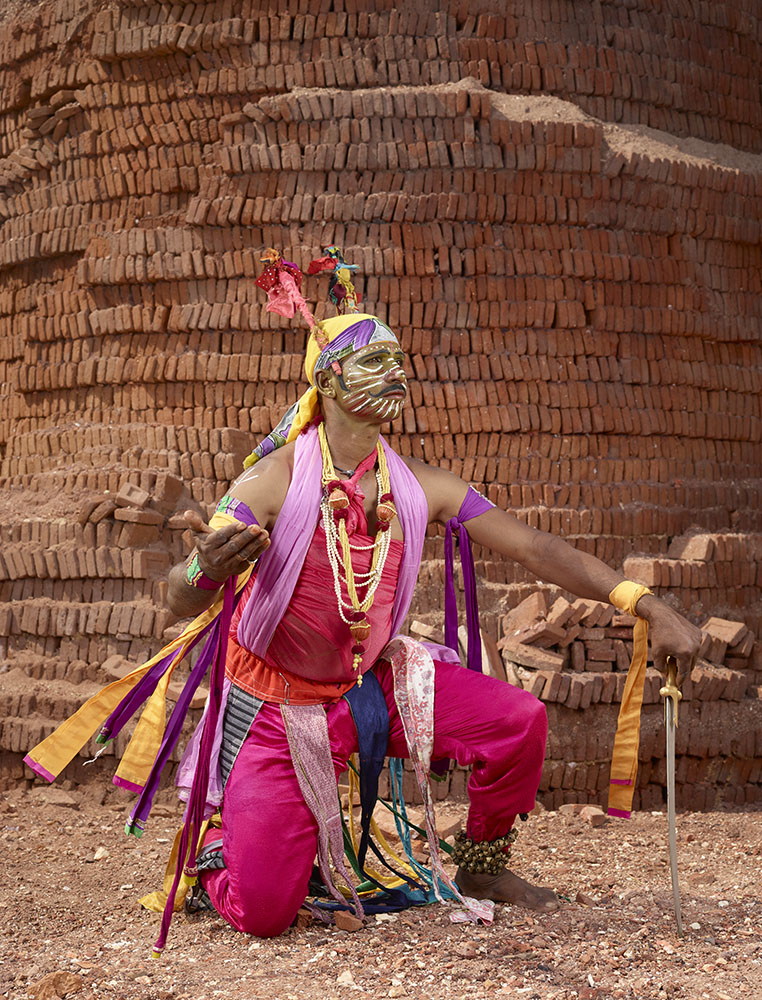
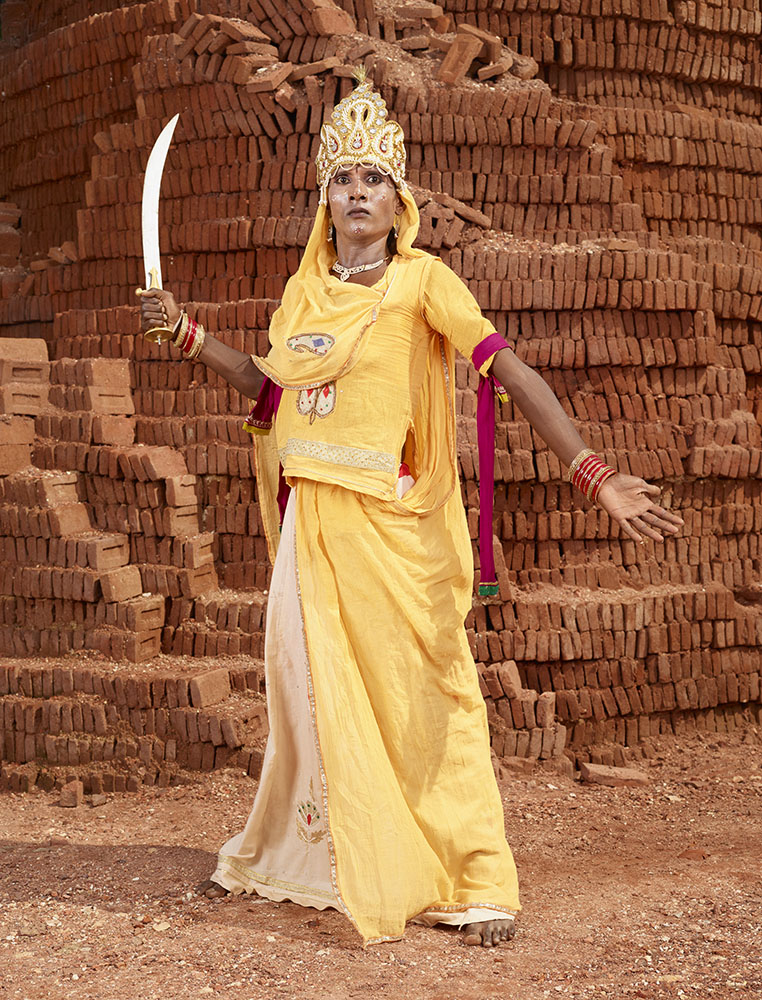
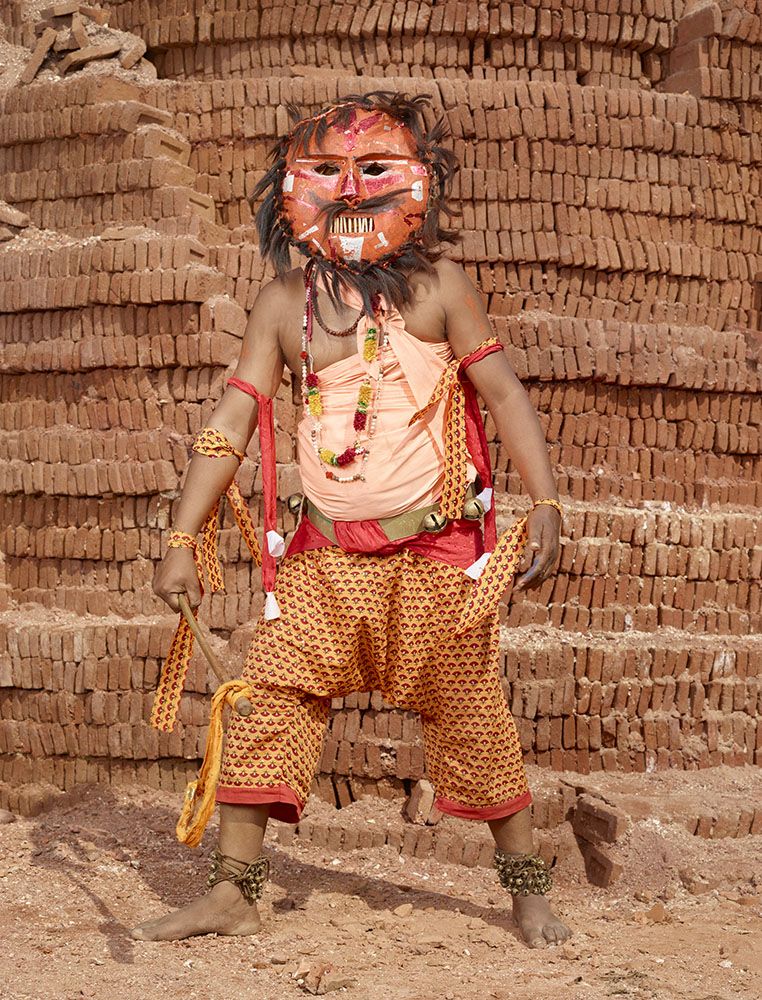
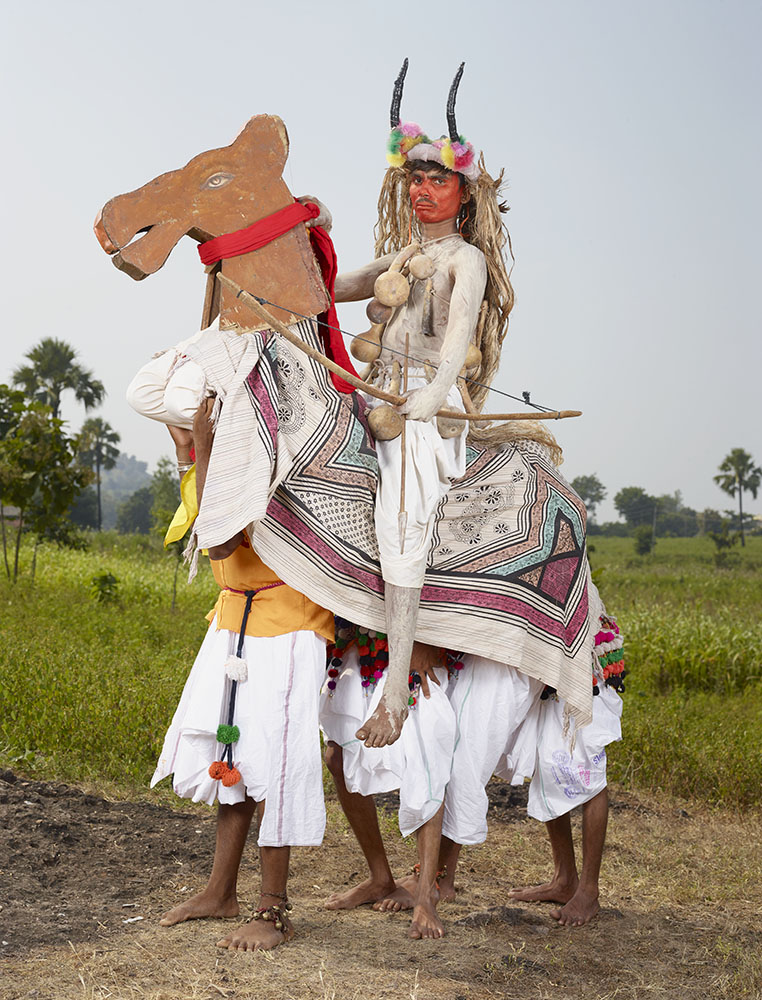
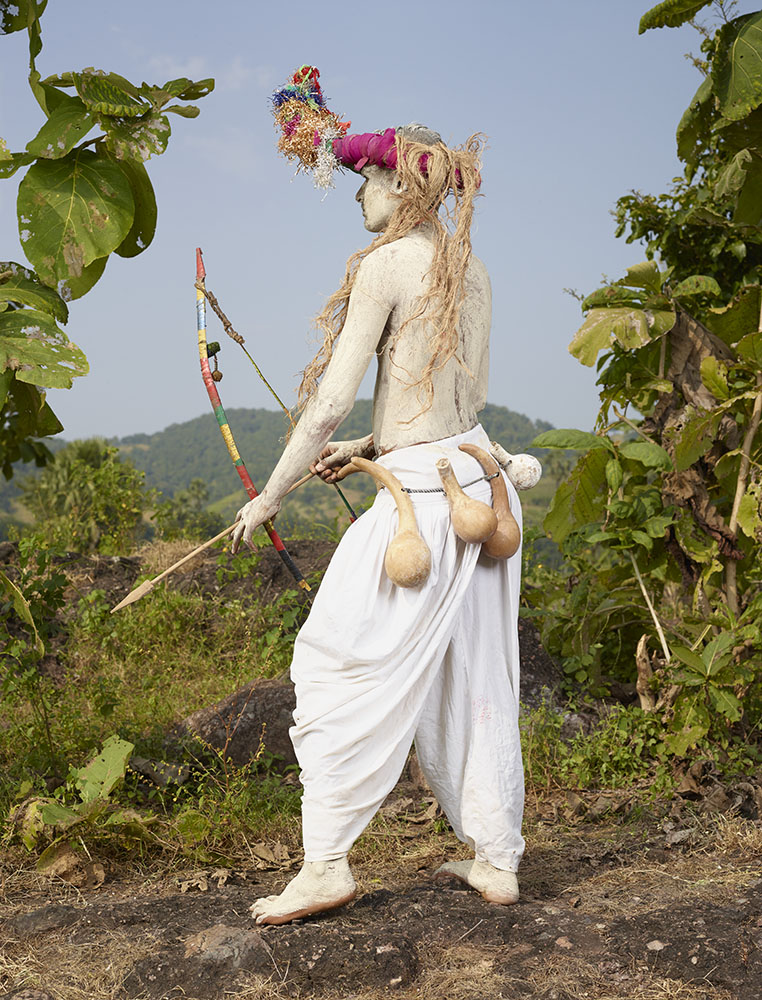
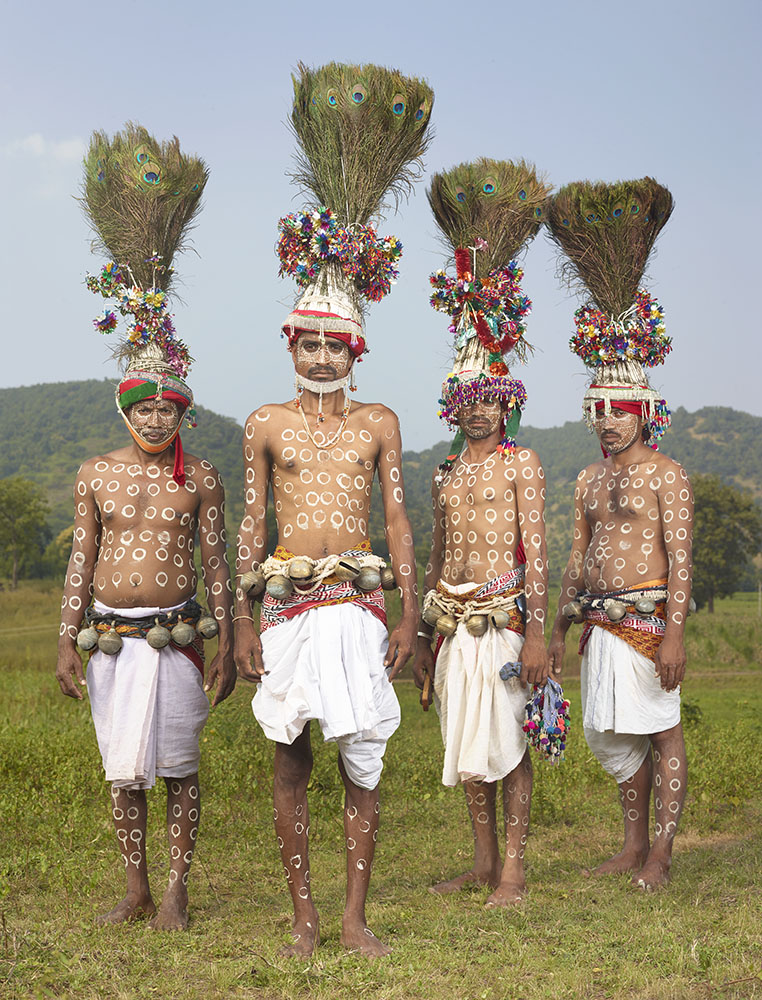
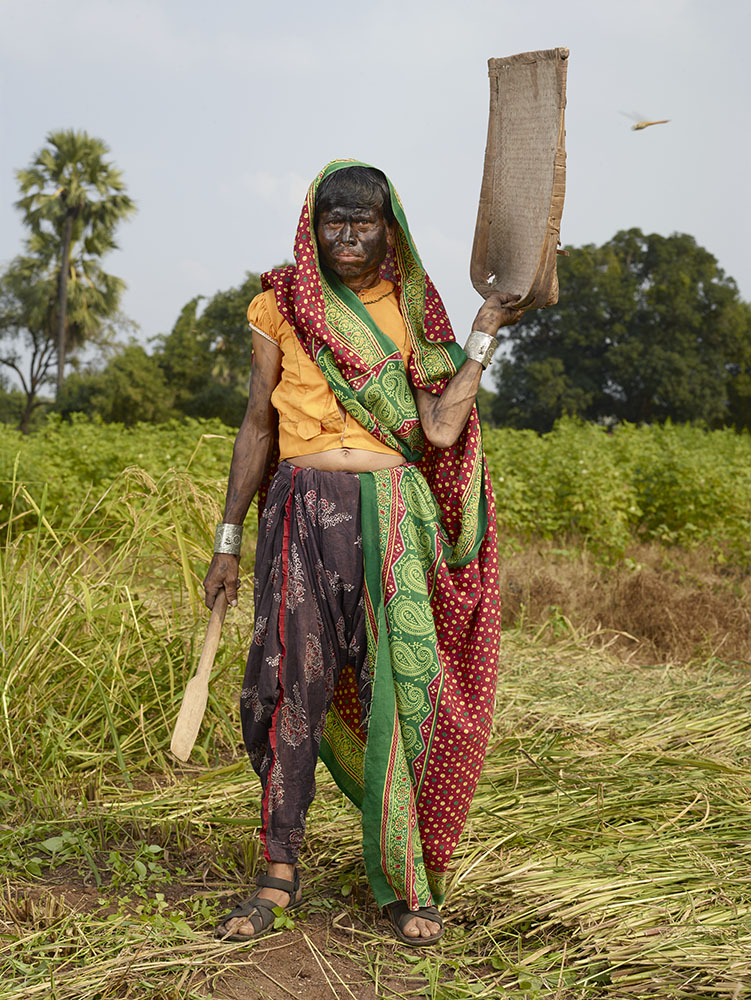
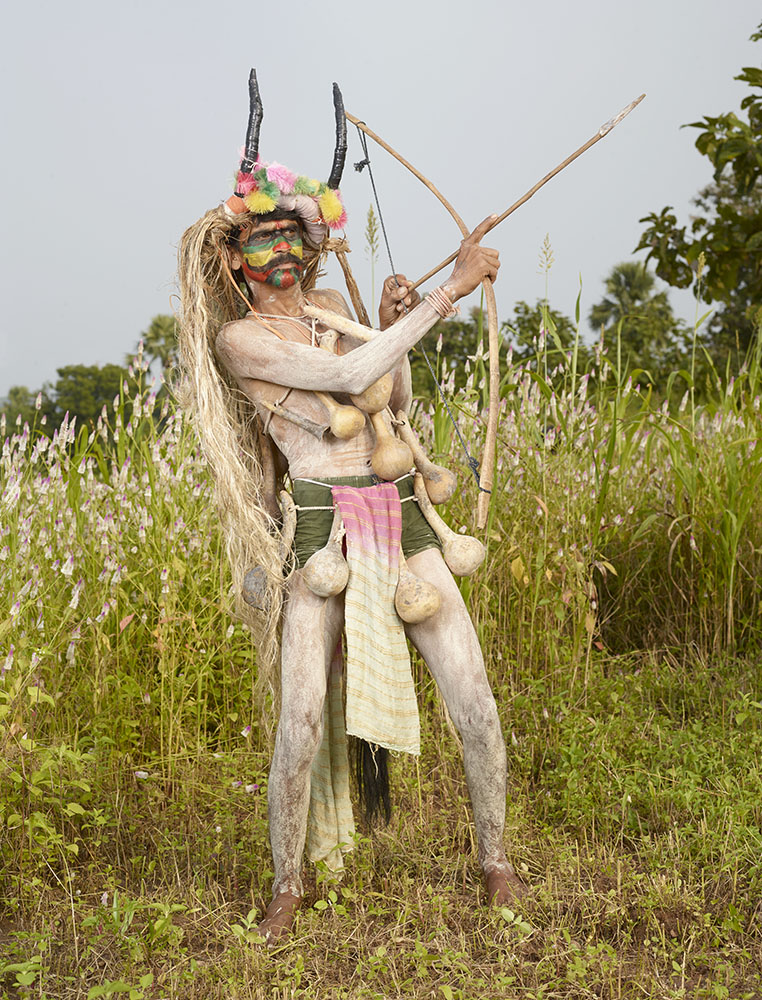
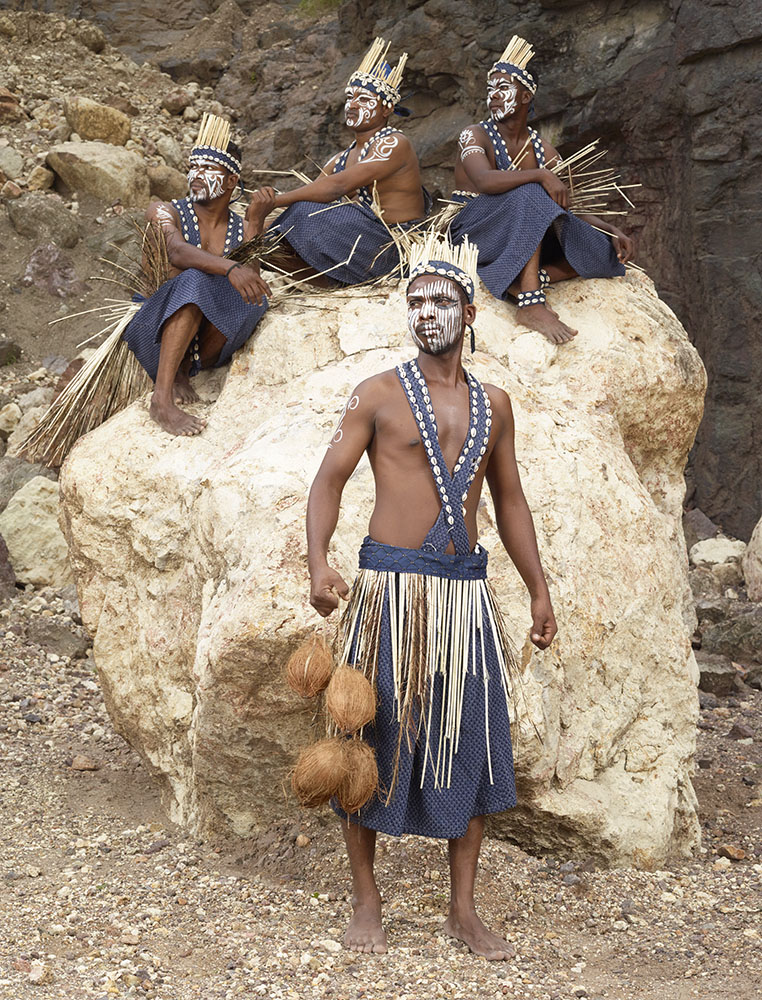
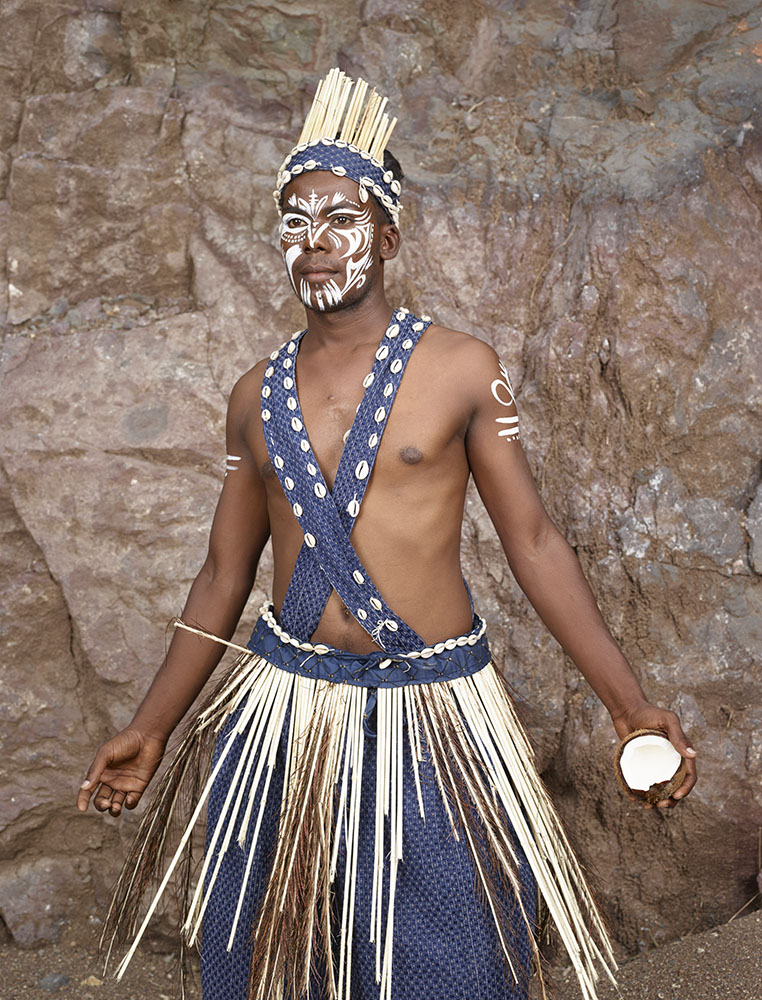
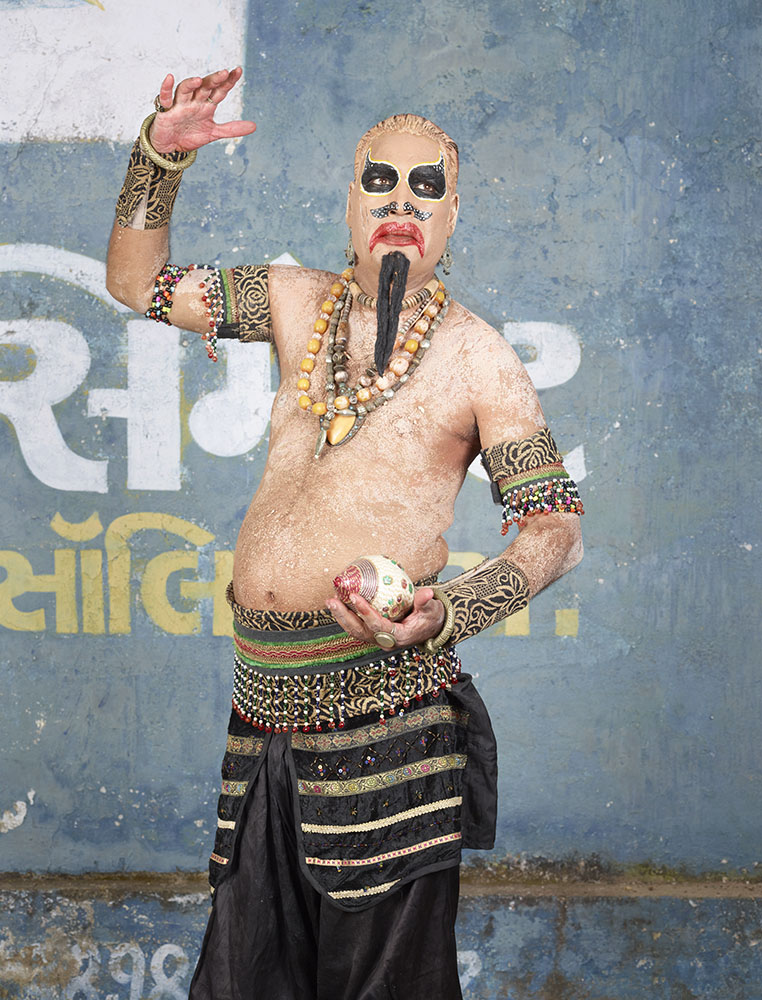
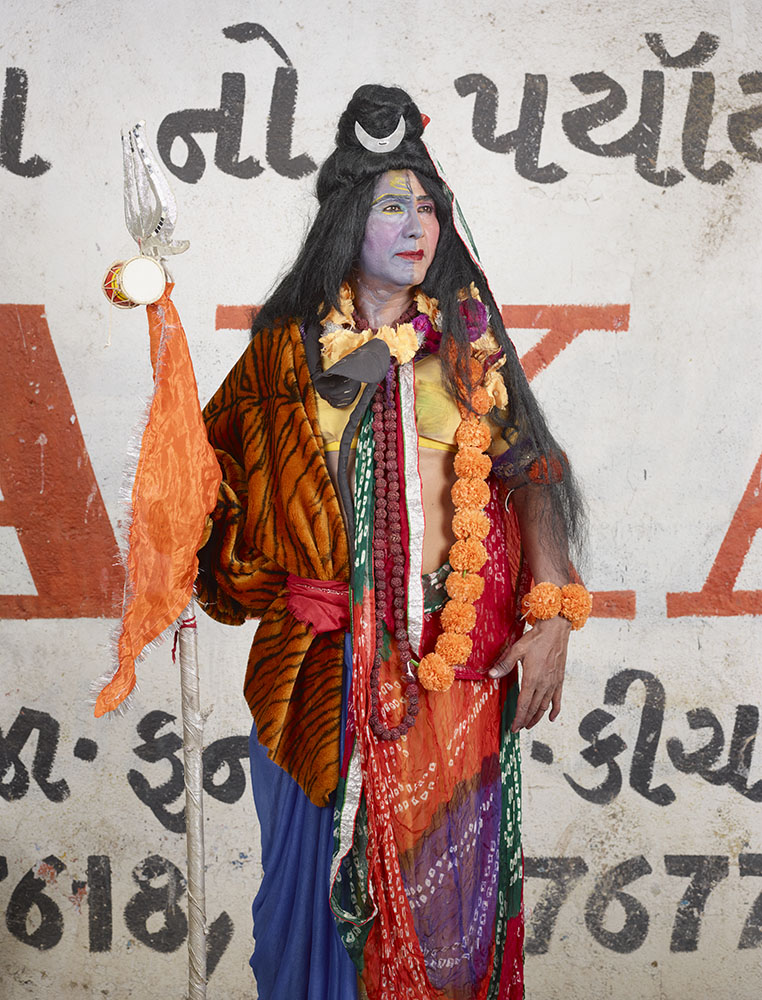
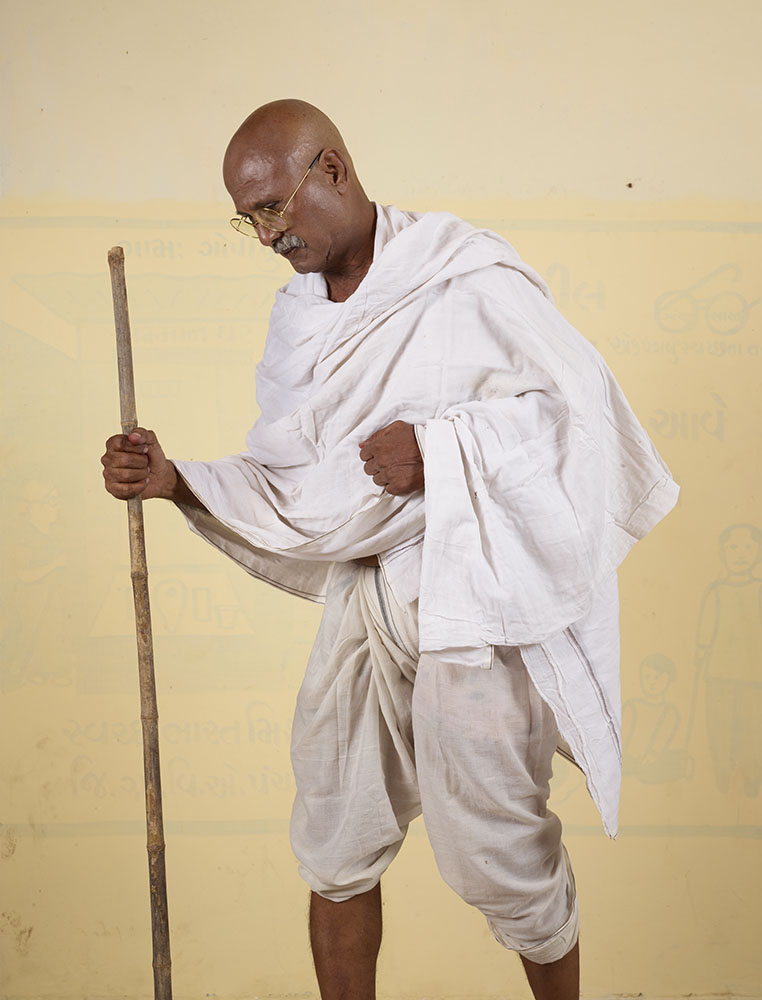
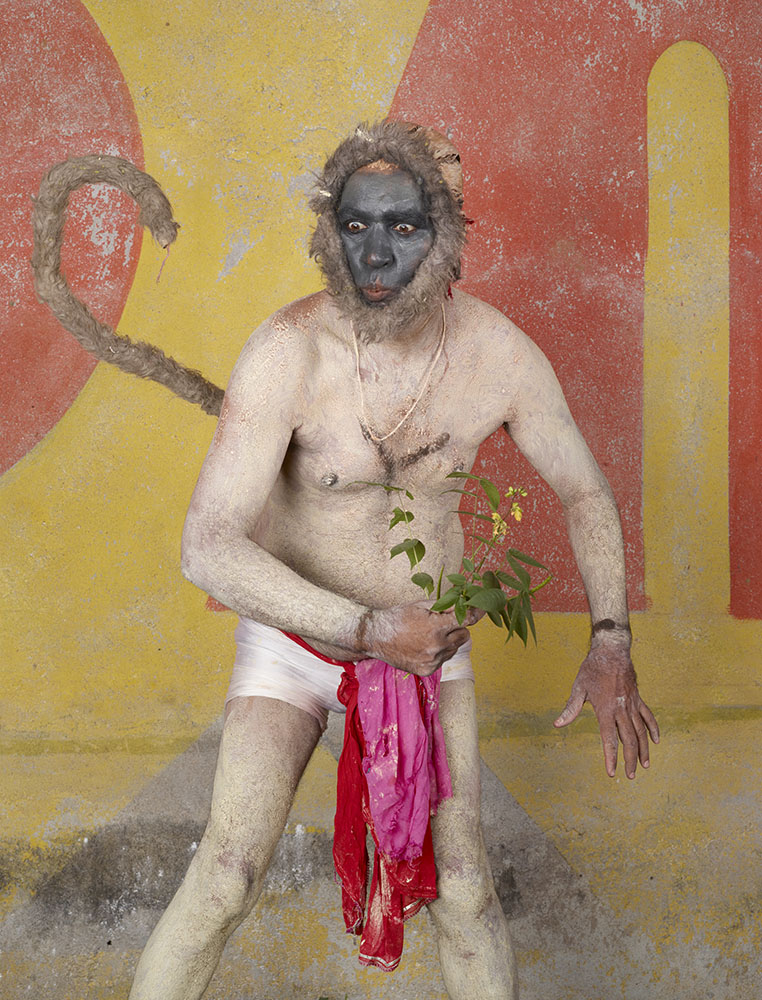
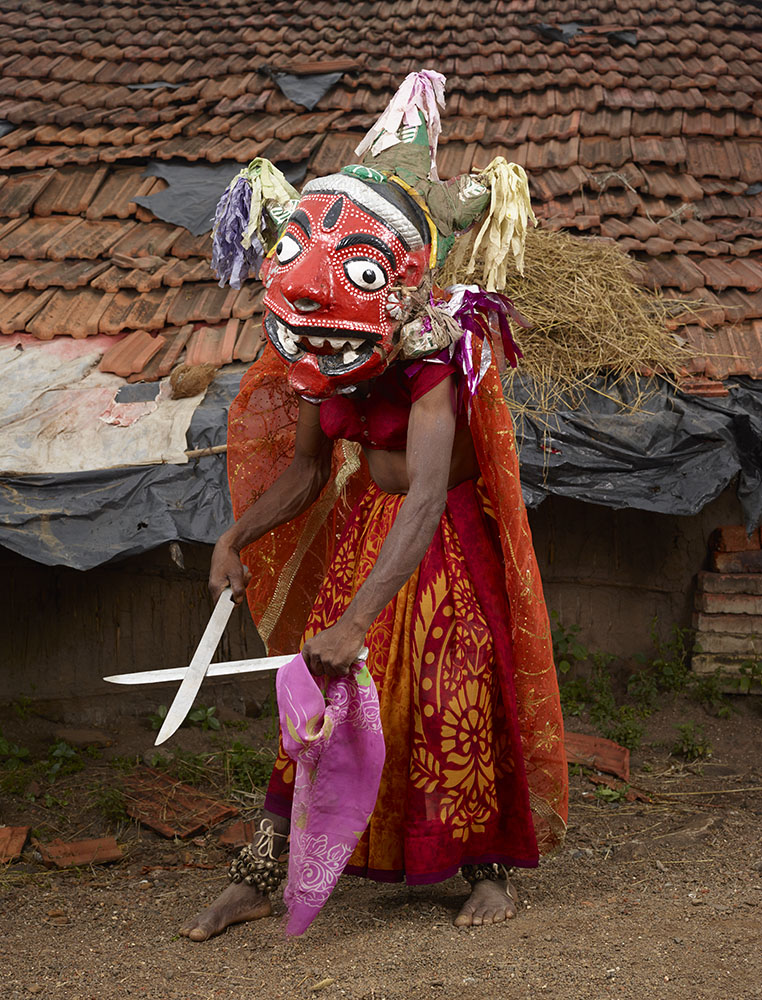
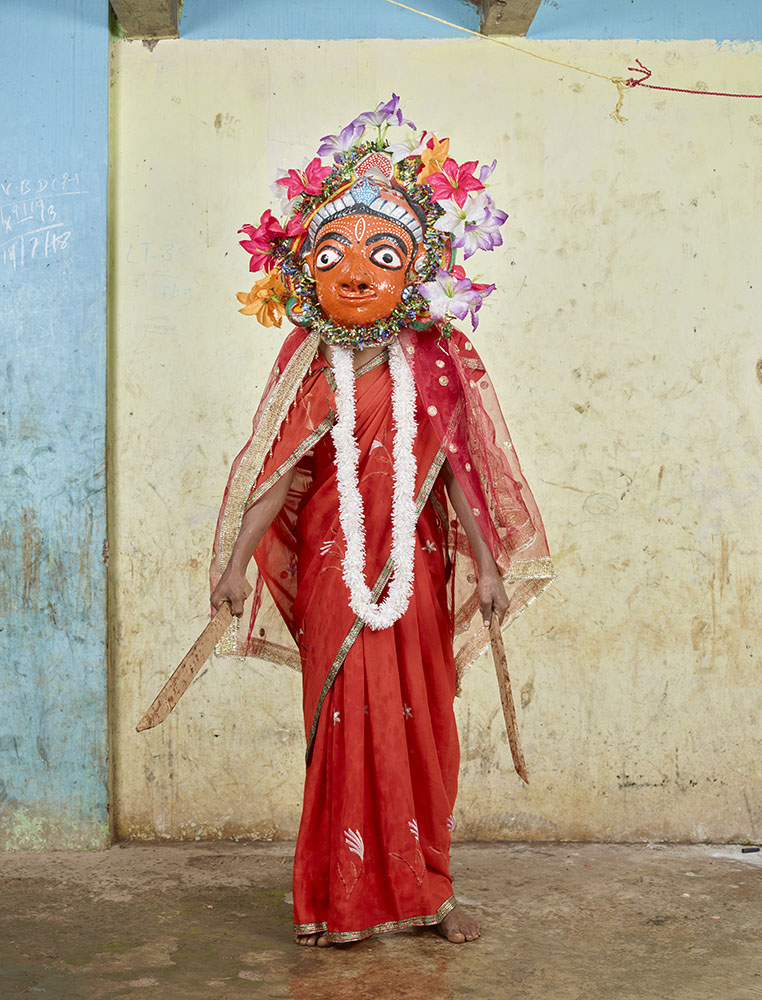
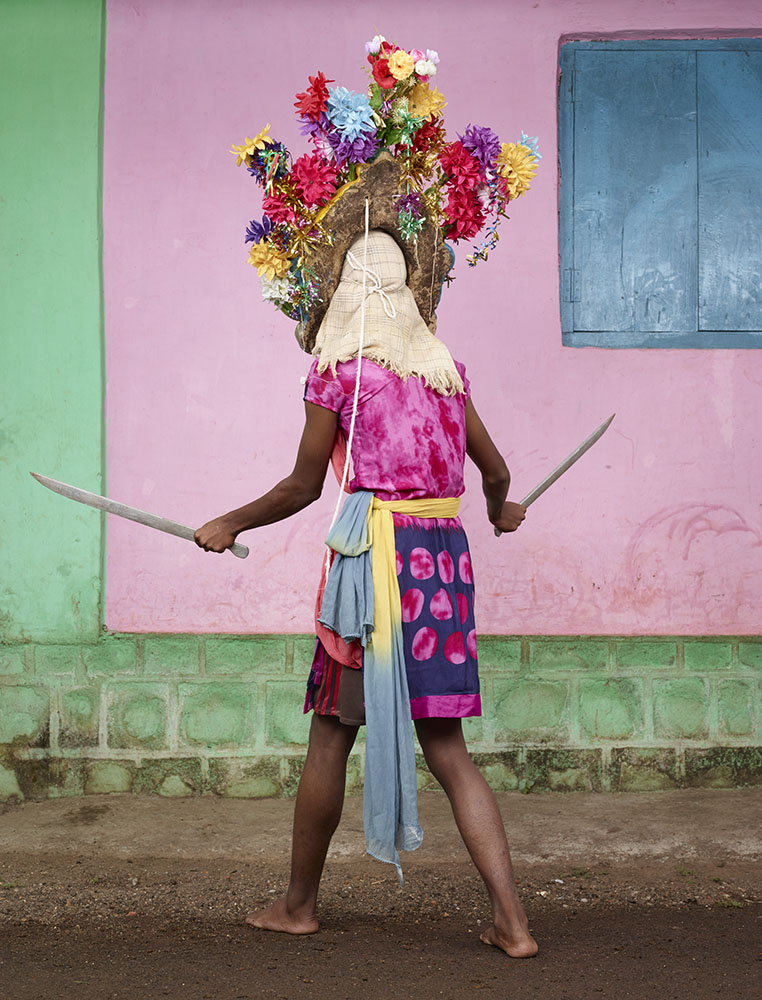
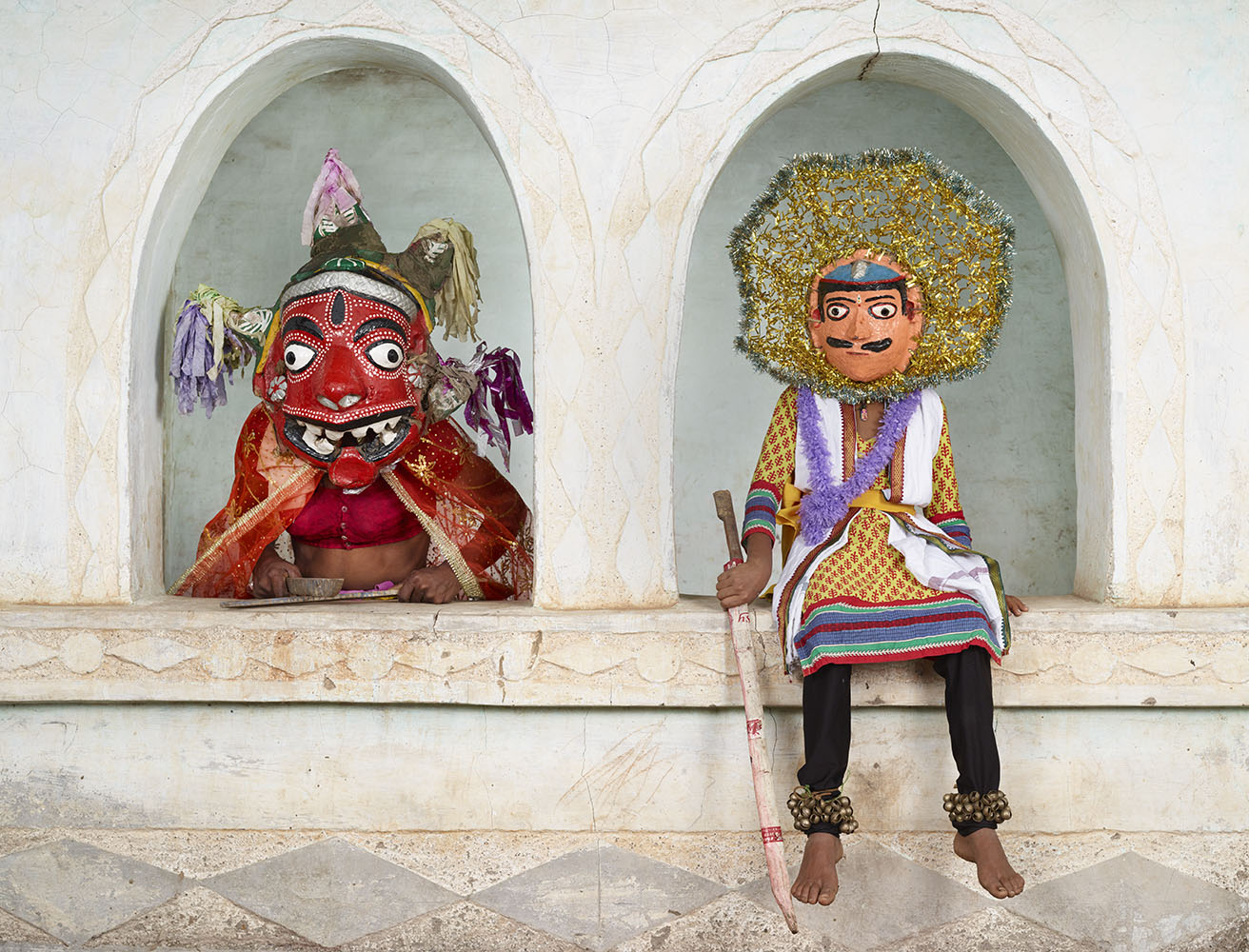
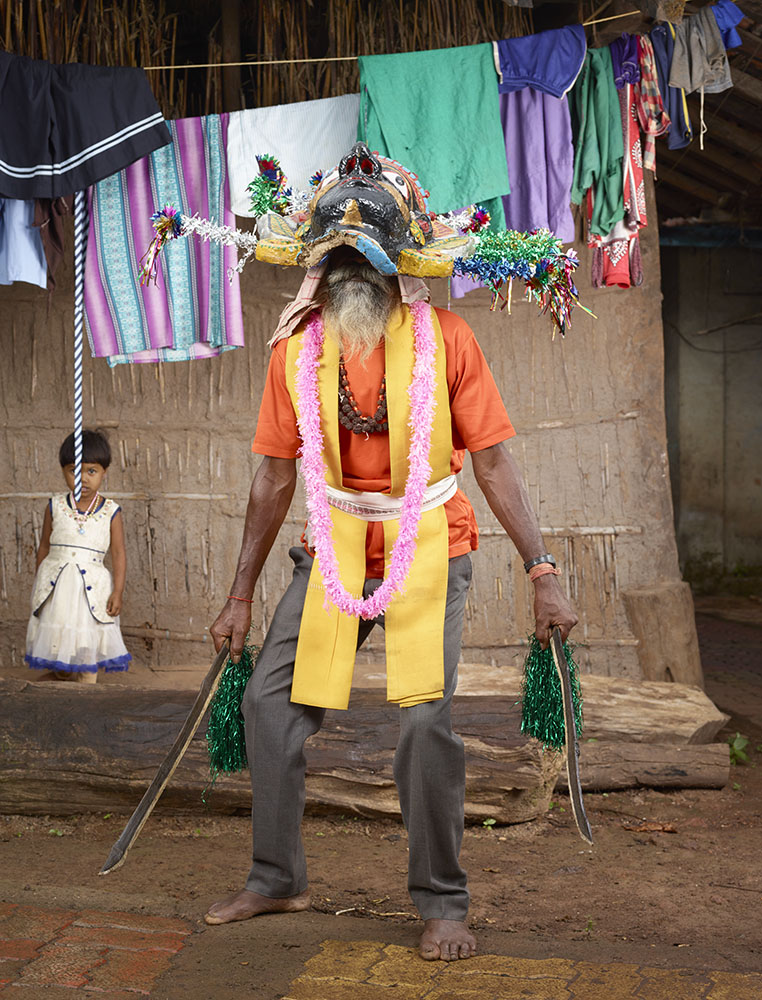
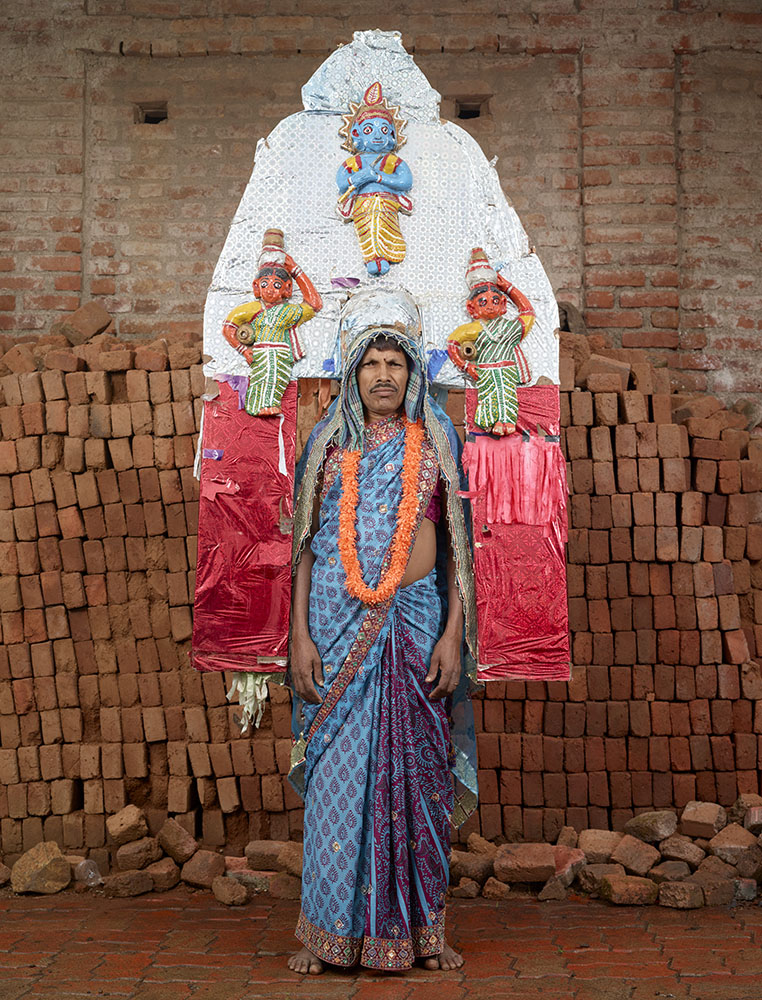
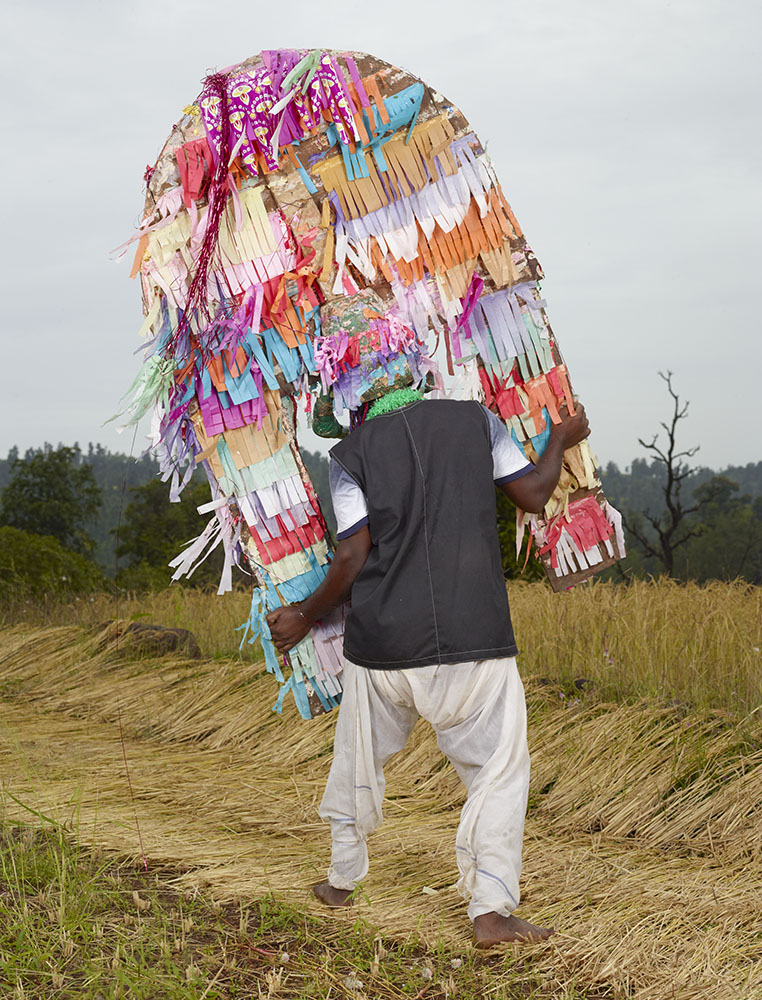
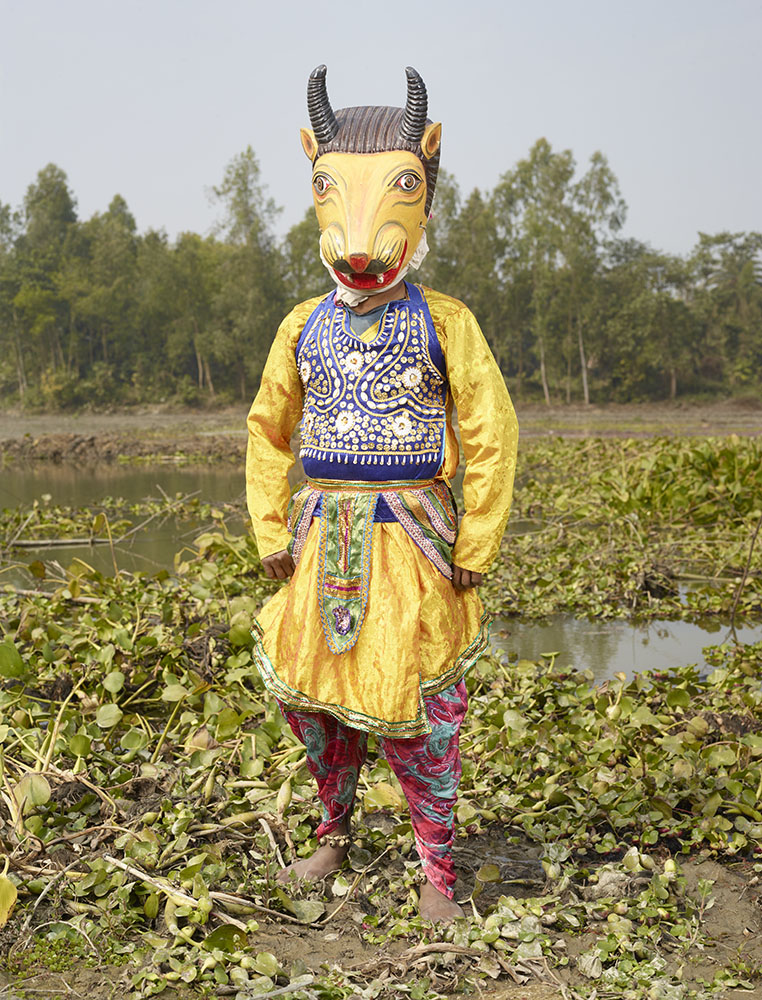
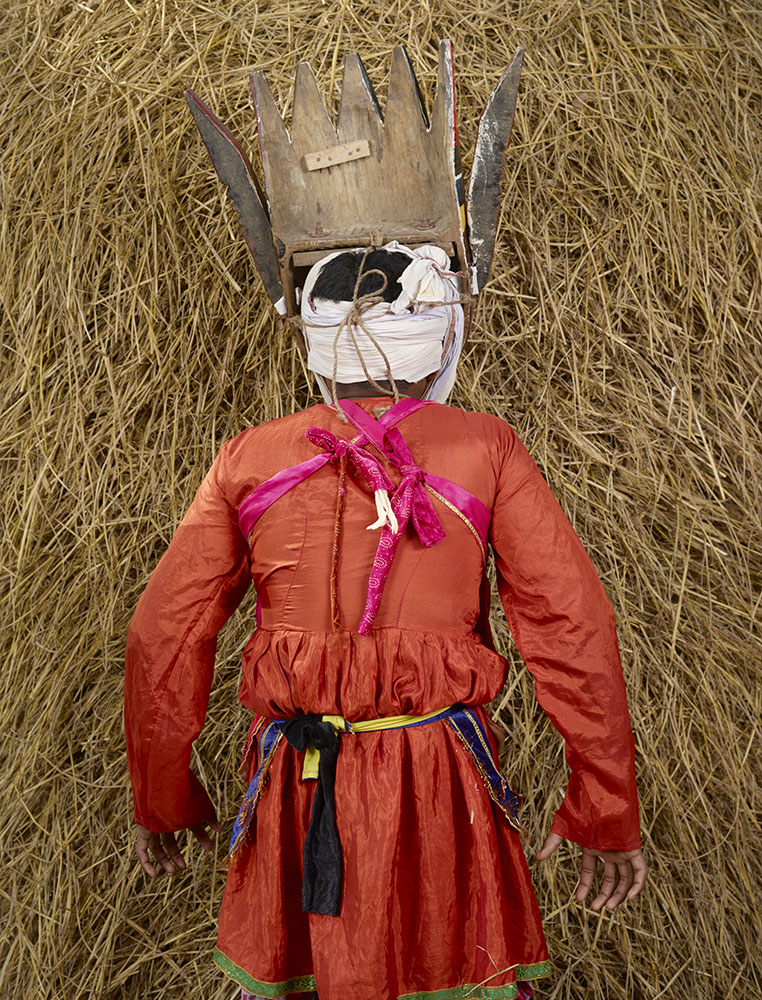
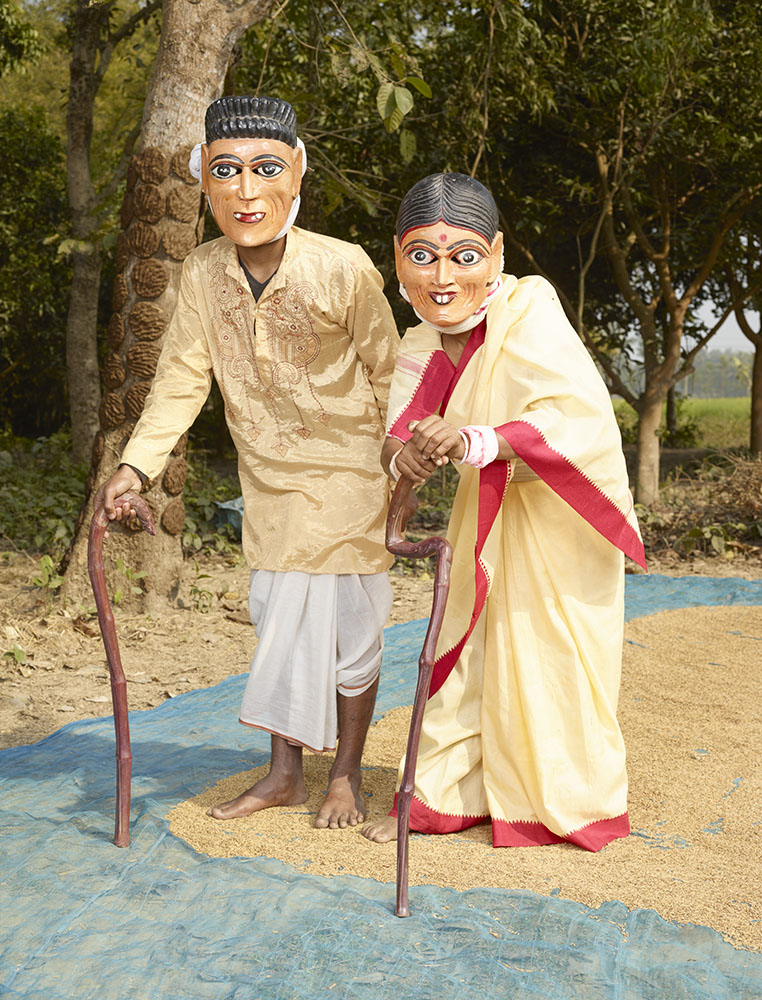
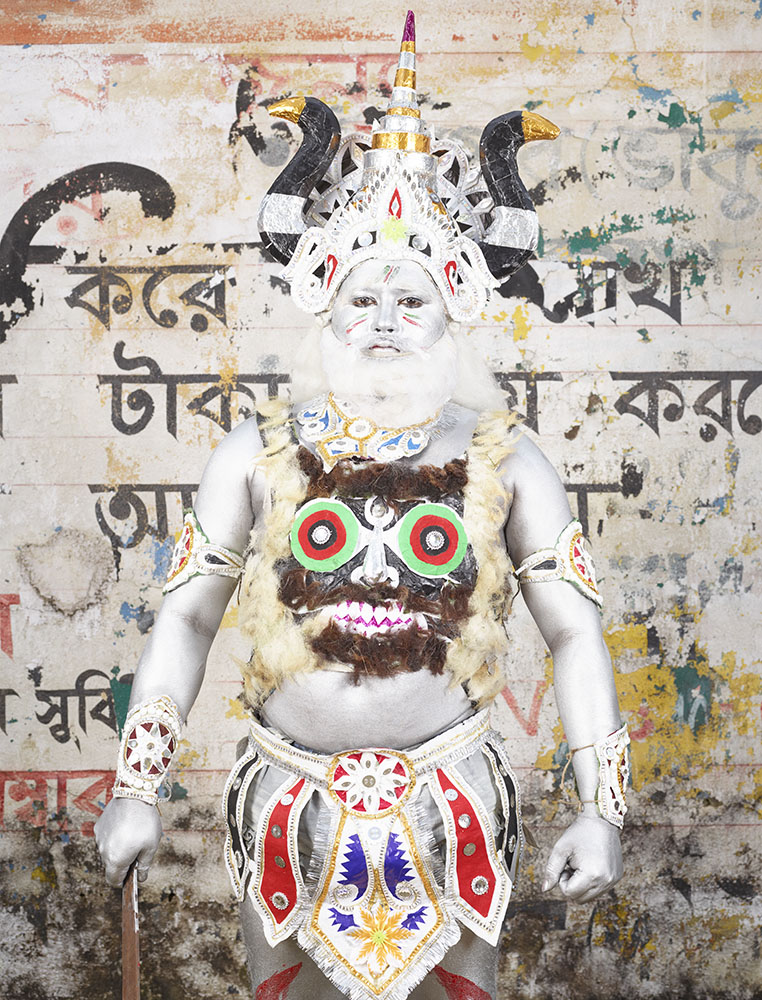
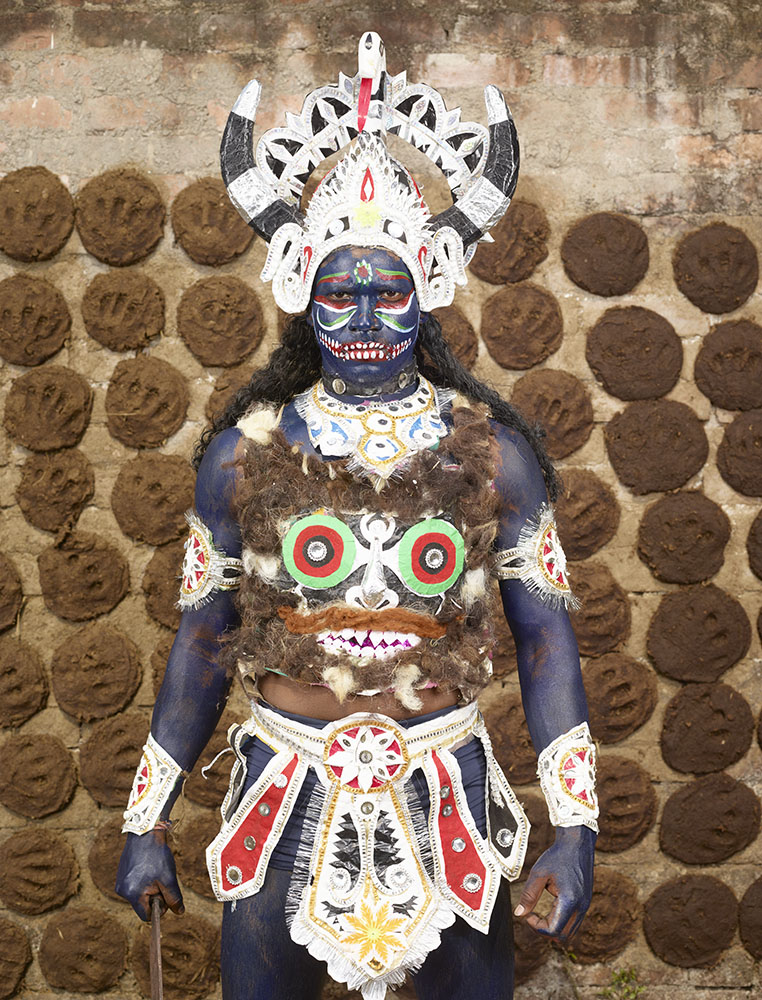
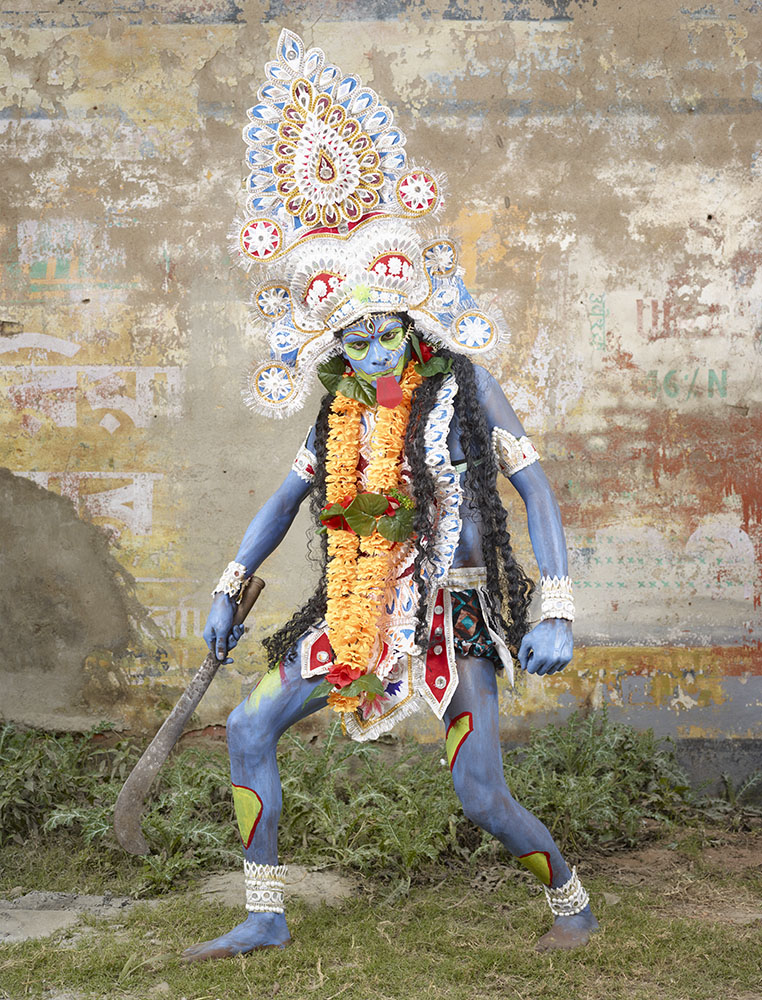
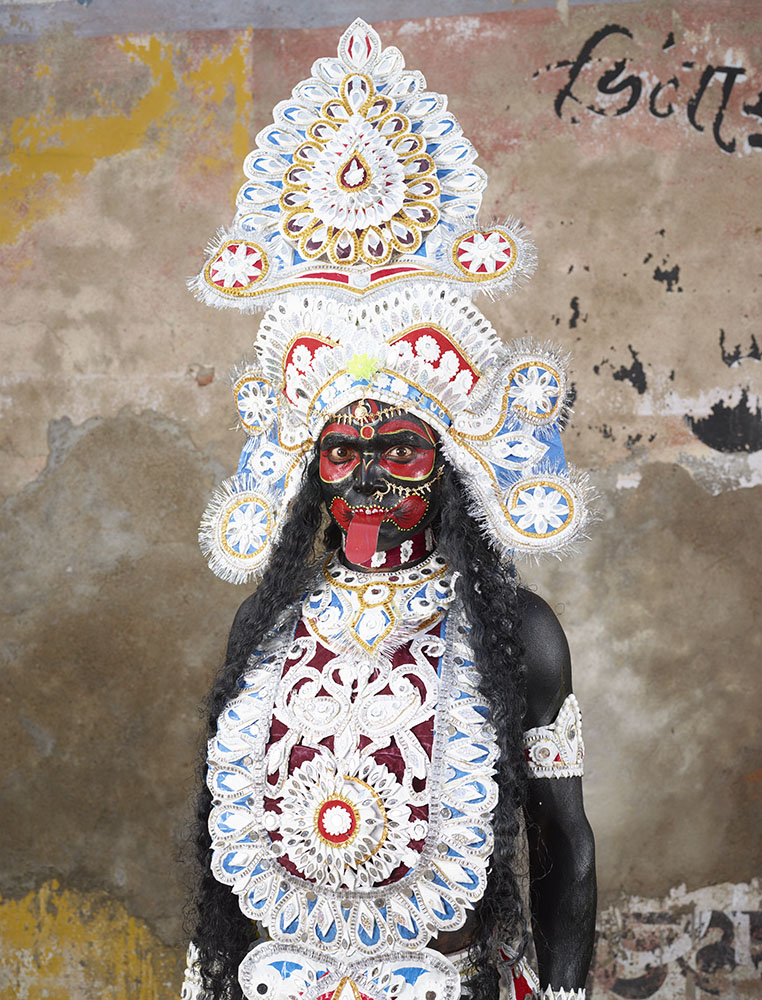
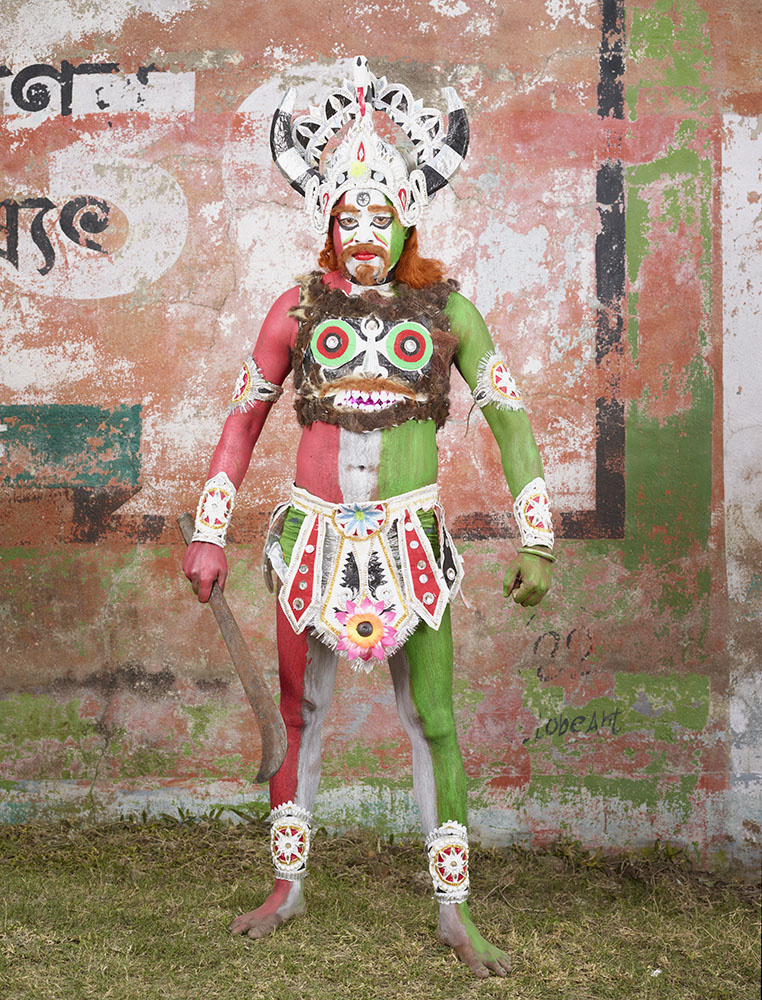
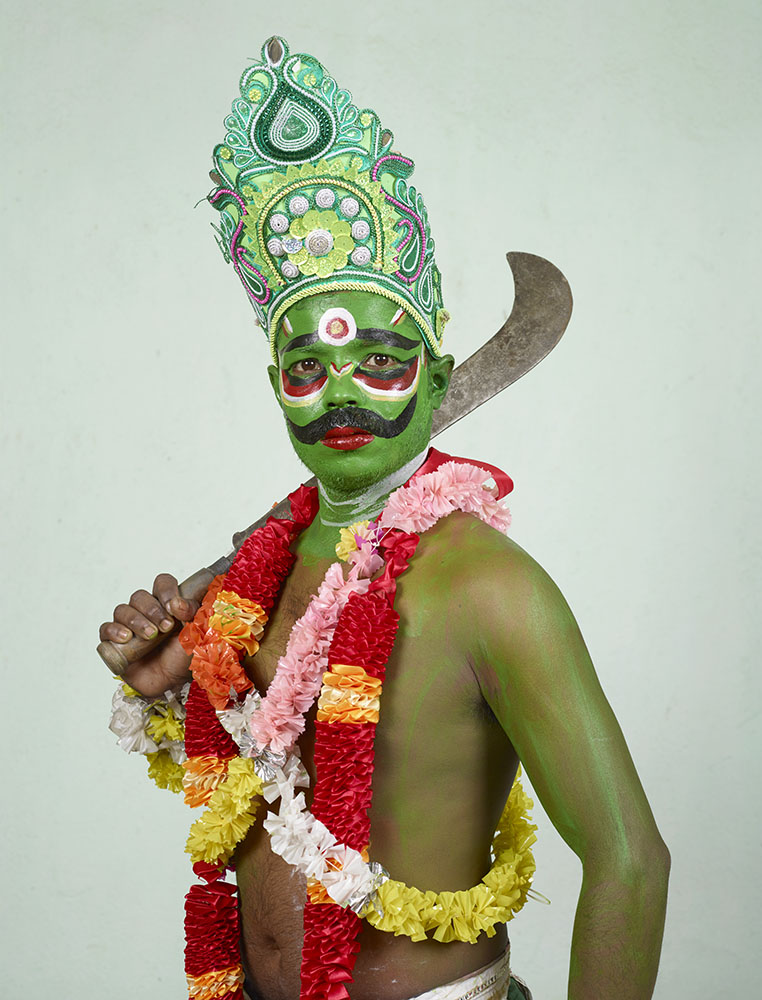
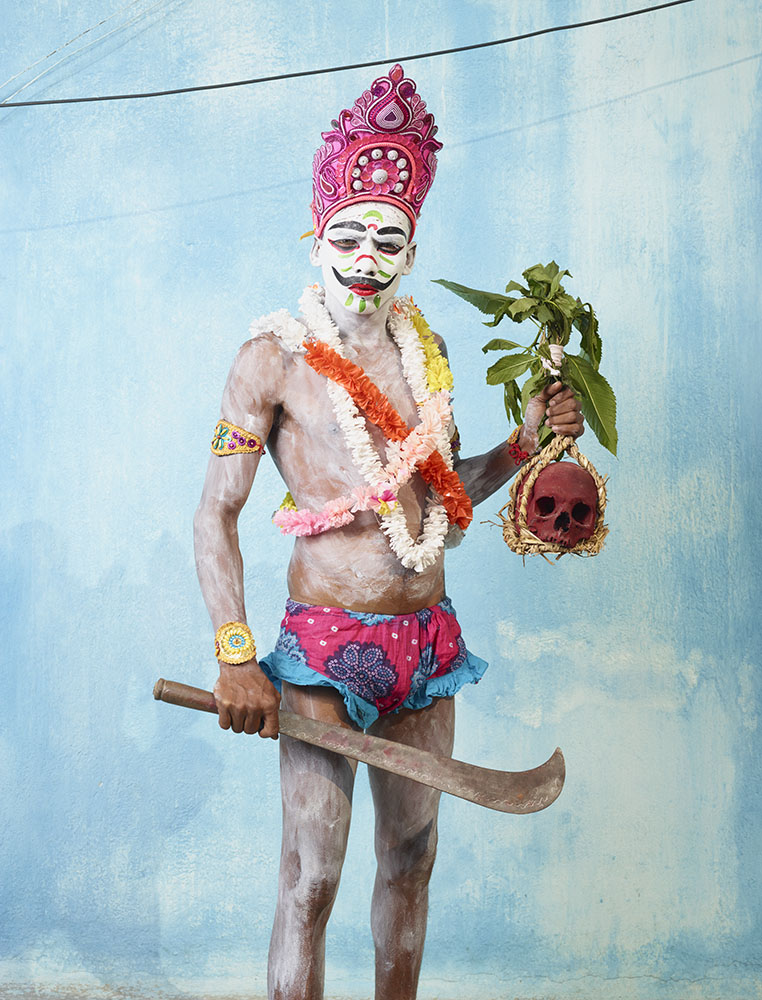
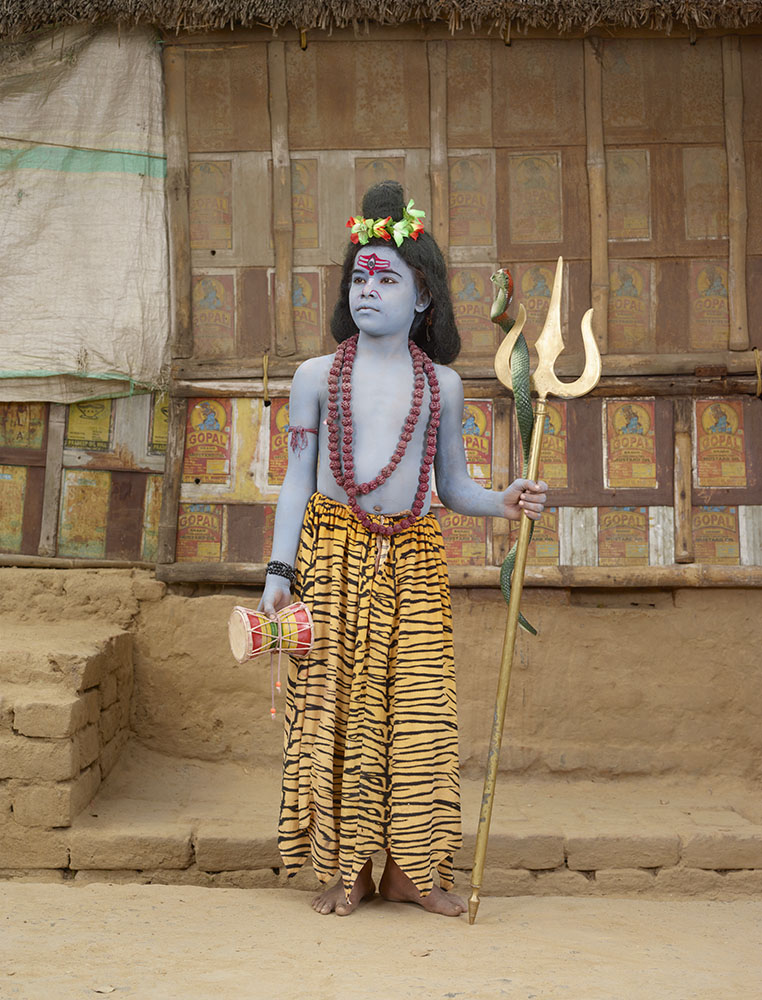
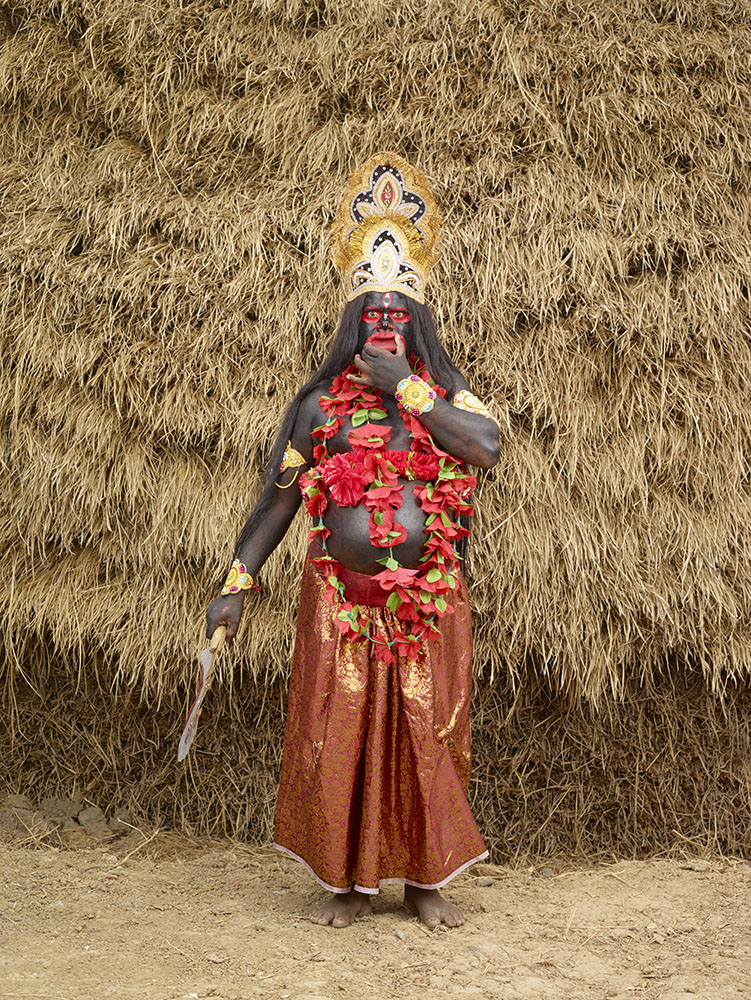
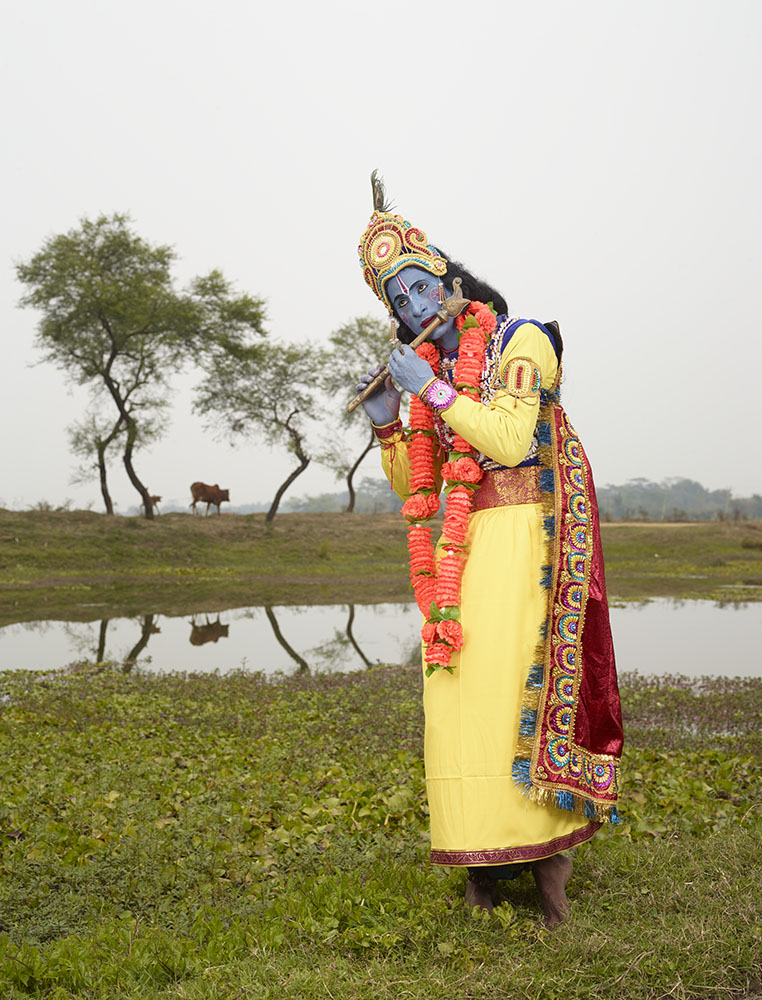
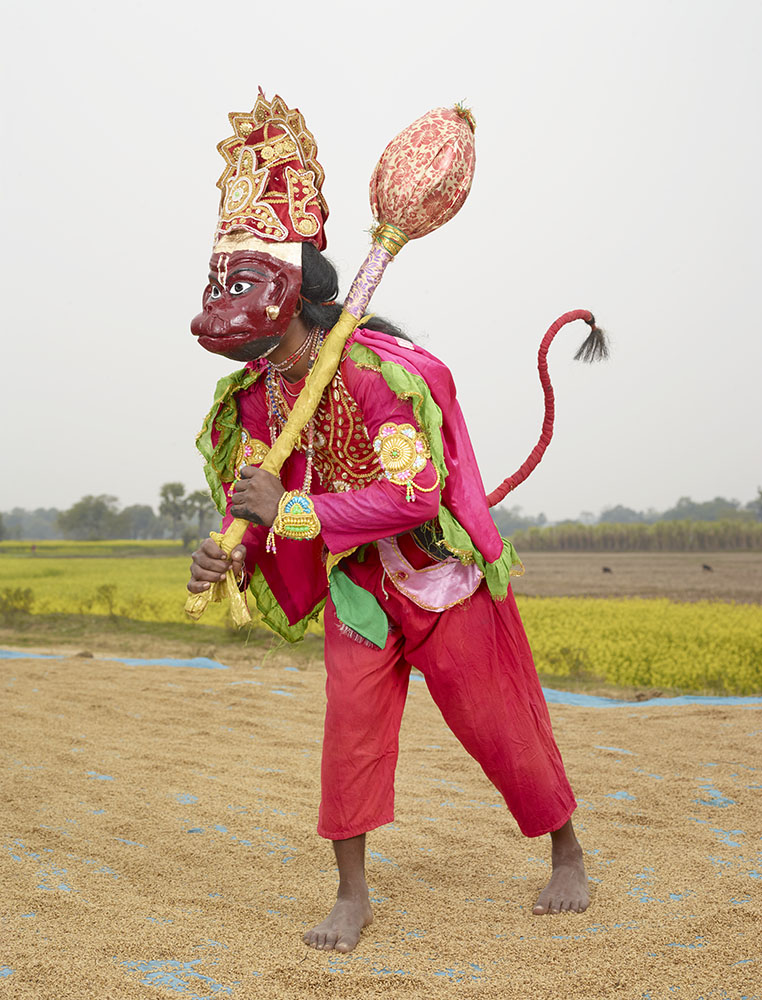
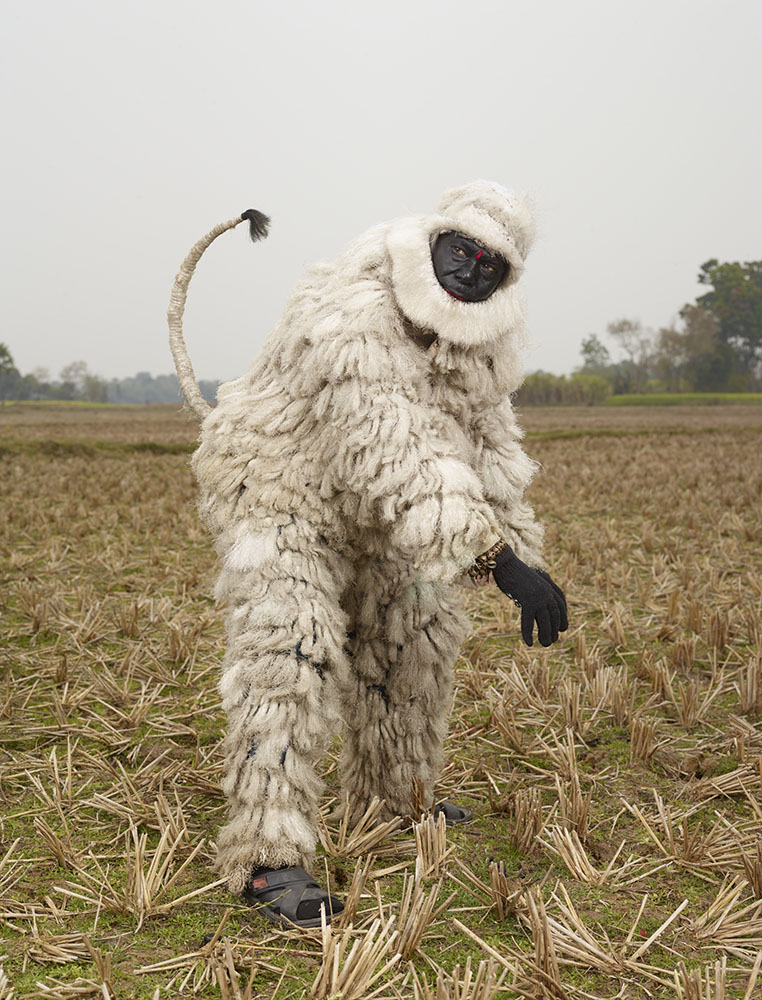
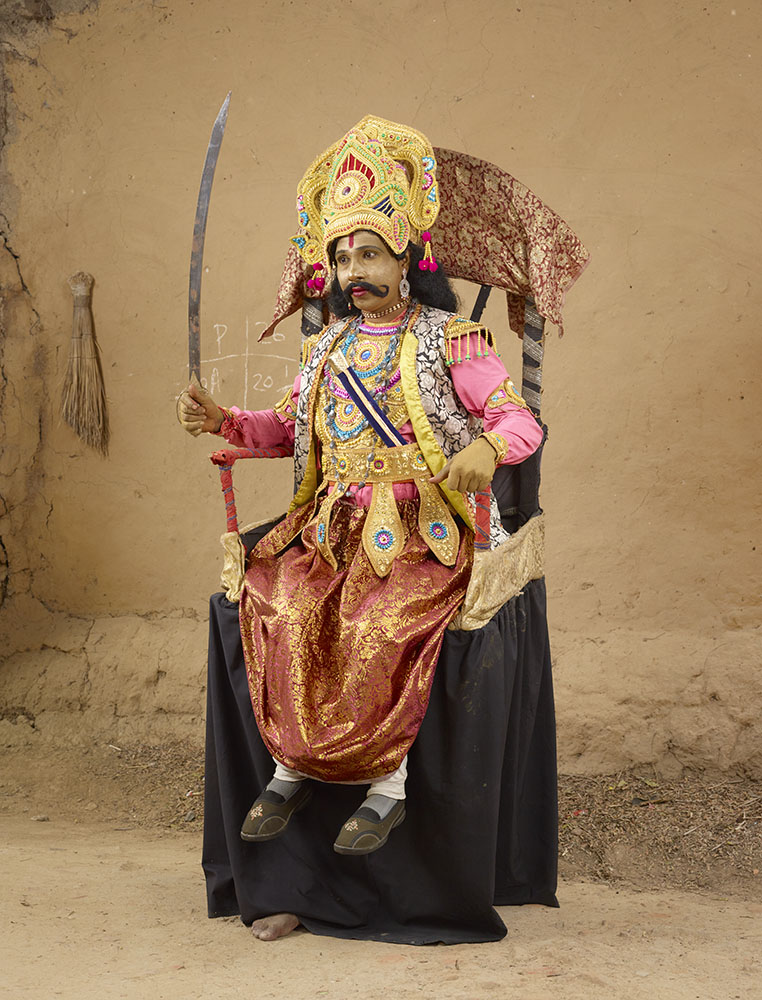
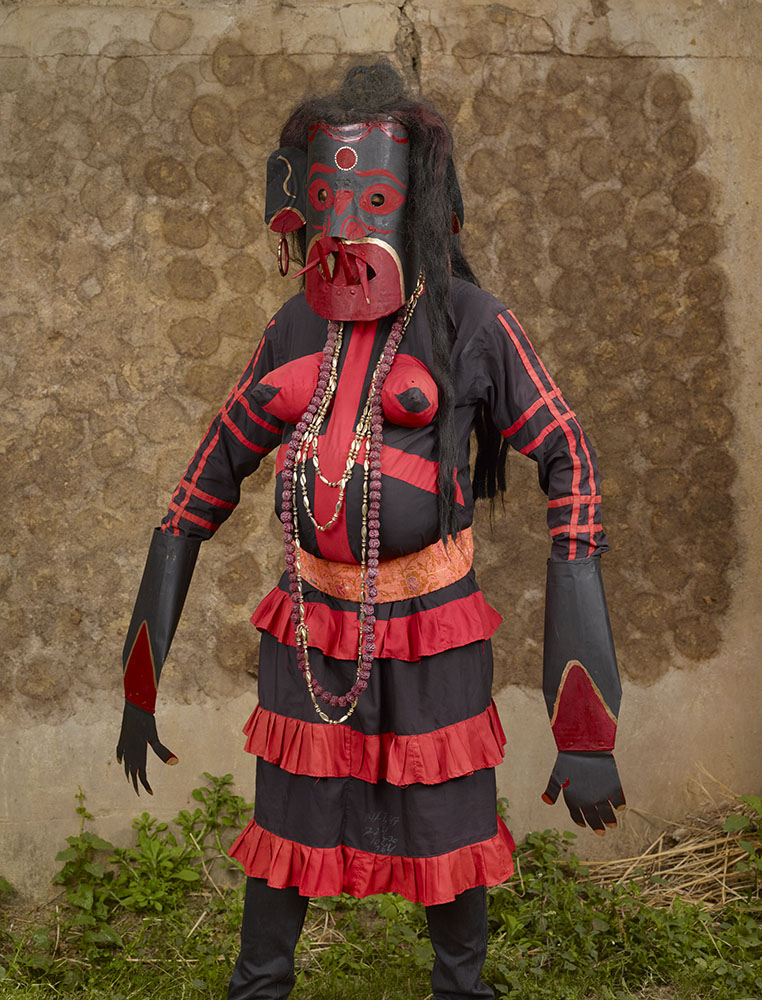
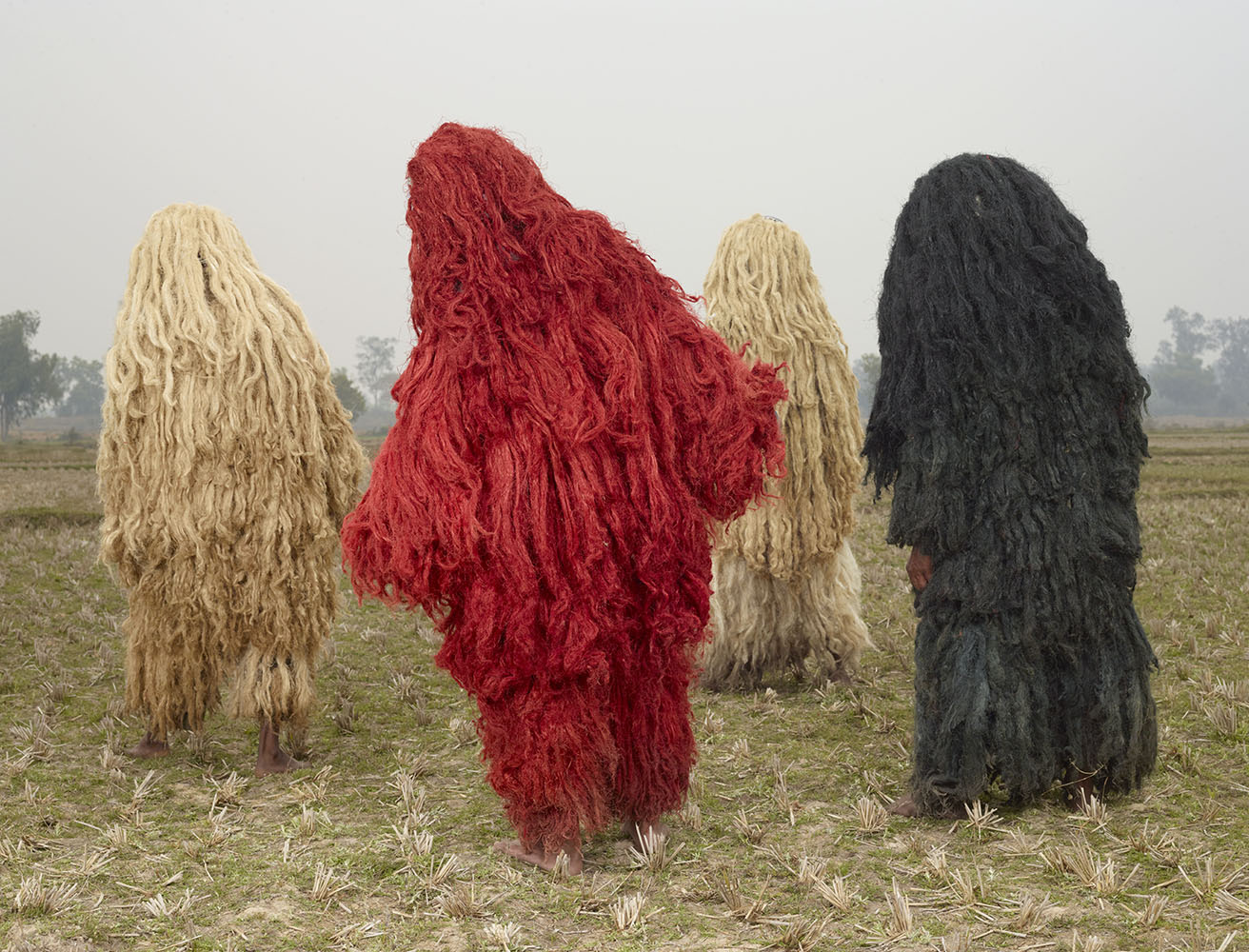
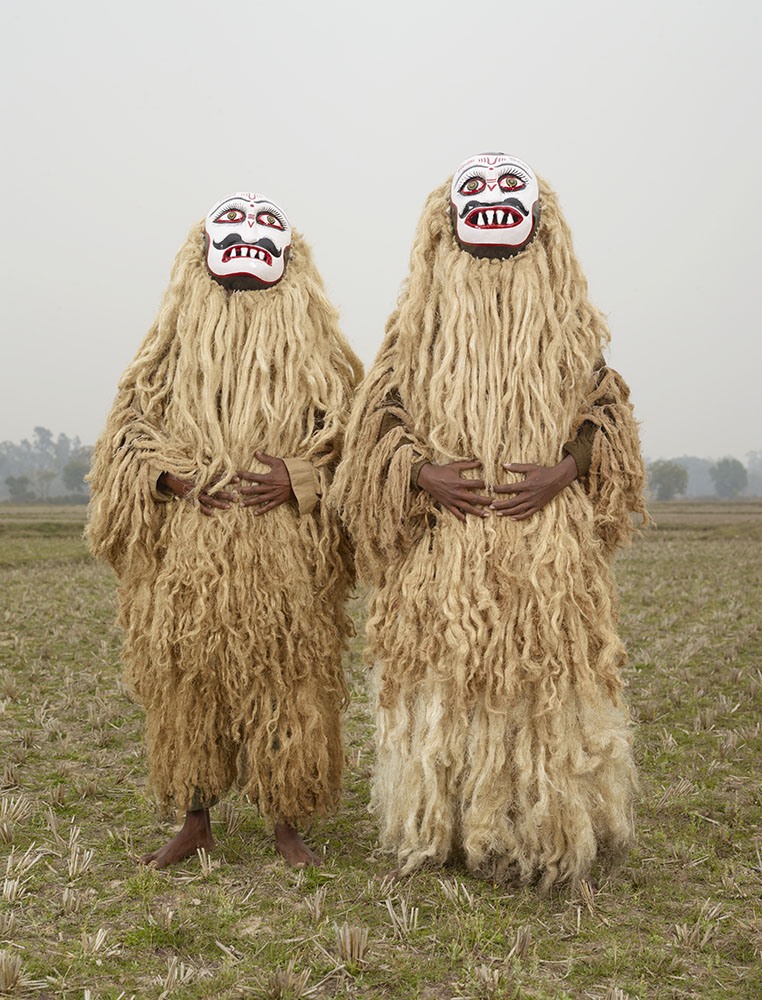
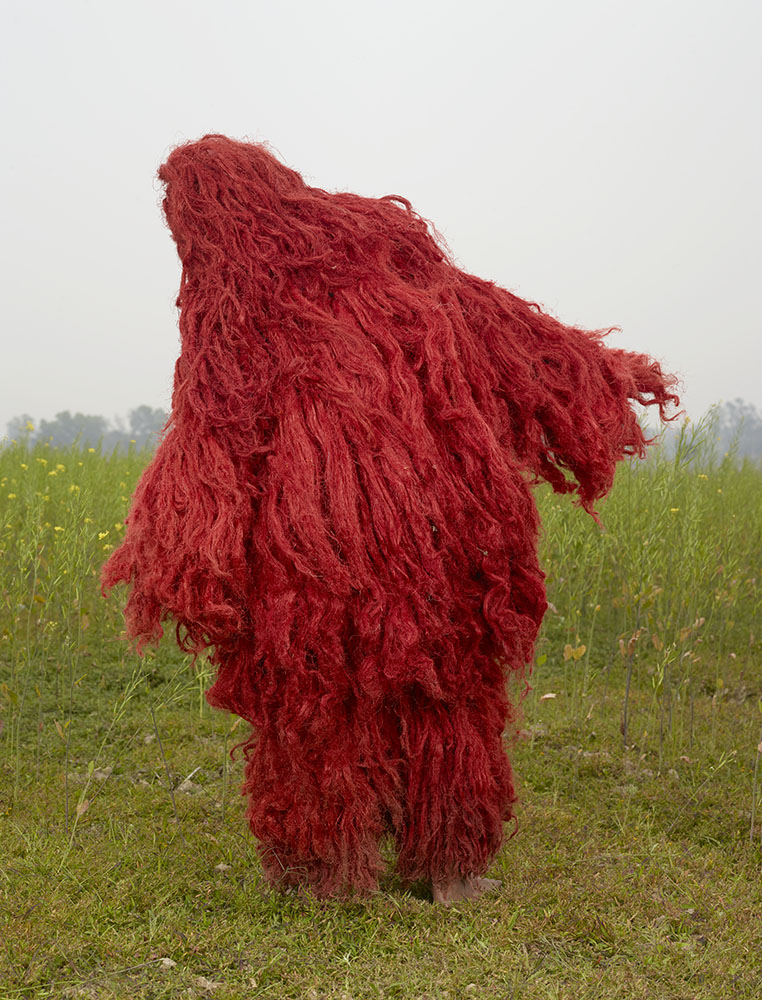
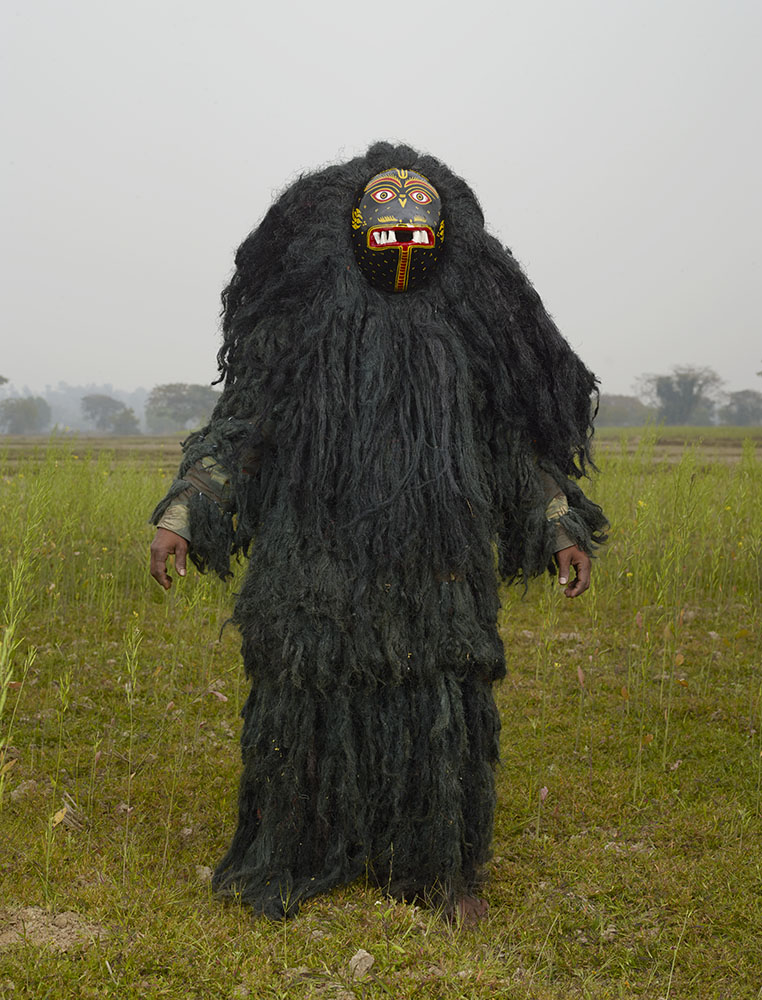
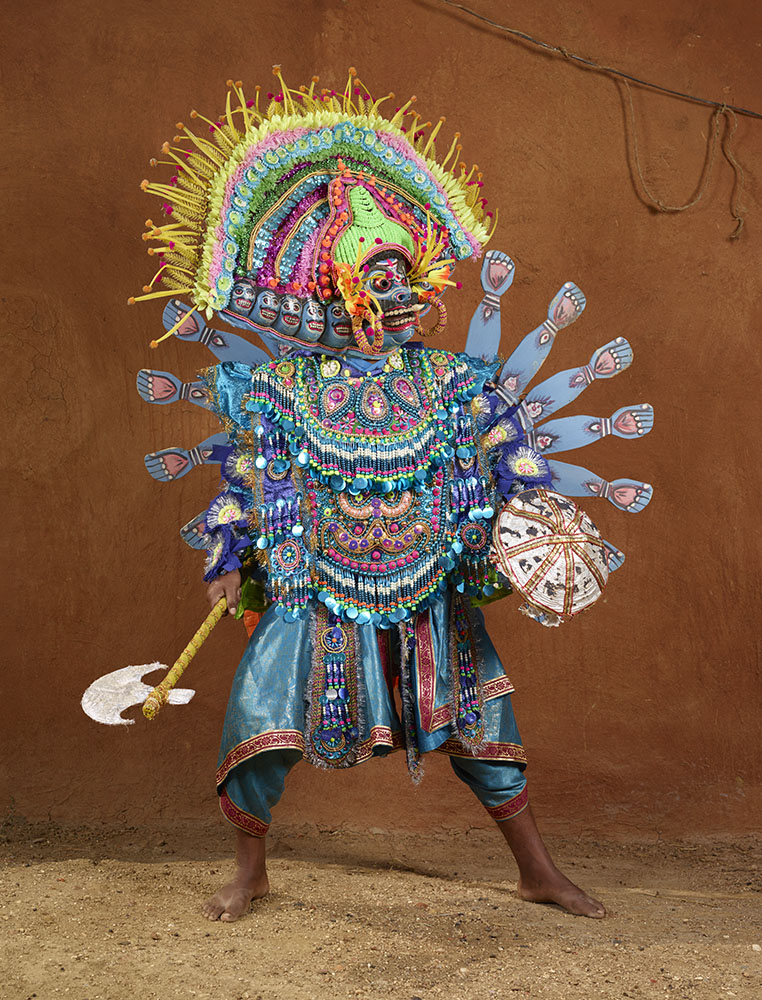
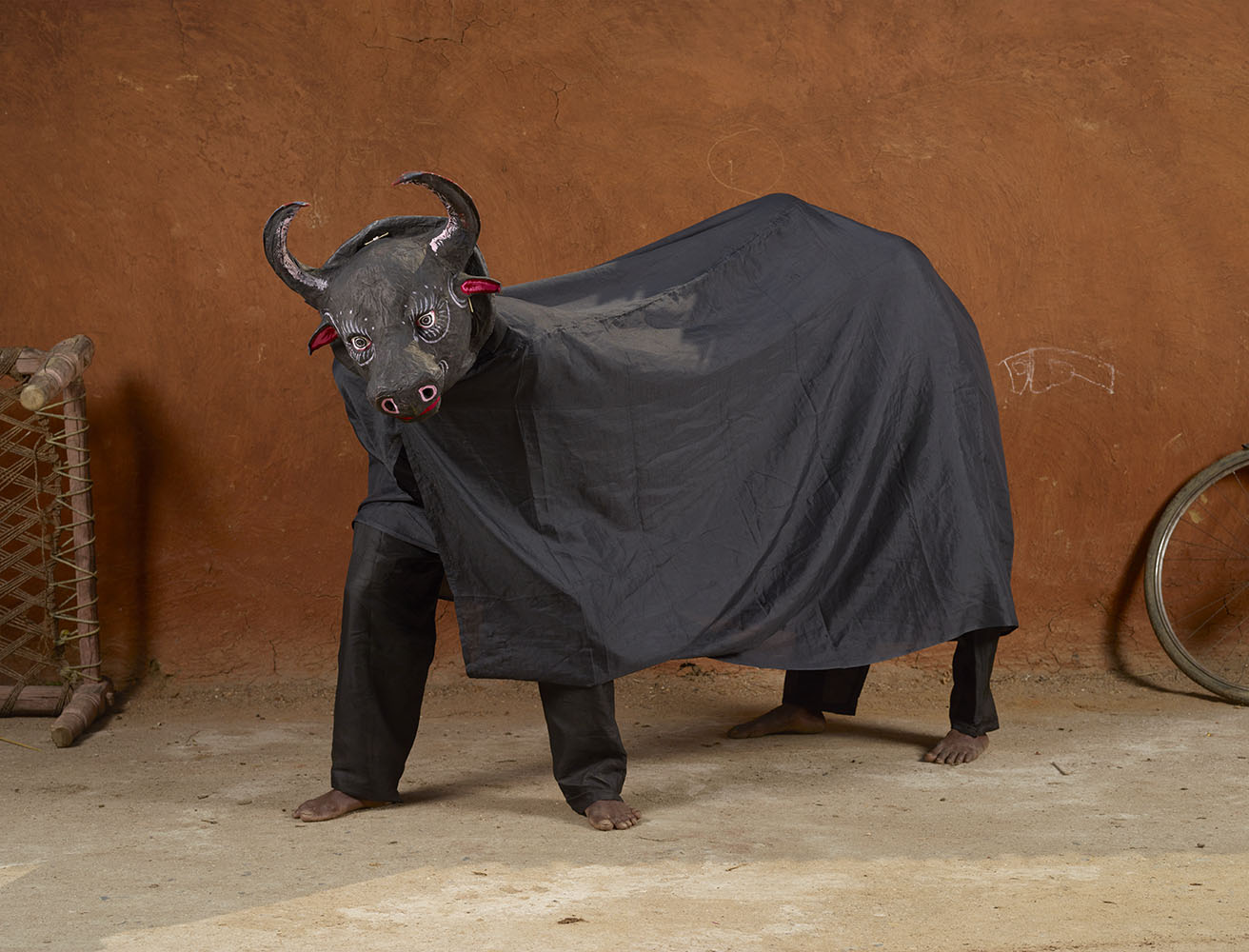
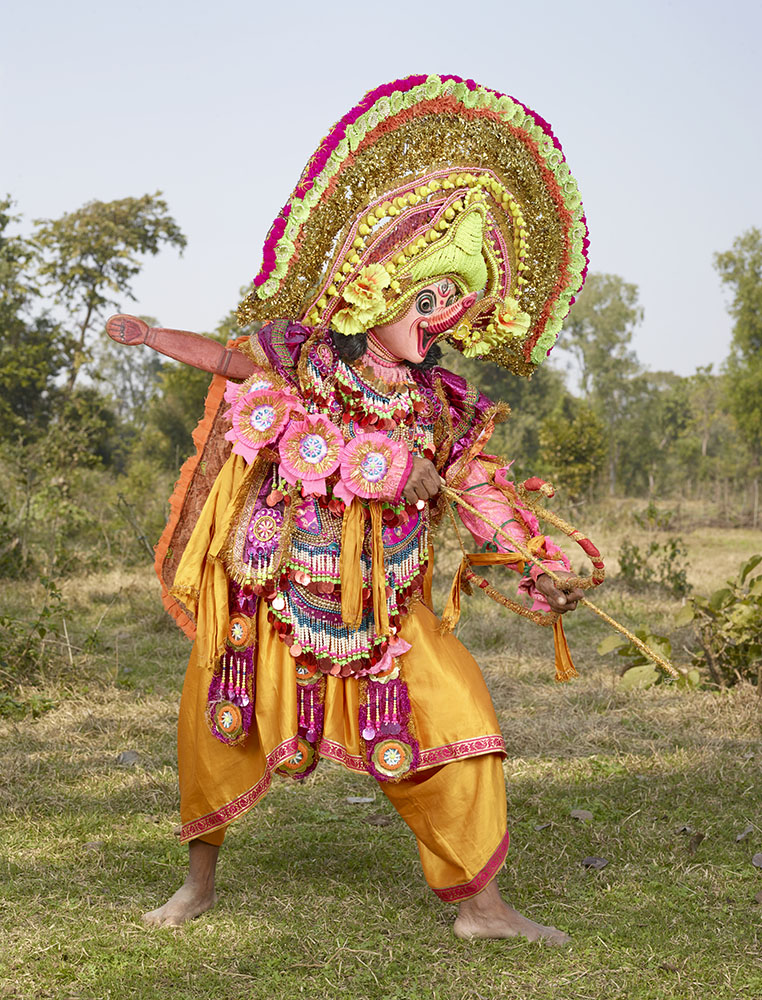
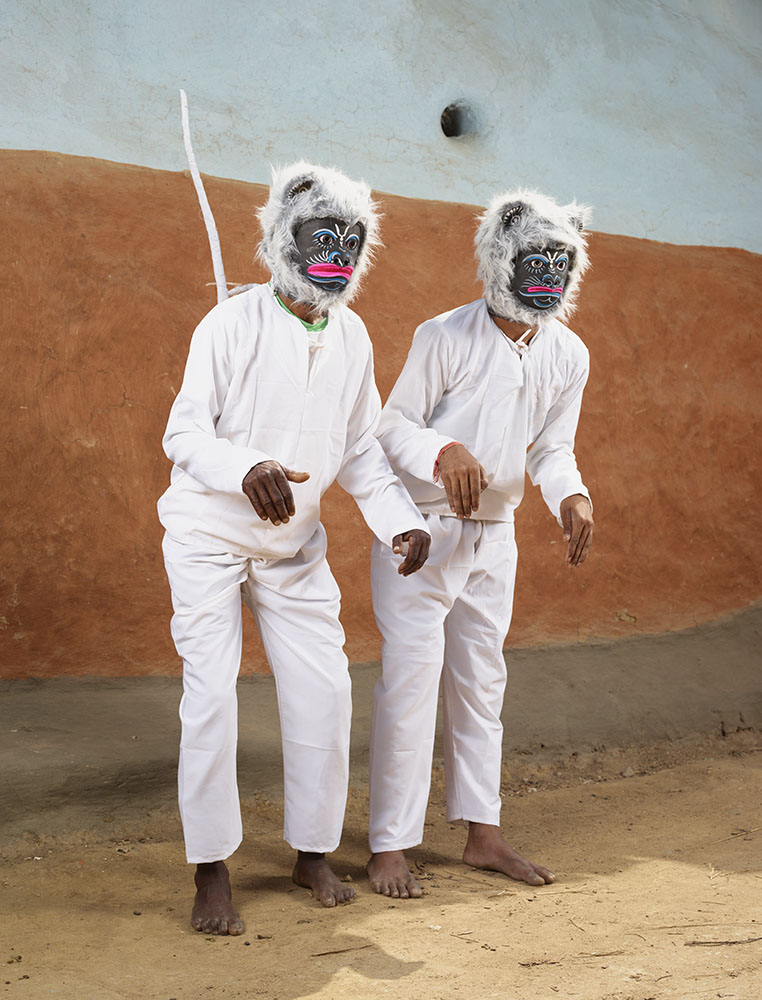
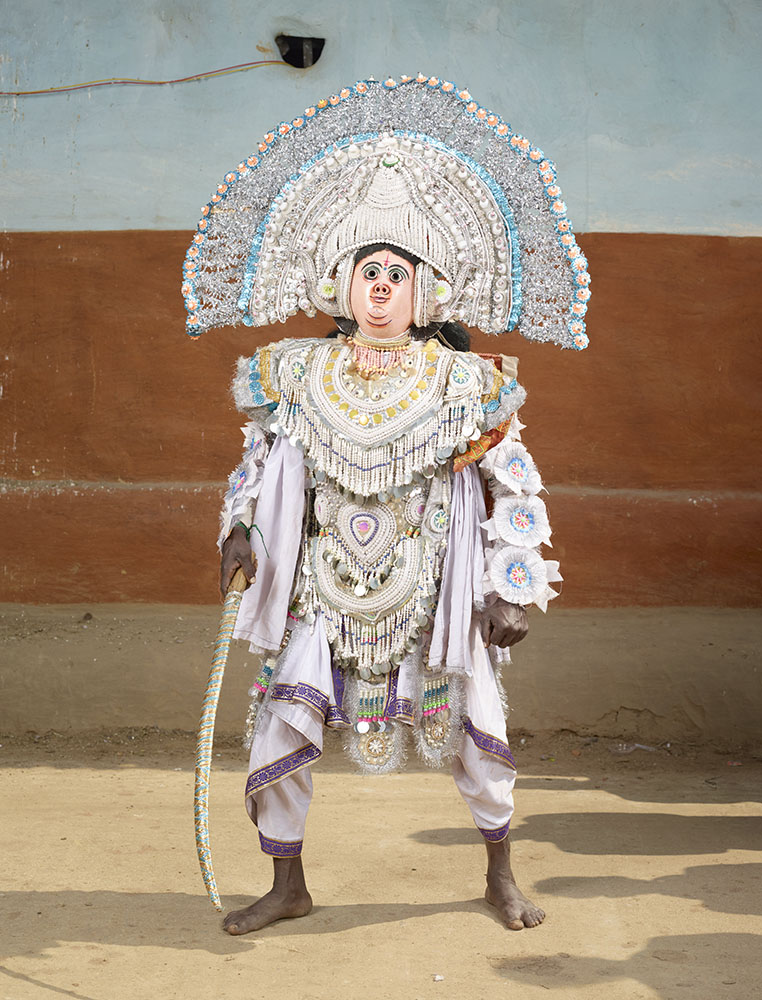
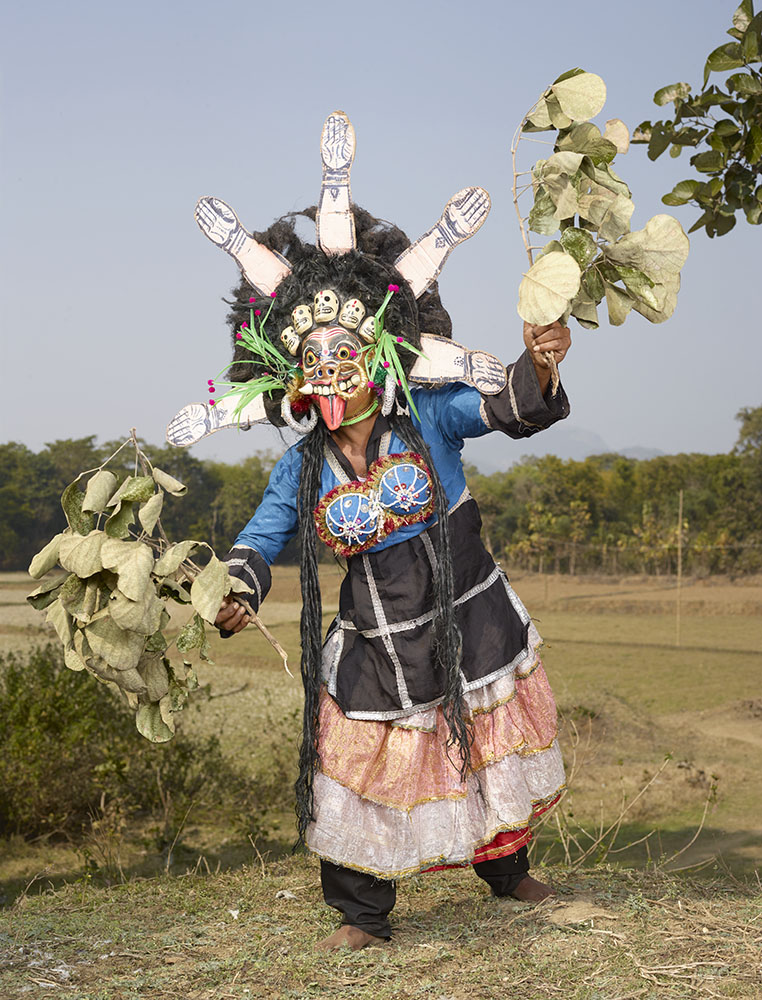
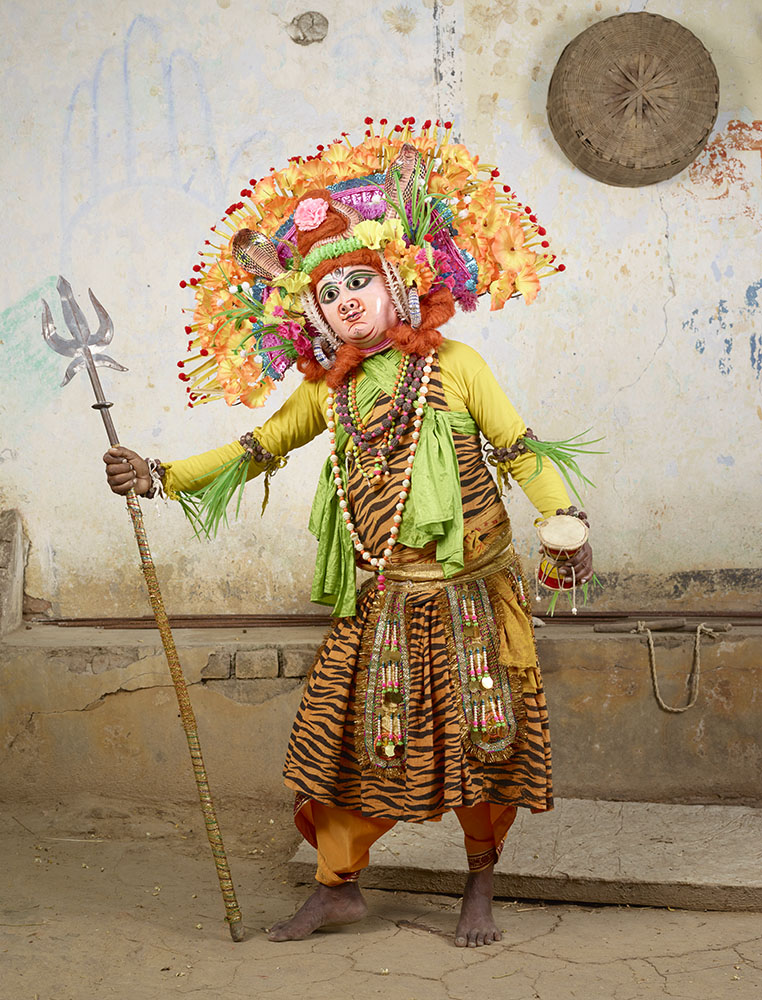
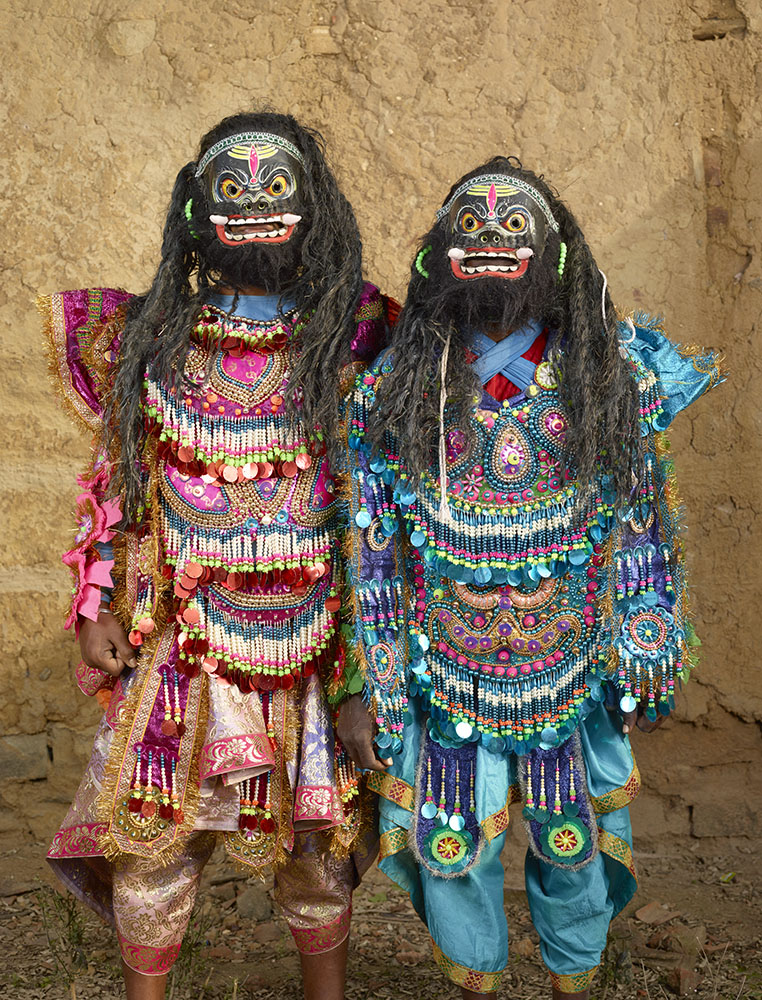
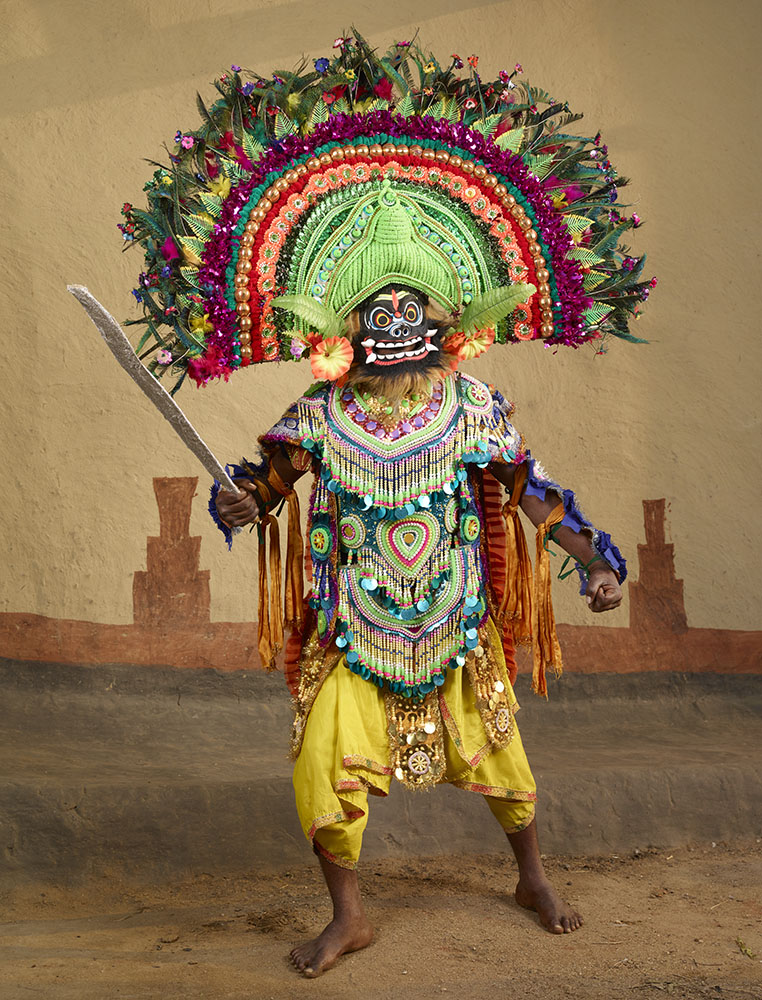
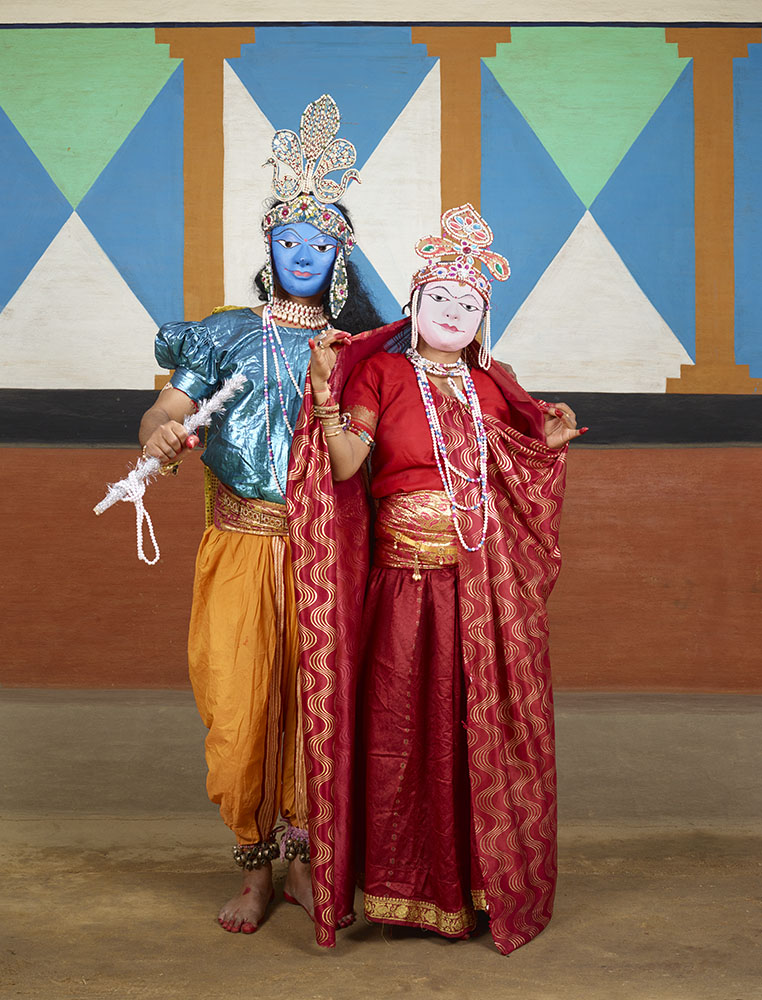
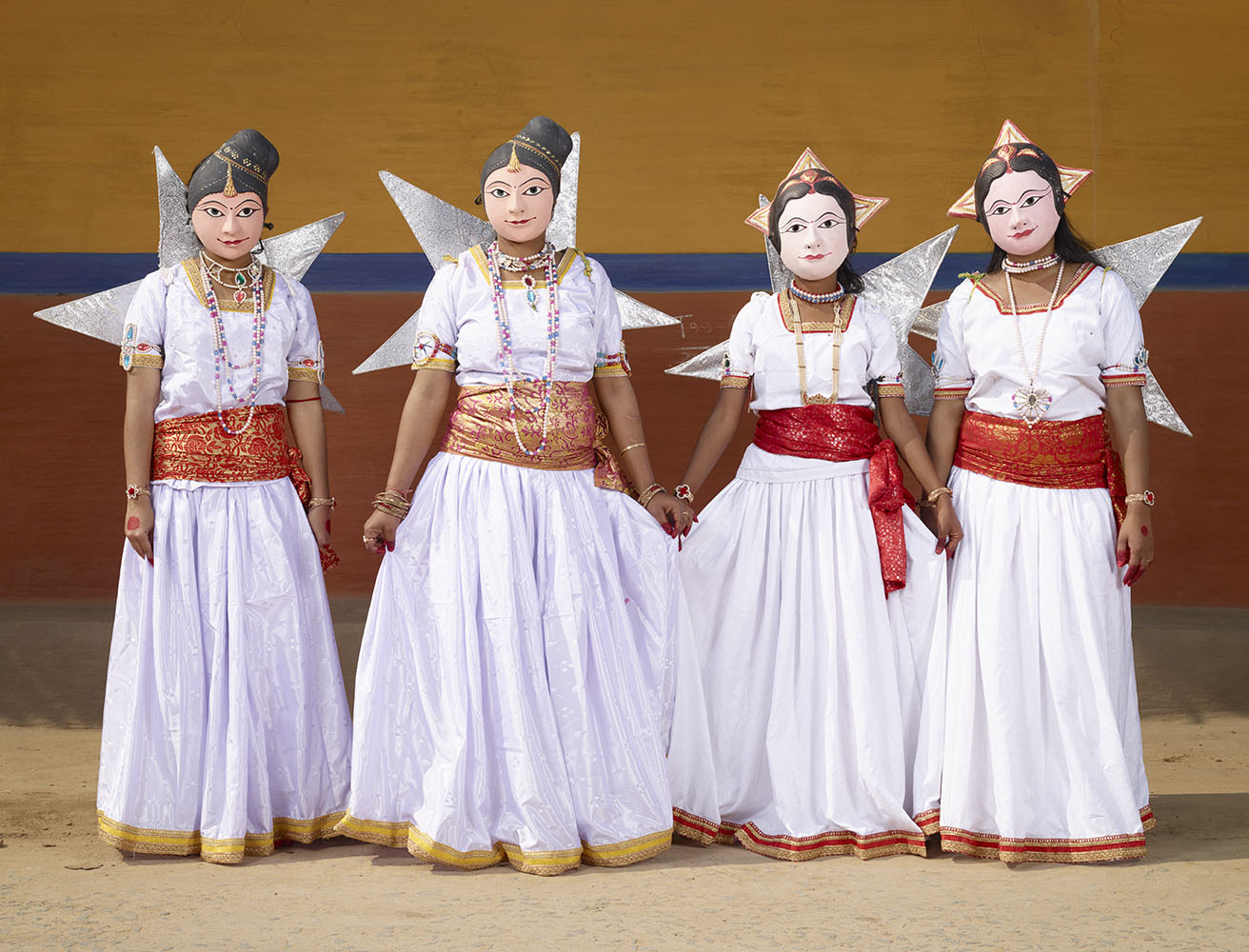
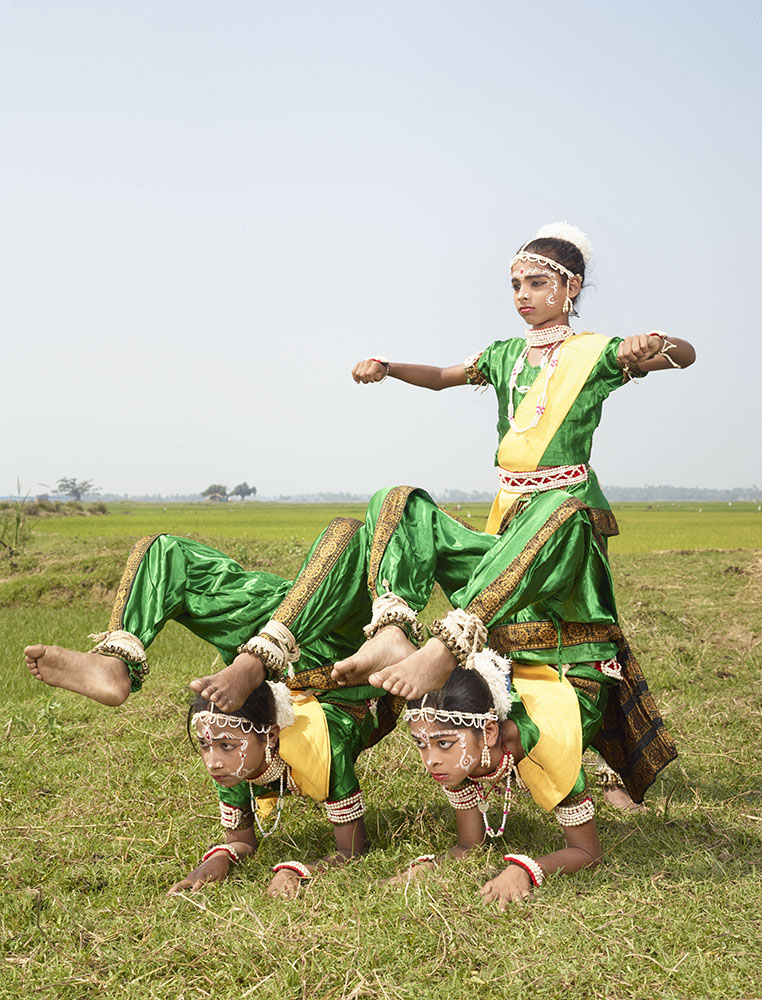
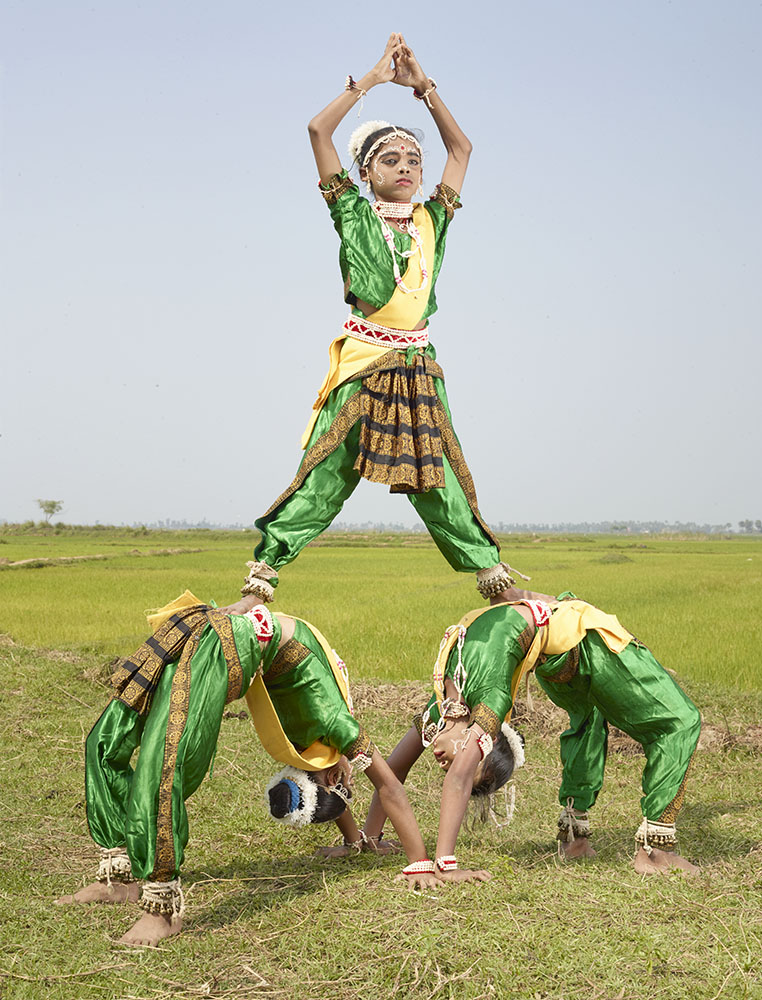
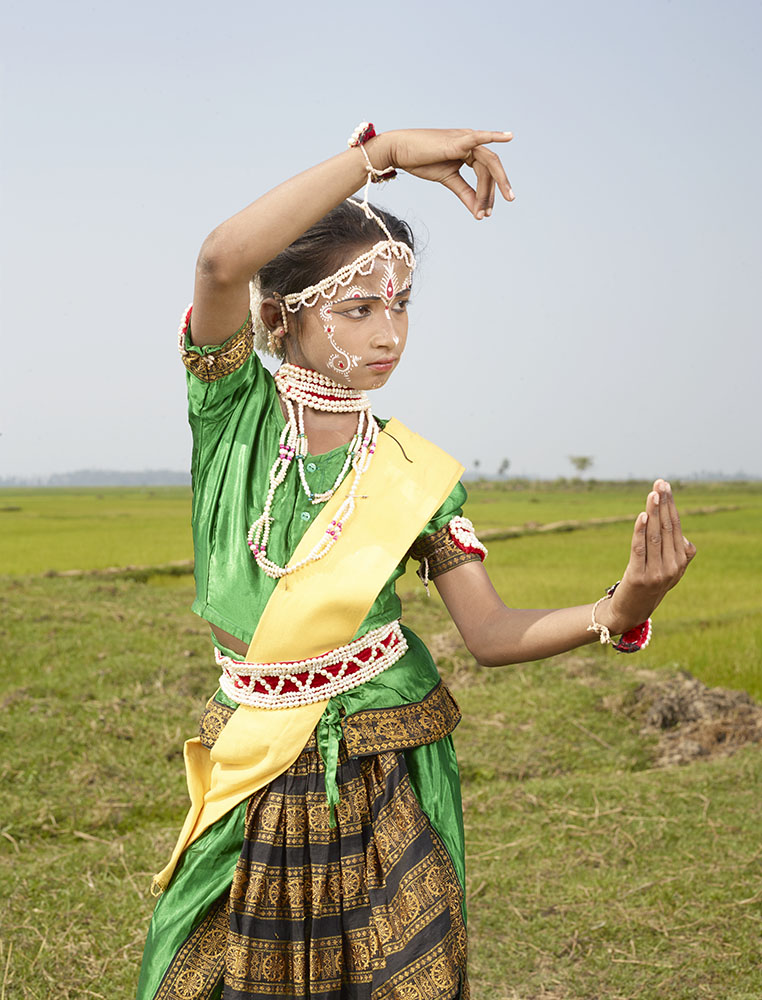
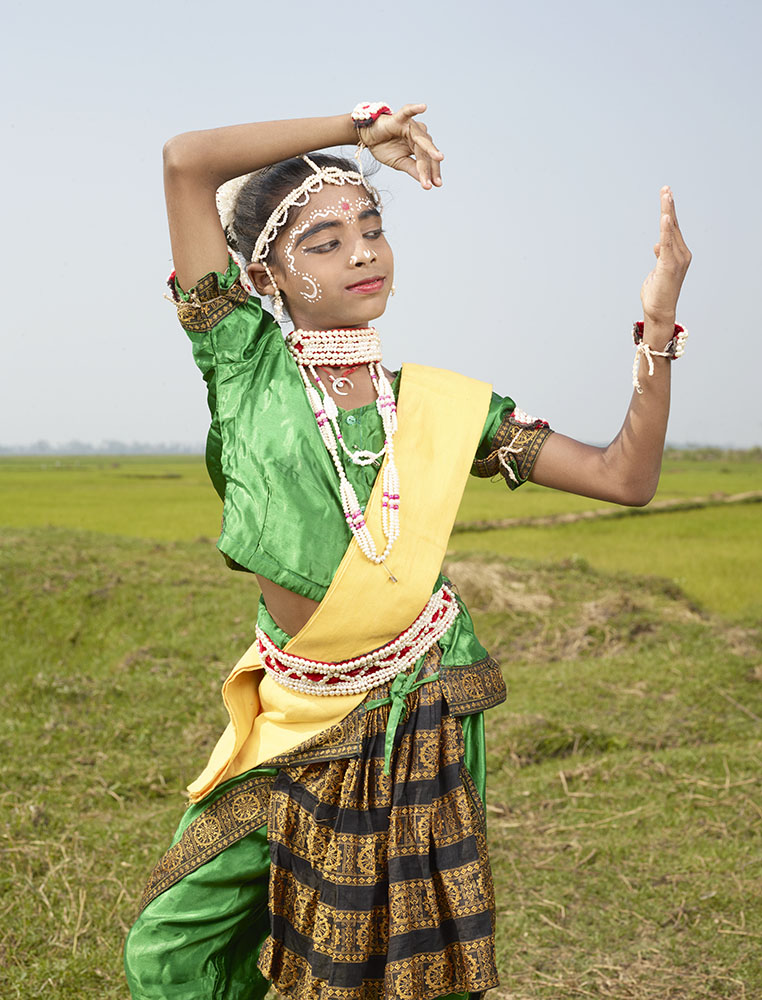
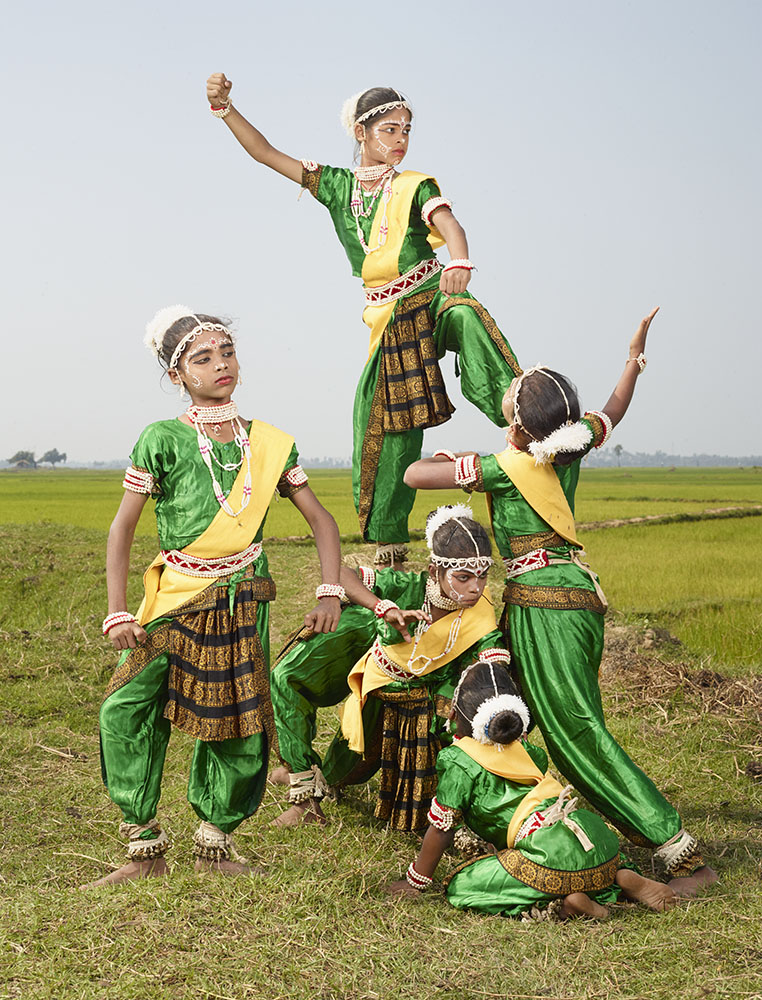
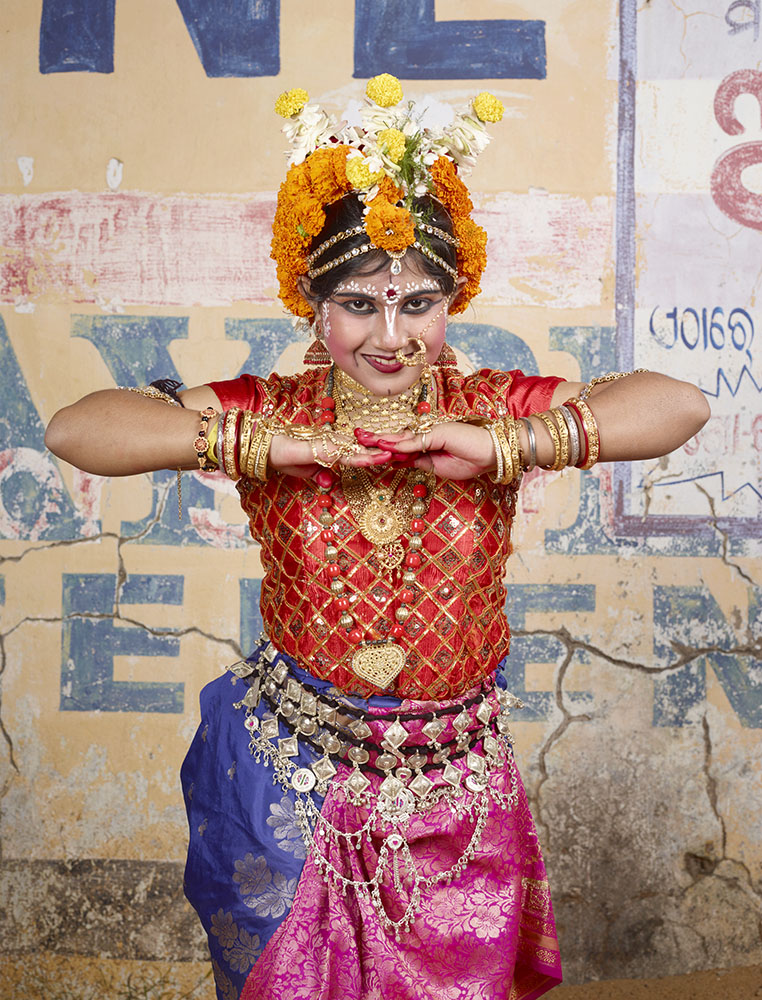
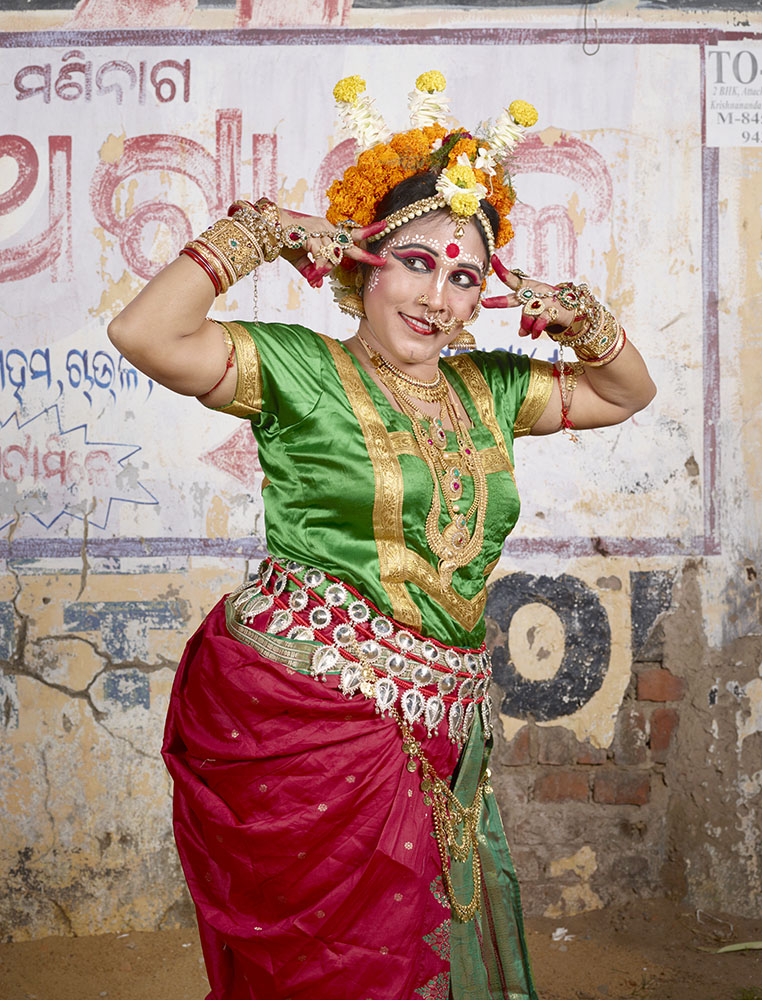
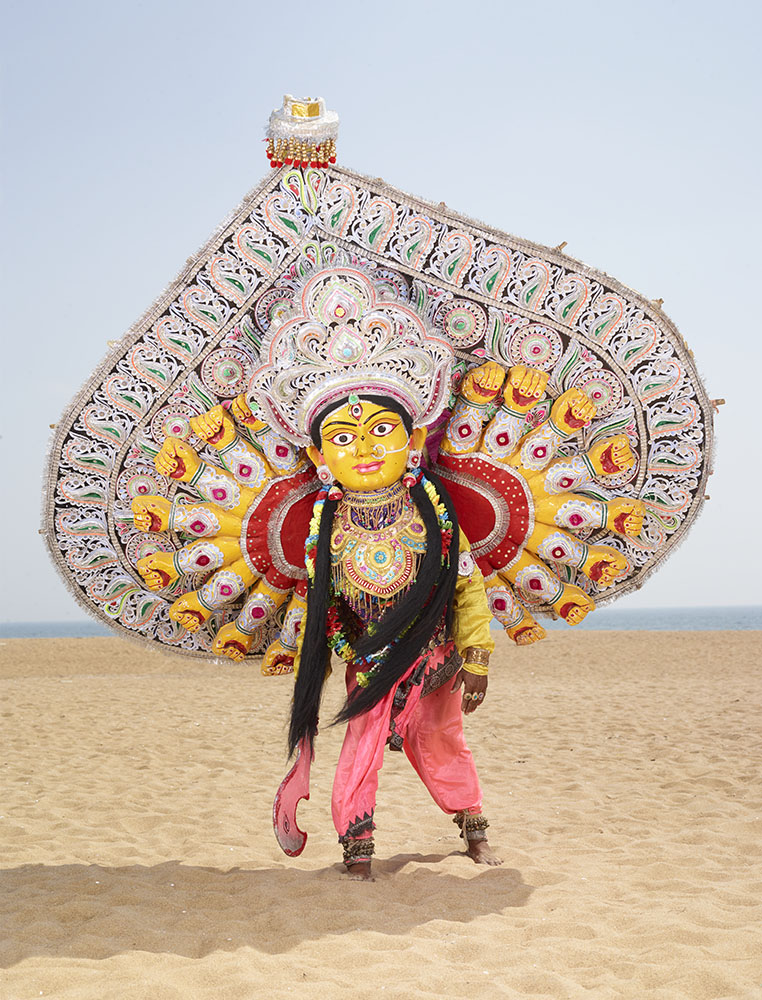
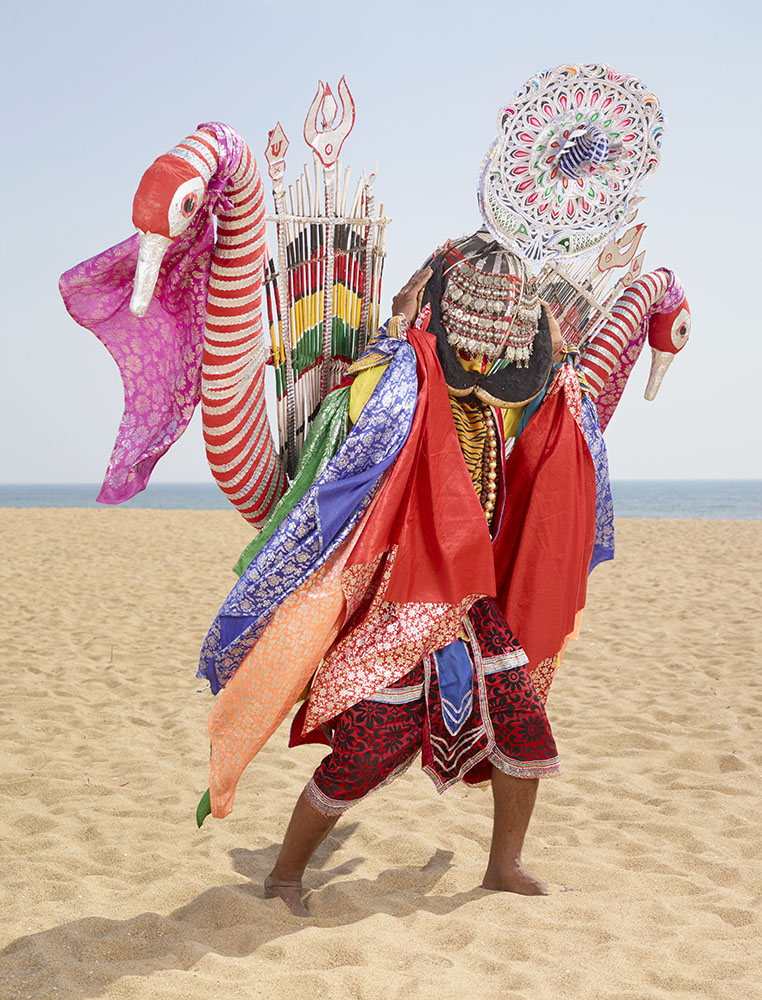
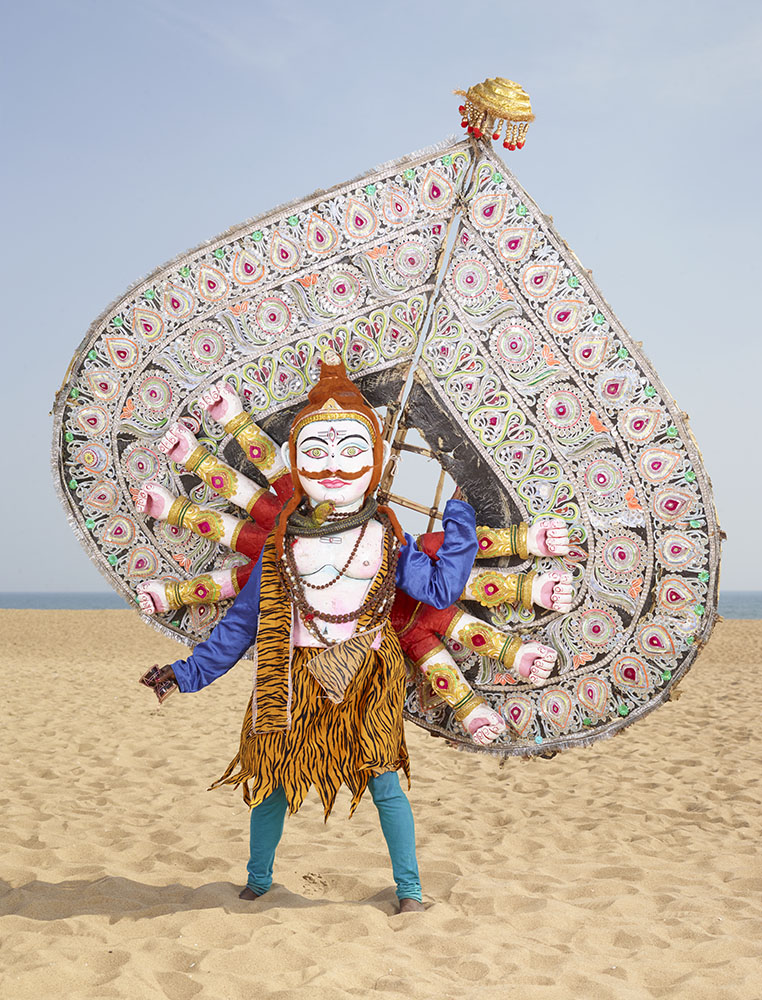
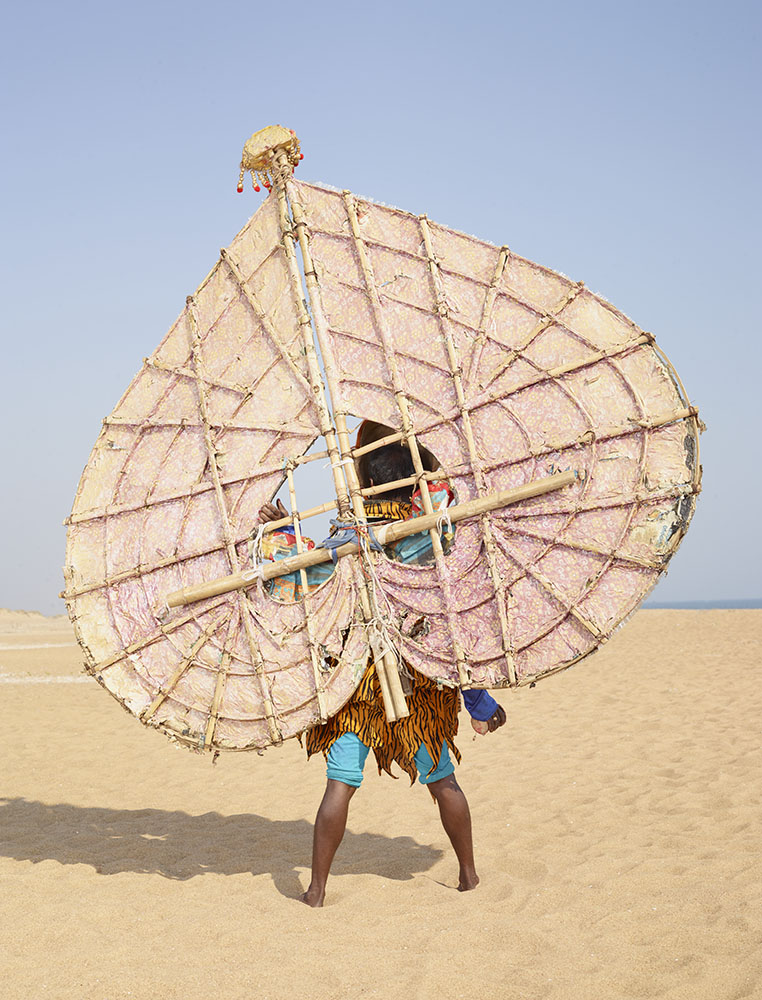
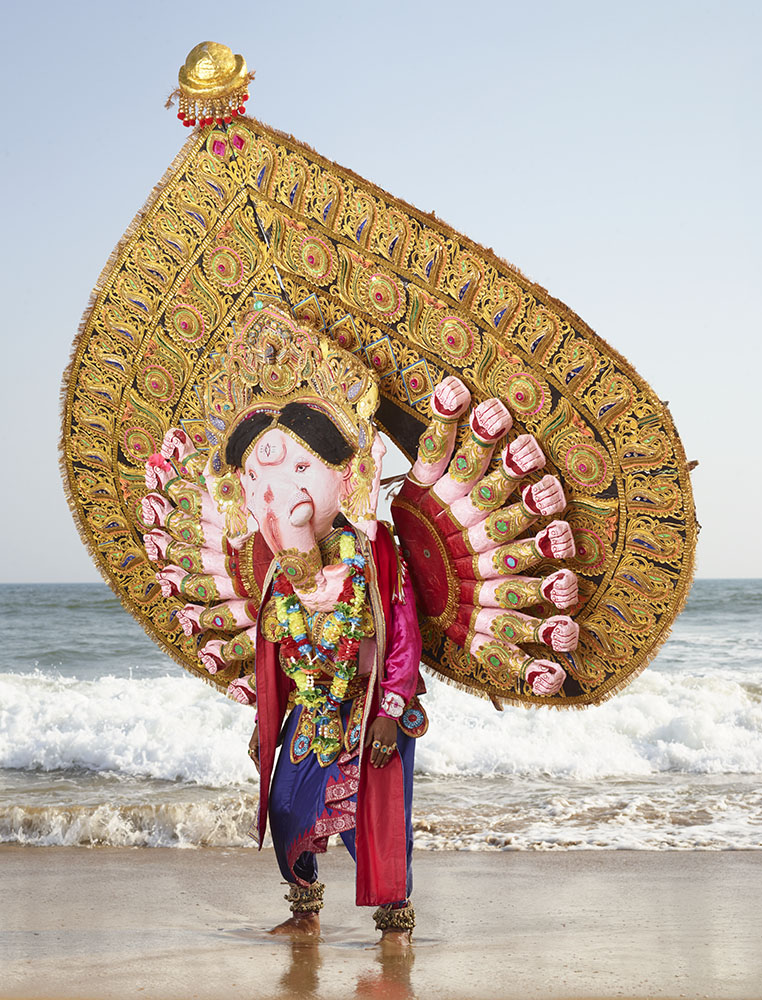
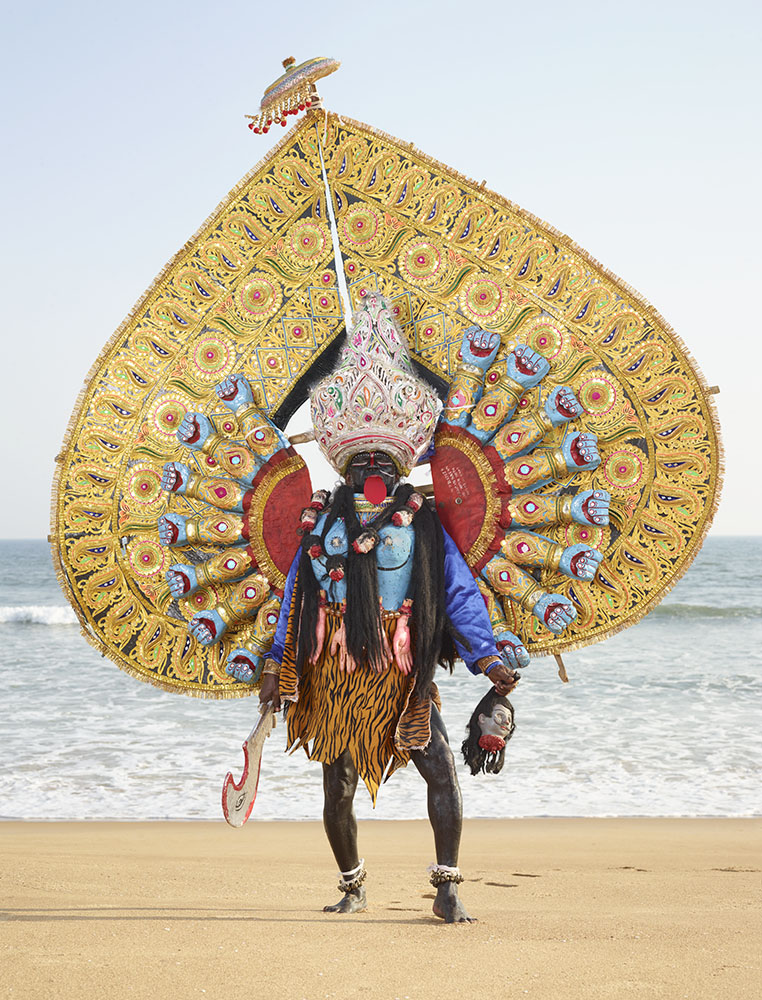
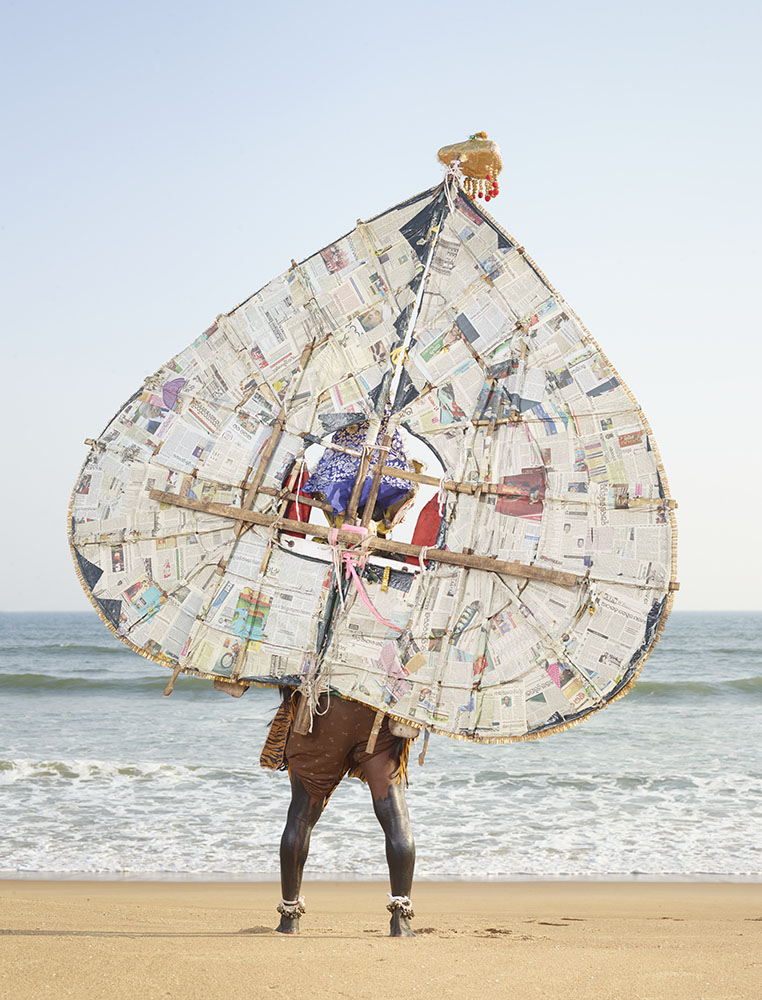
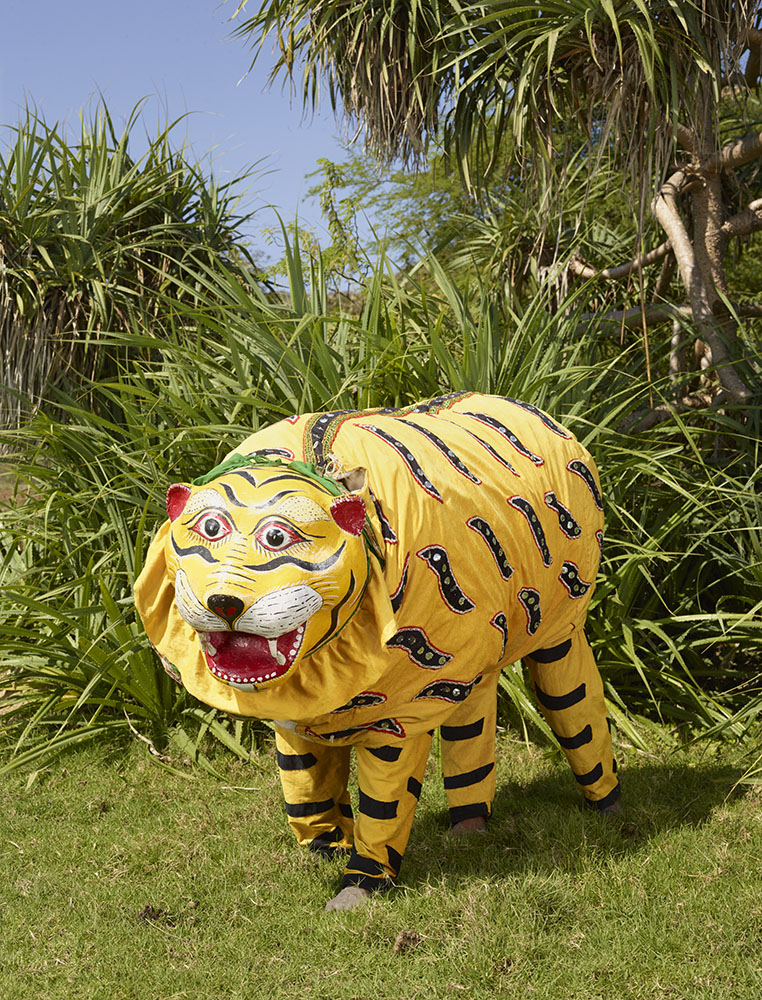
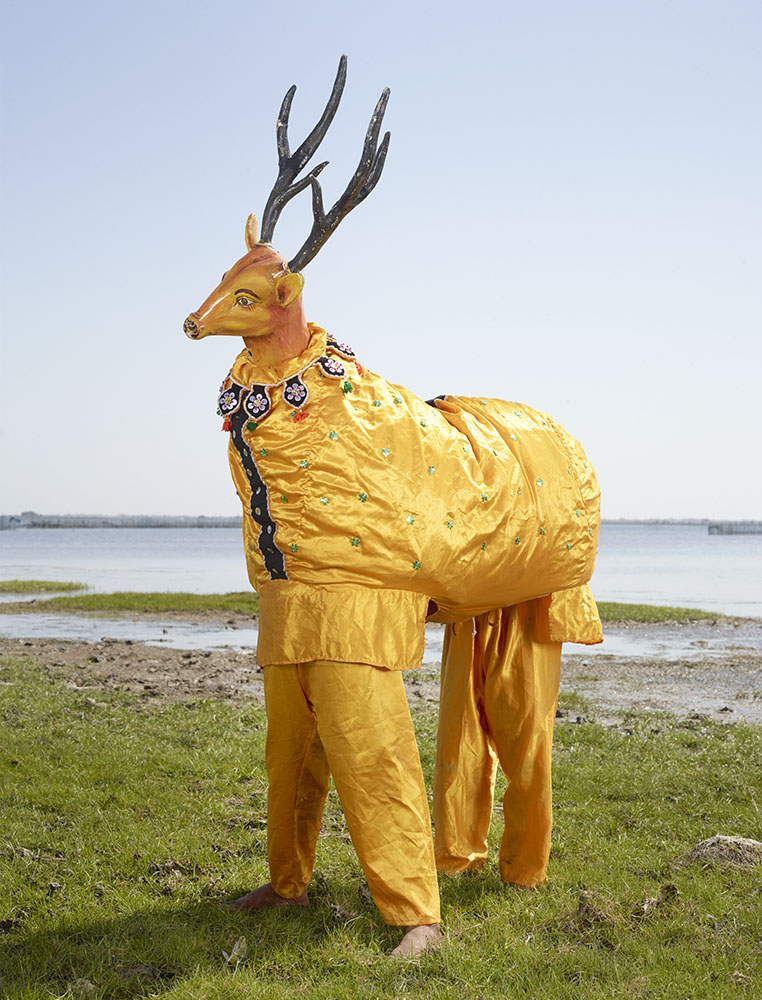
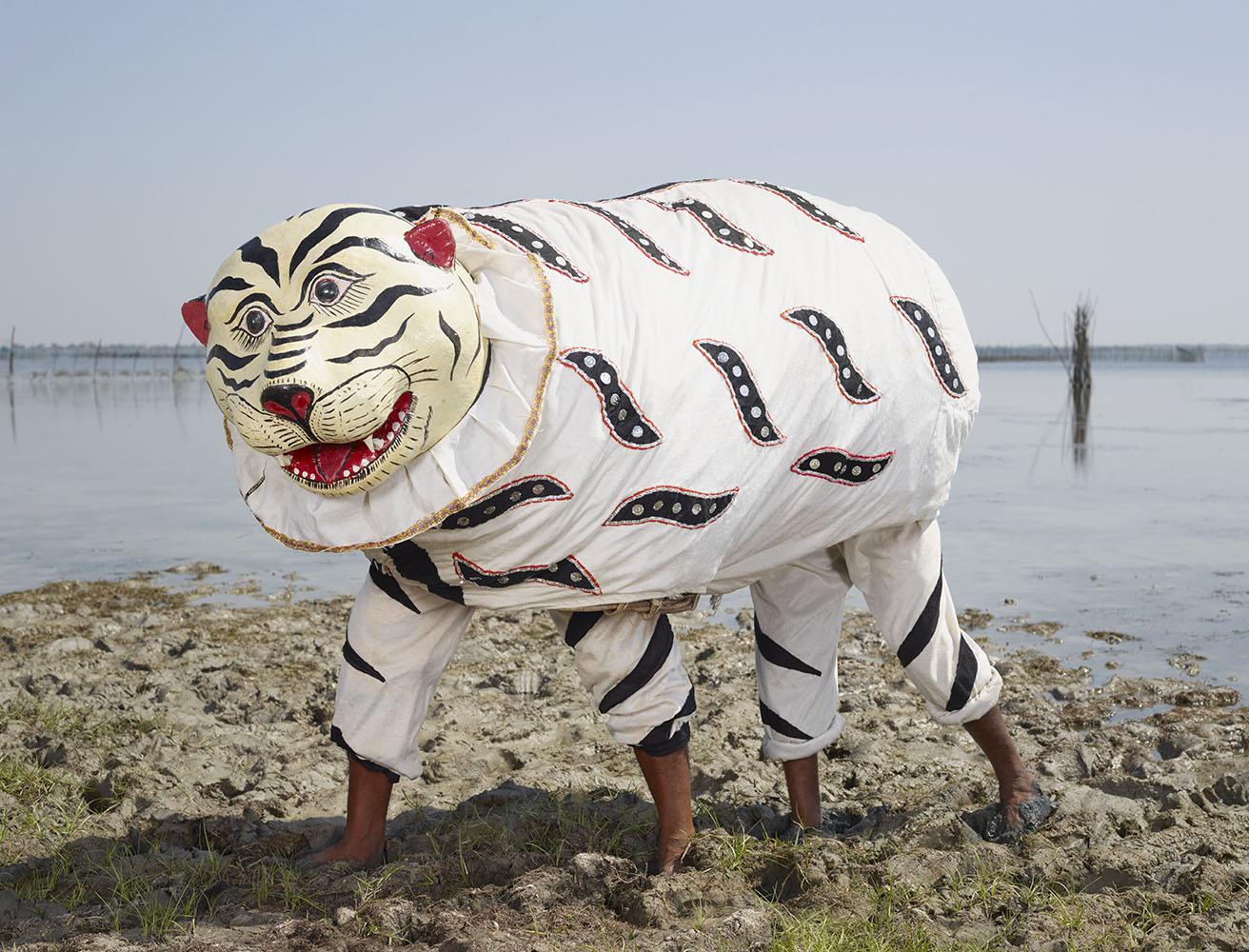
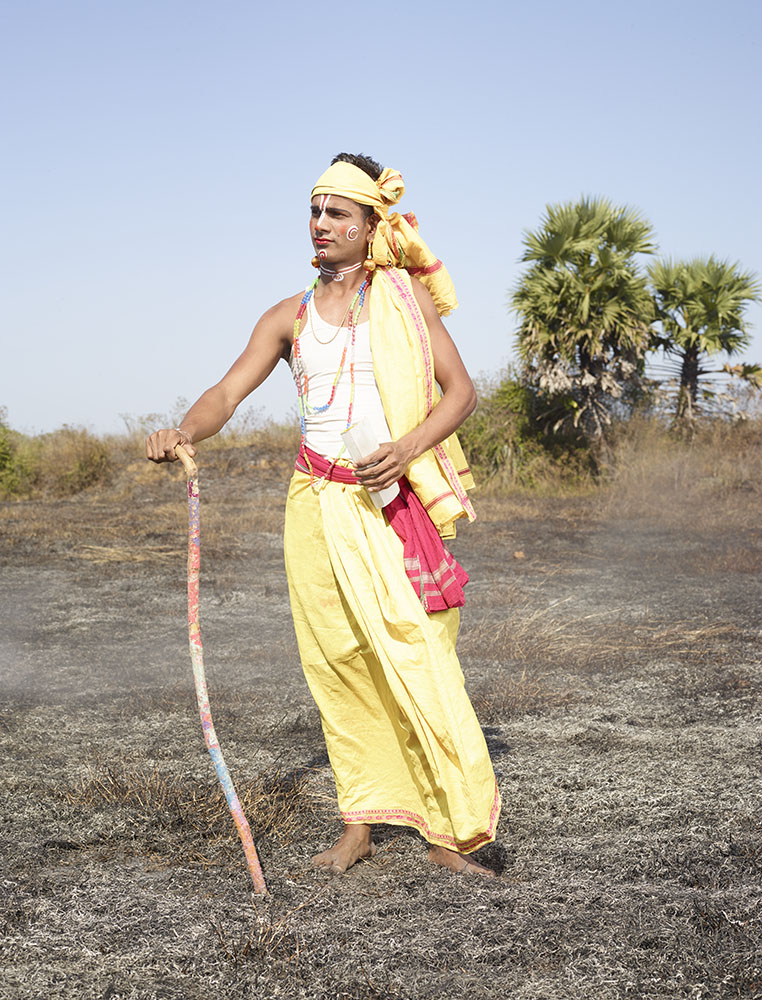
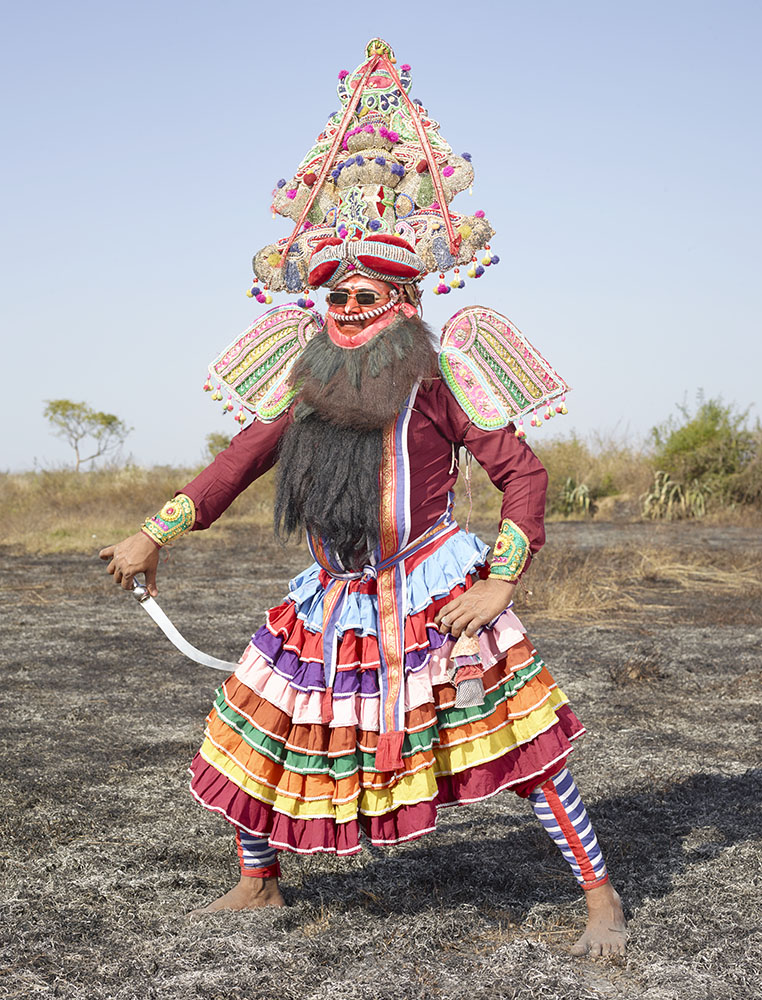
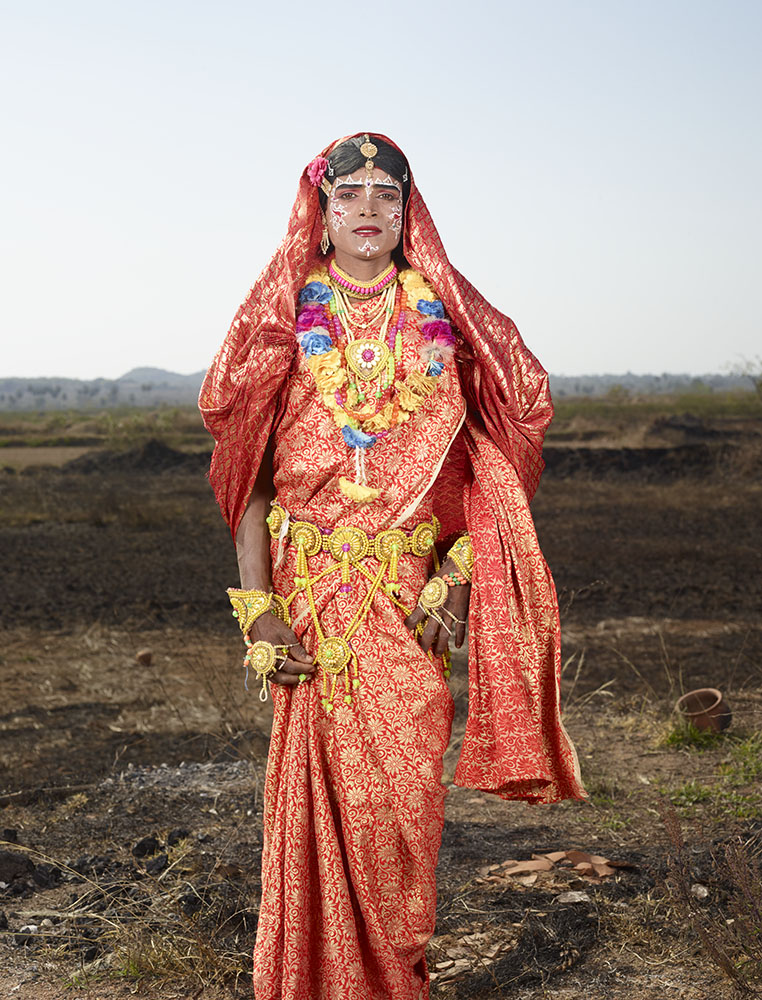
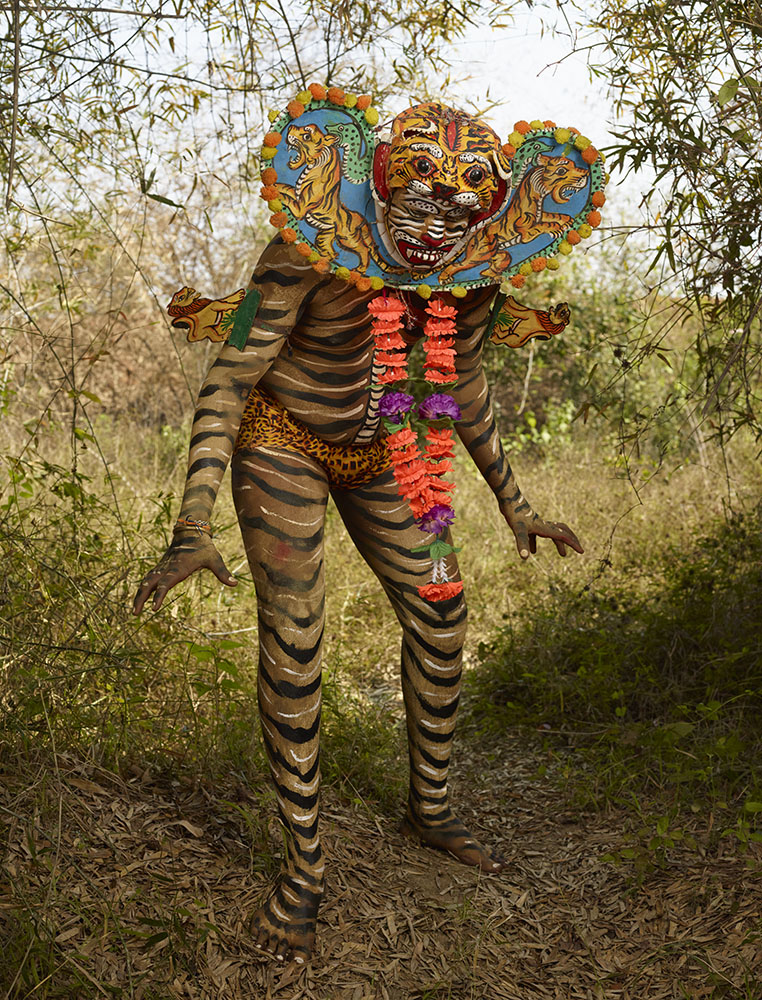
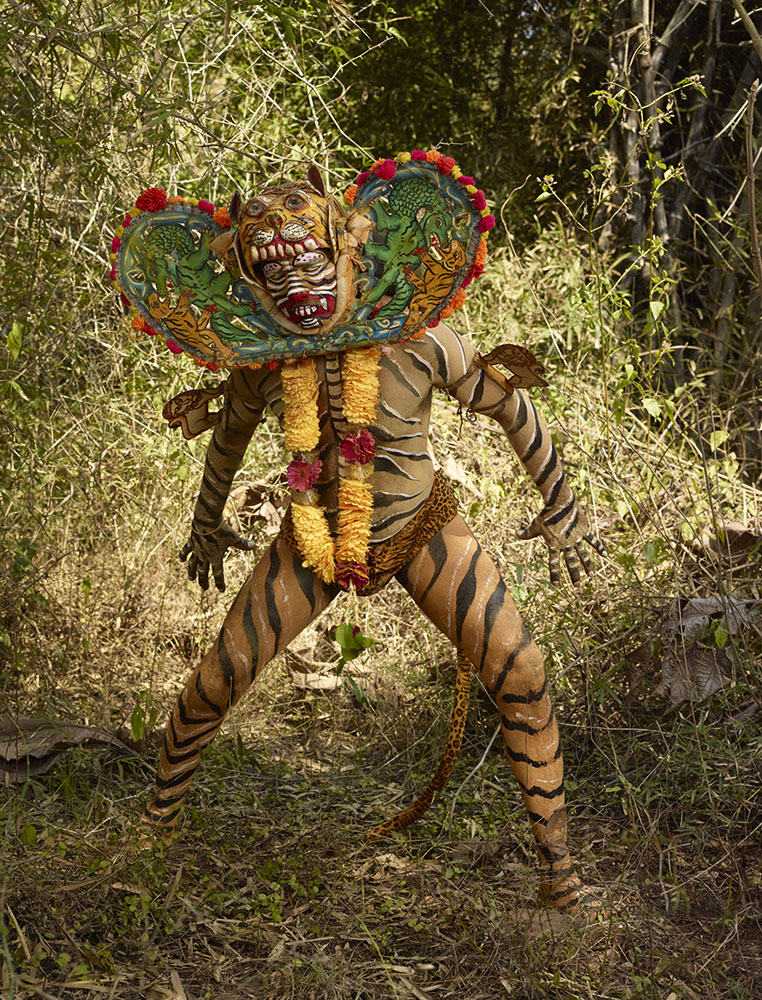
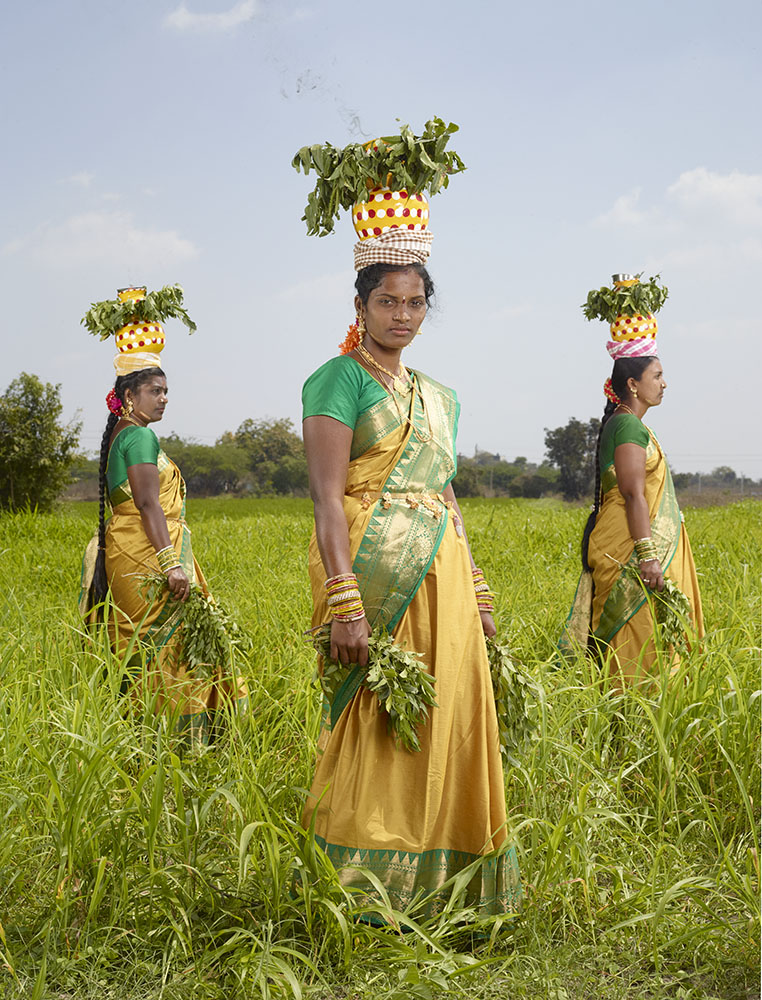
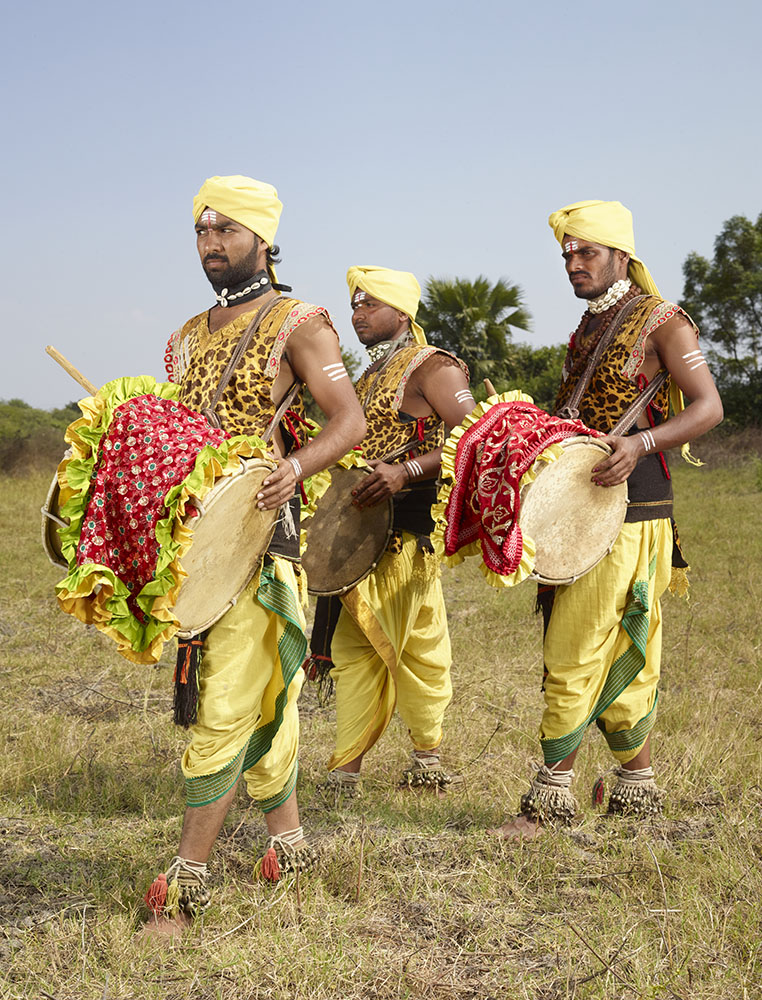
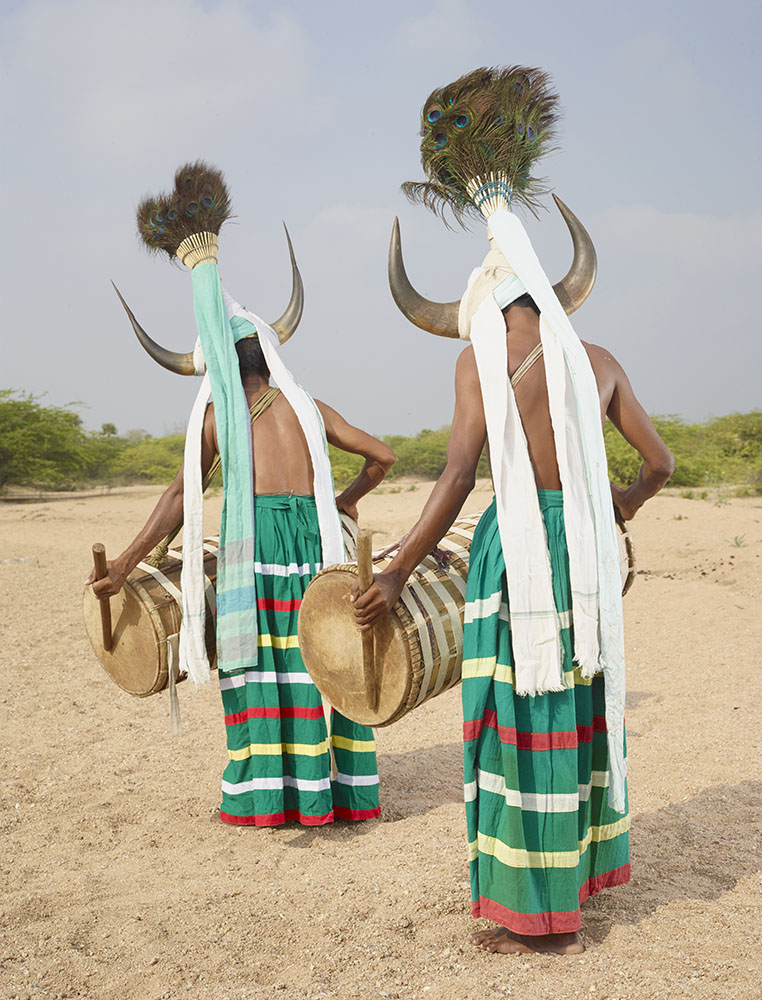
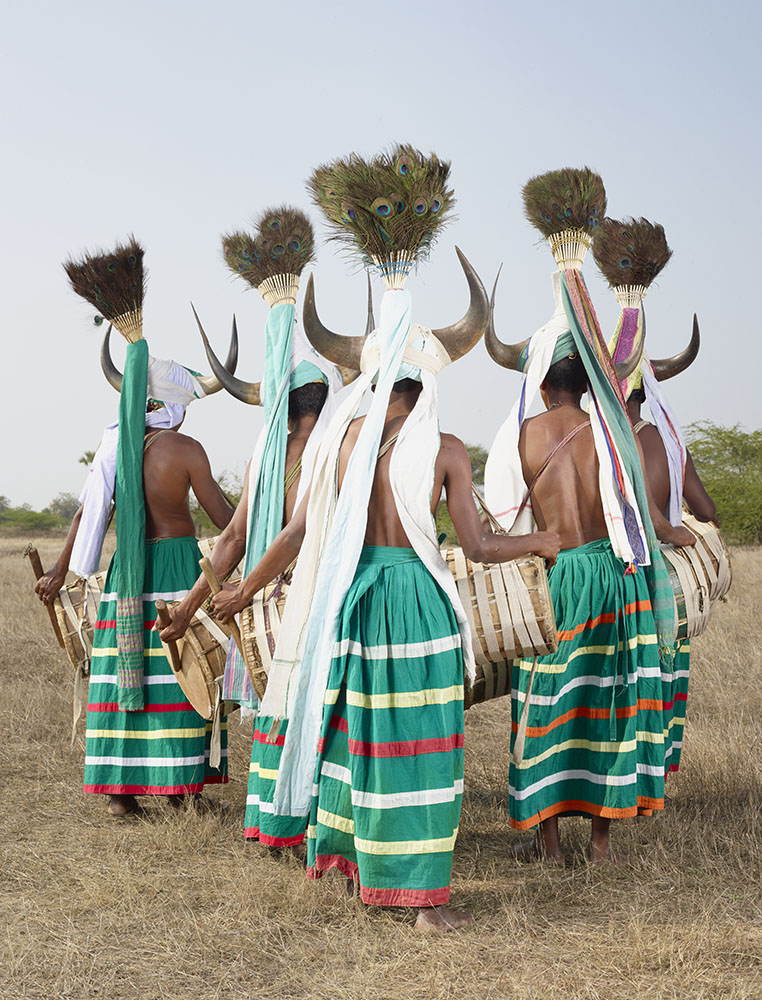
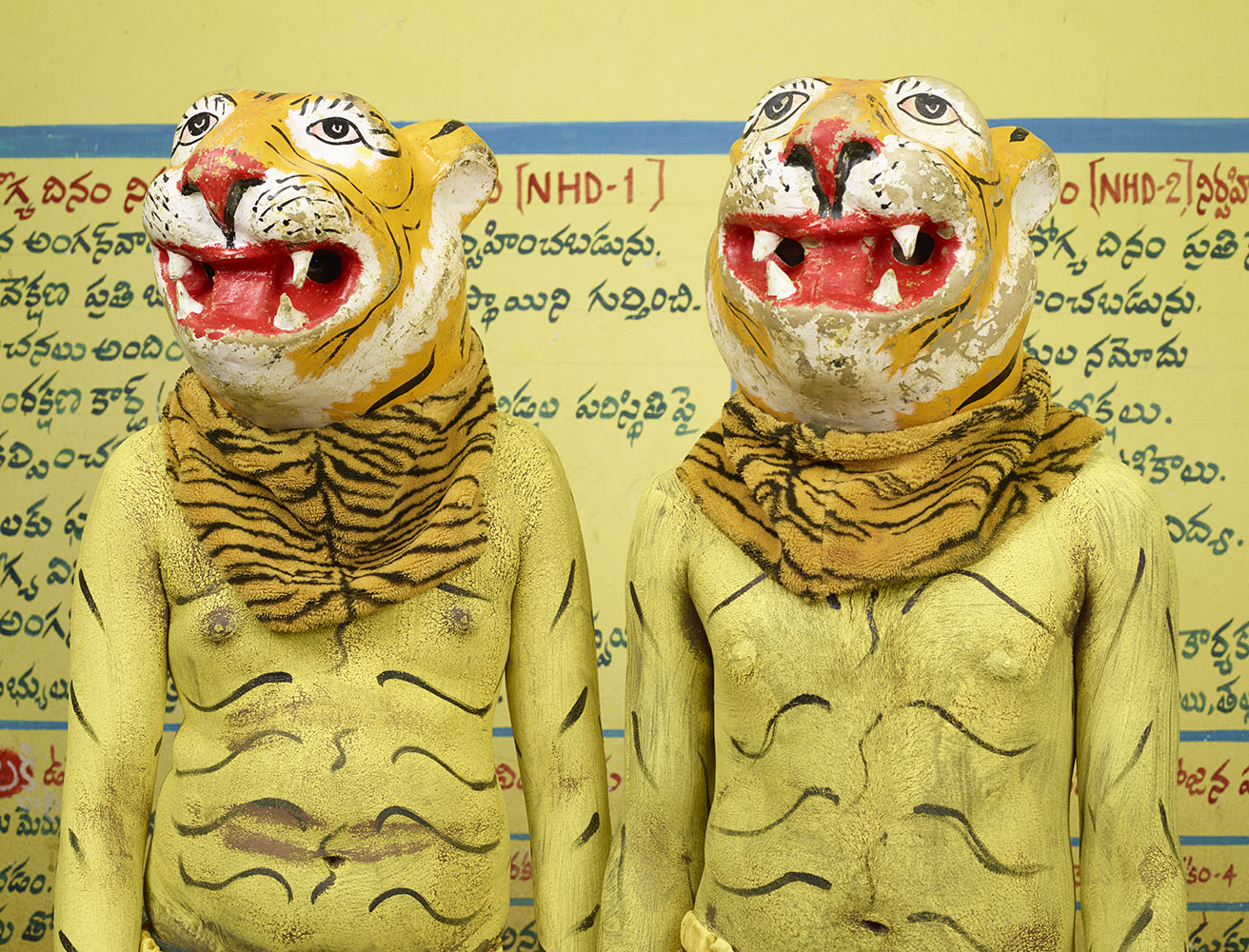
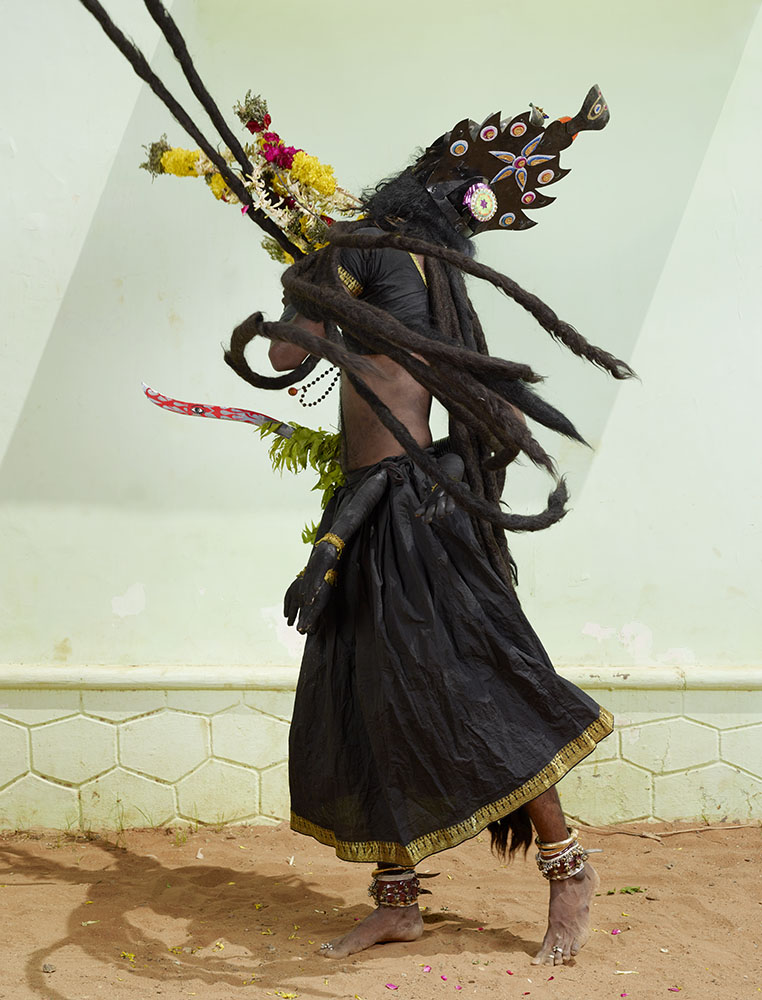
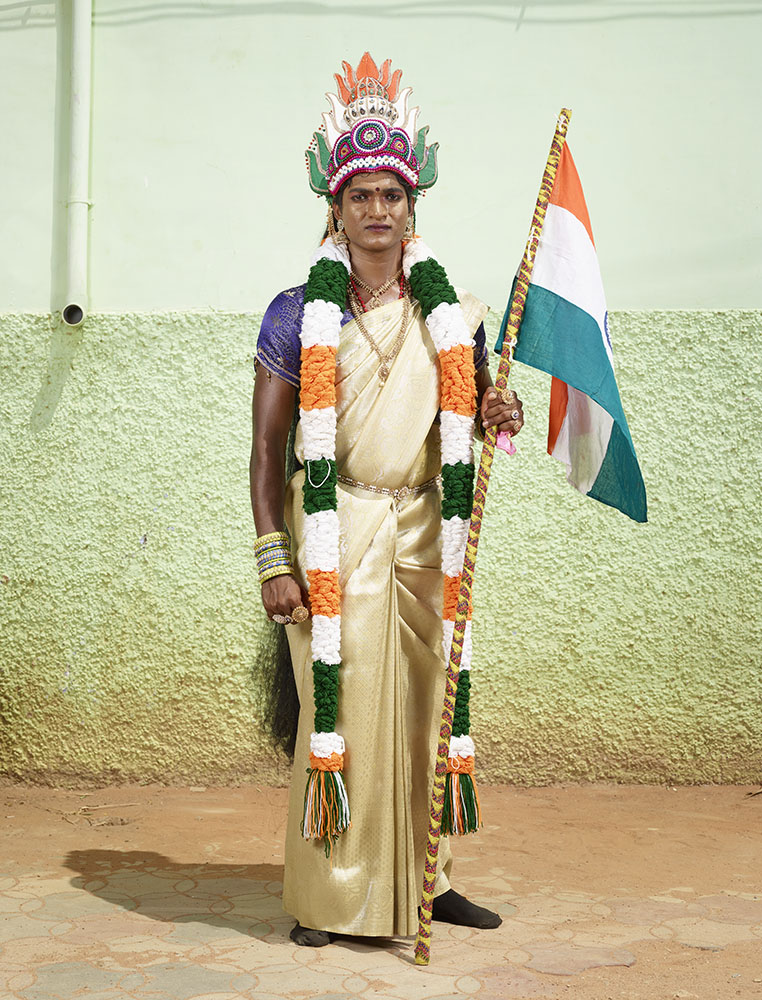
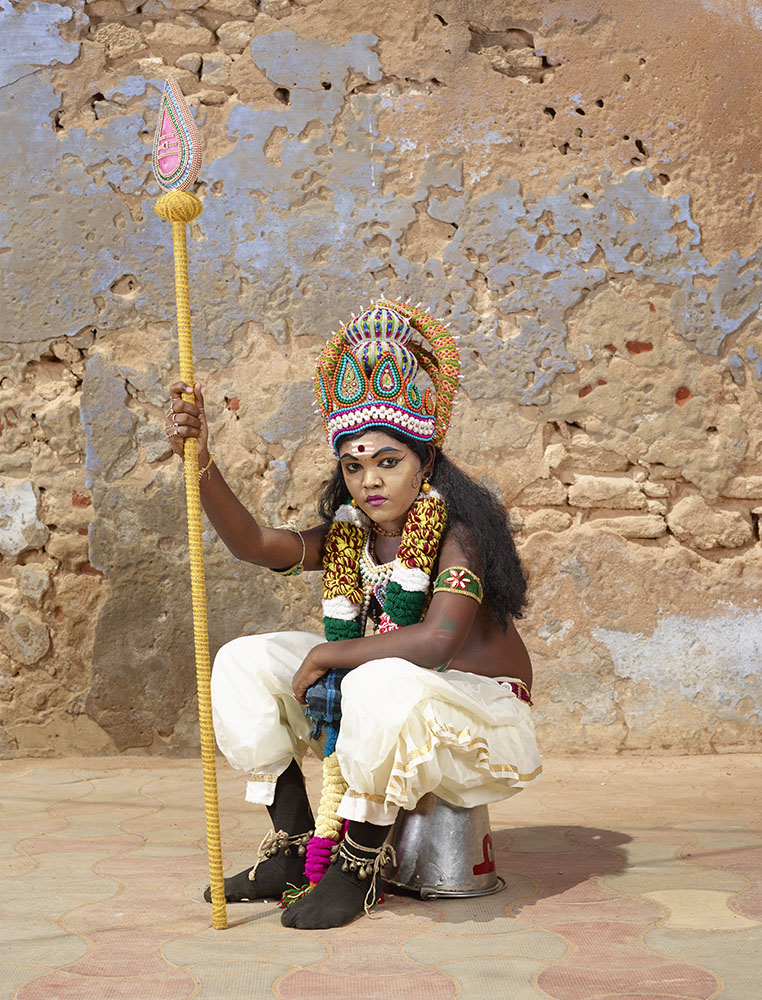
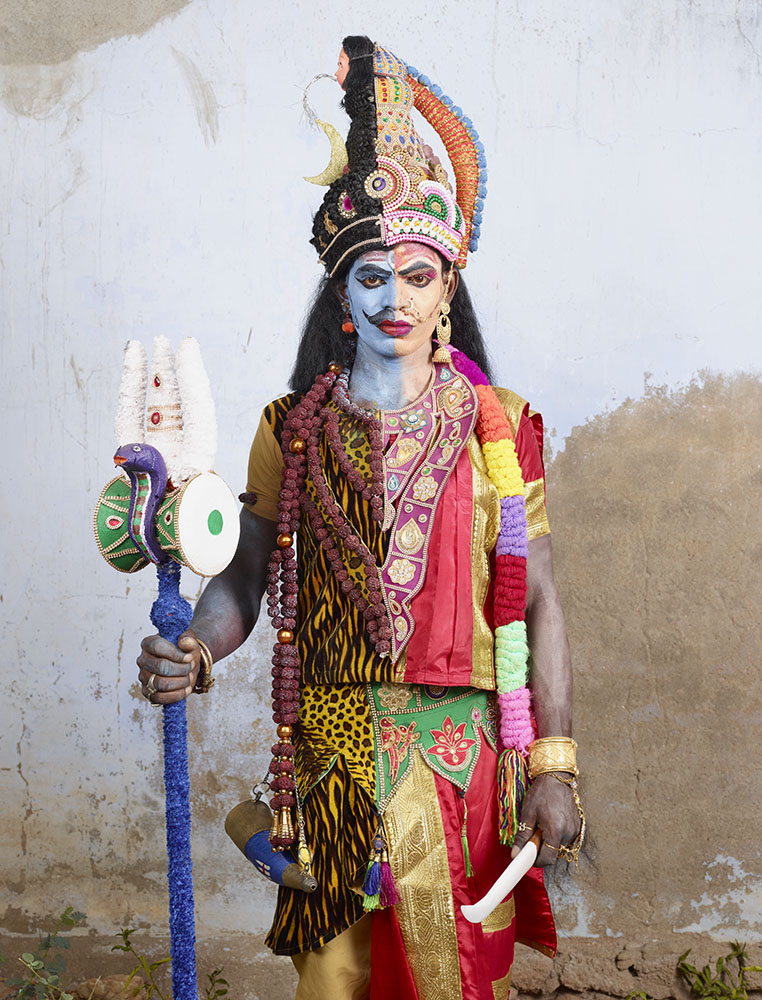
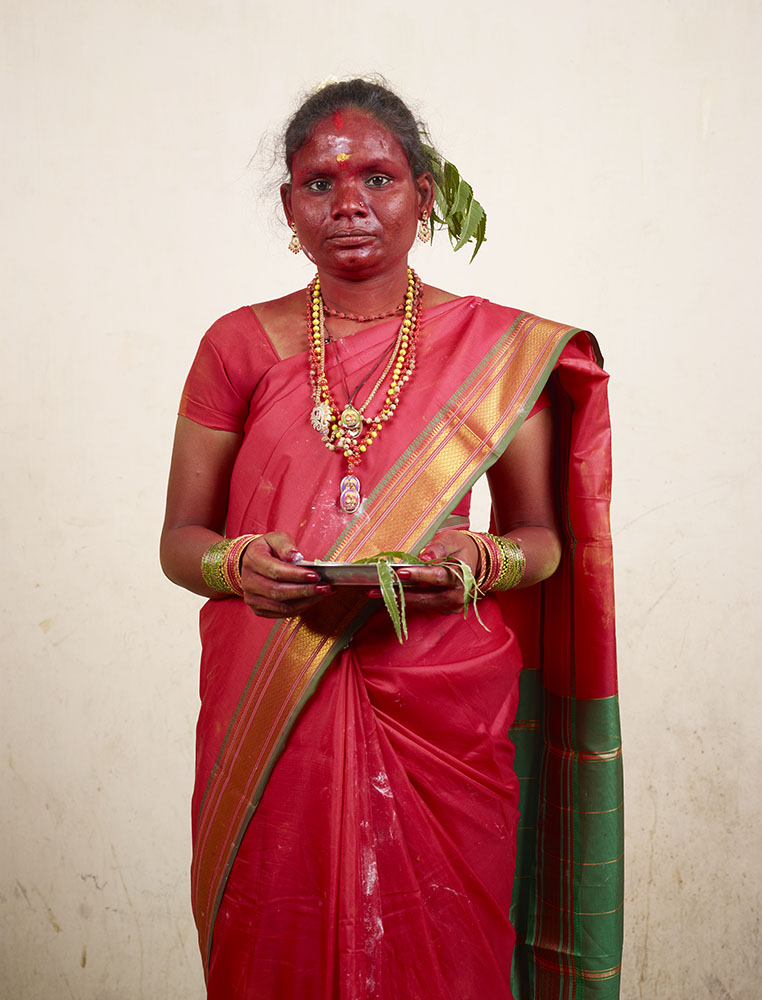
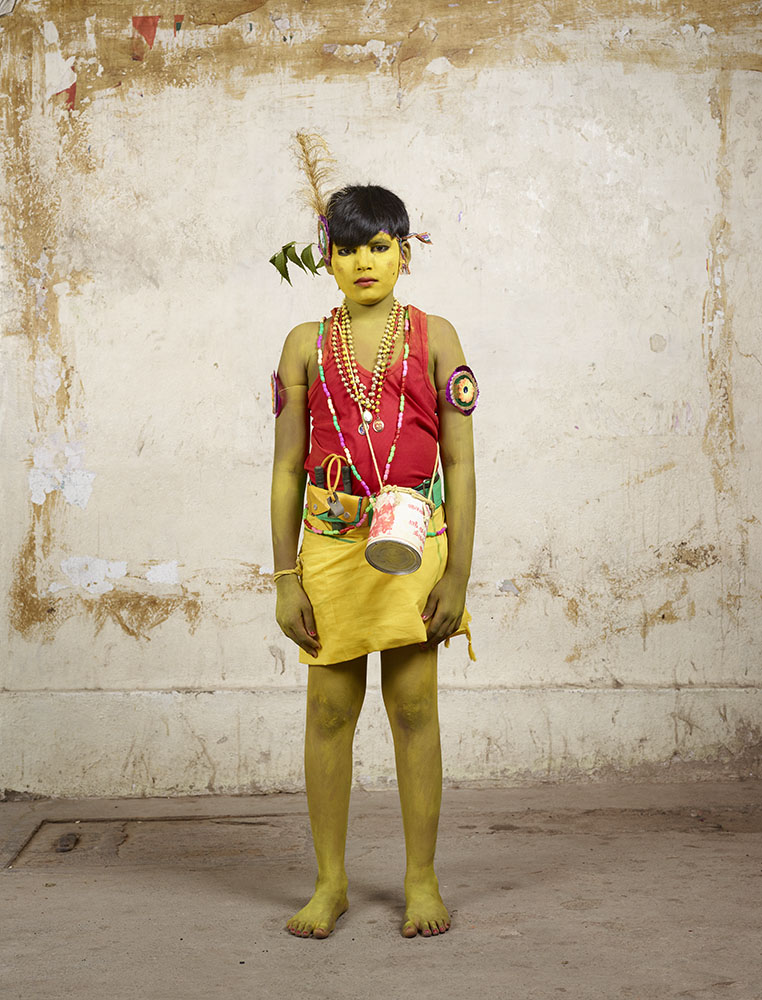
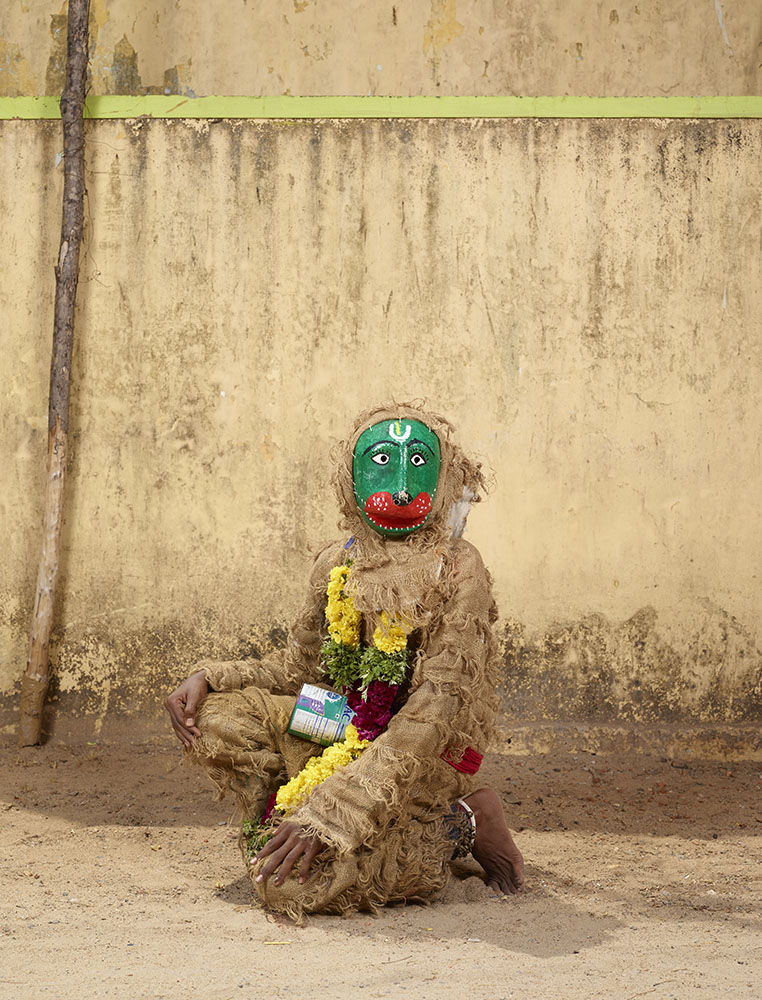
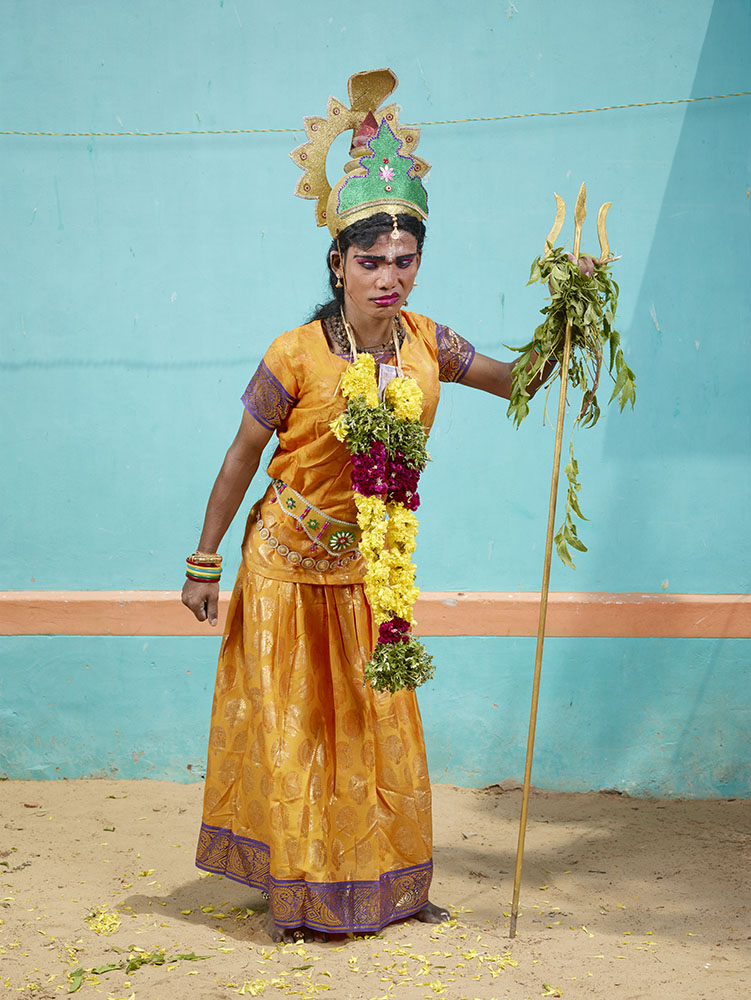
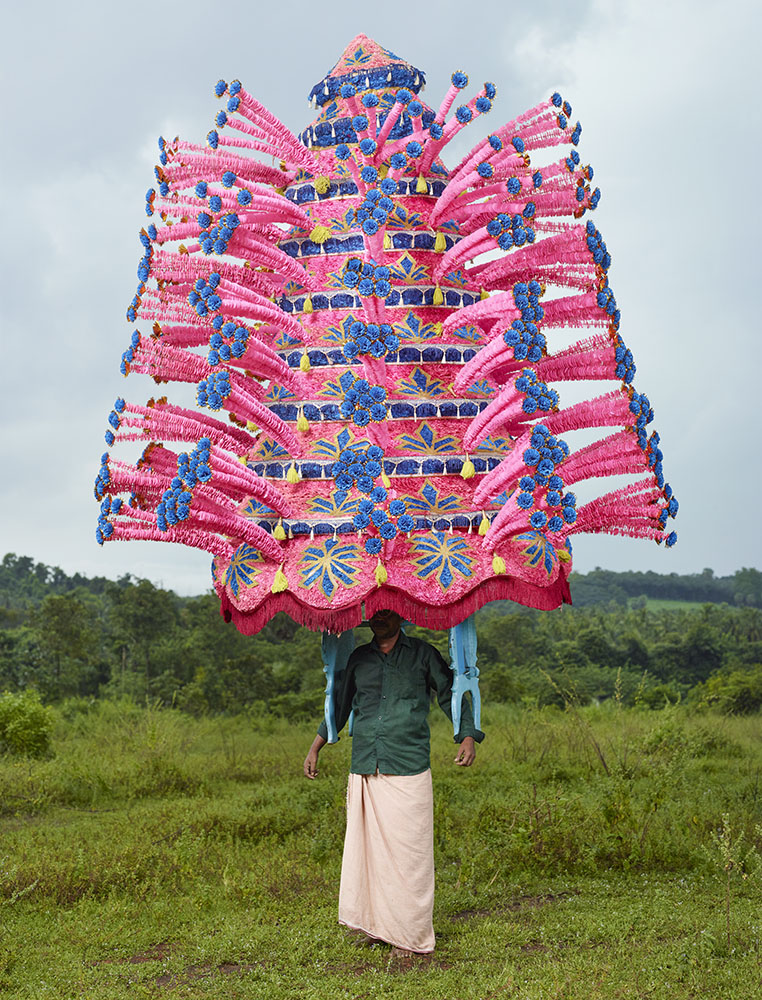
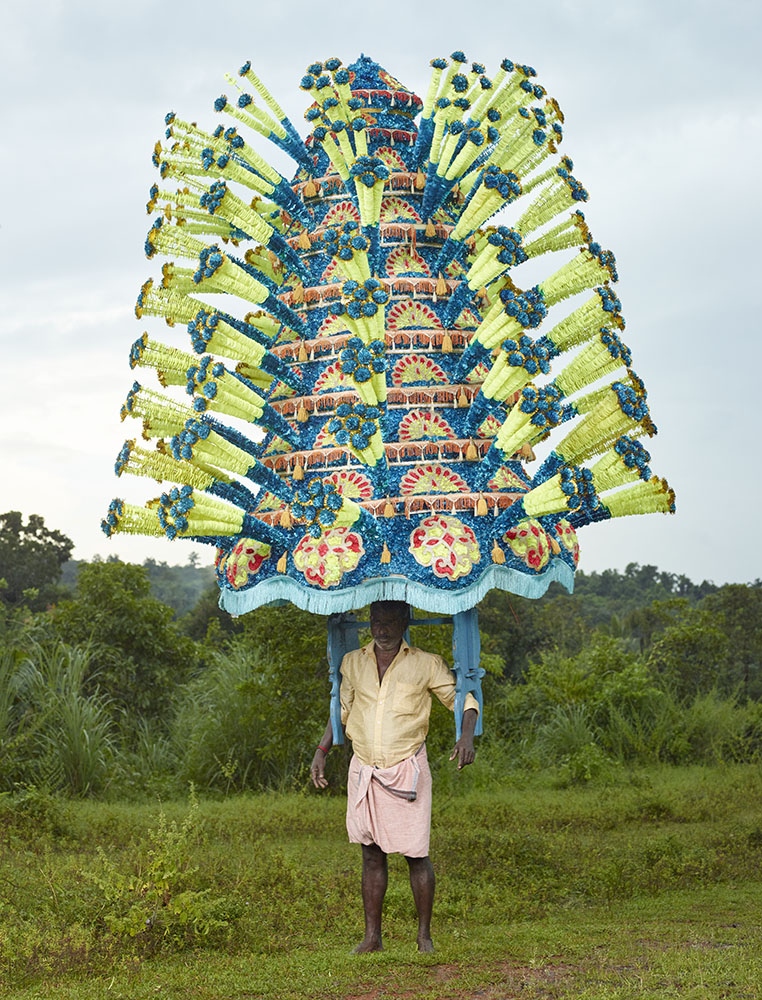
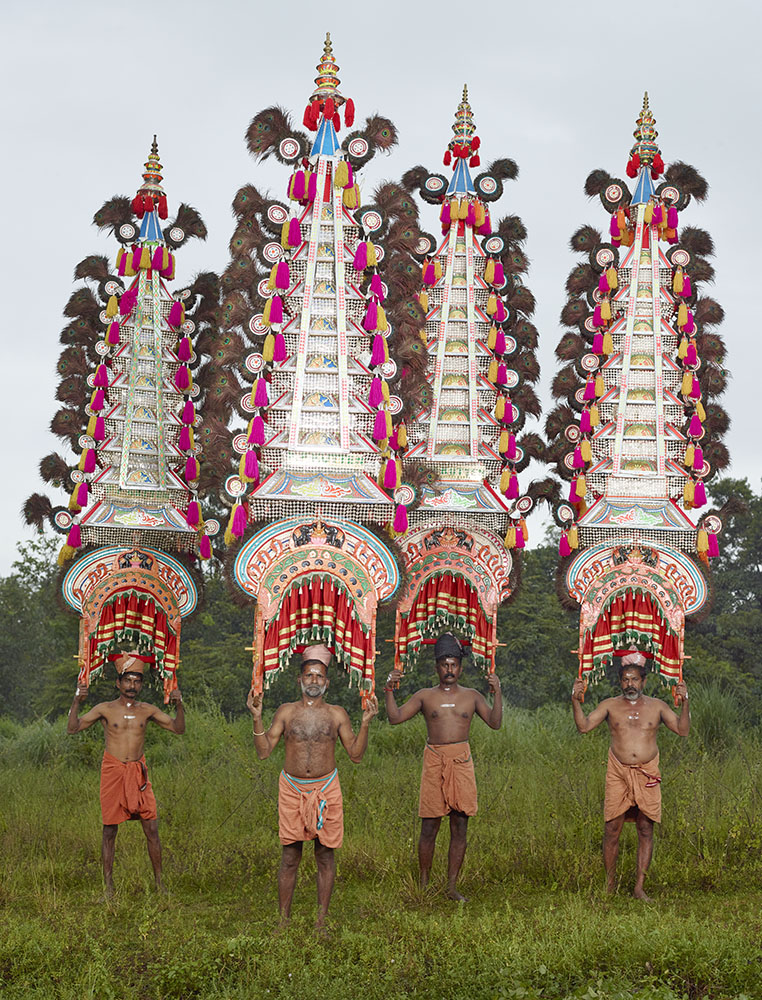
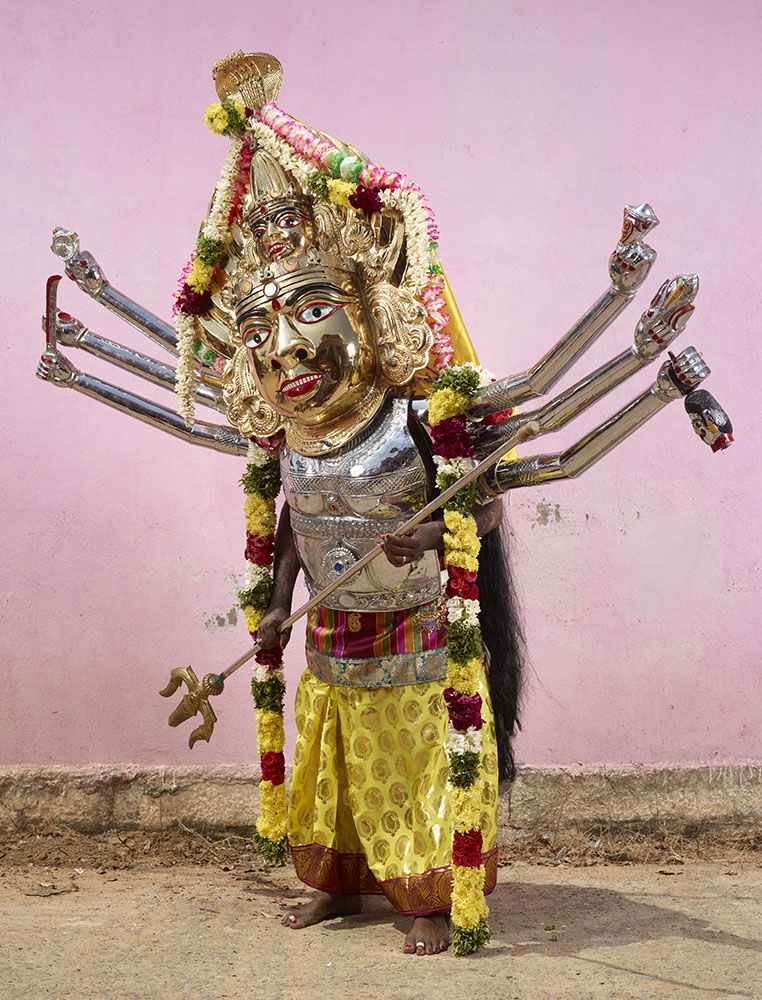
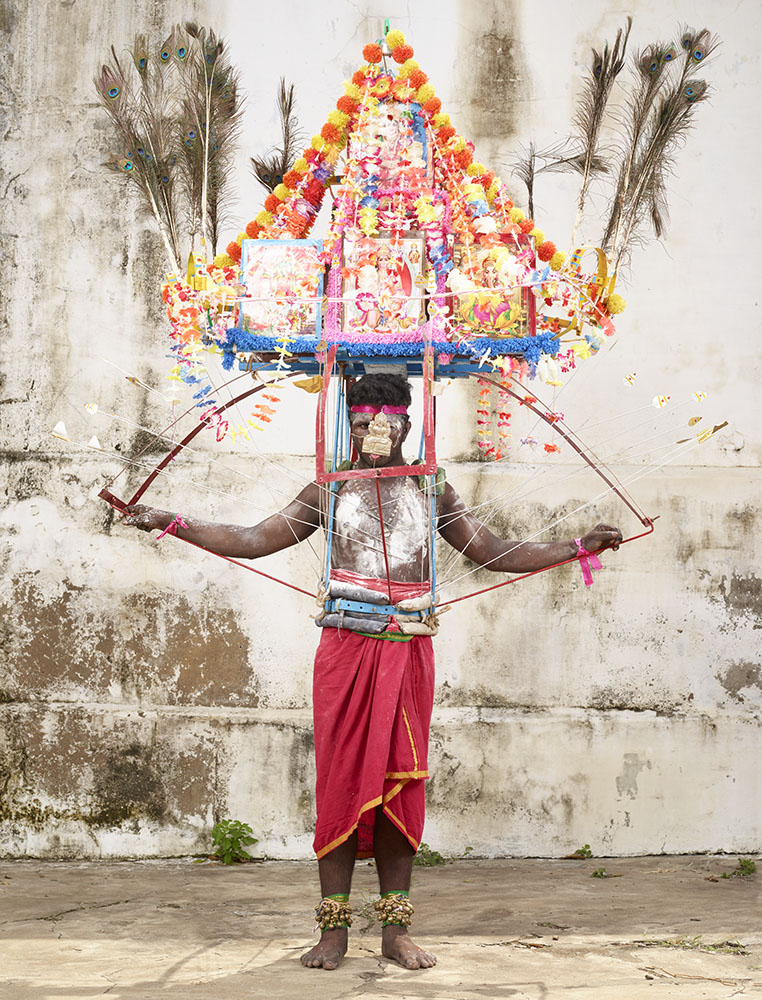
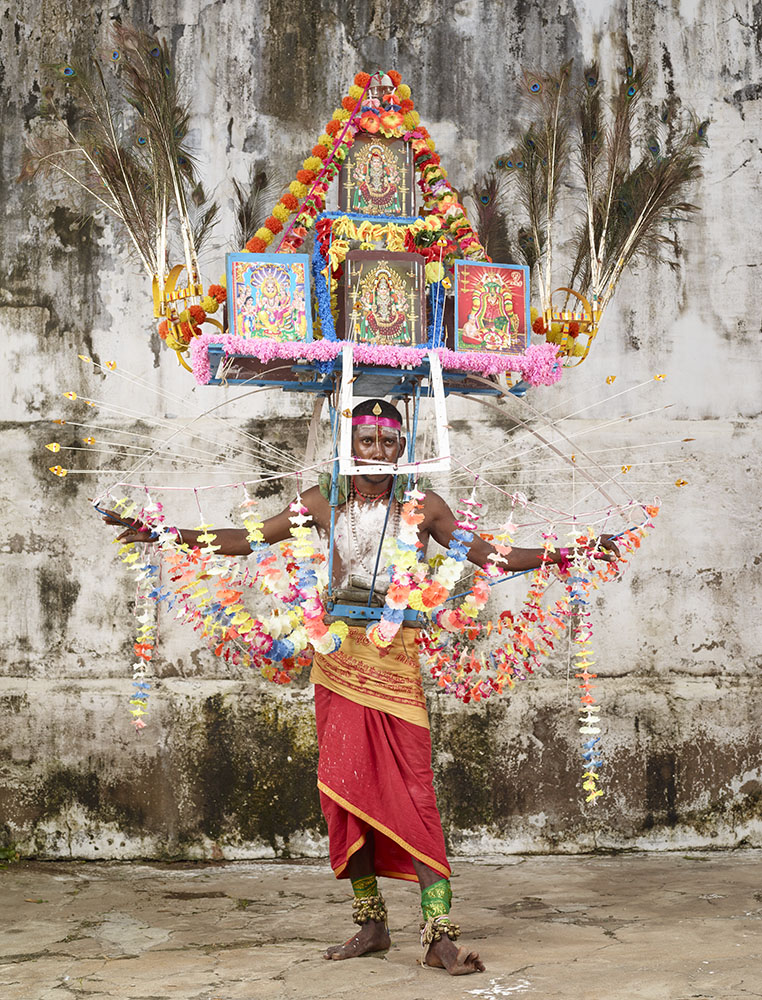
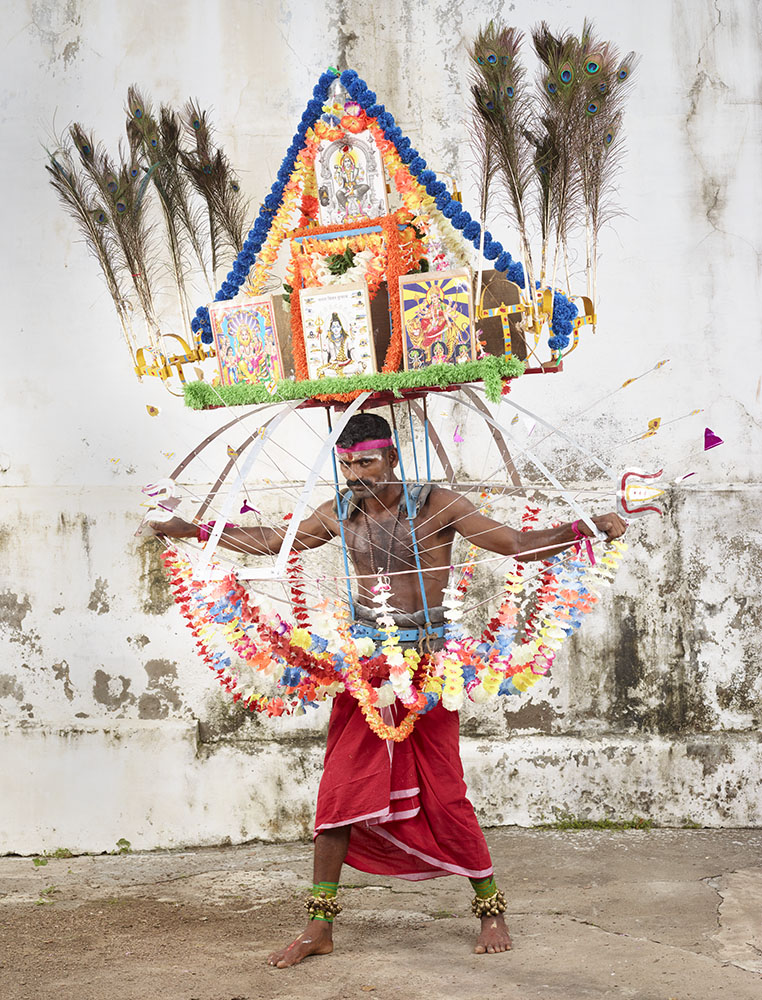
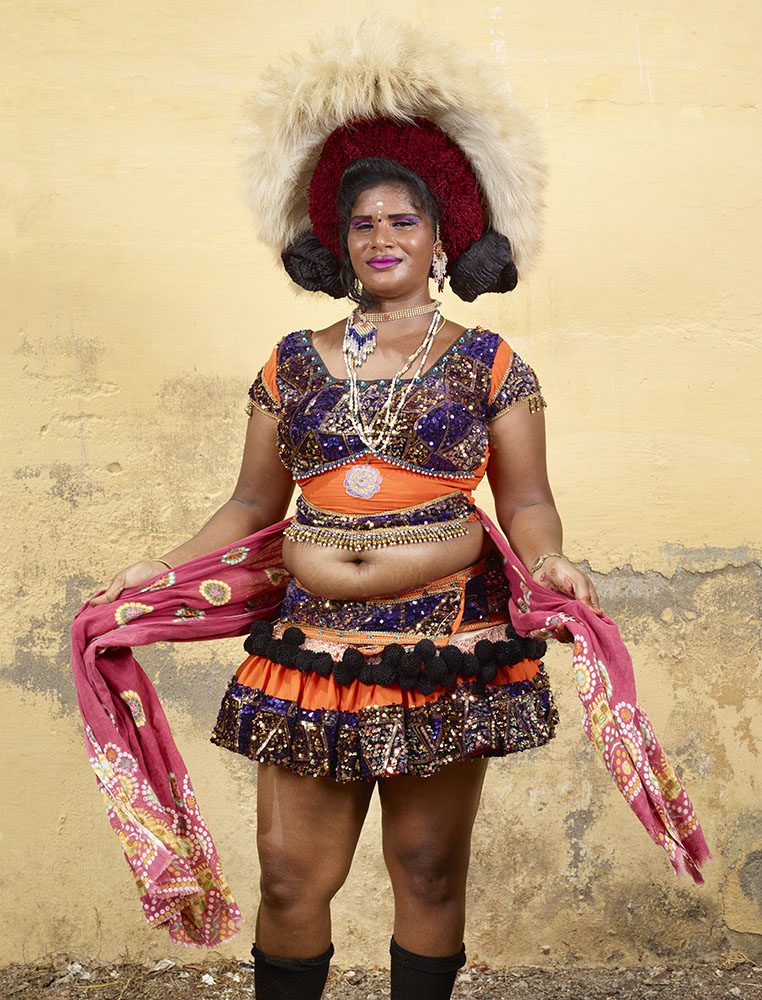
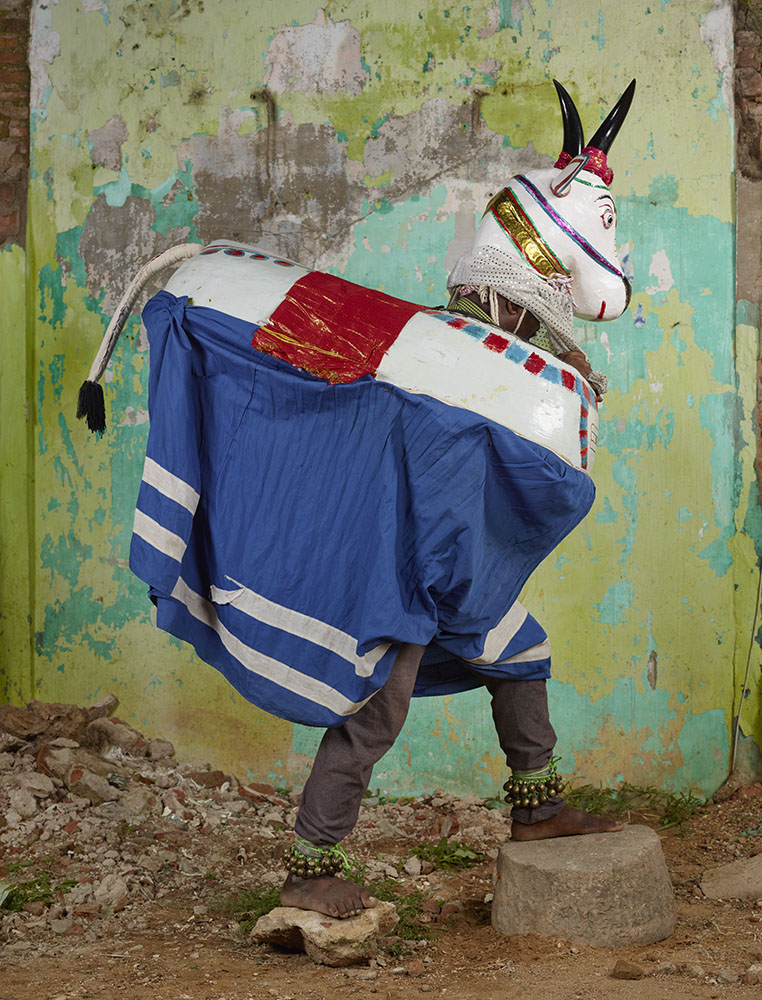
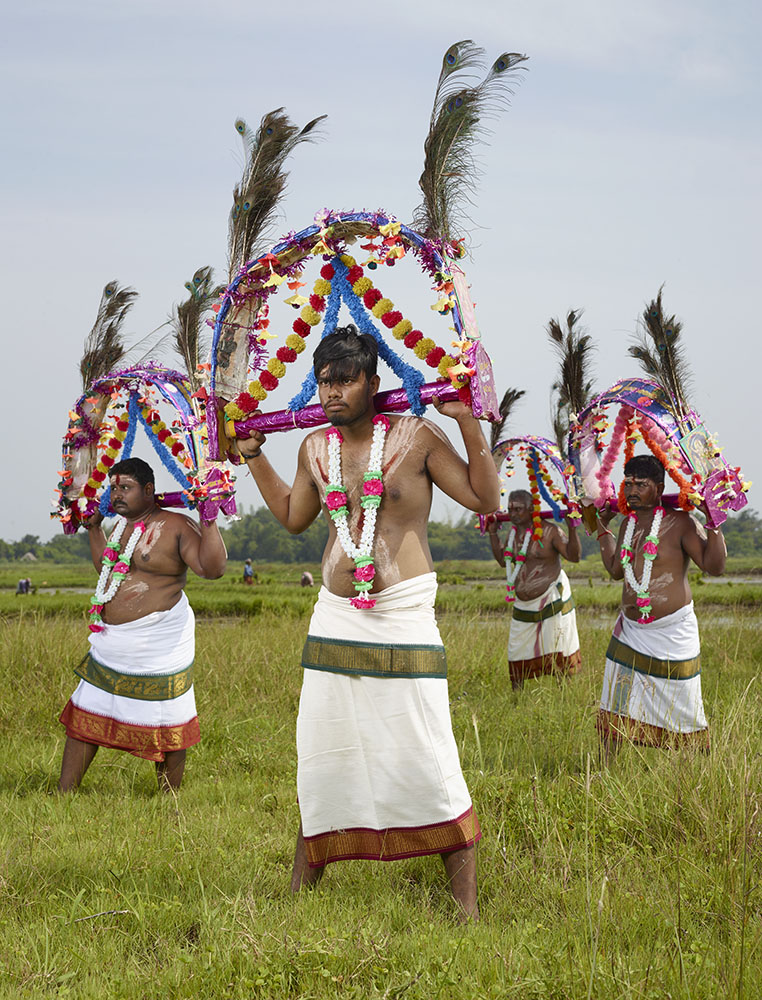
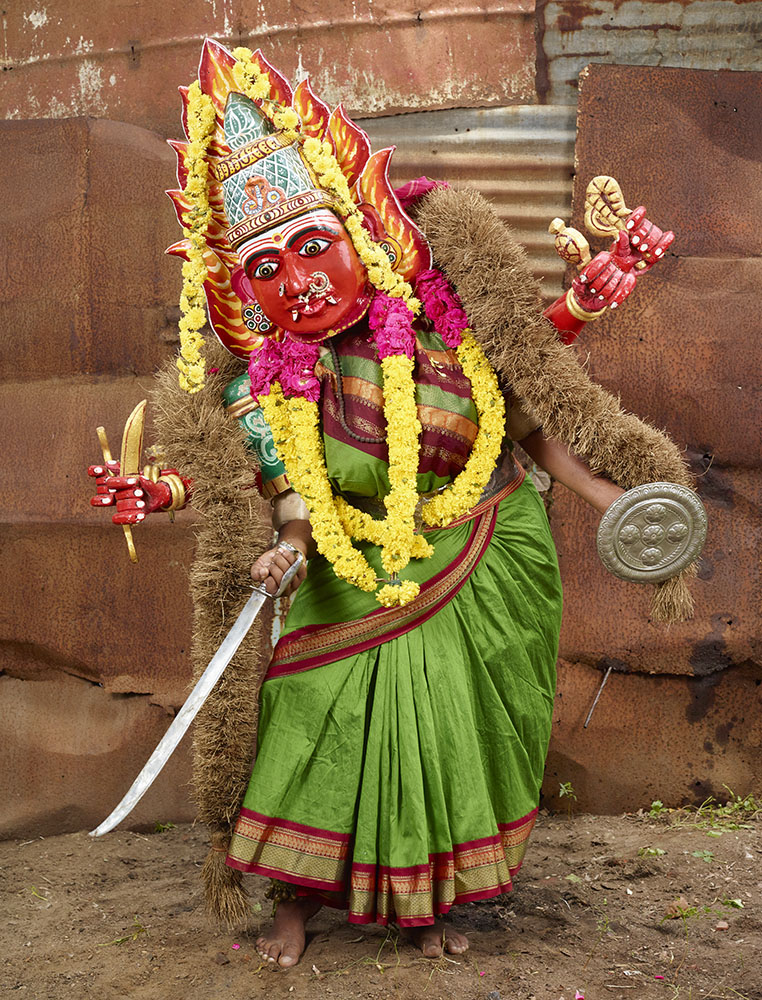
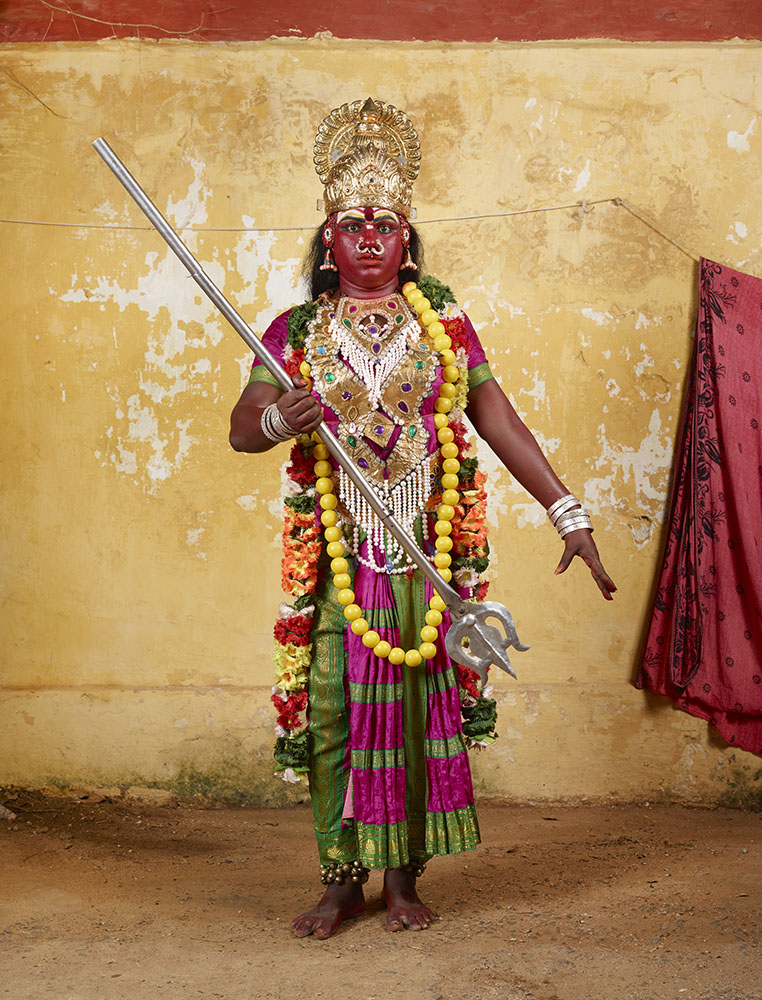
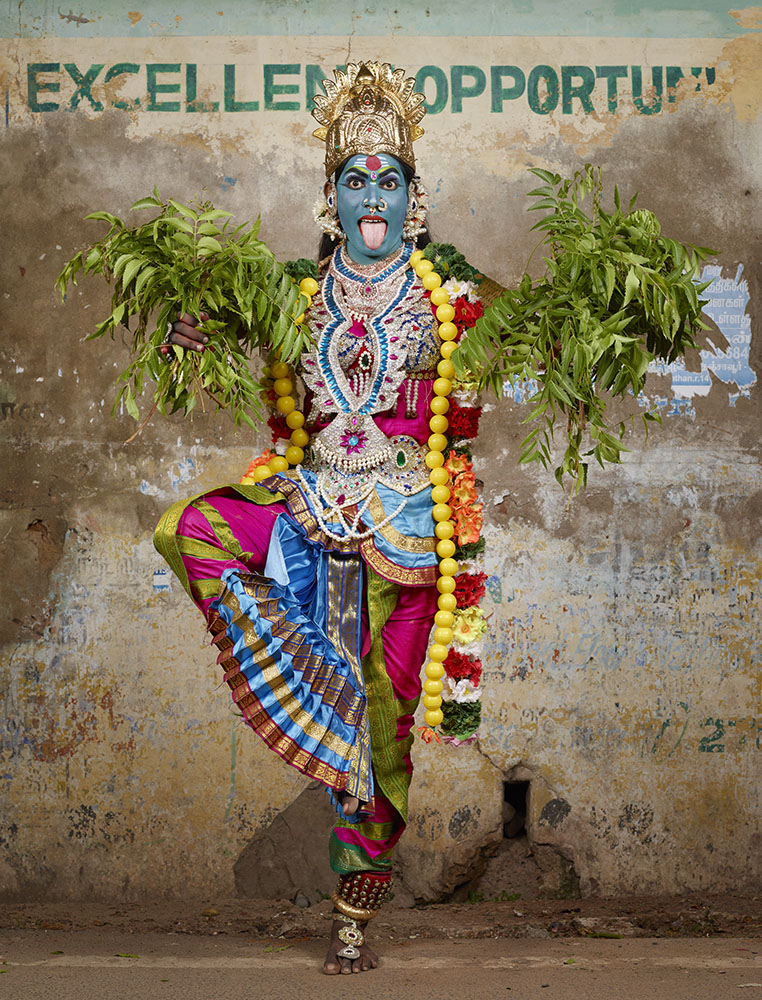
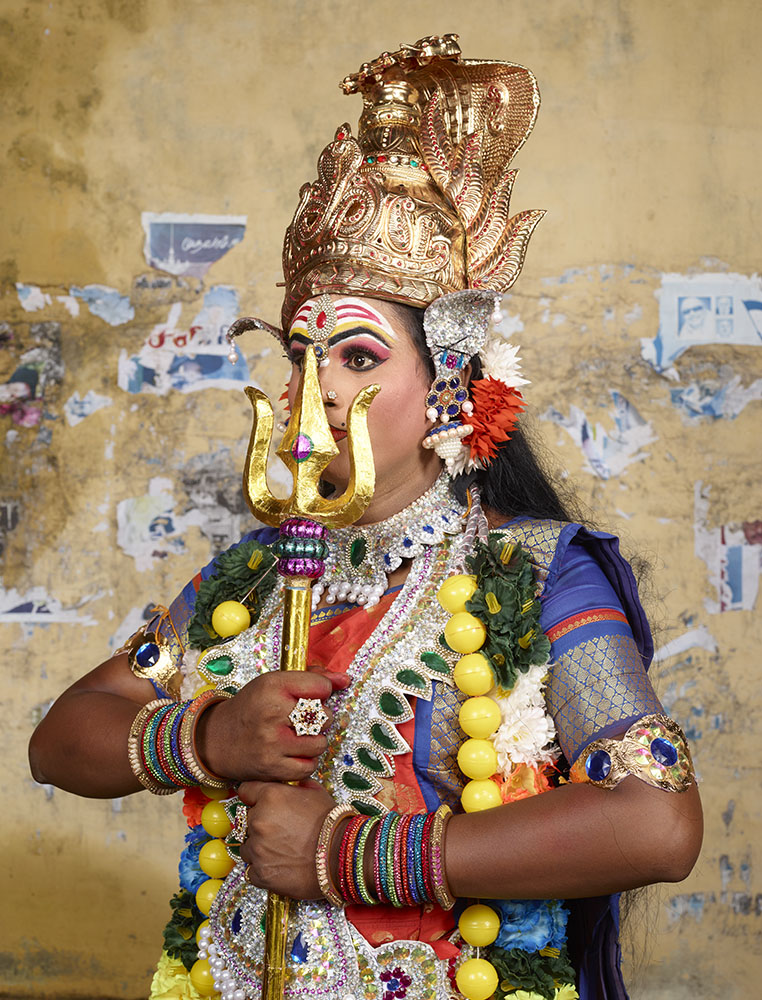
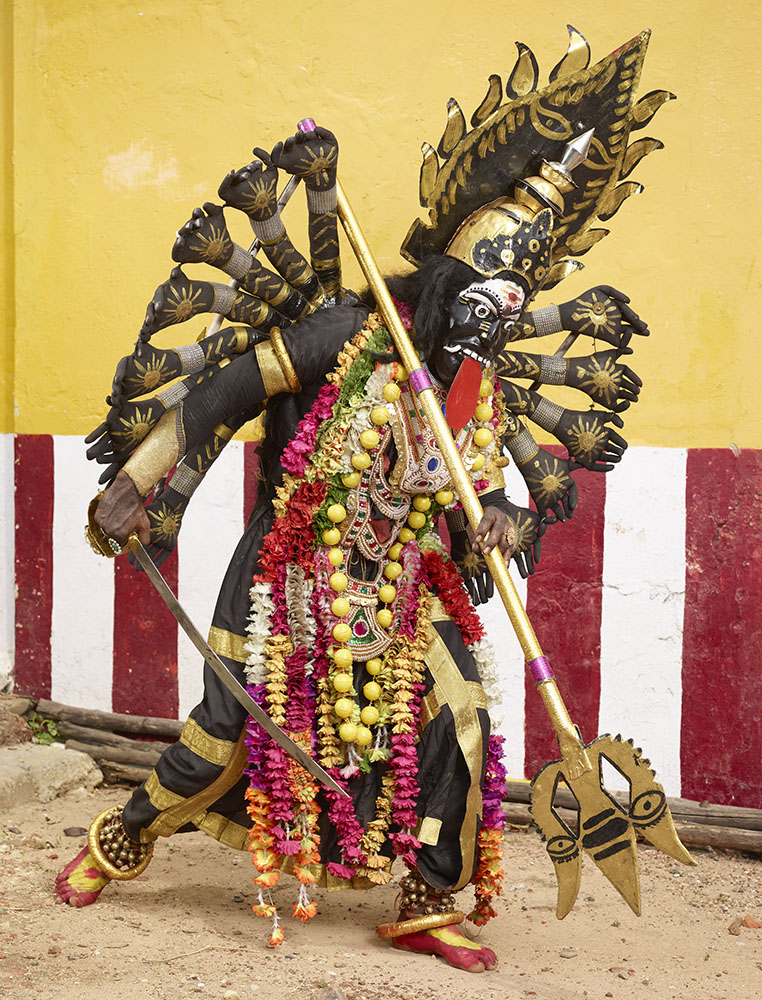
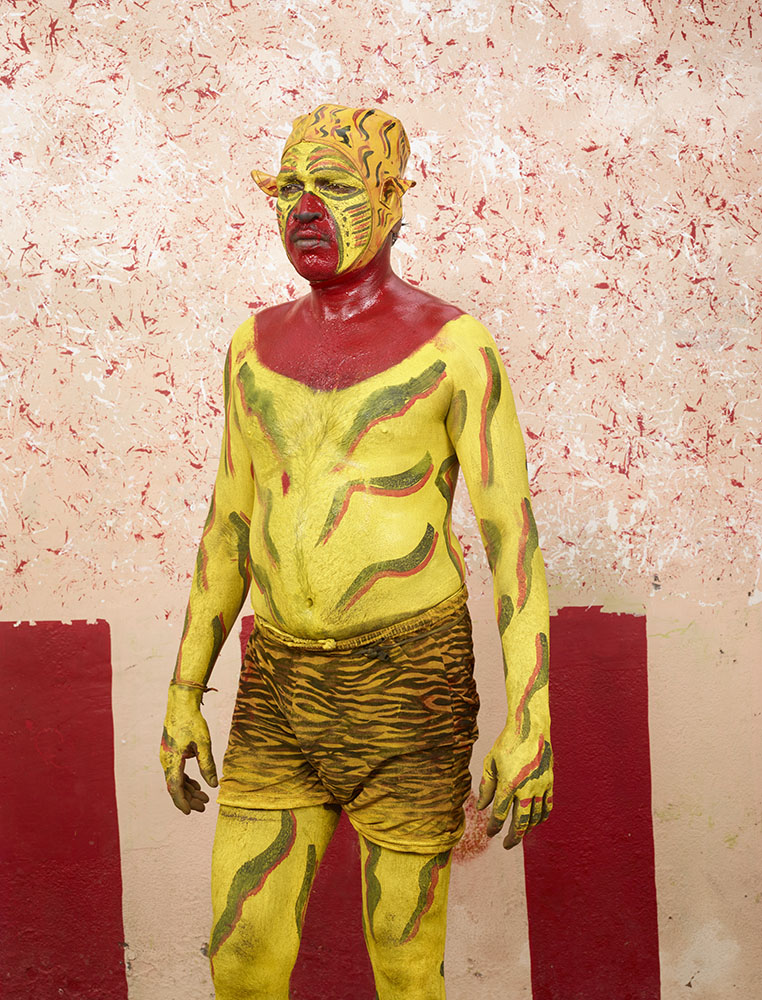
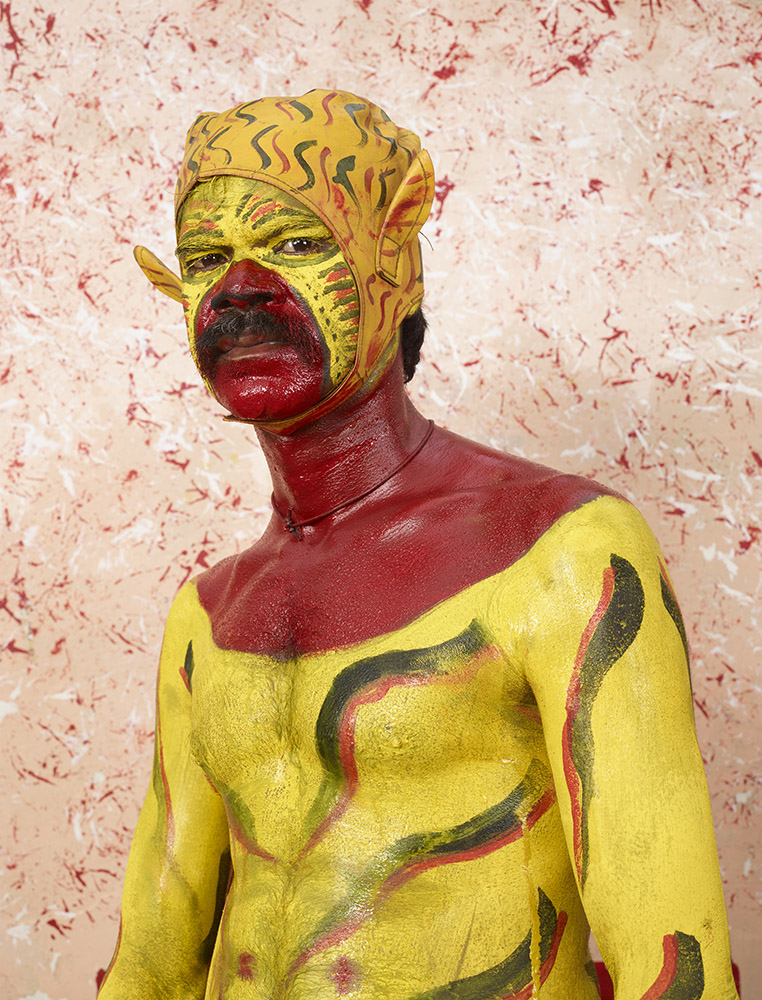
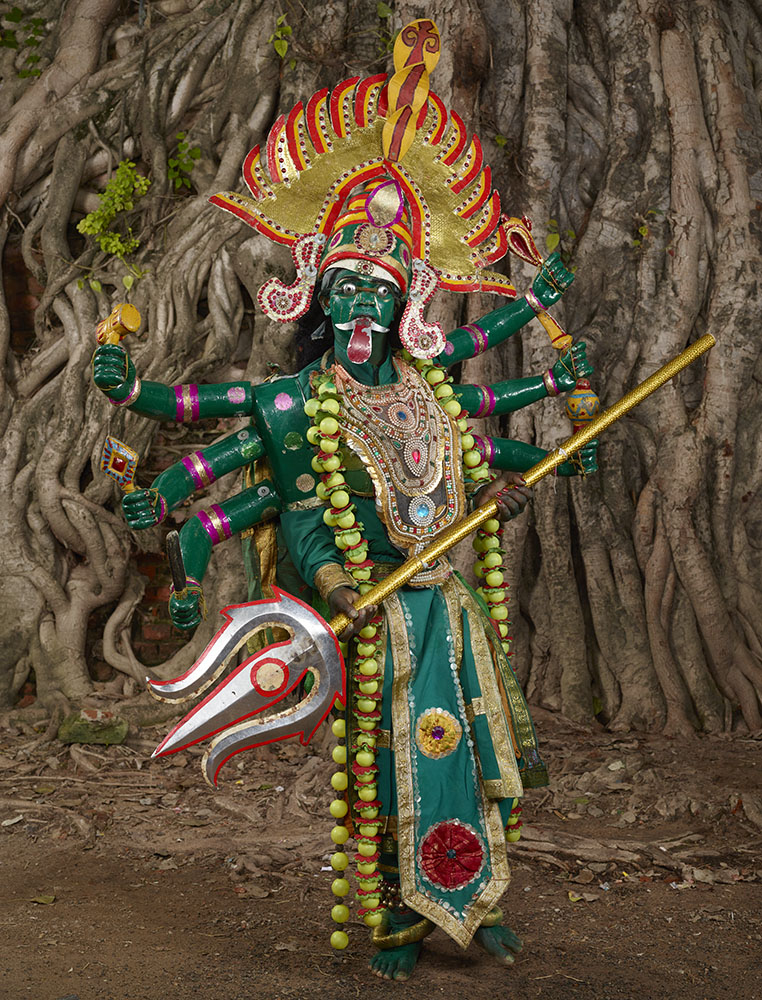
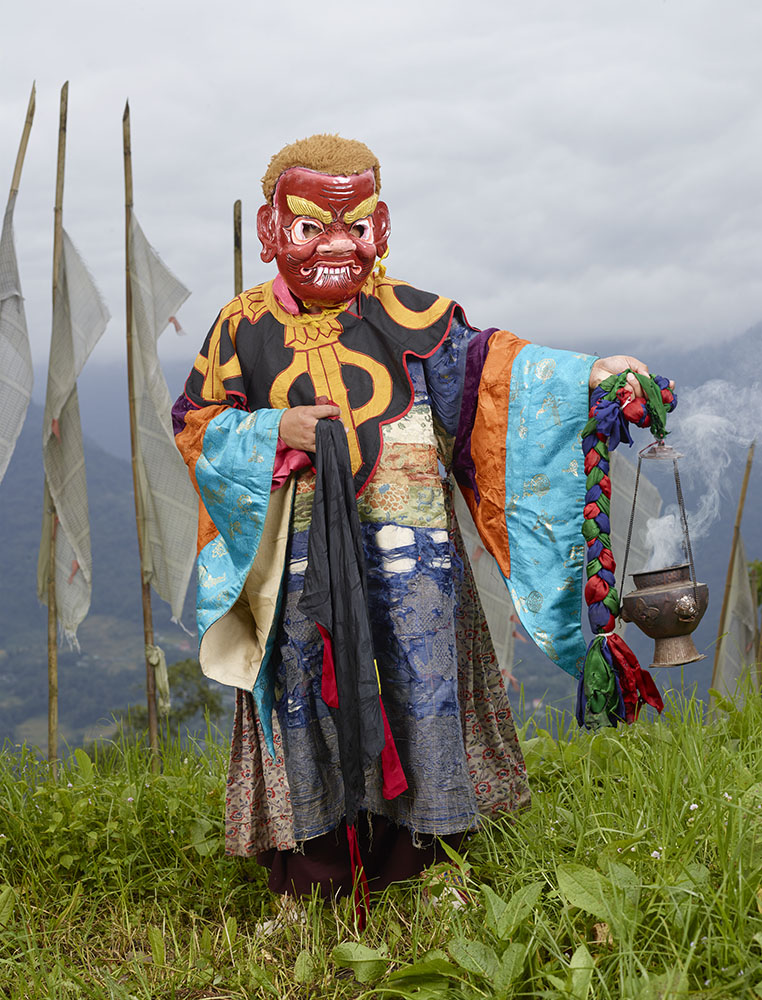
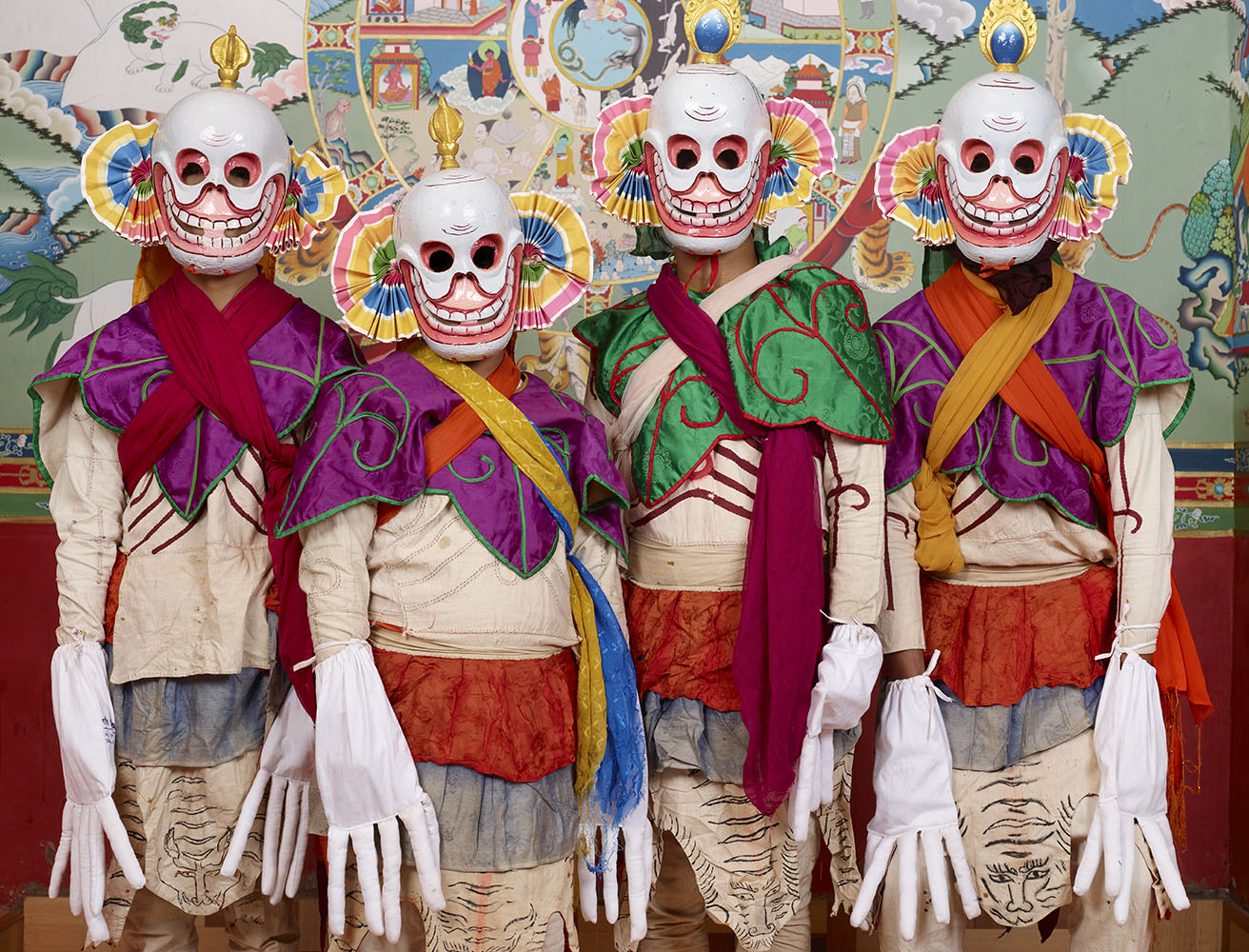
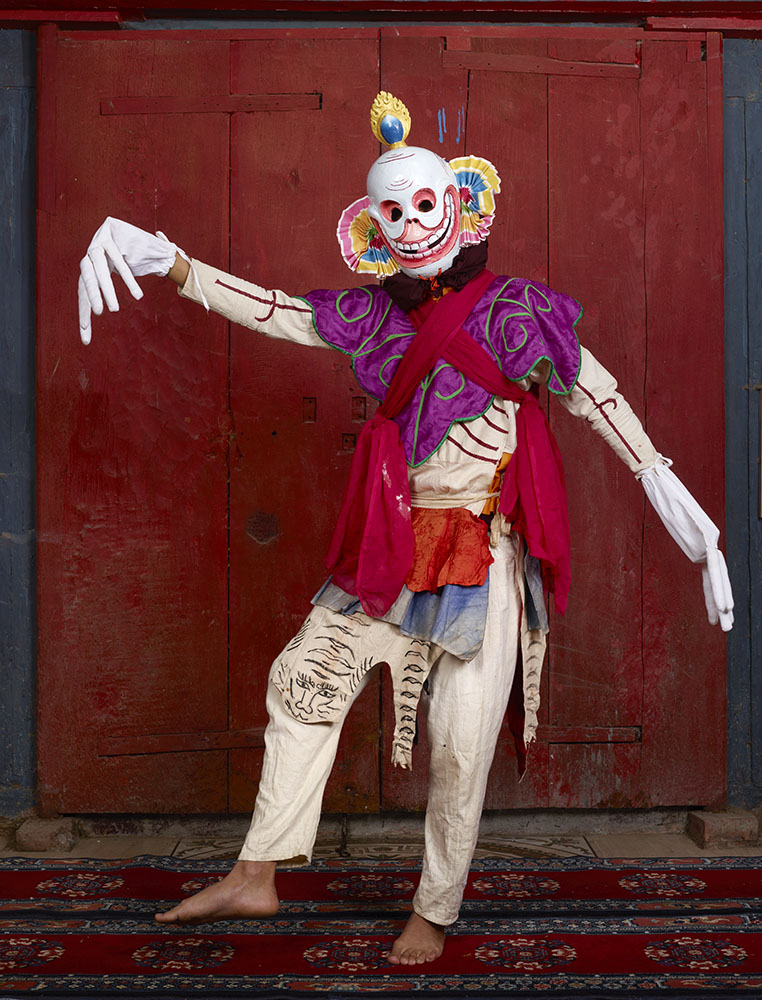
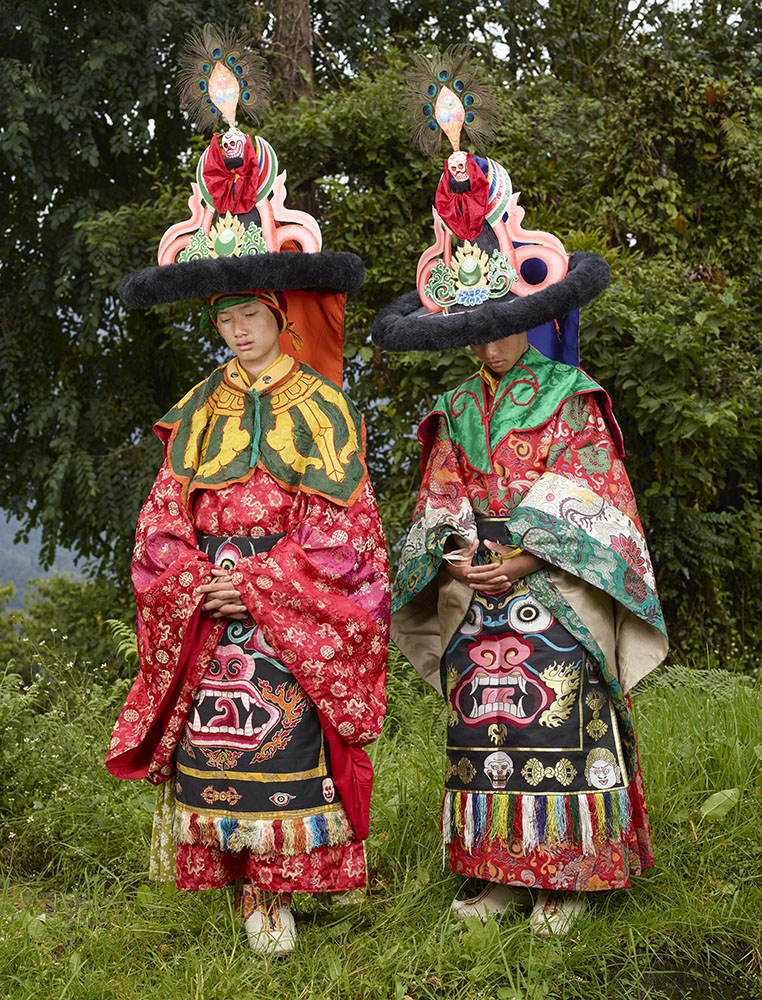
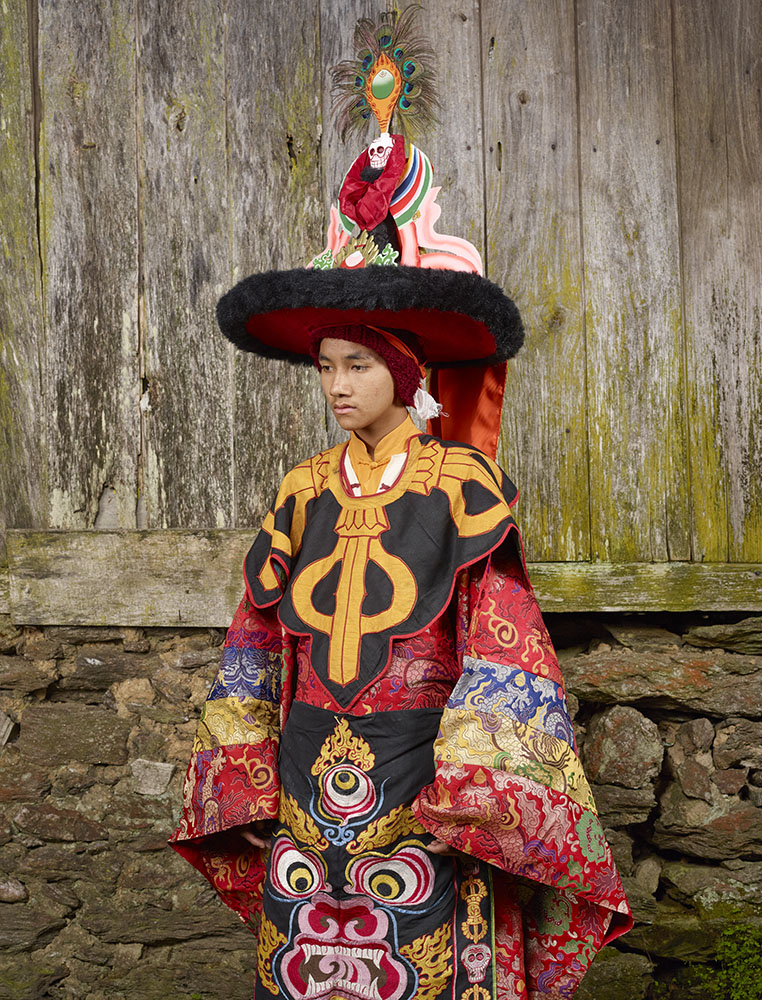
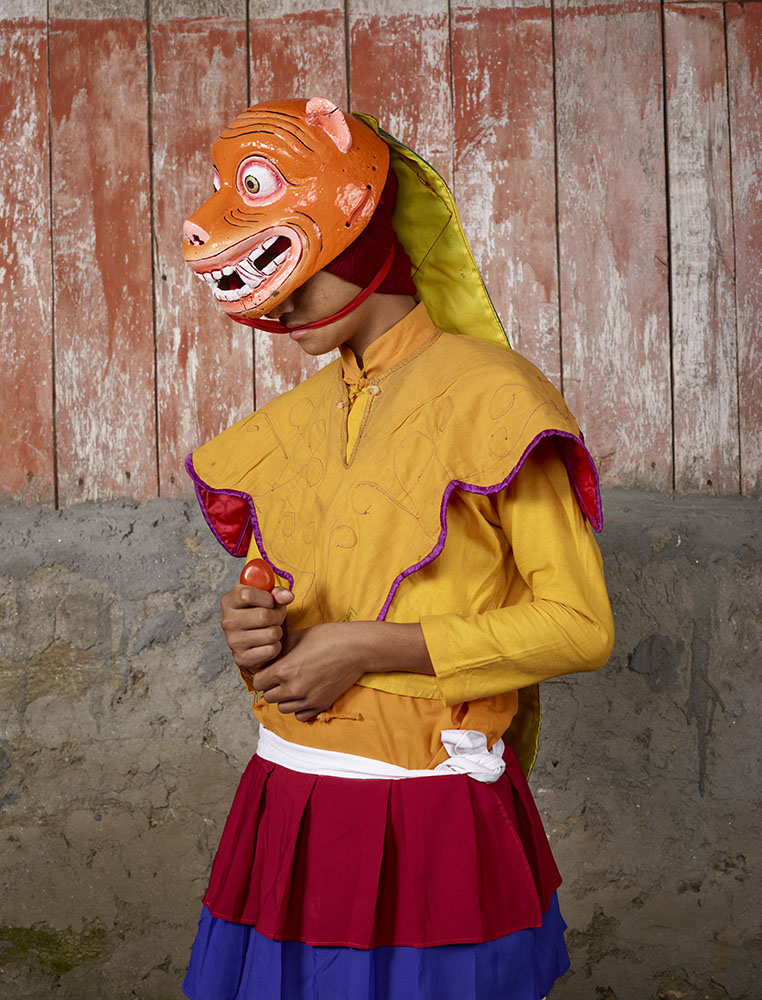
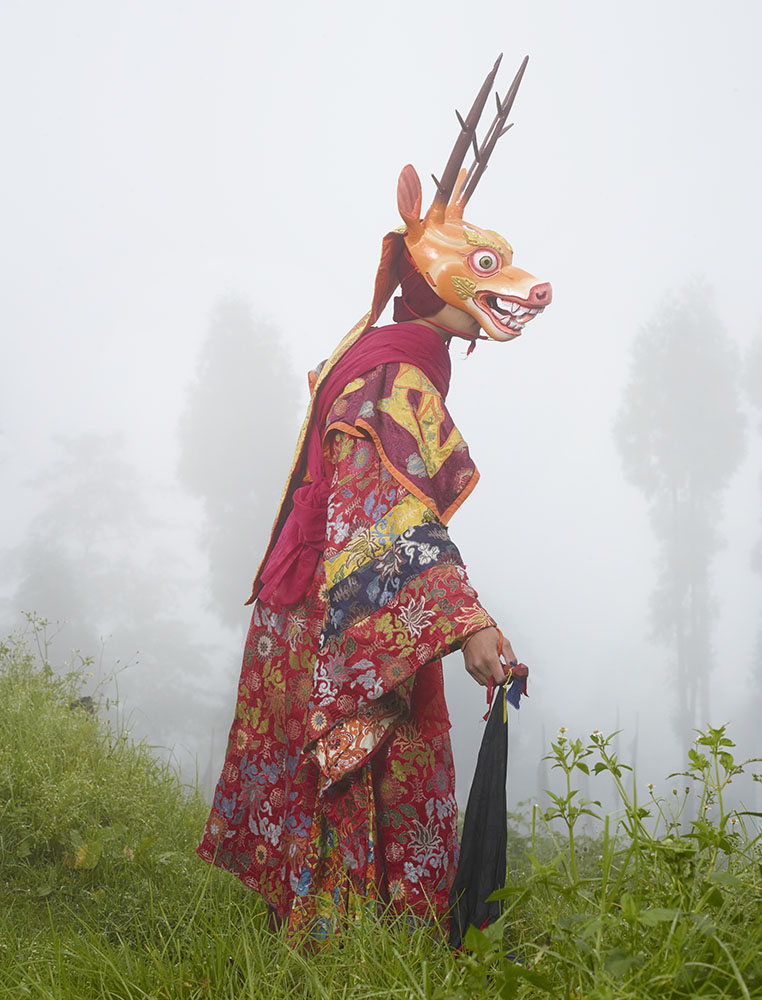
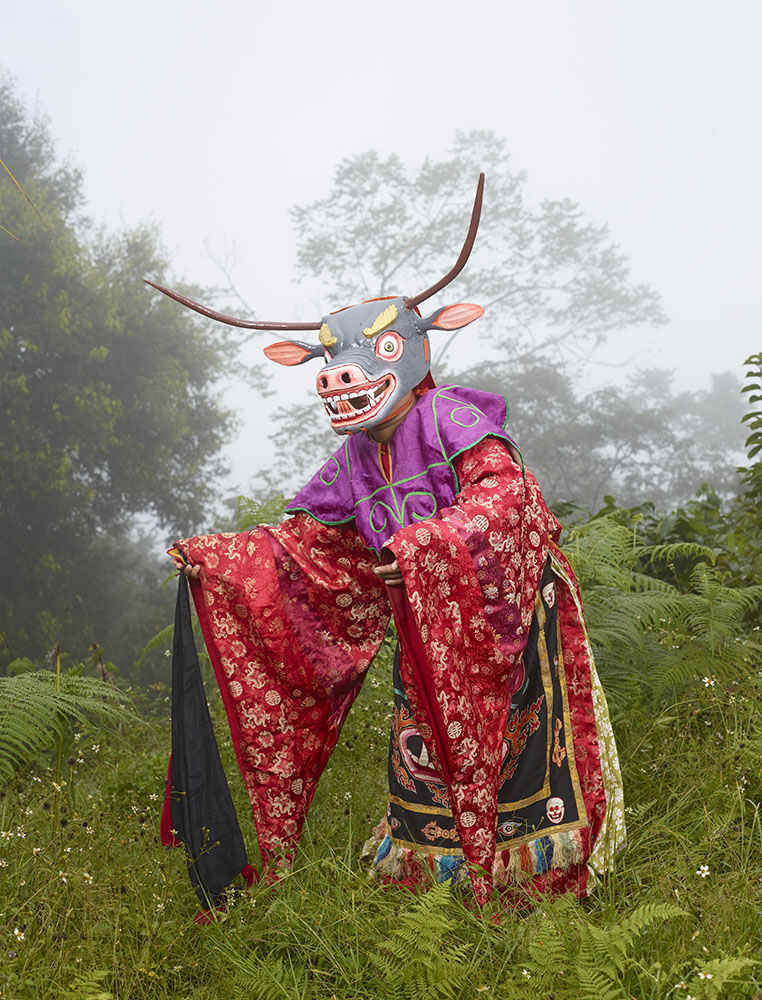
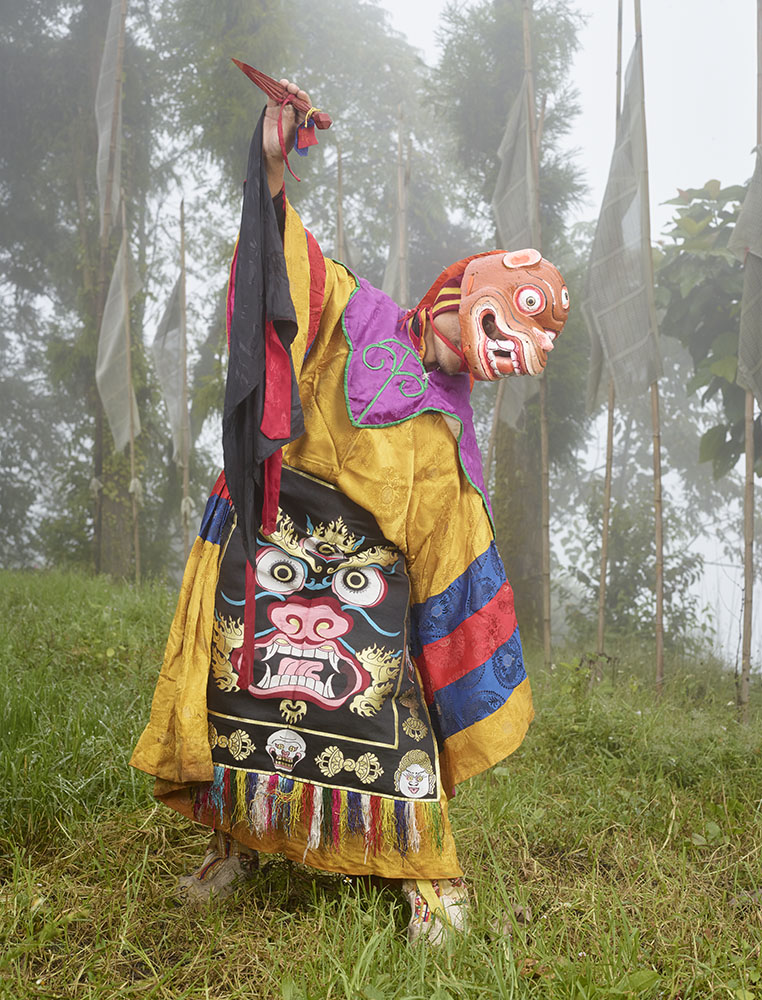
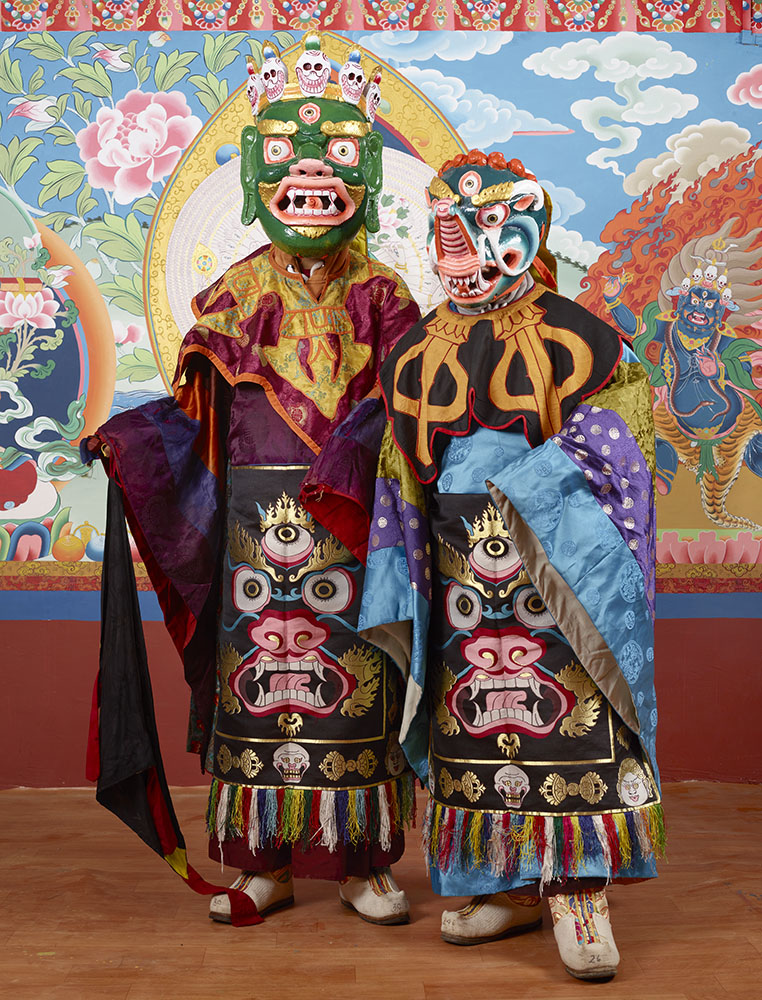
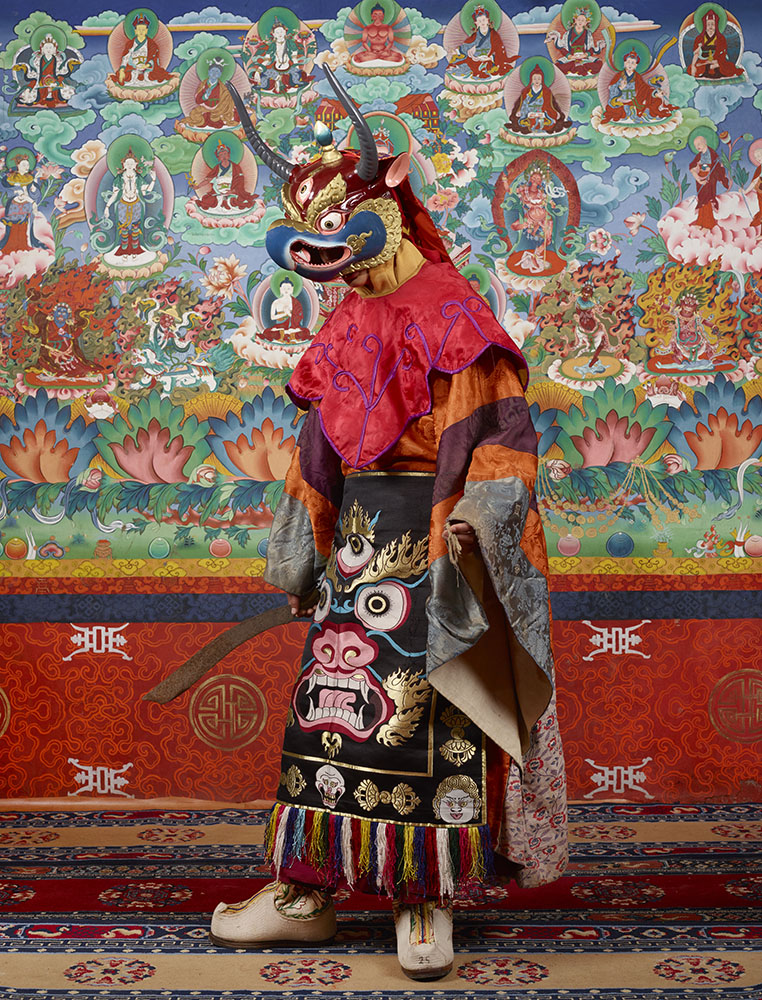
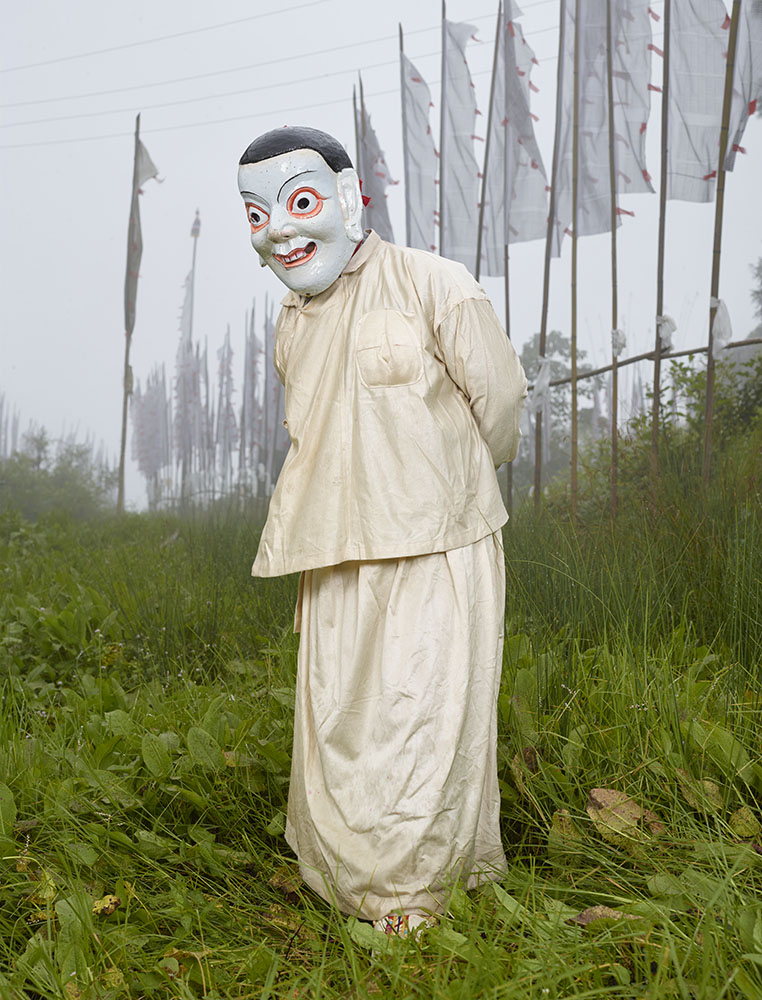
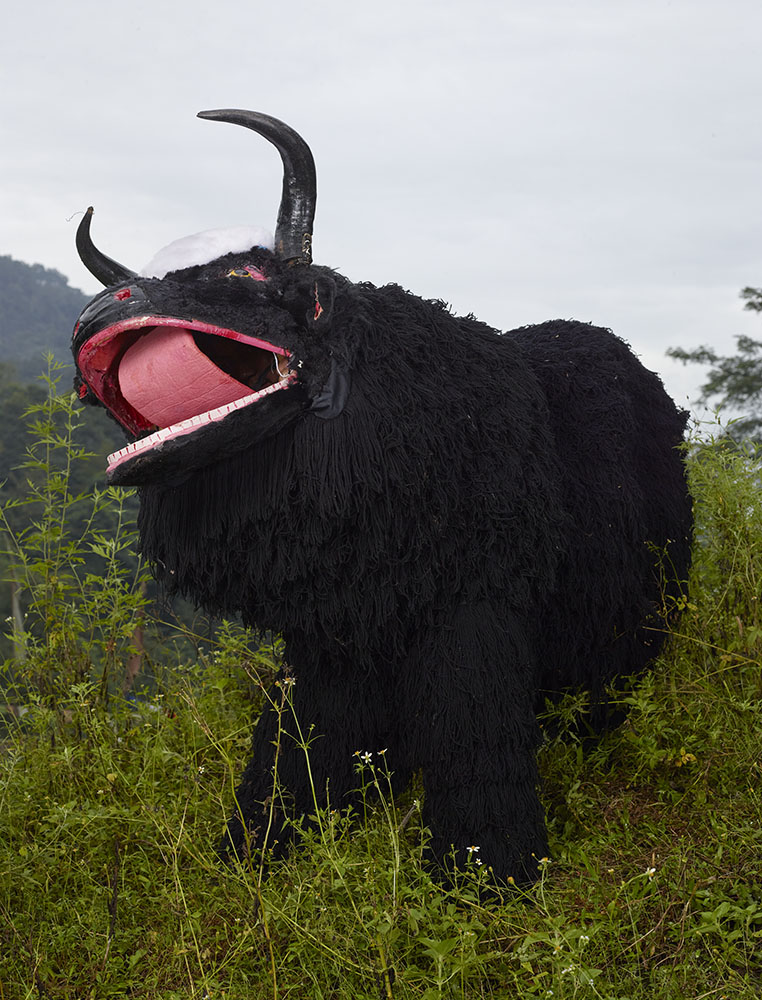
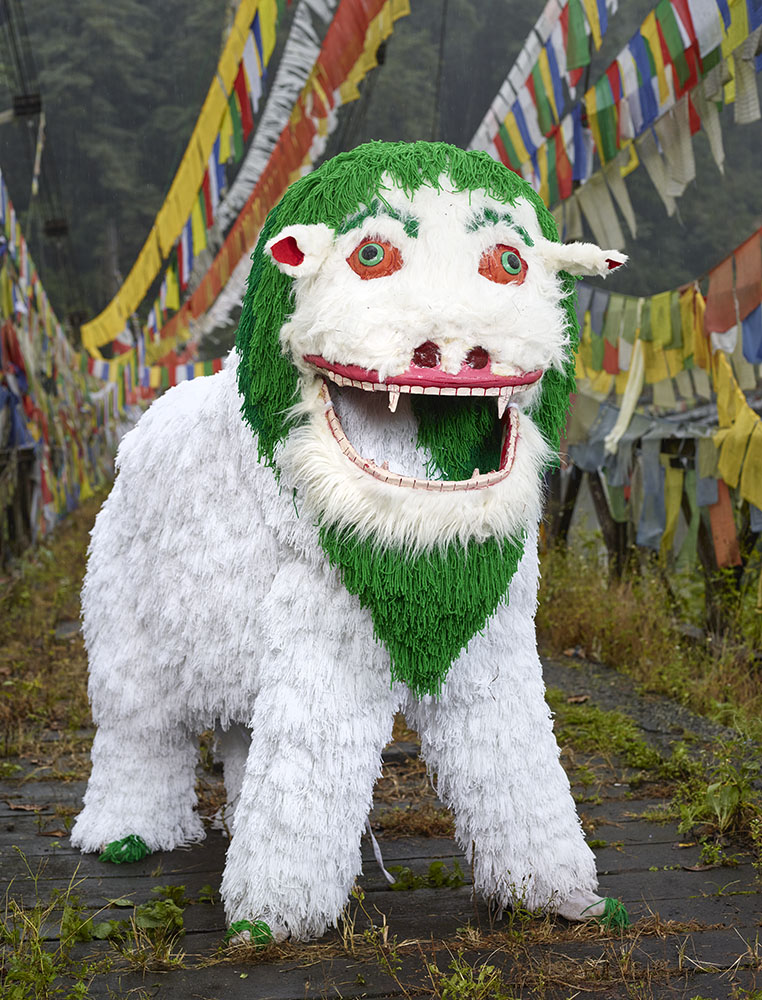
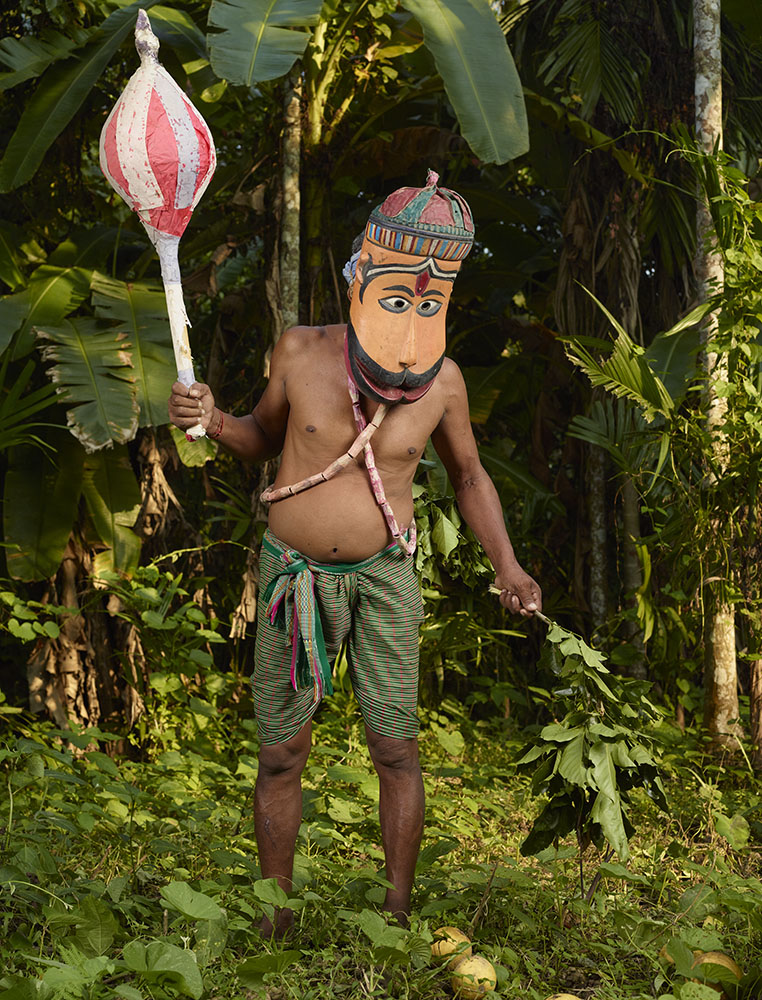
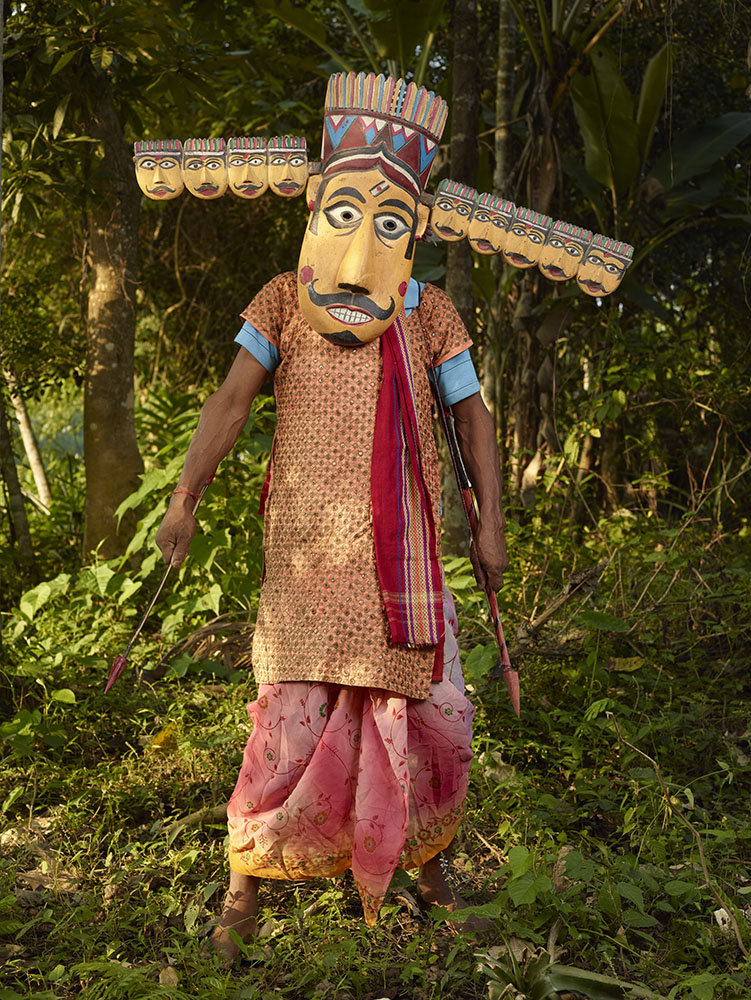
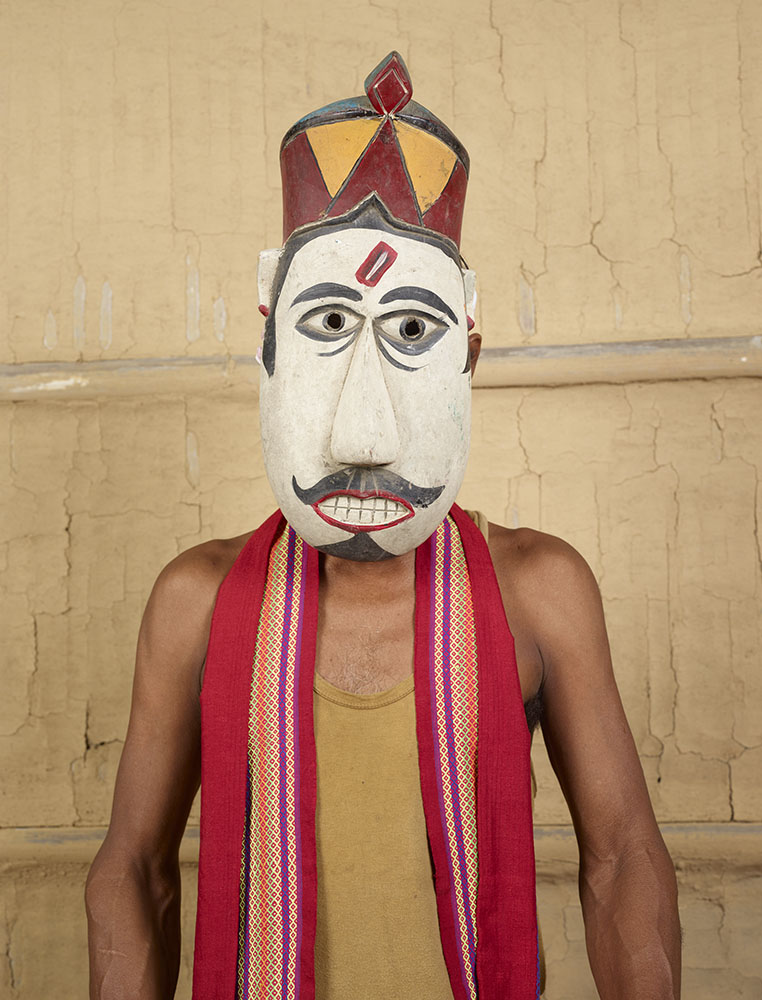
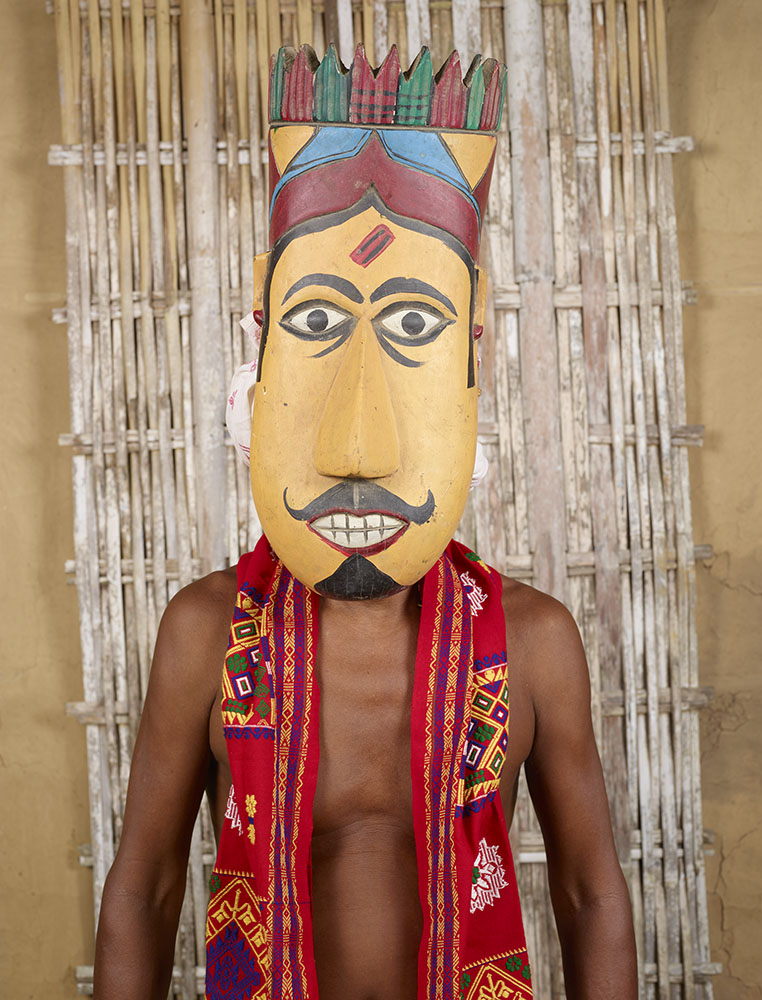
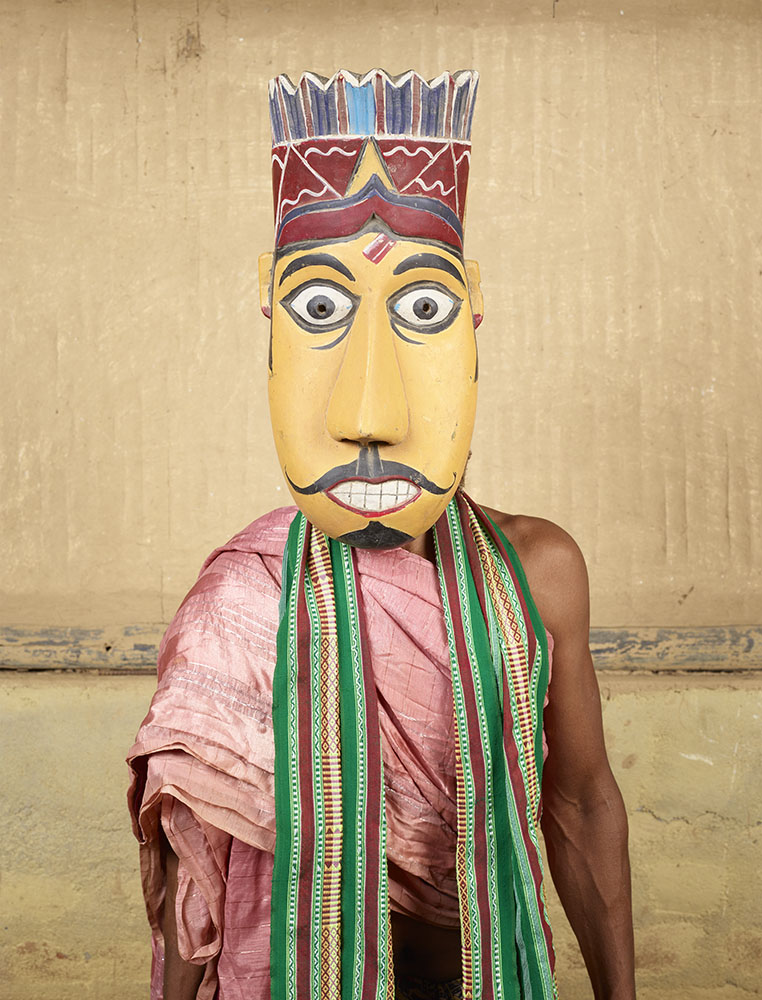
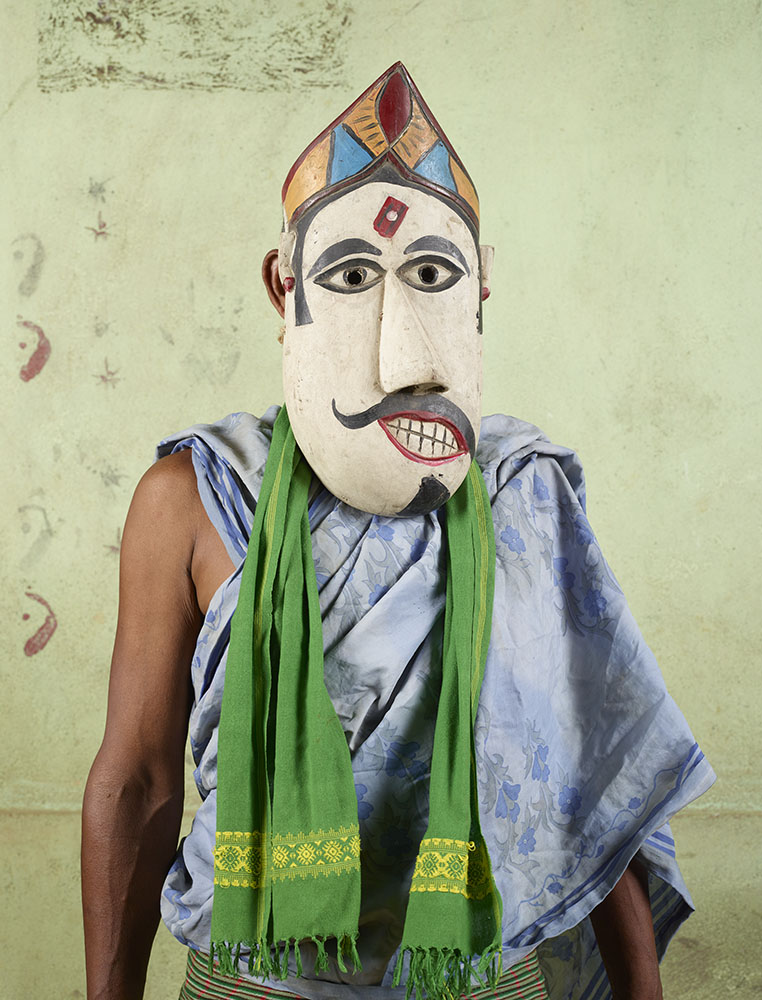
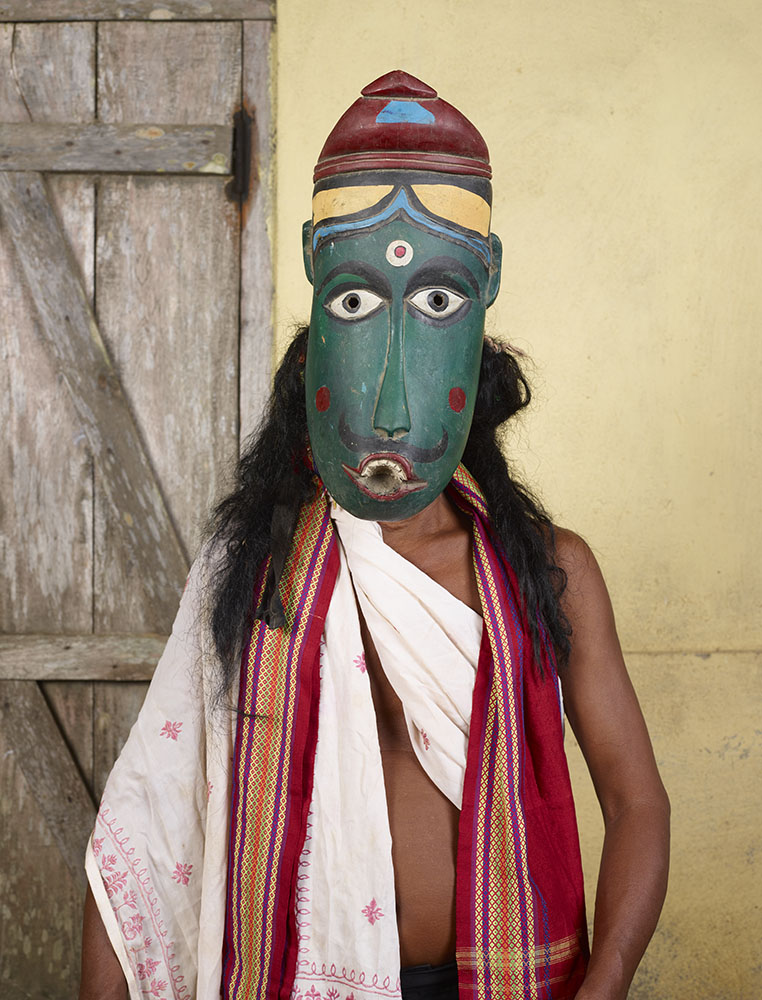
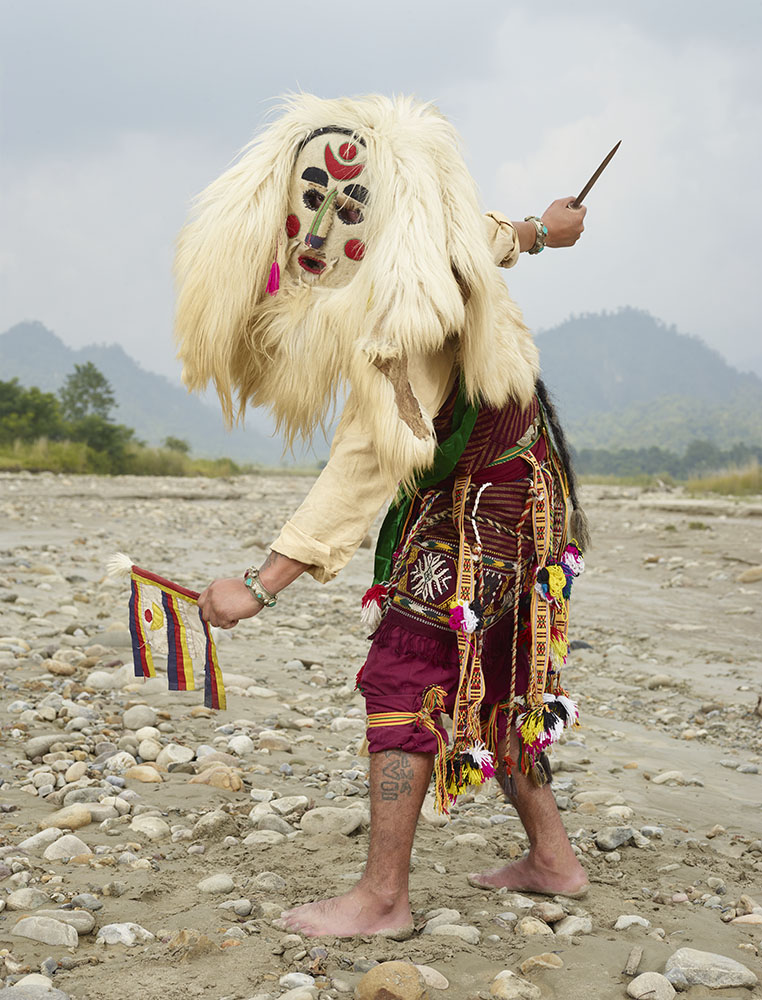
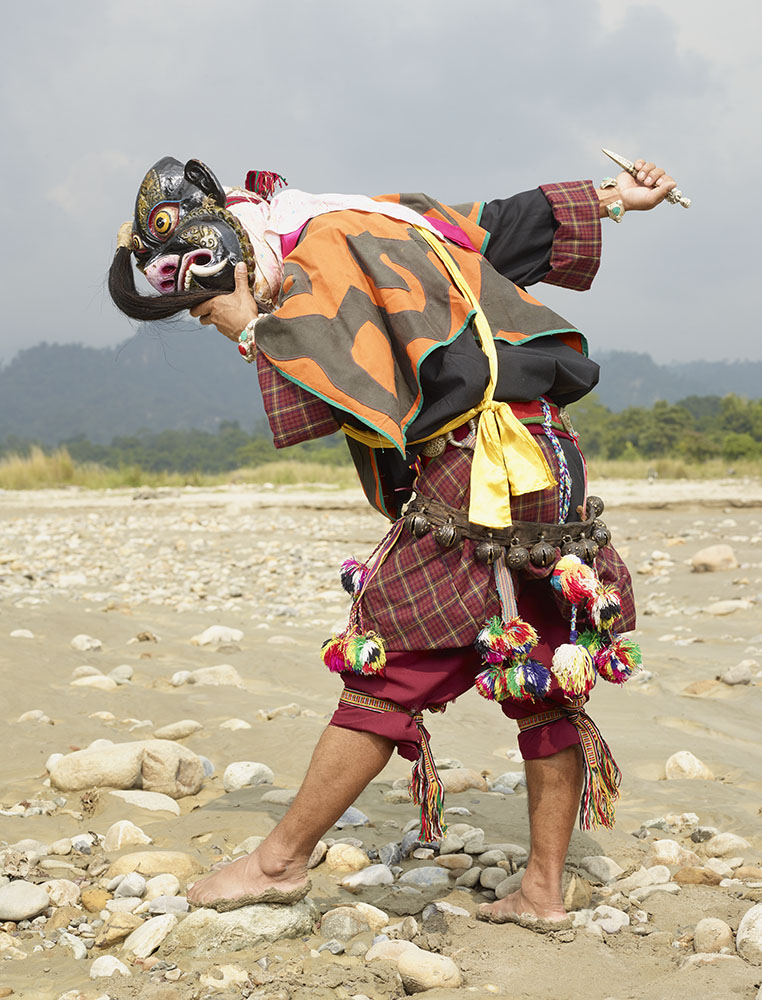
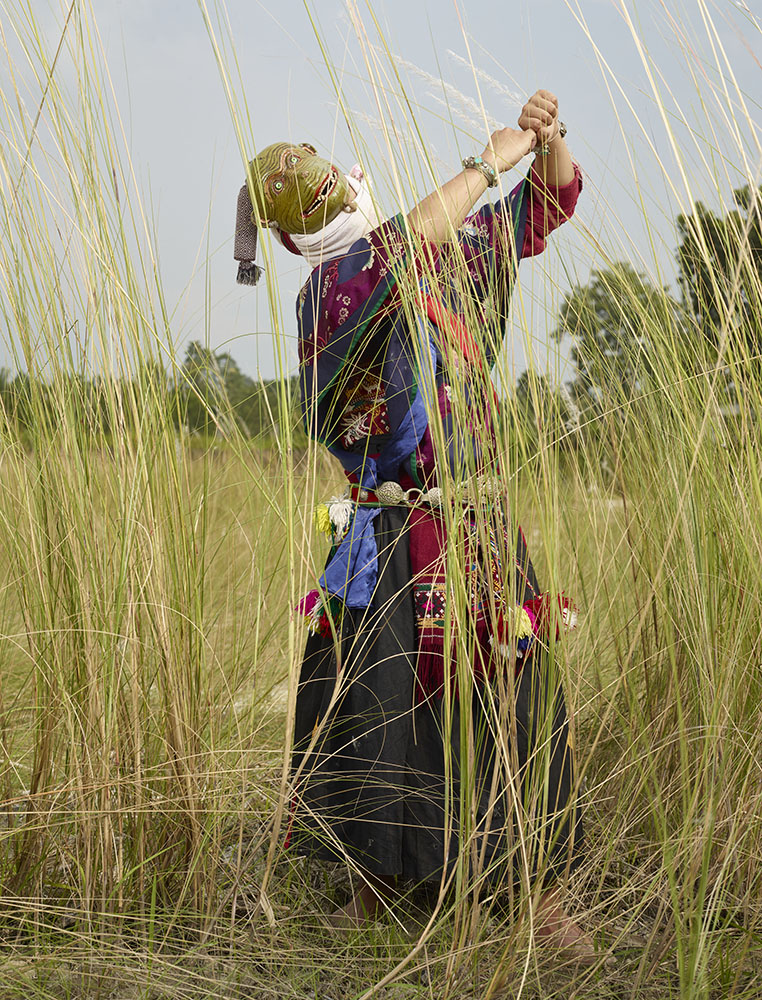
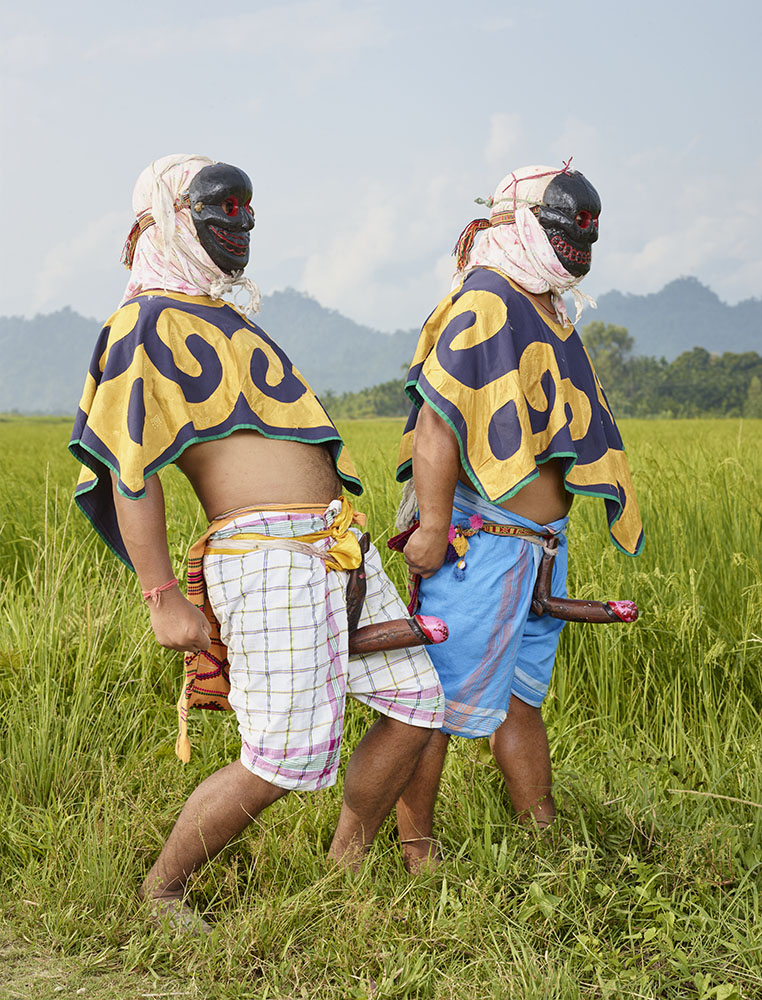
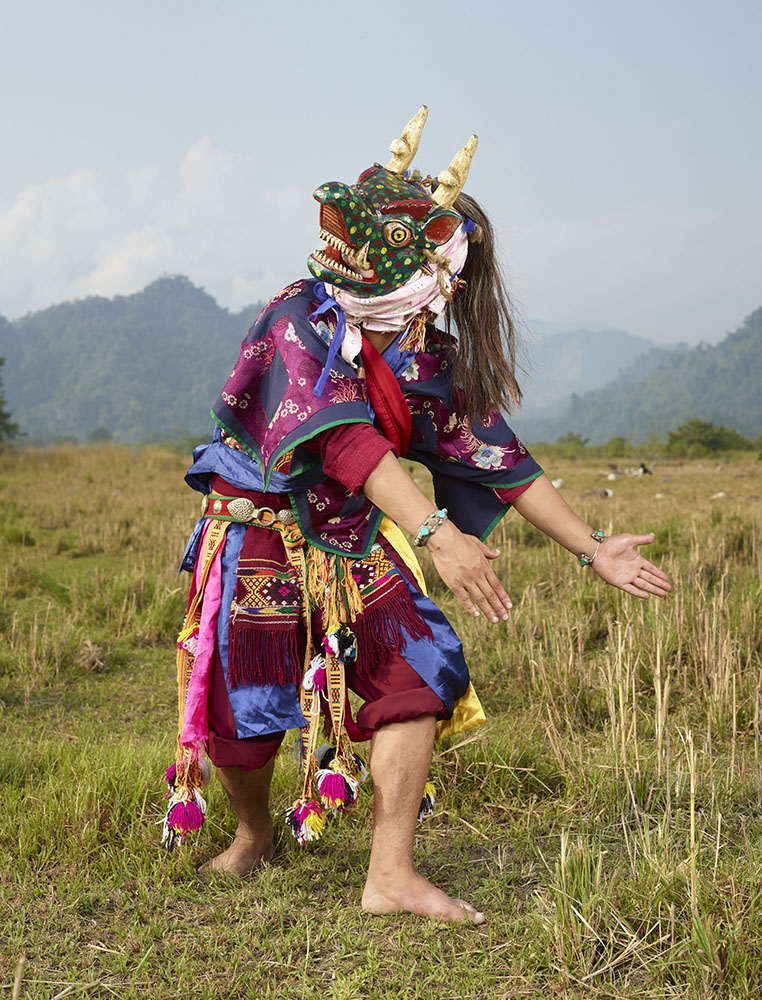
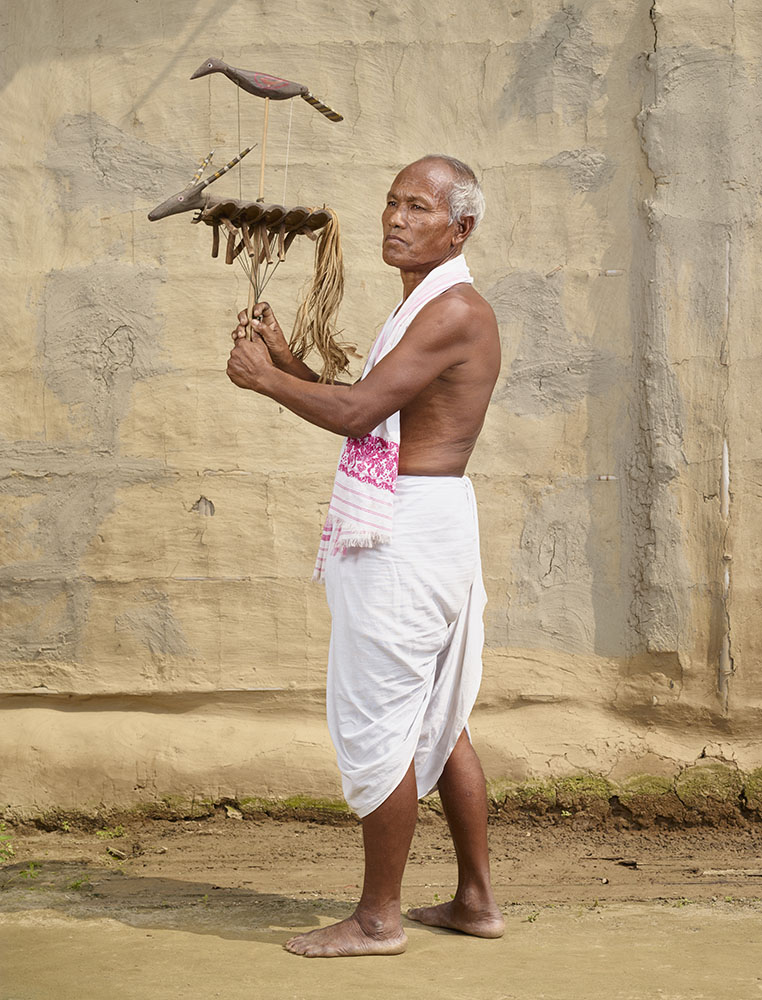
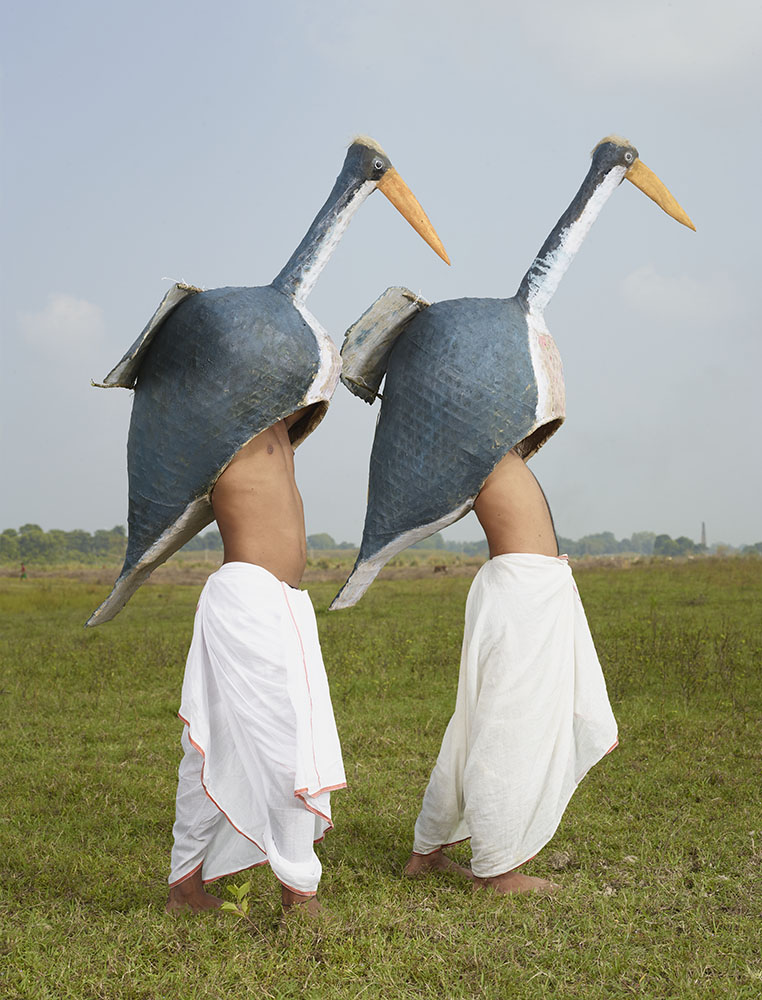
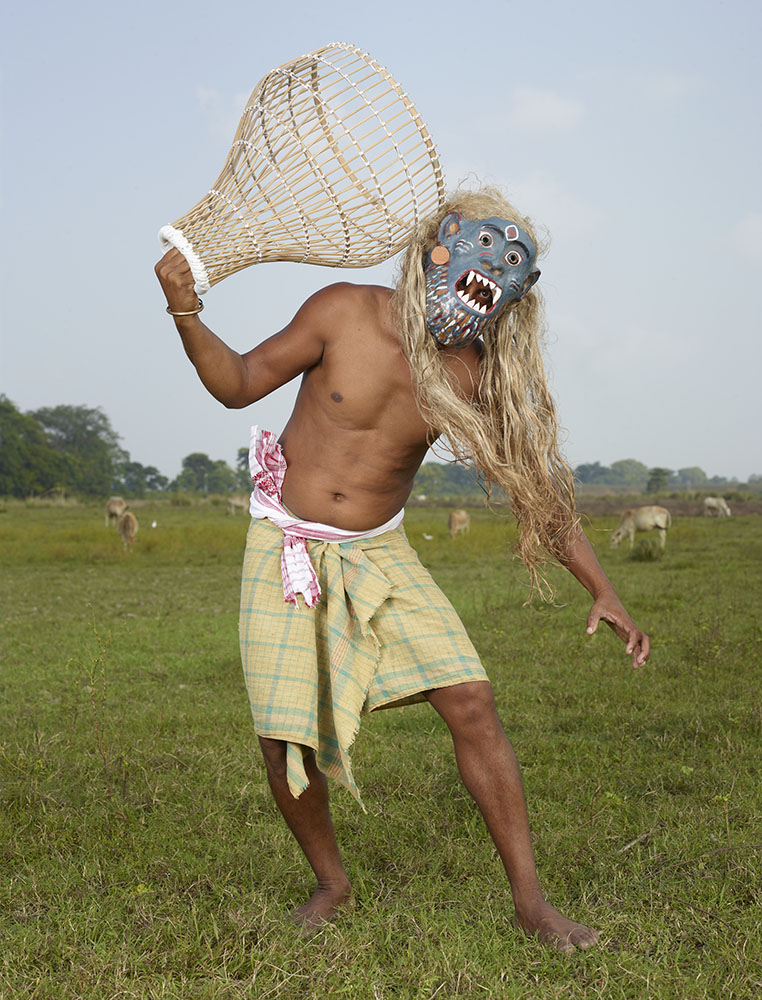
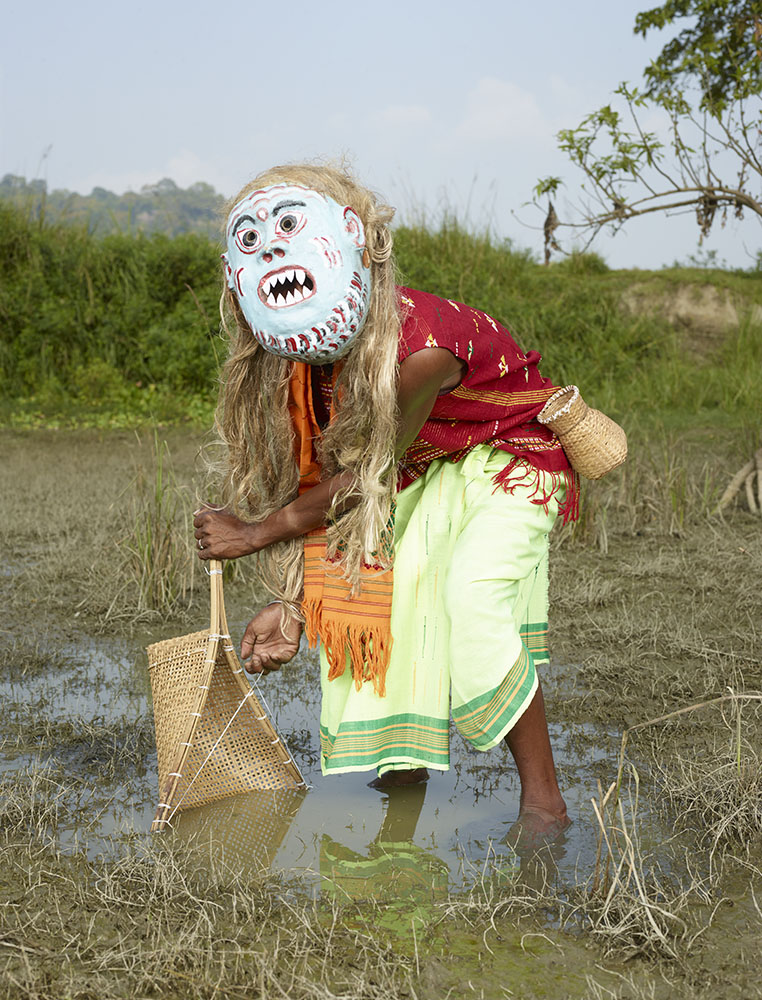
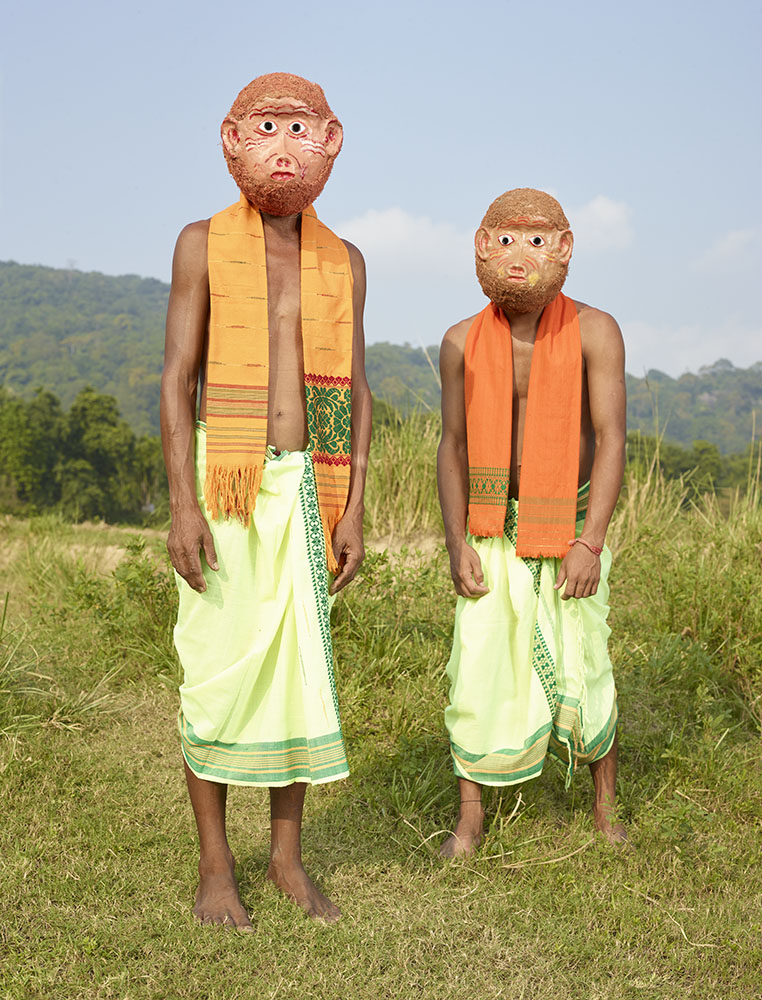
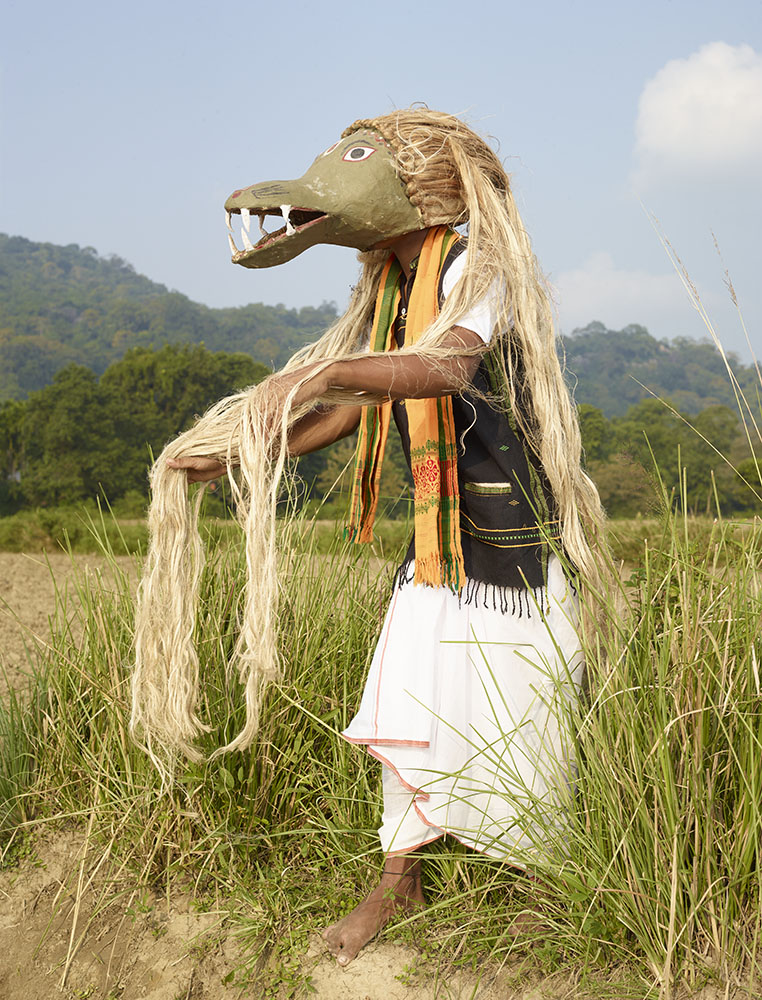
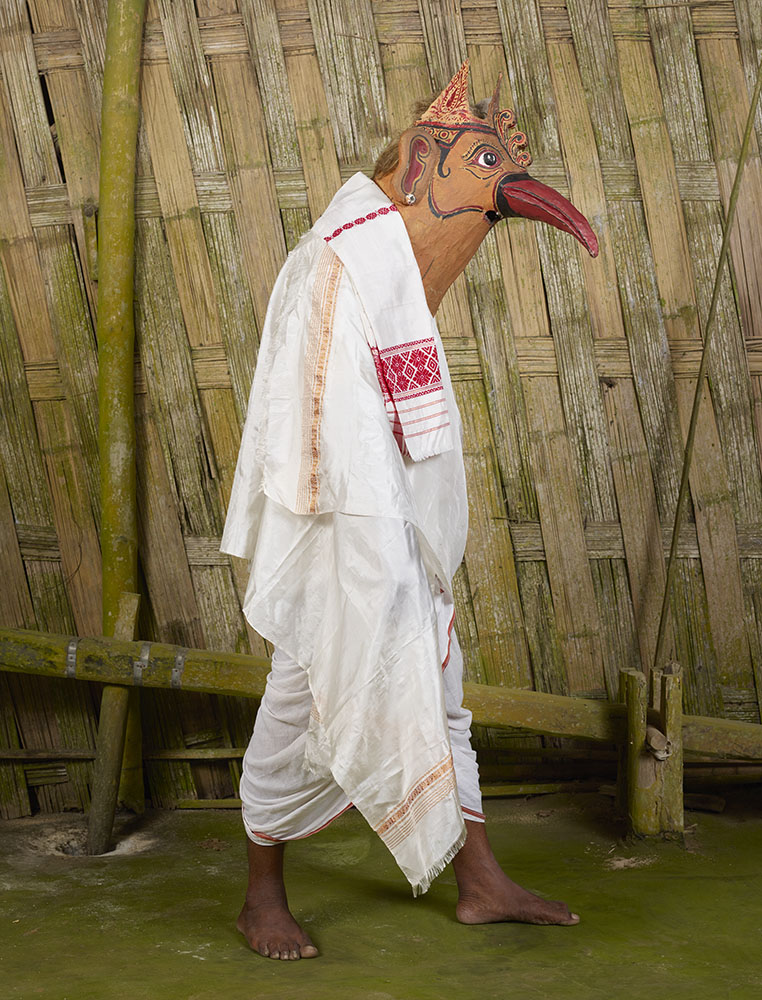
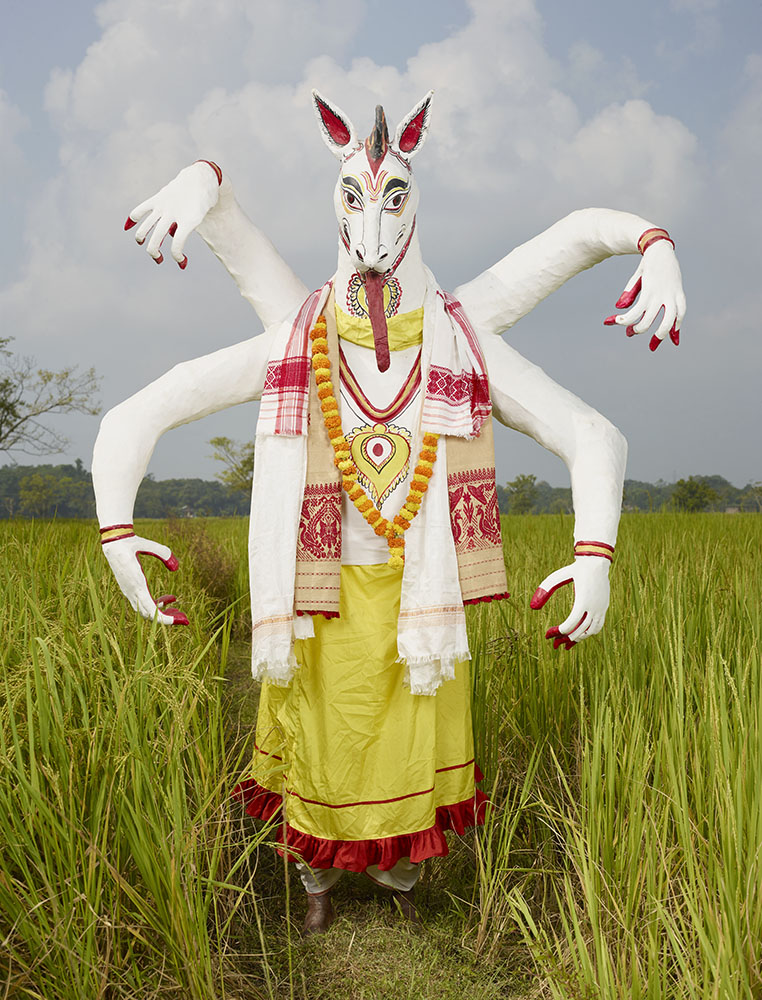
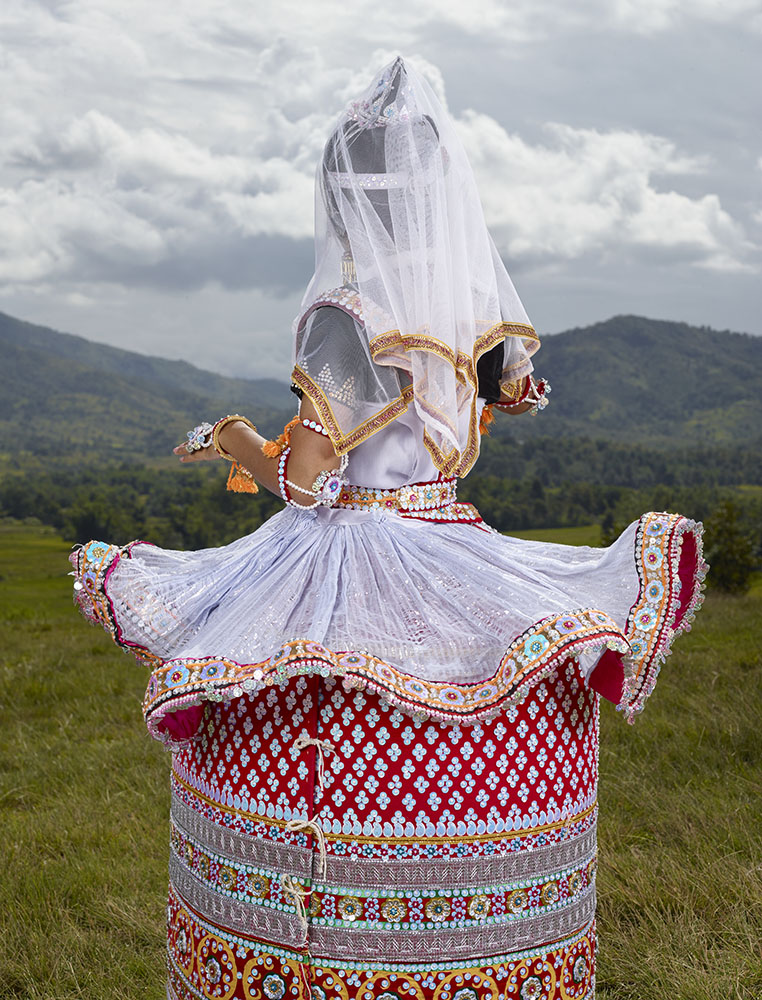
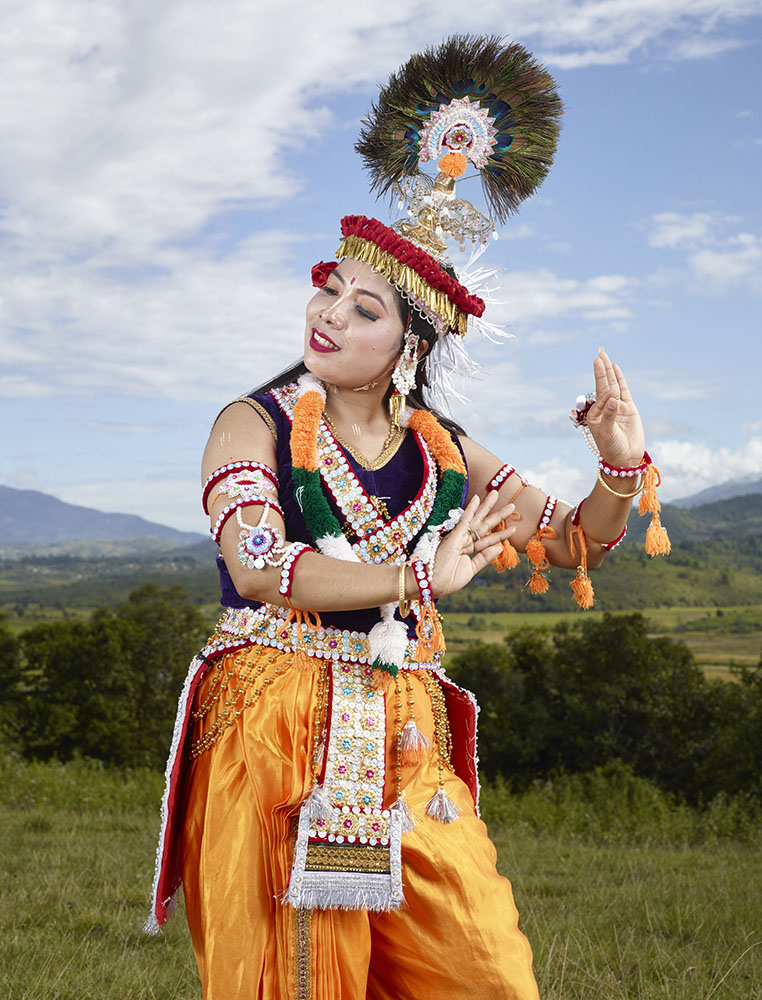
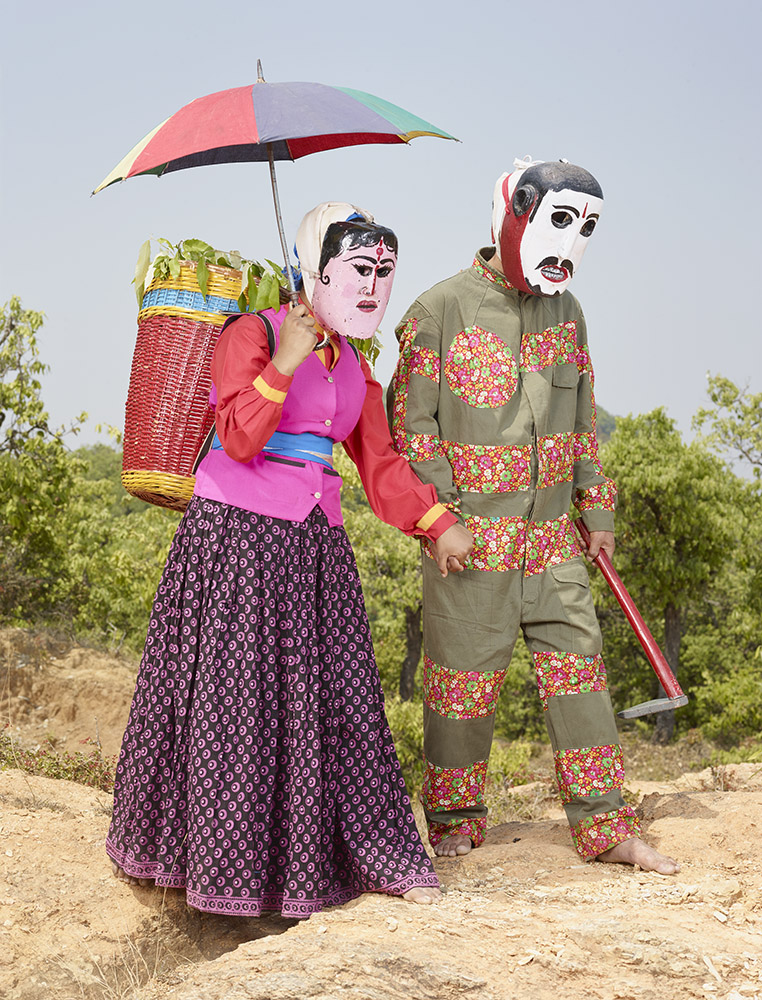
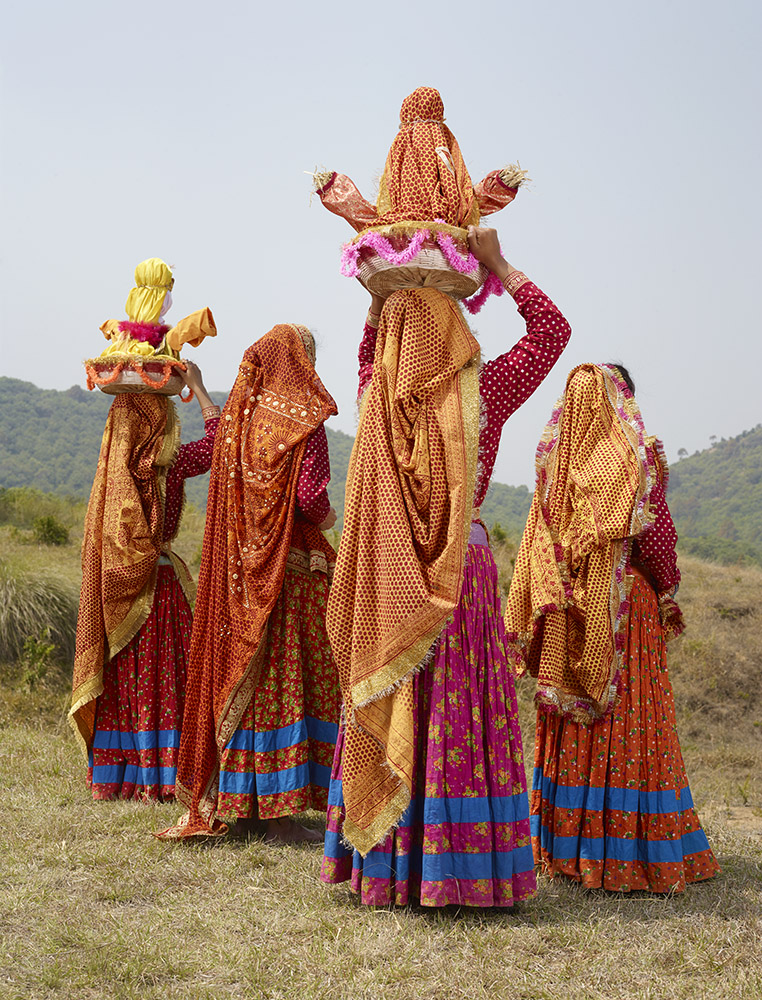
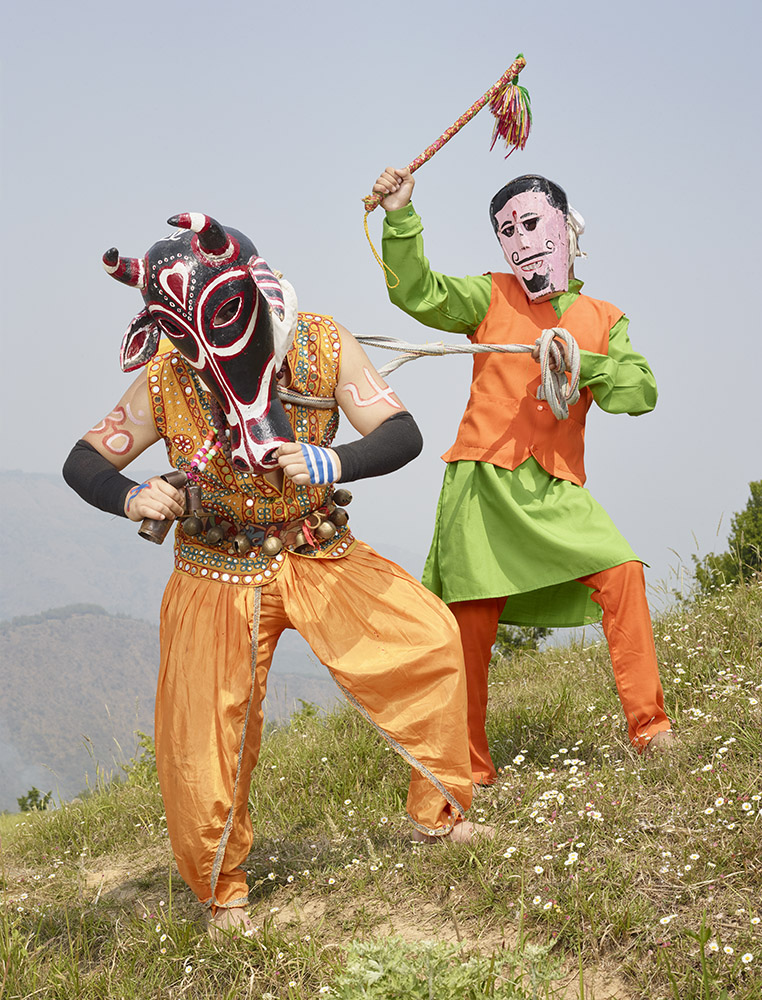
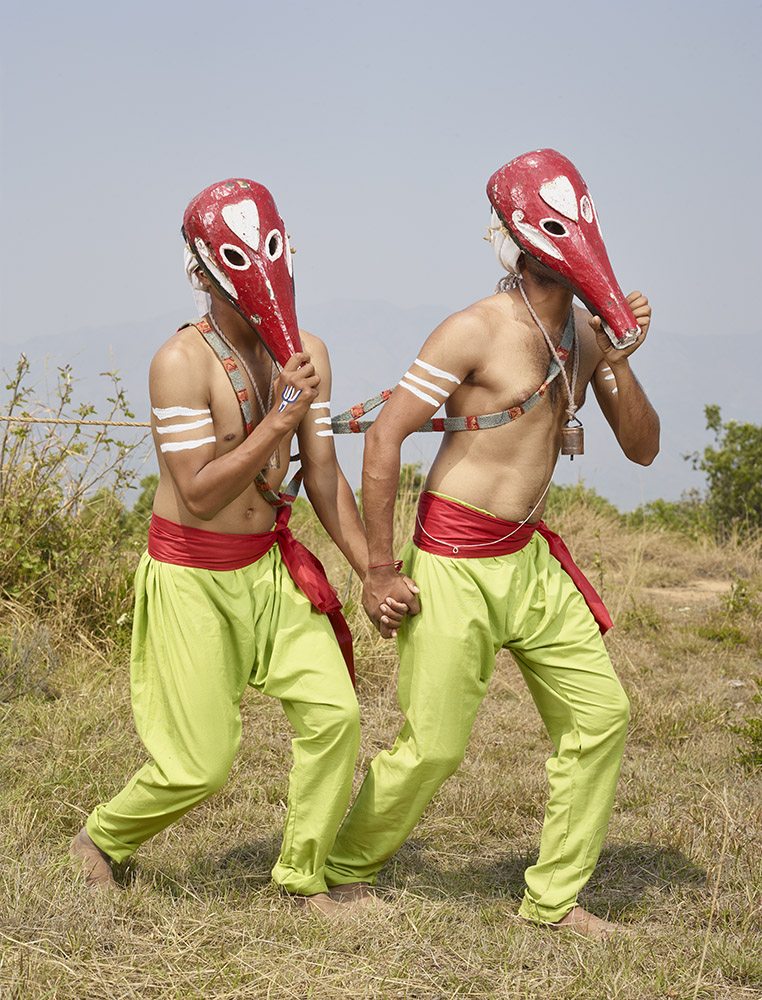
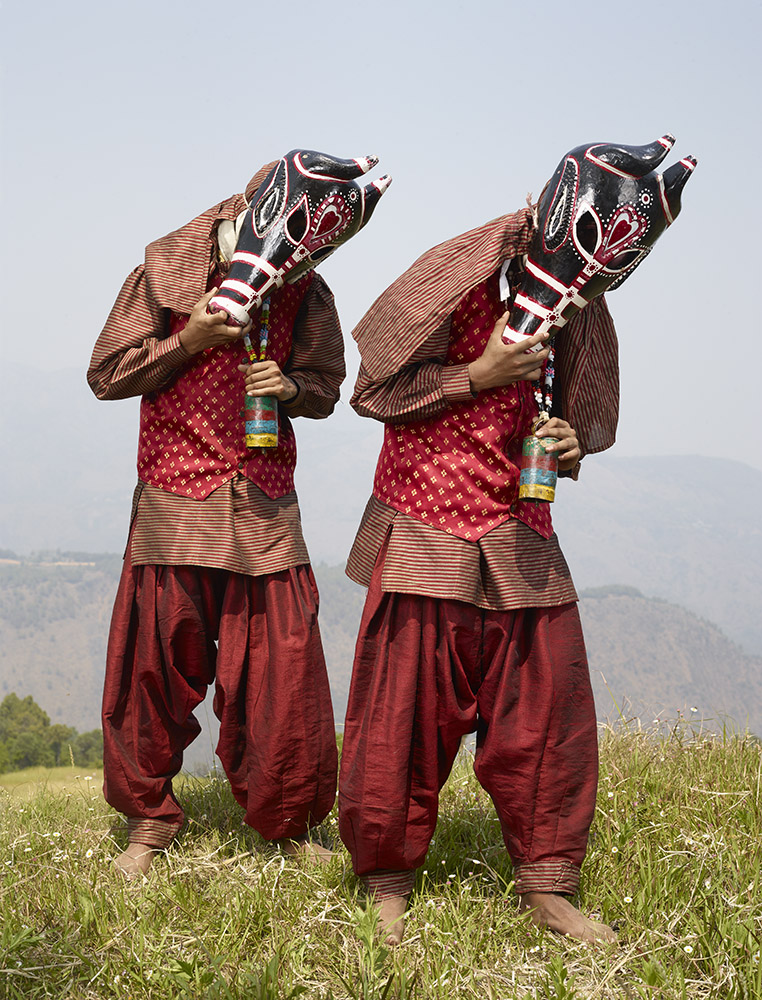
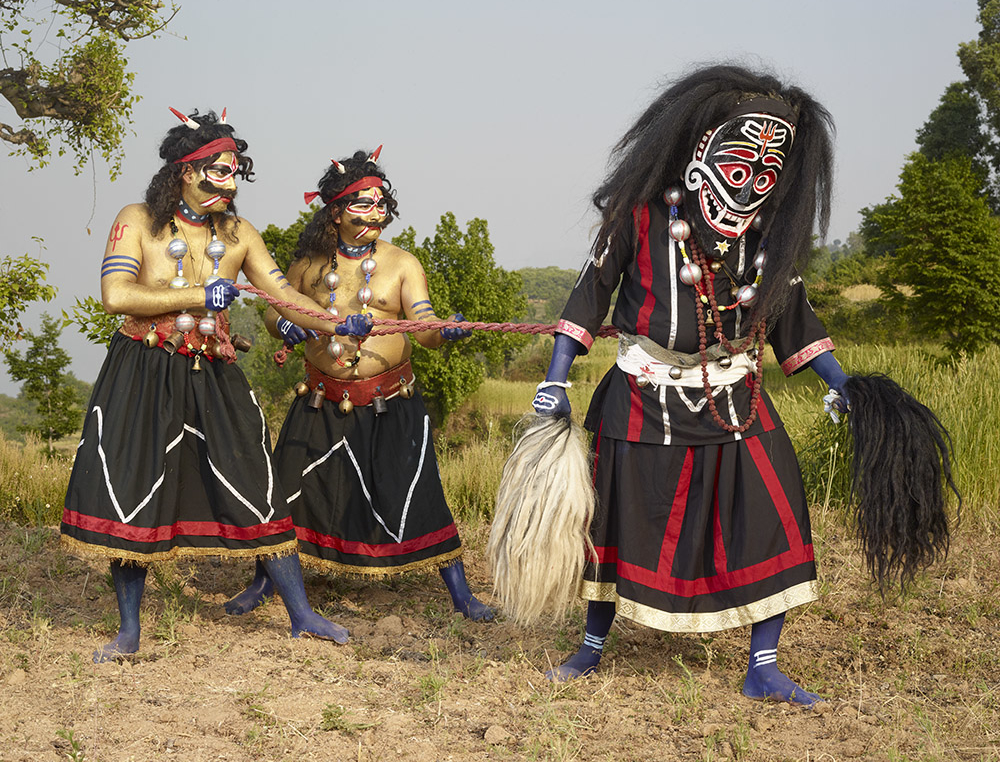
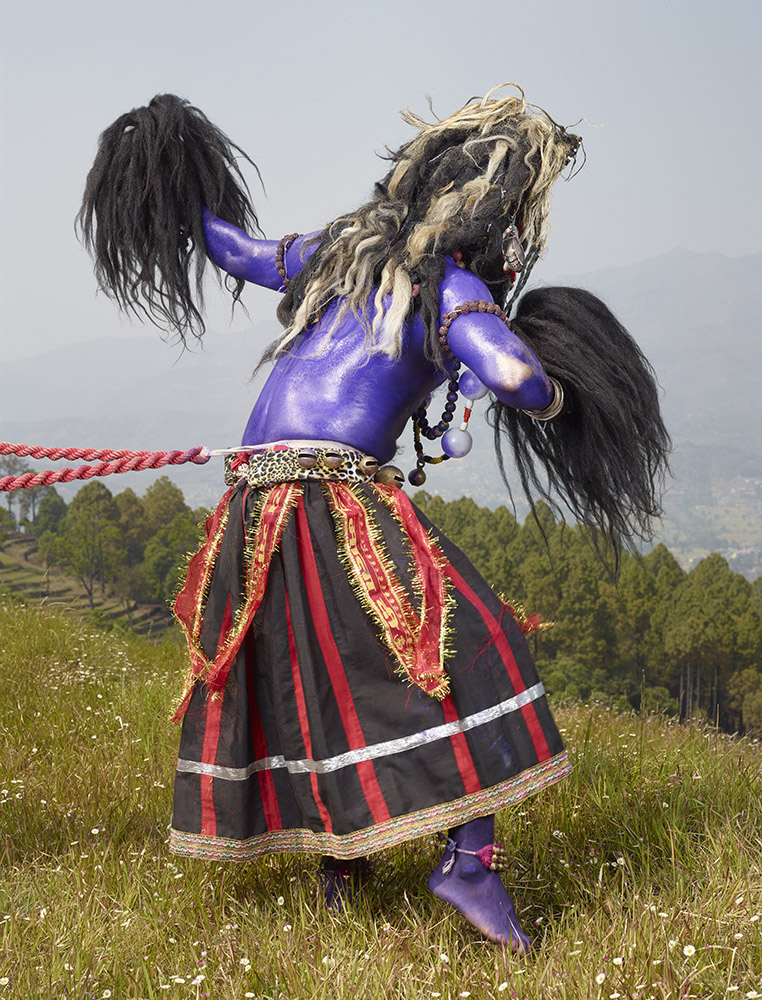
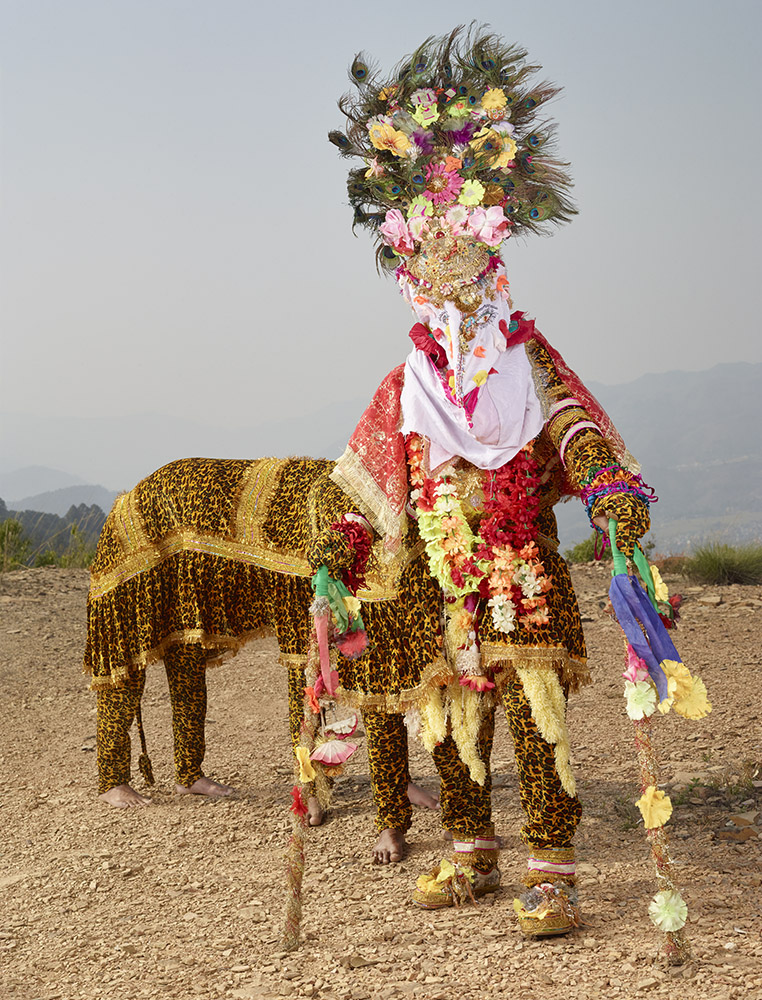
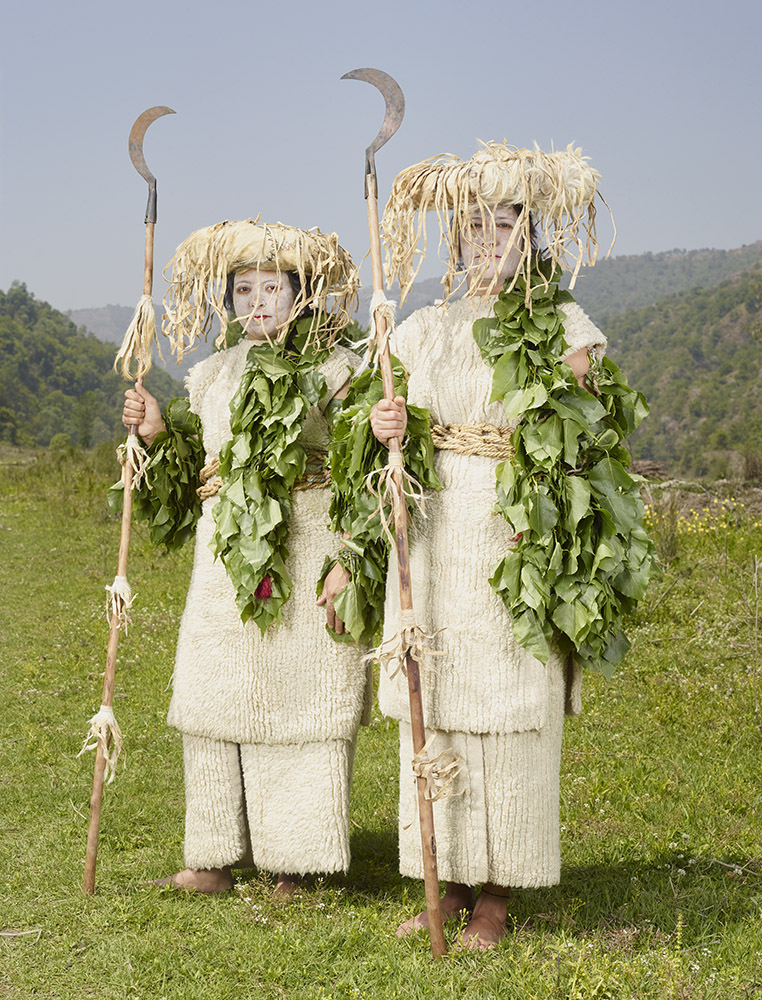
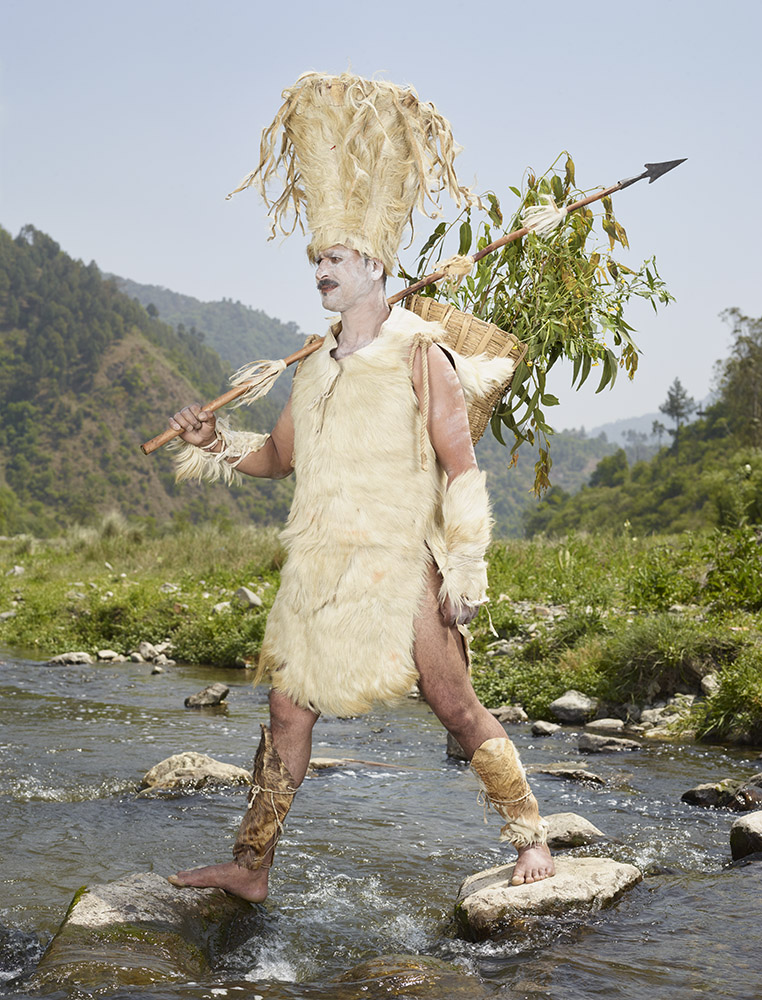
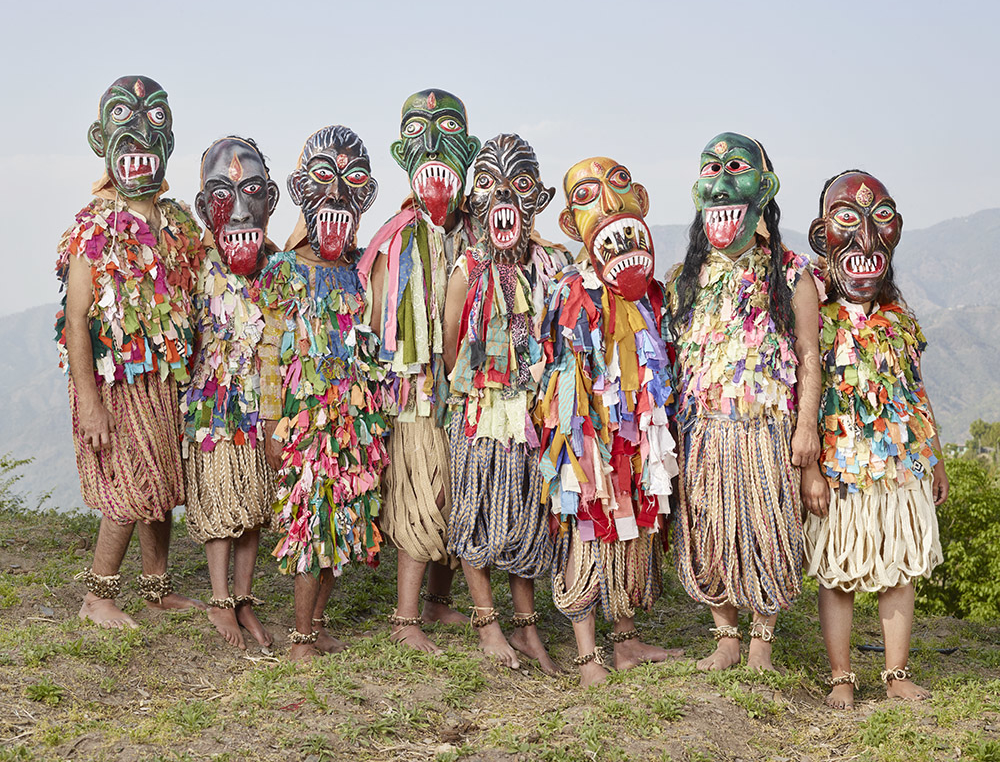
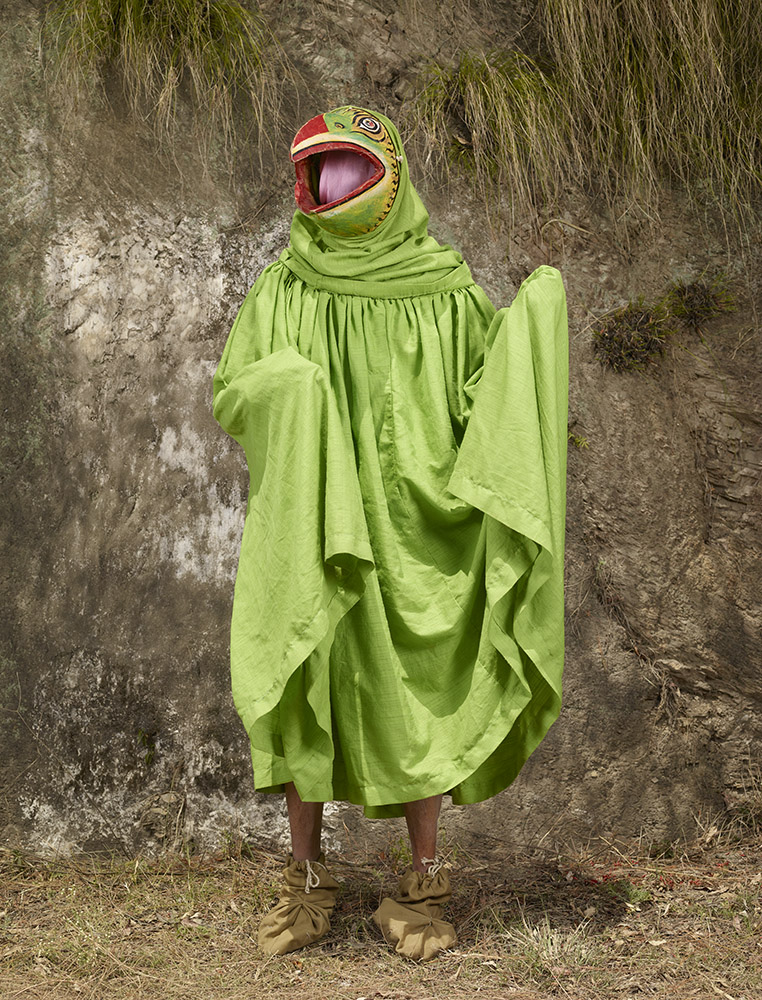
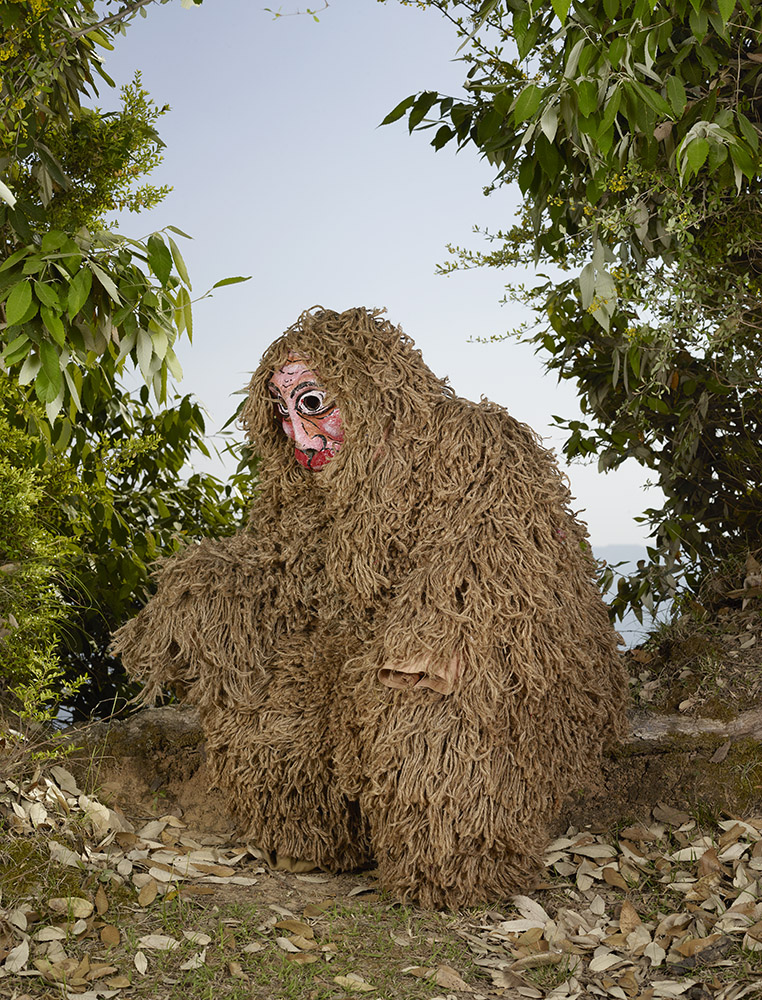
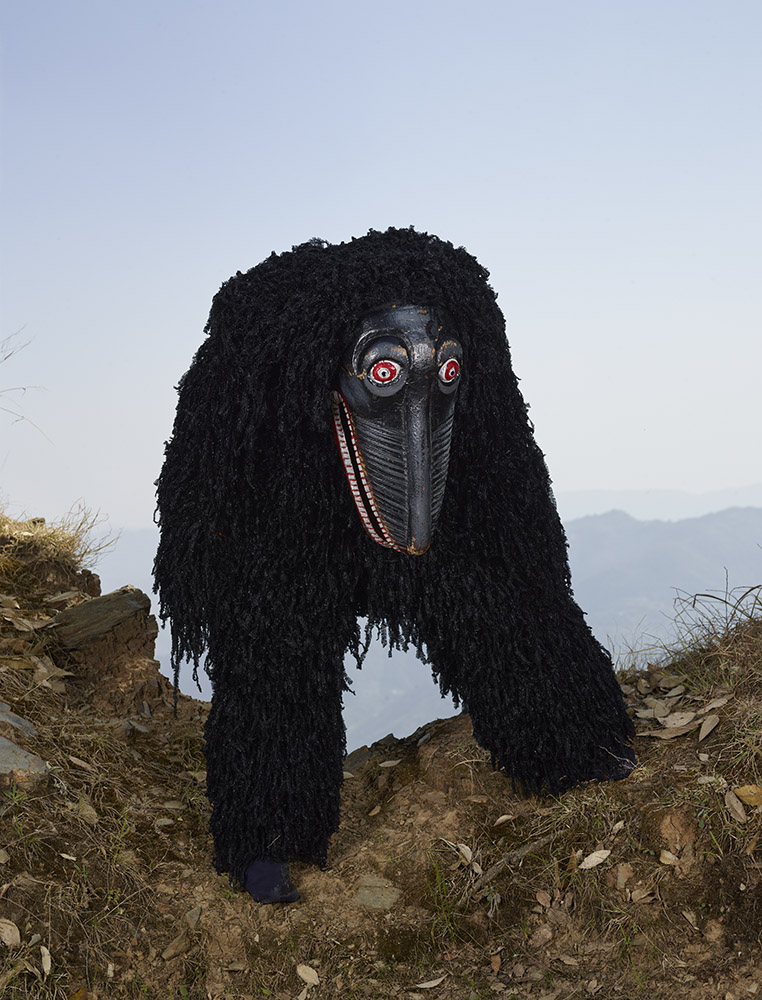
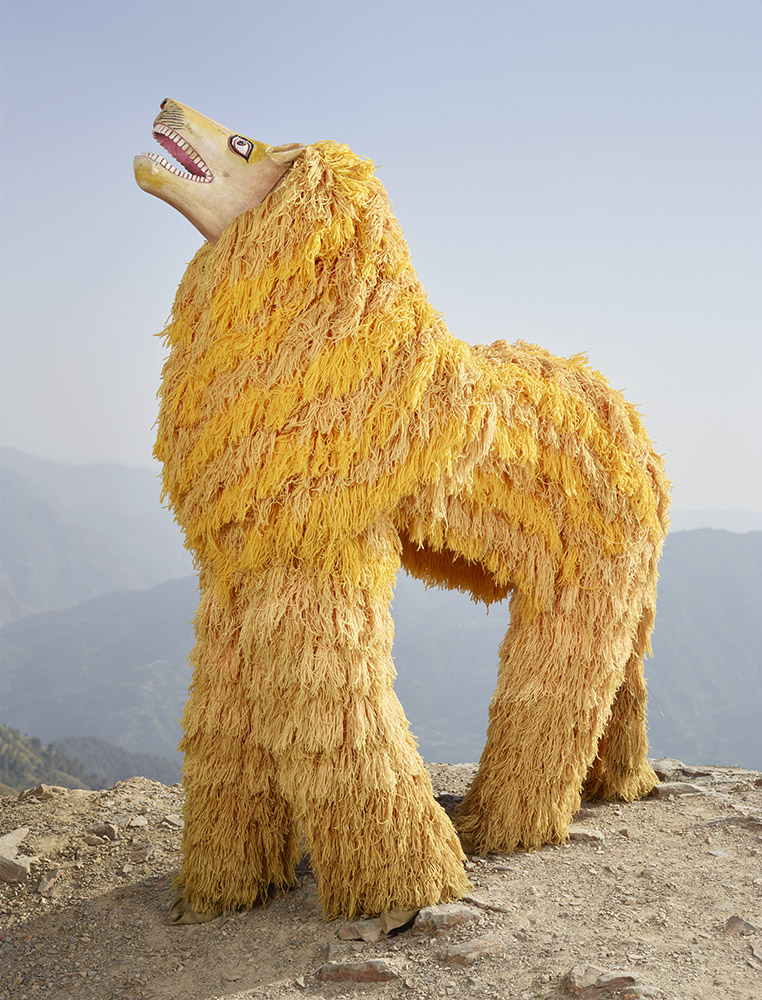
Since 1999, Charles Fréger has built up an extensive photographic corpus, invariably taking human beings and their social skins as his central subject. Sometimes dressed in uniform, sometimes covered in tiger-striped make-up or a moss-covered costume, the subject appears in the process of becoming human, animal or plant. The costume plays its role, embodying, here, the link to the community, there, the cycles of nature and beliefs. Produced over several years, his projects culminate in a book: essays by writers and notes by researchers accompany the photographs, which leave so much room for fiction that they document how human beings around the world invent their relationship with their own kind and, more broadly, with the living world.
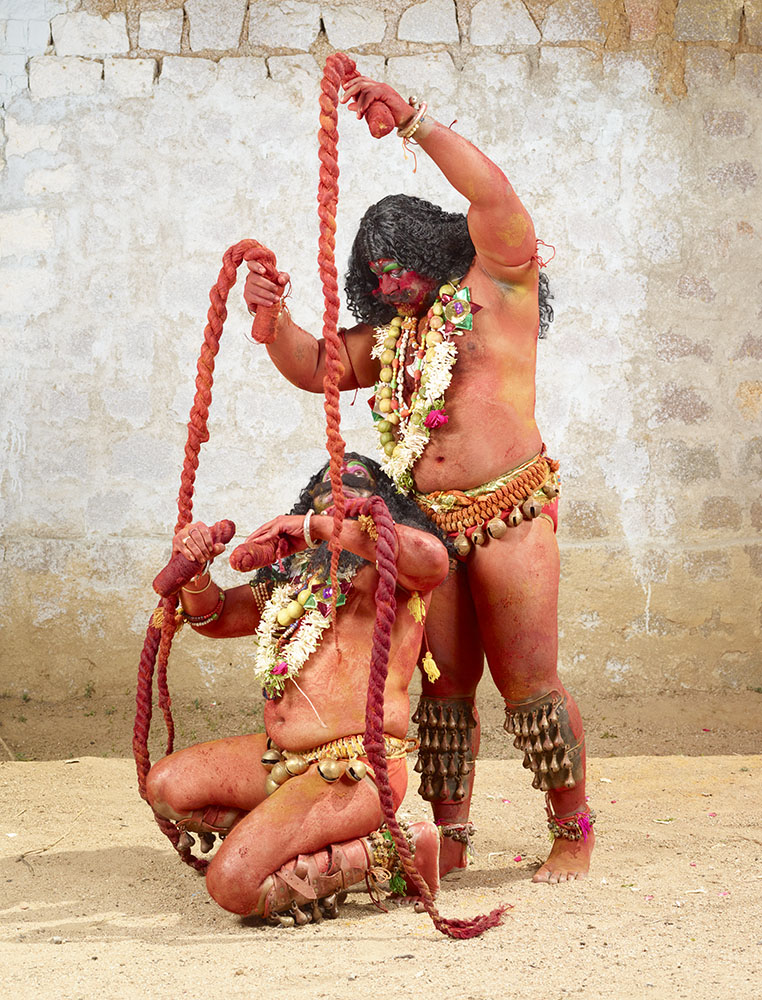
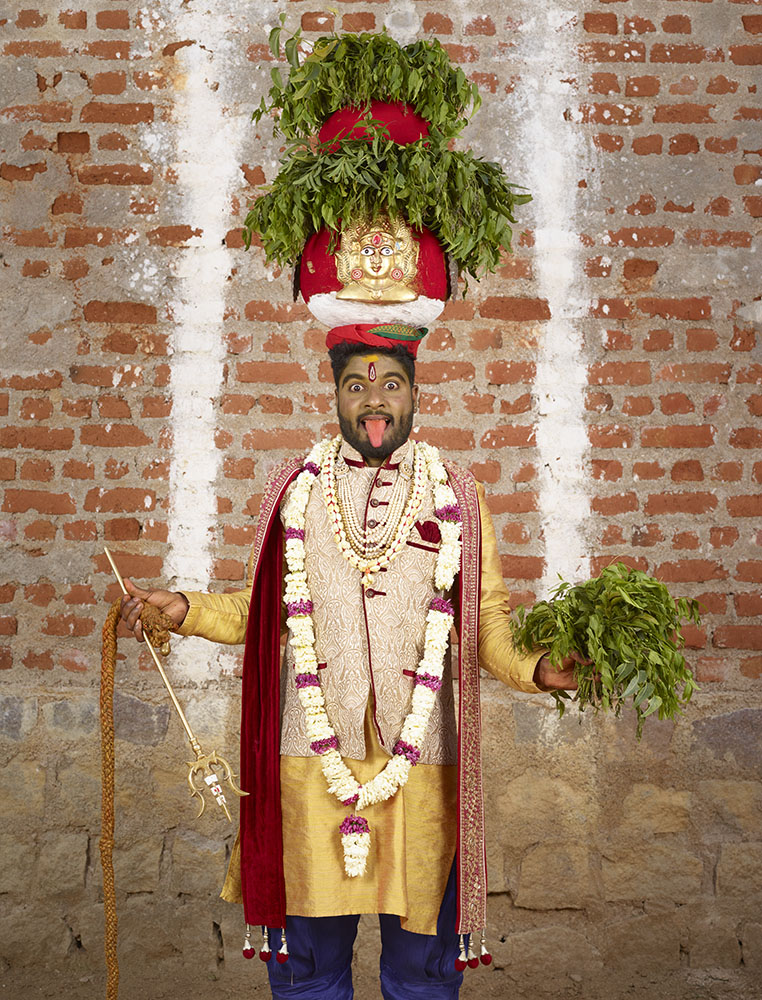
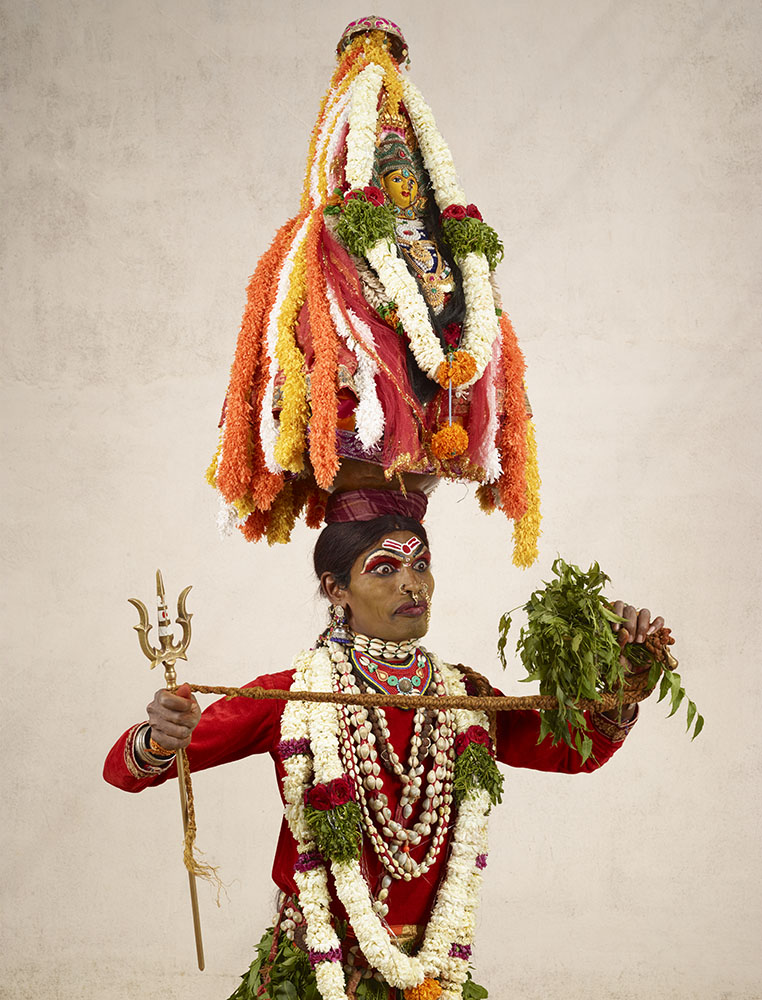
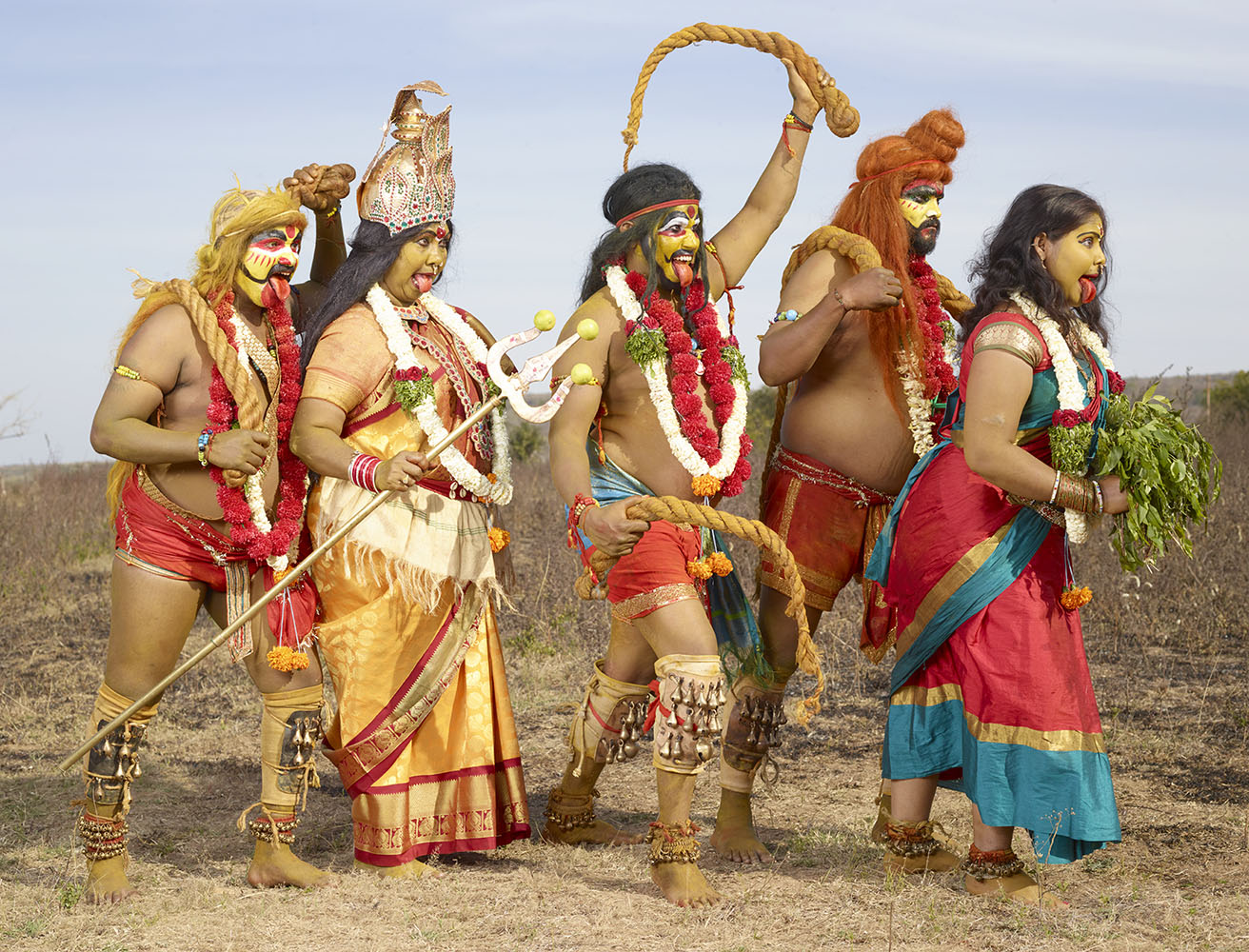
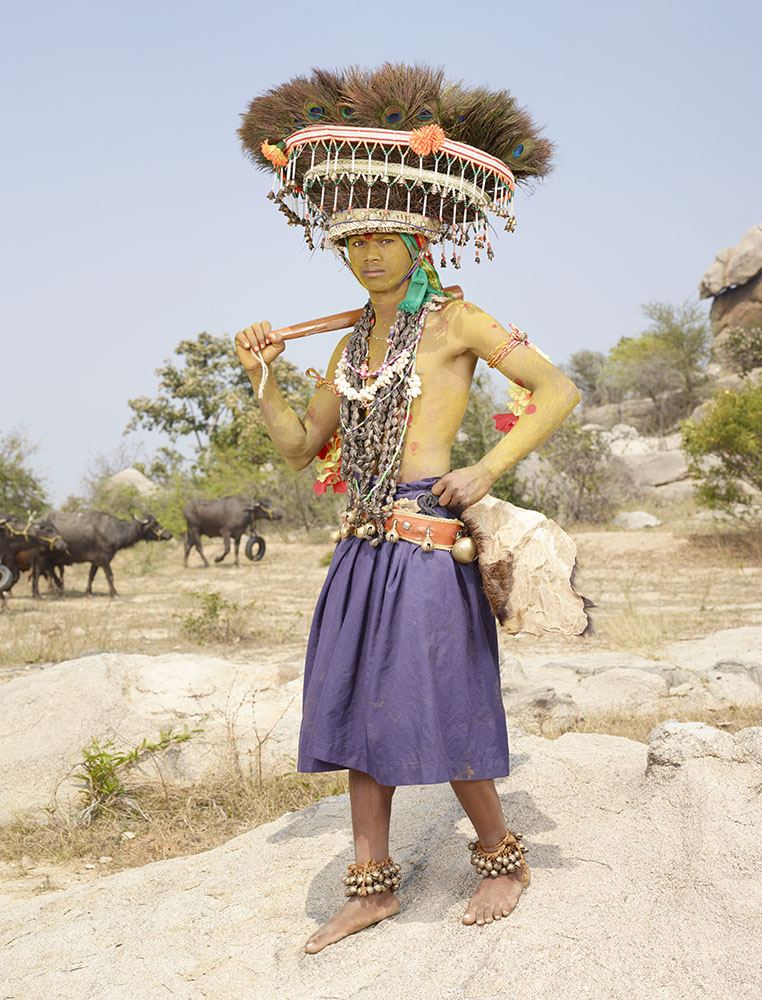
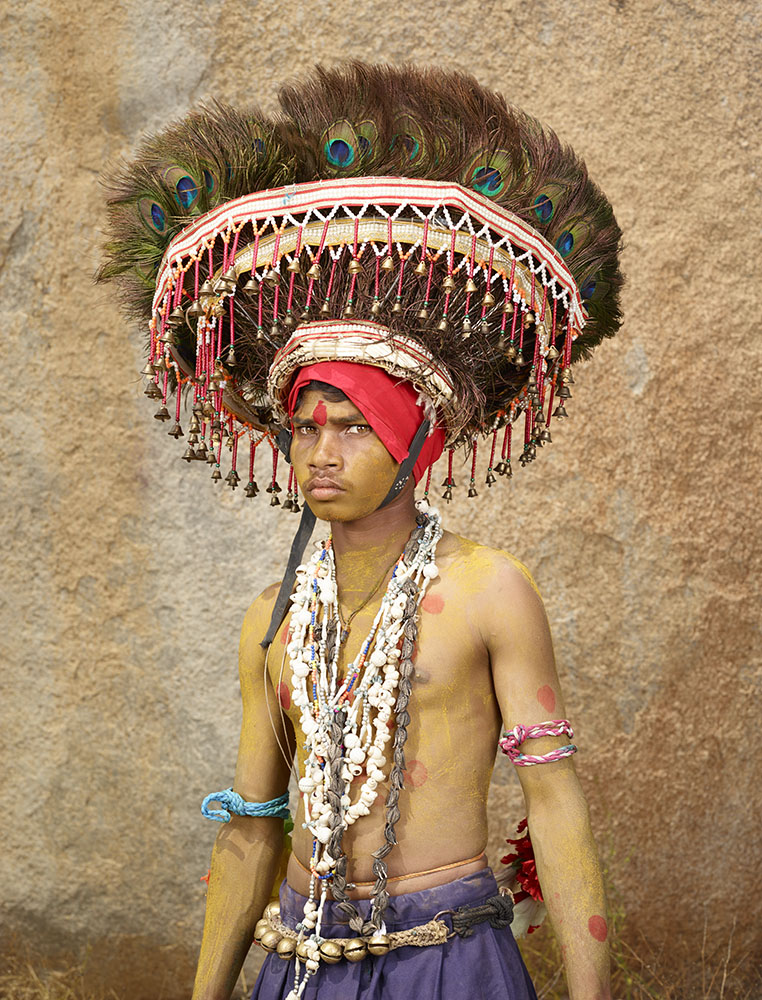
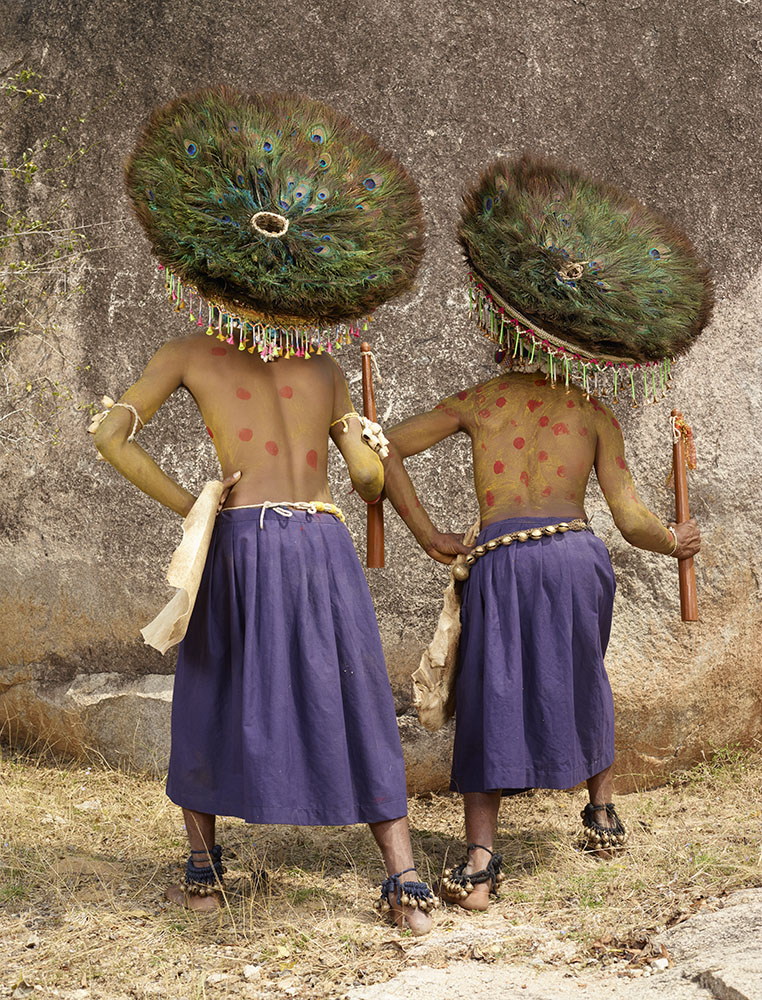
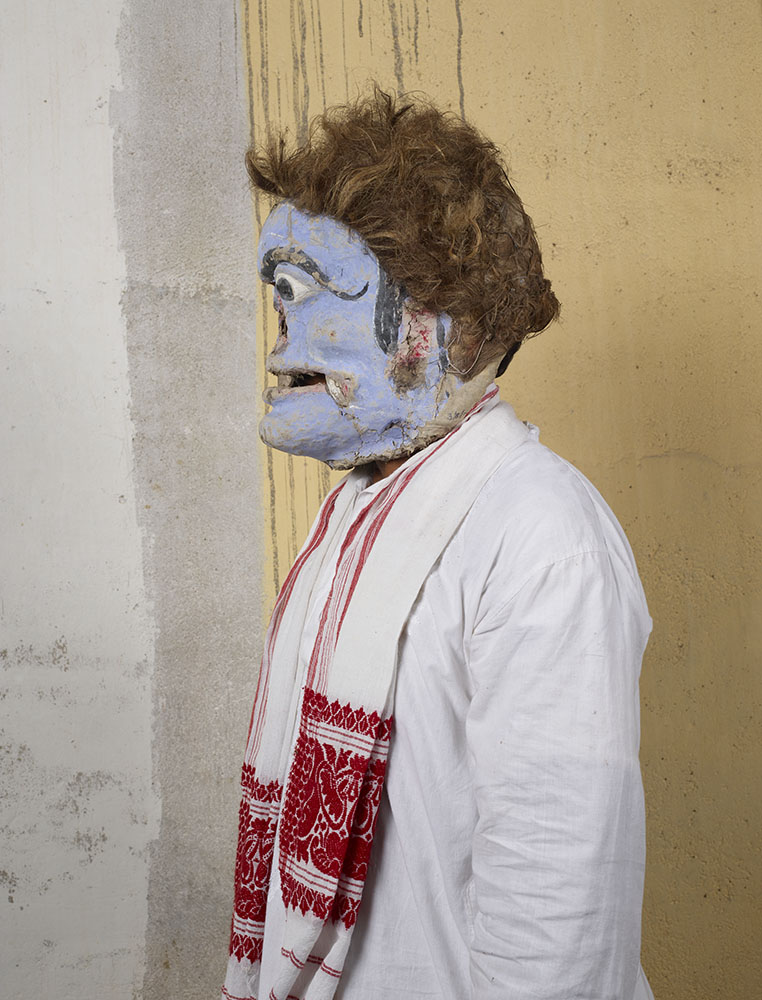
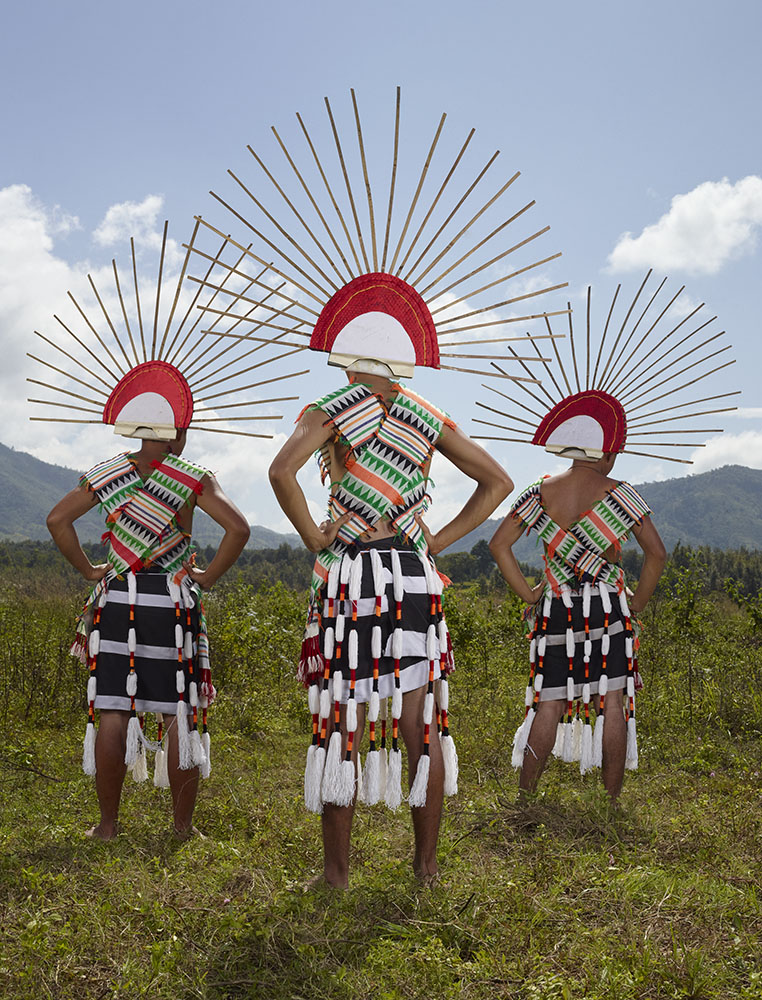
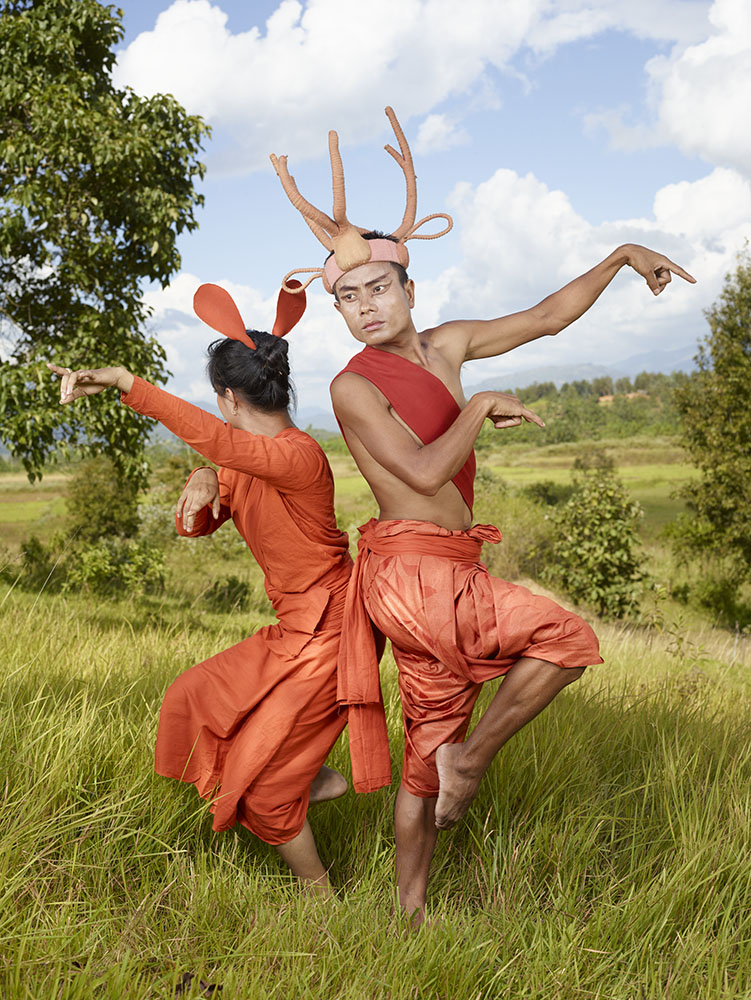
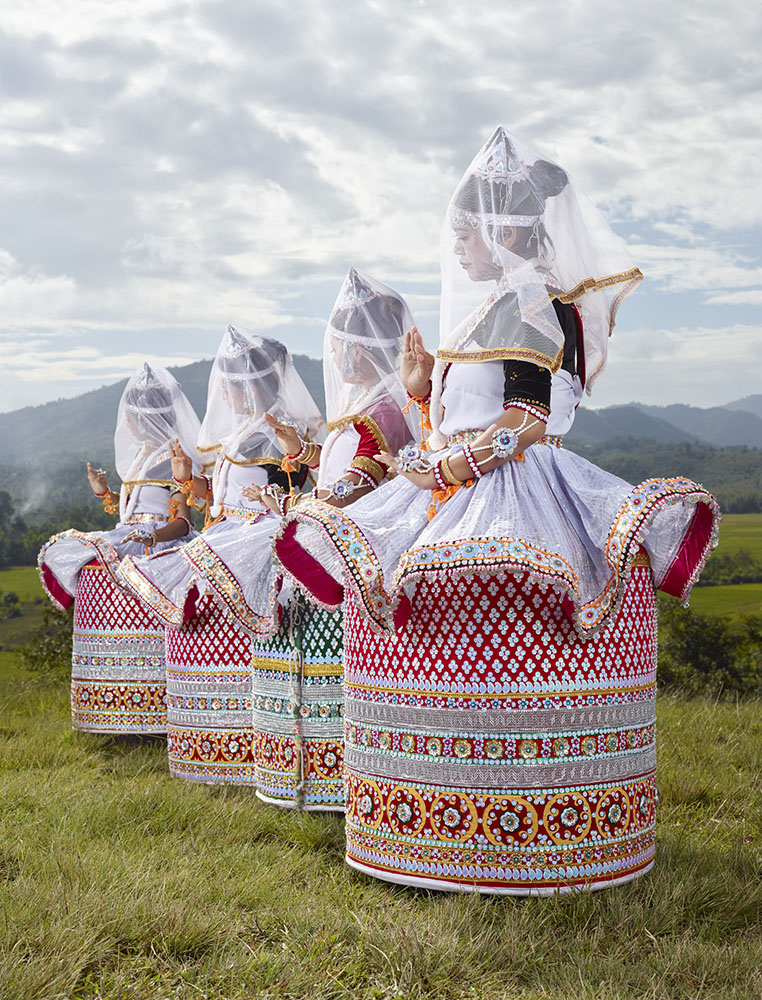
The photographic project Aam Aastha, carried out in India from 2019 to 2022, is a continuation of Charles Fréger’s series on masquerades around the world: Wilder Mann (since 2010), Yokainoshima (2013-2015), Cimarron (2014-2018) .
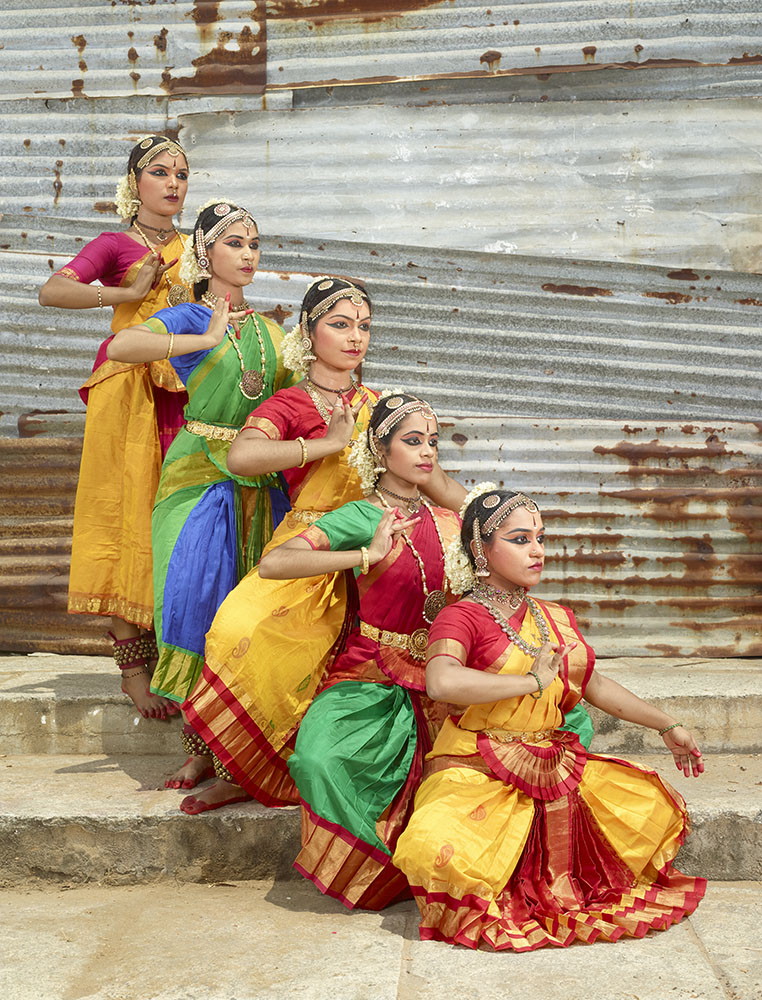
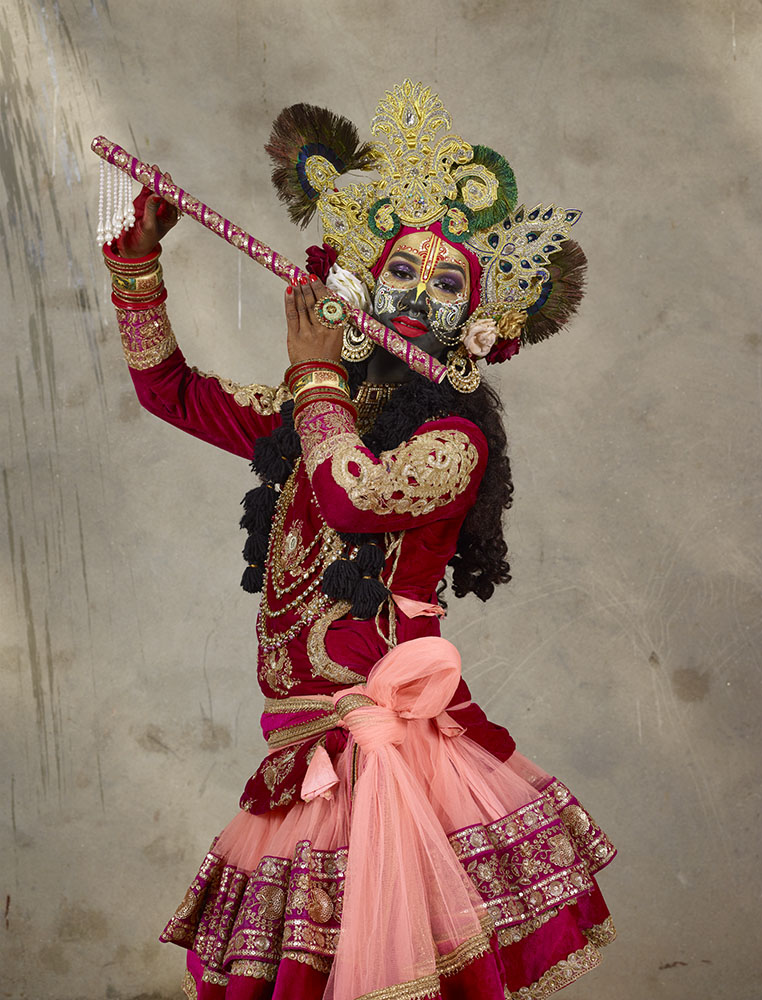
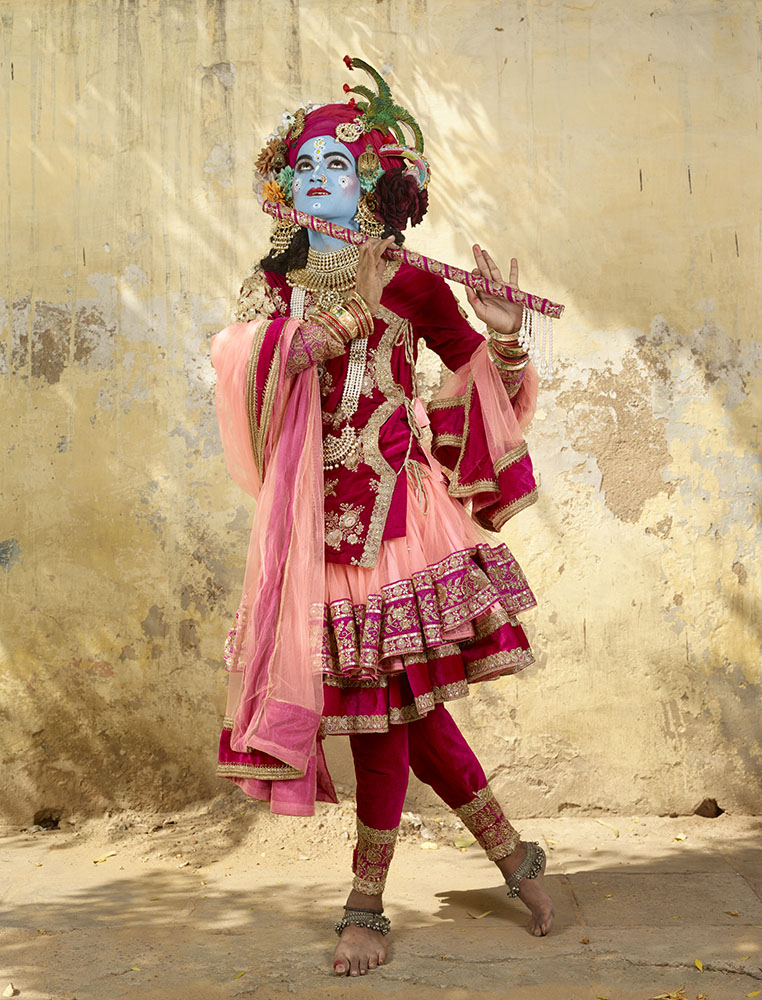
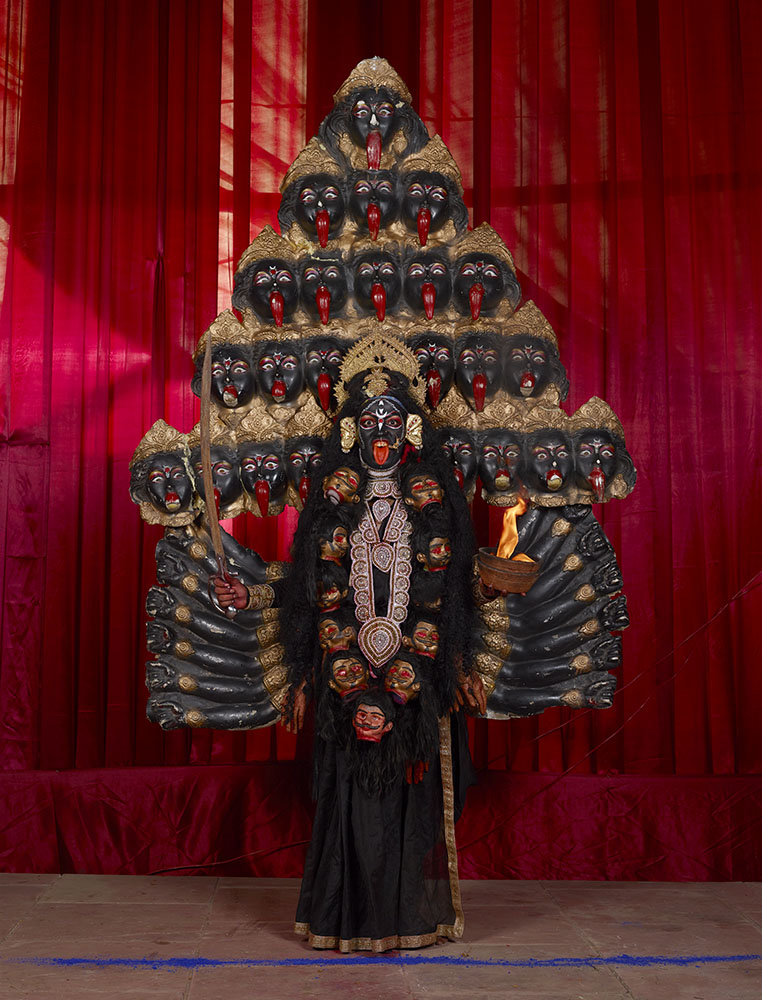
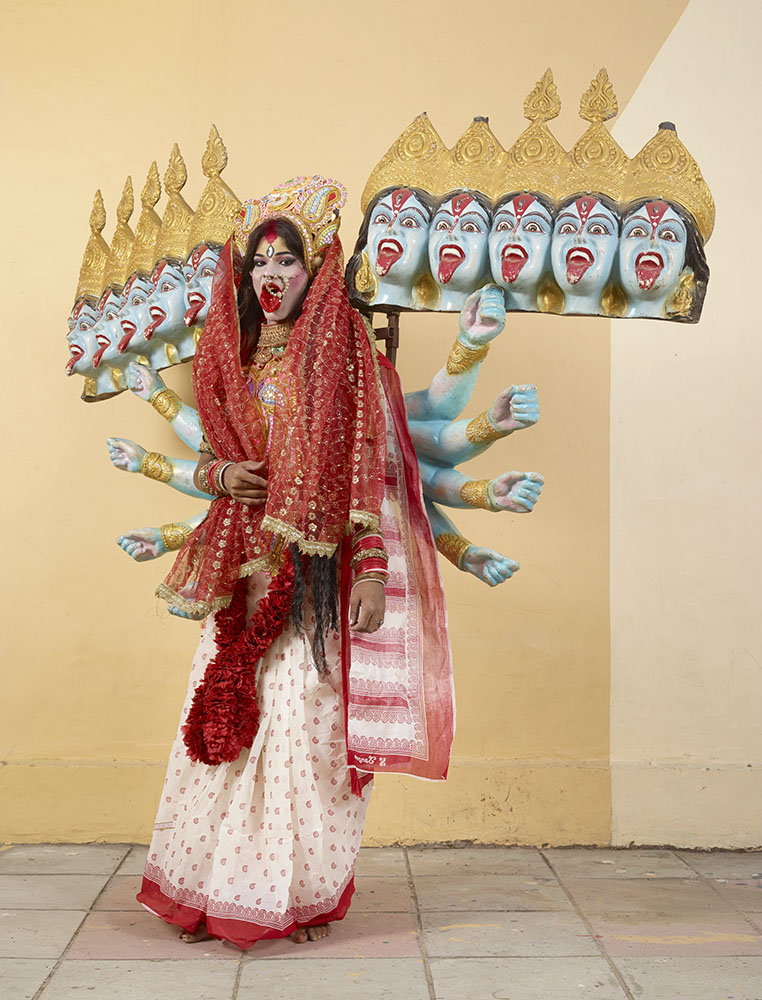
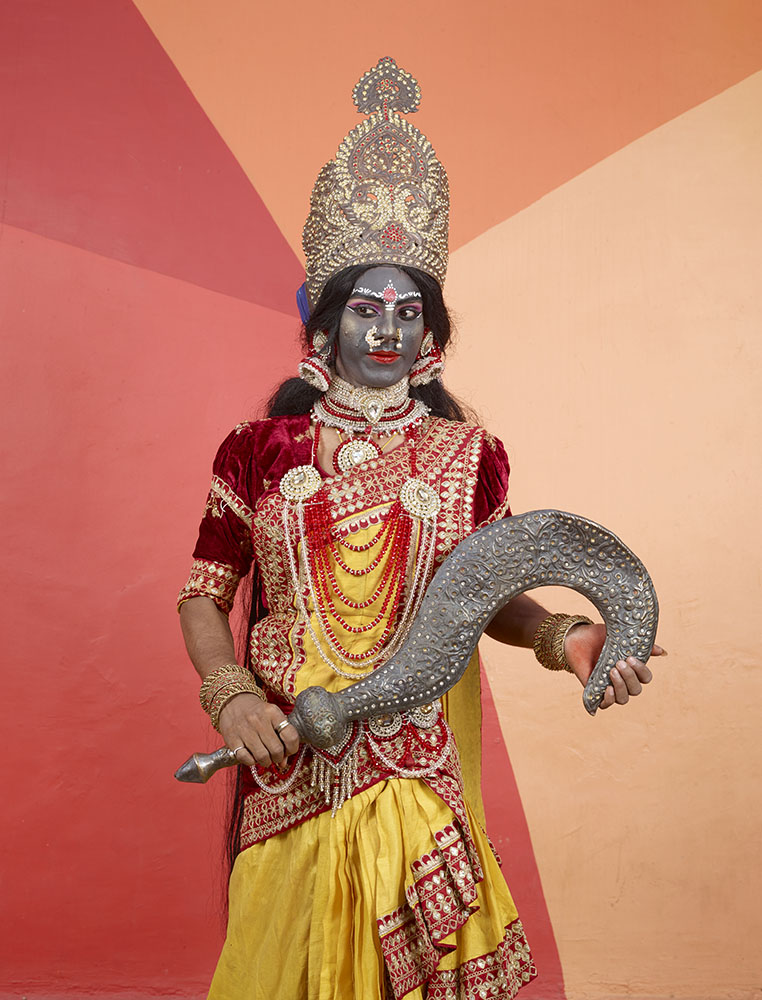
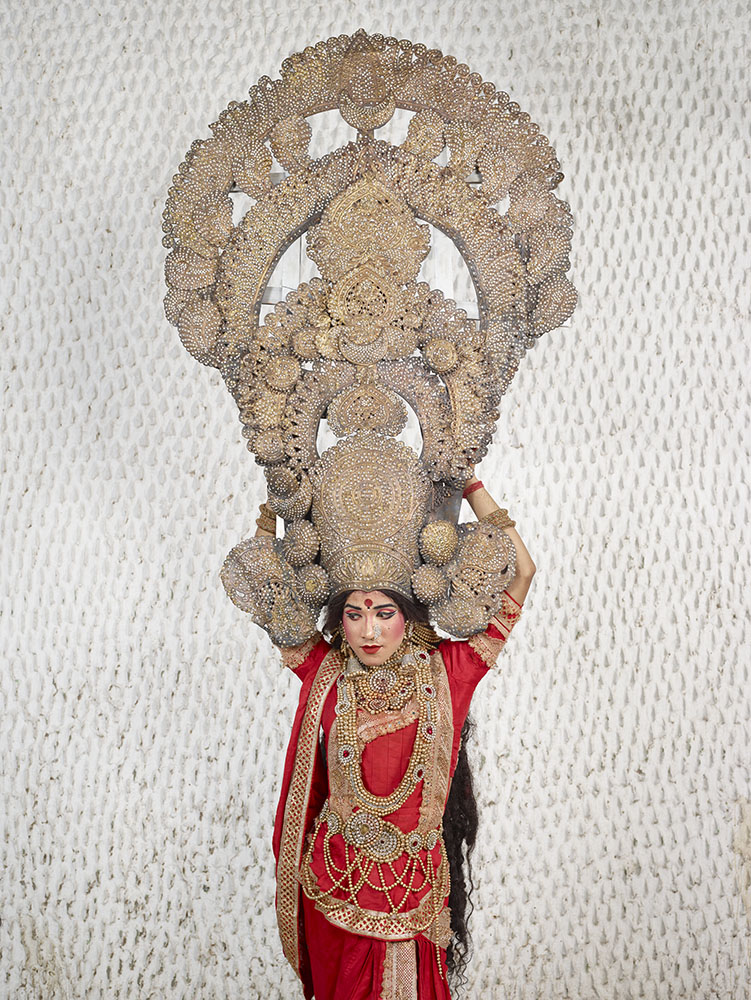
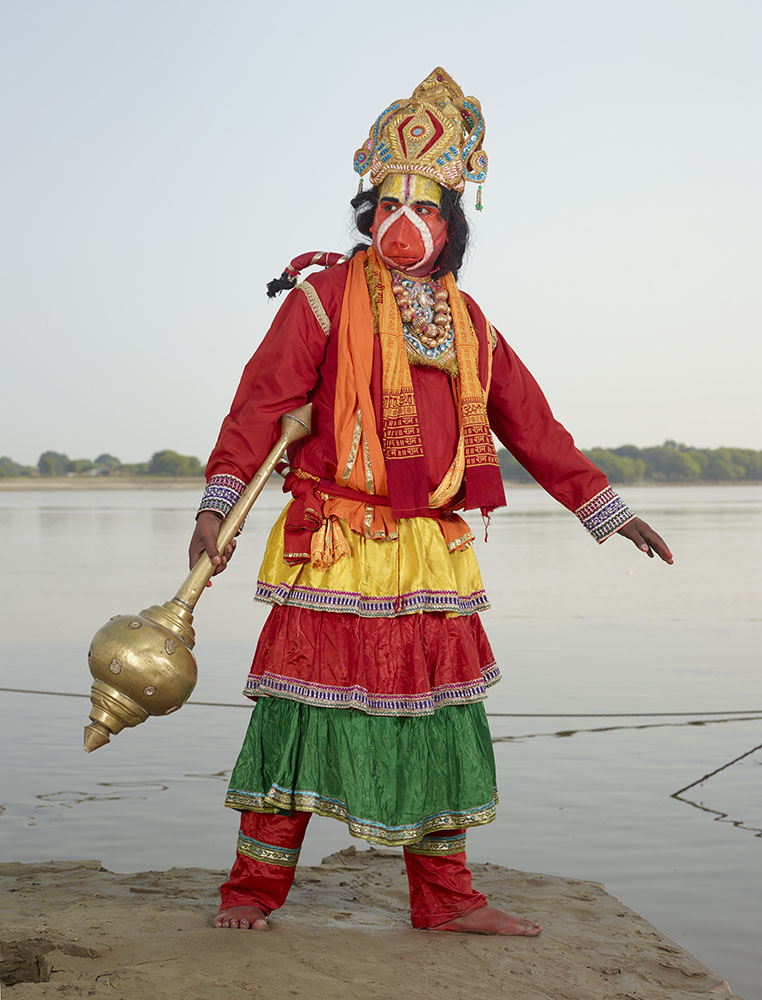
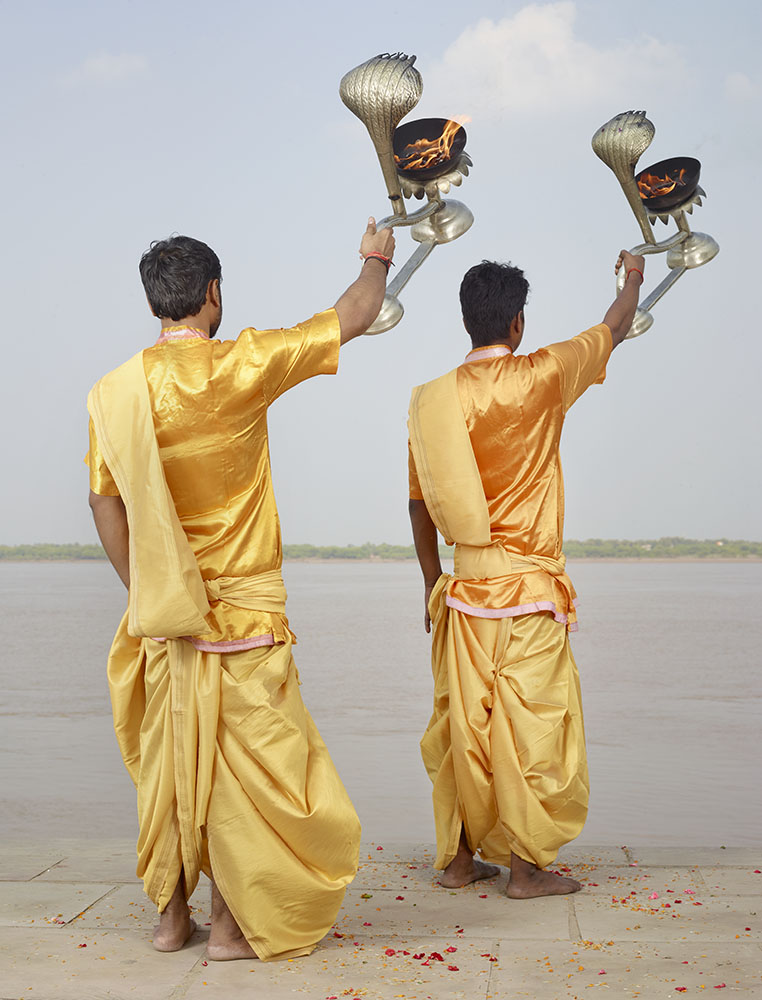
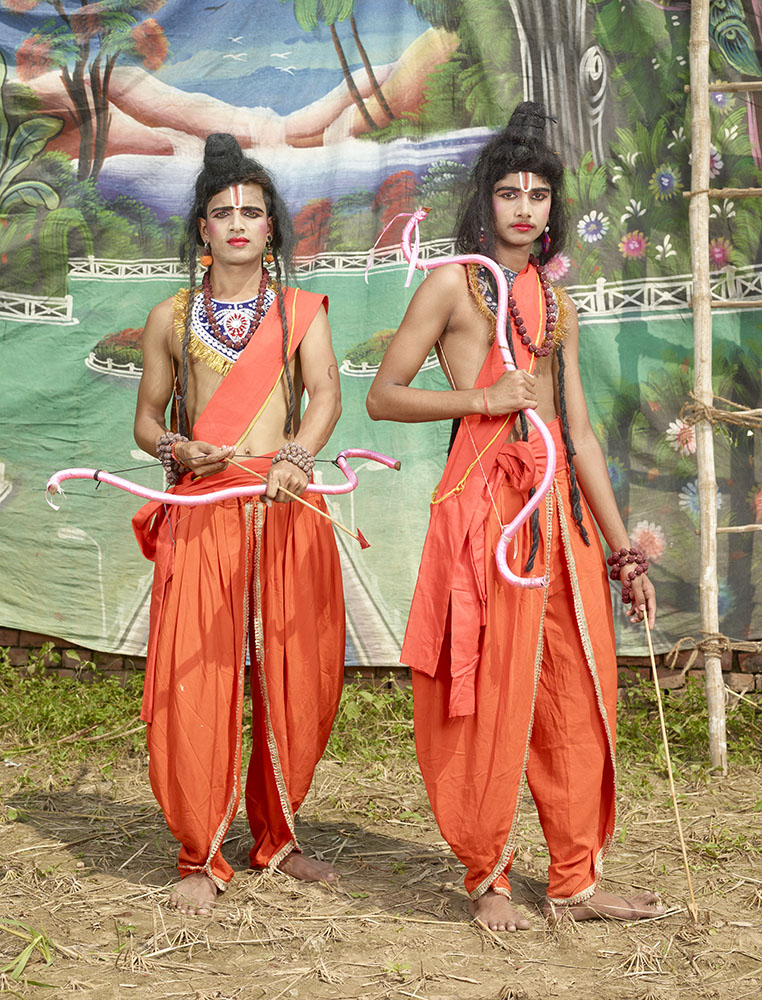
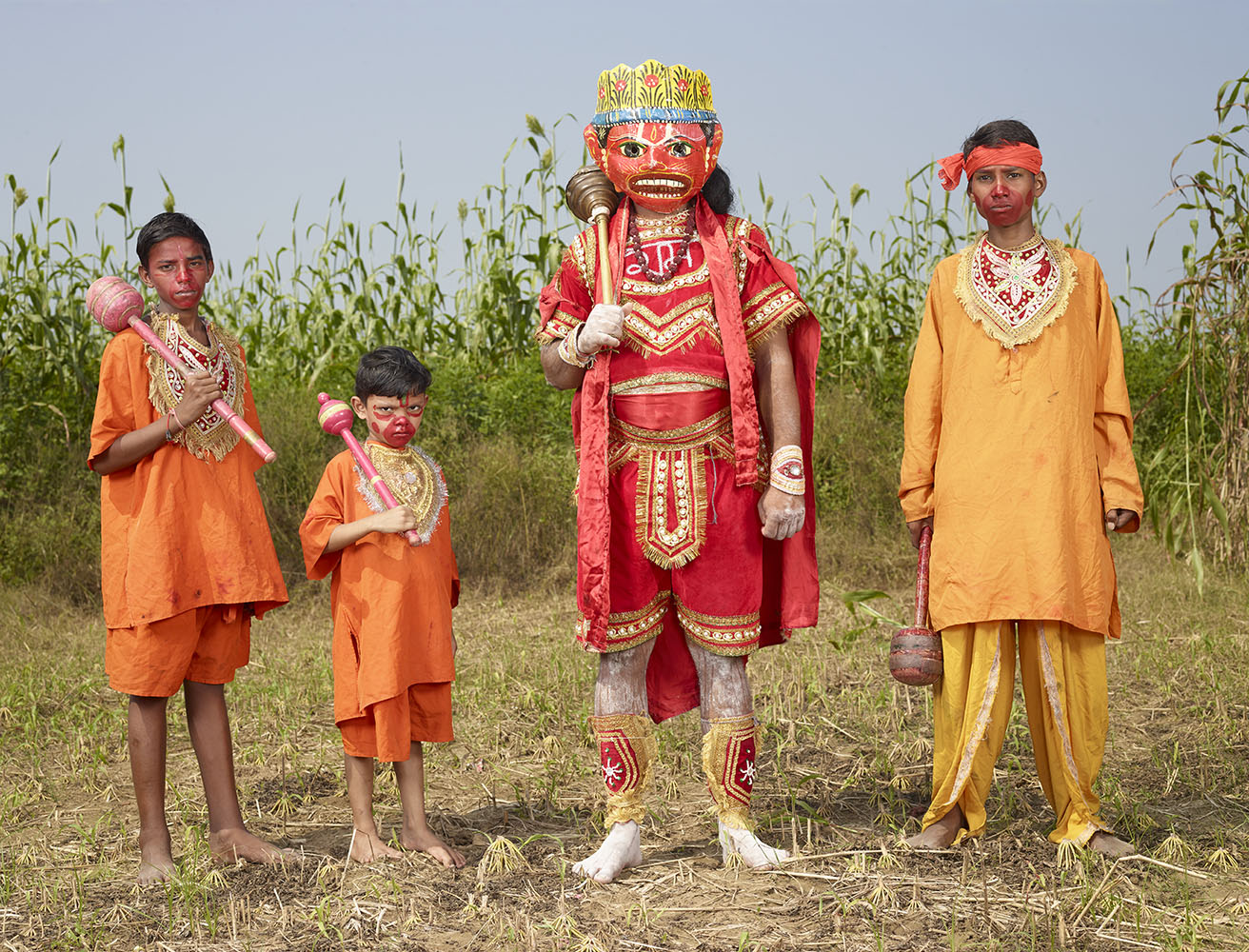
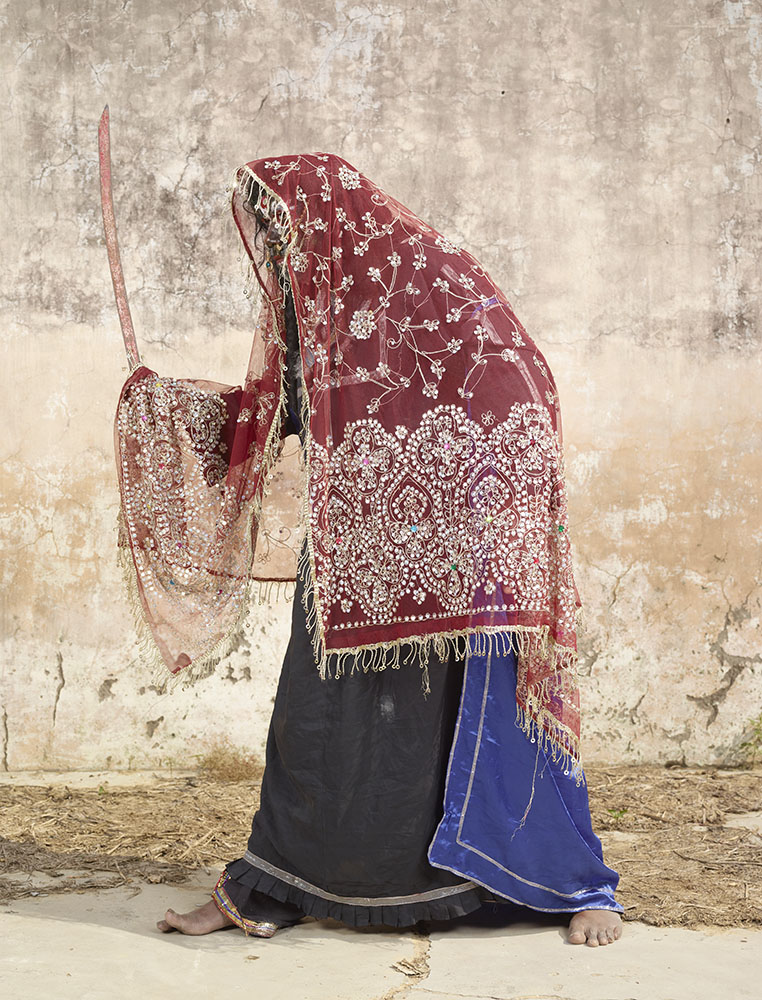
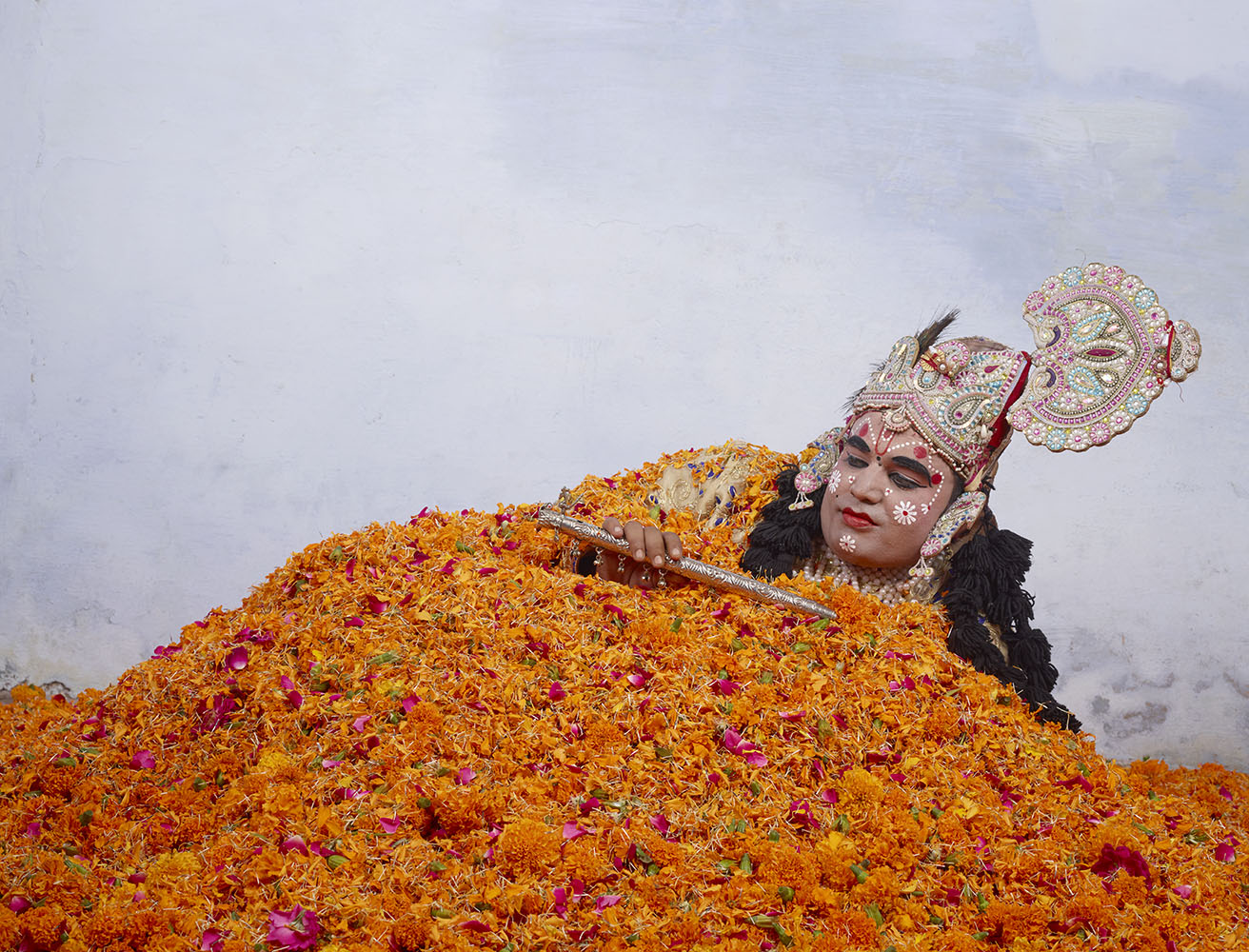
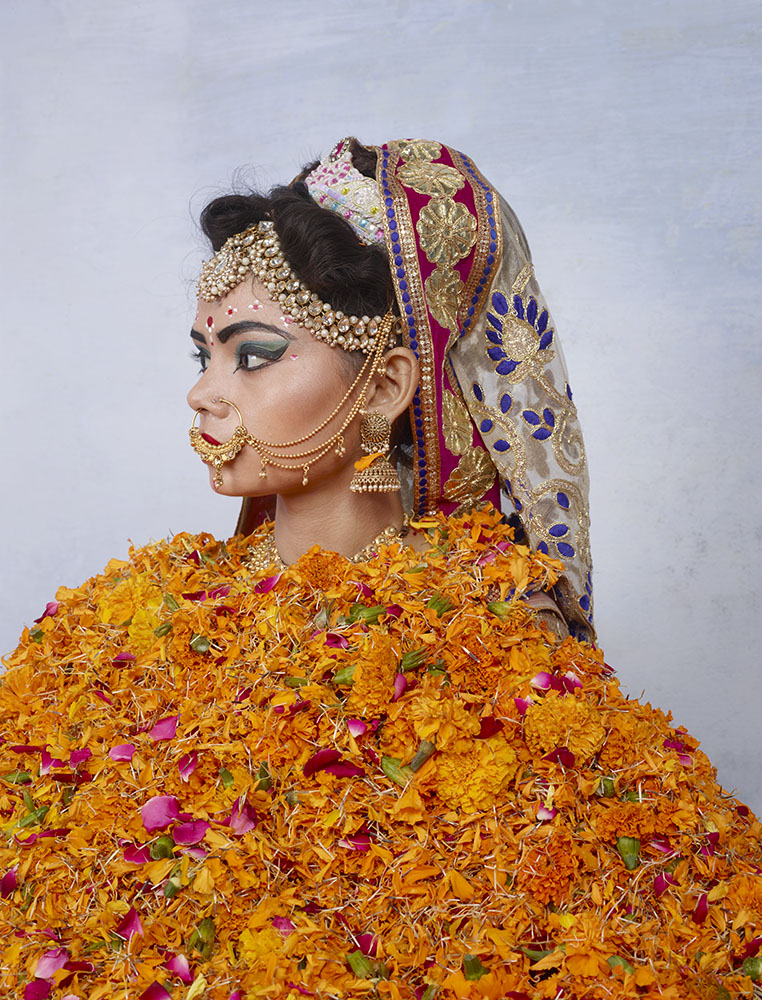
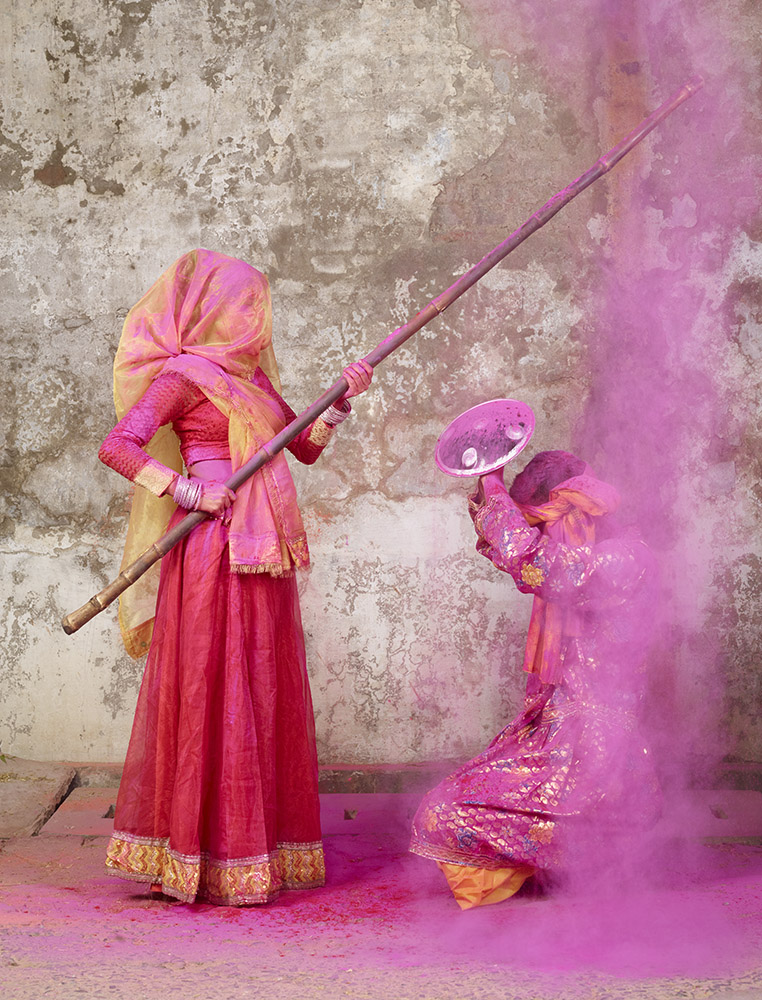
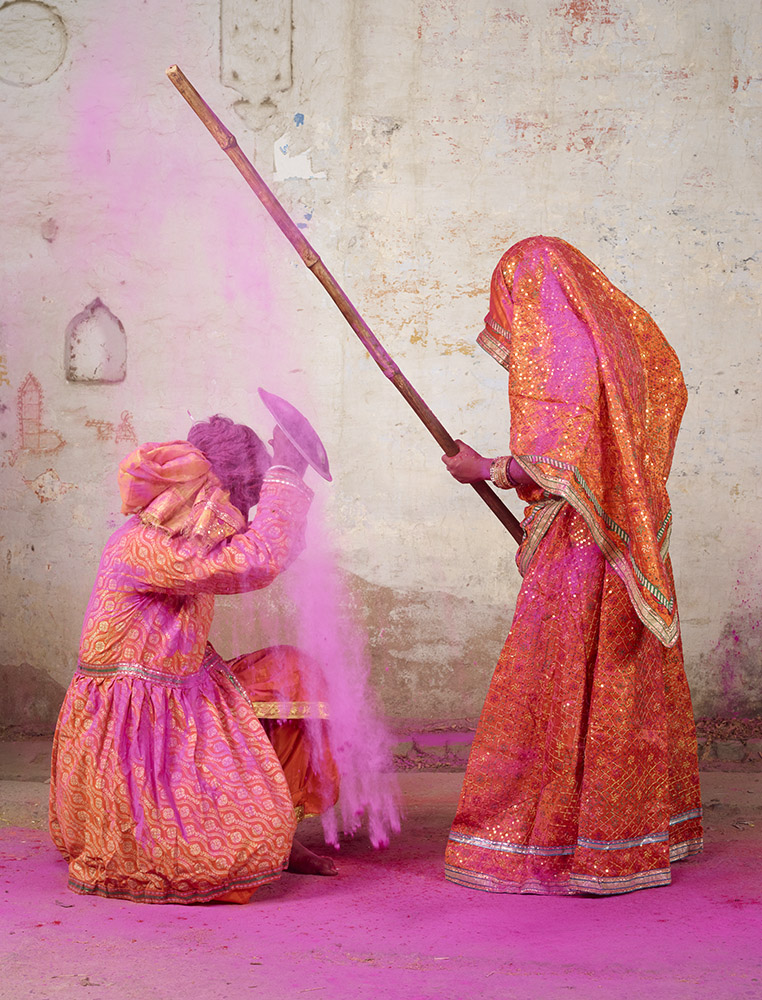
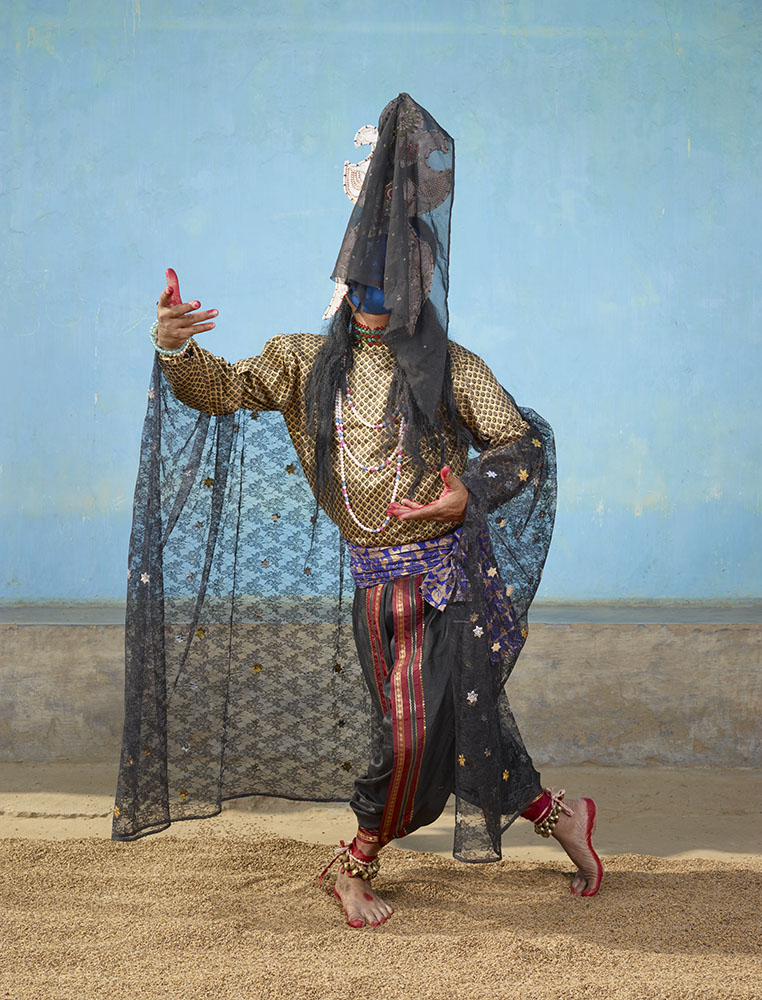
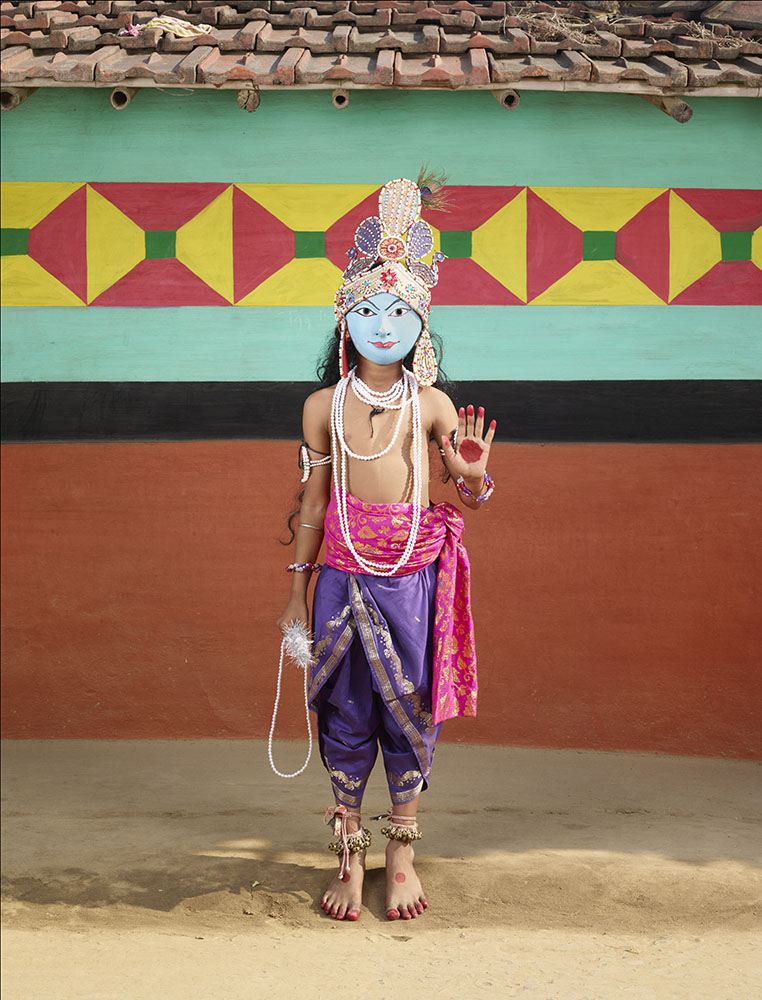
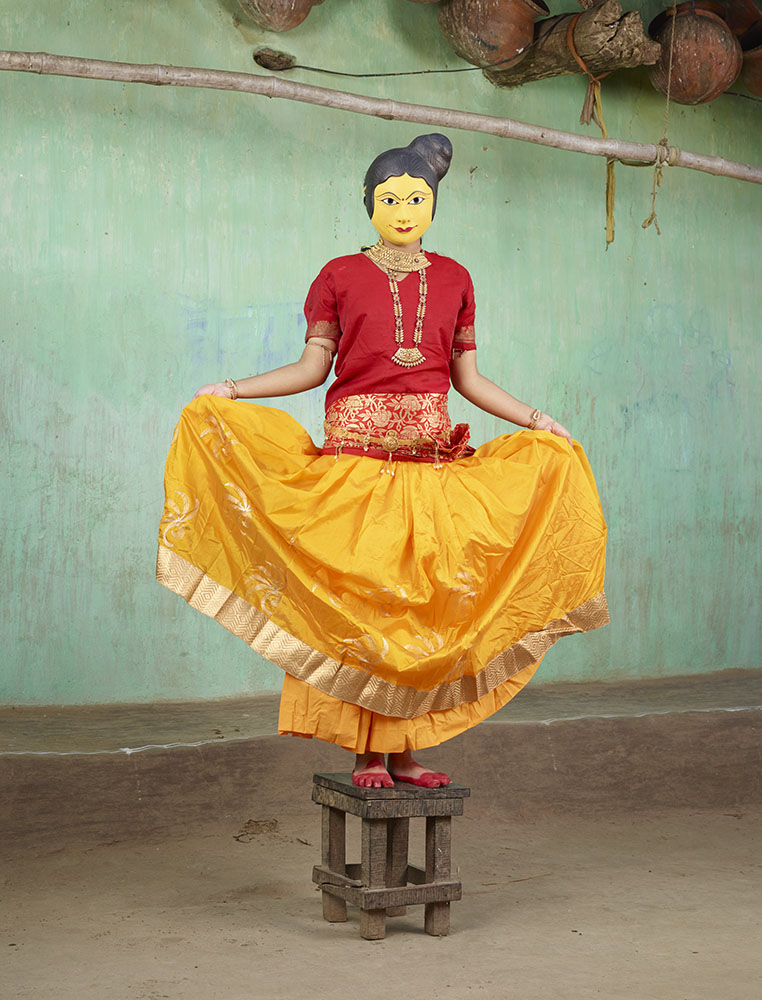
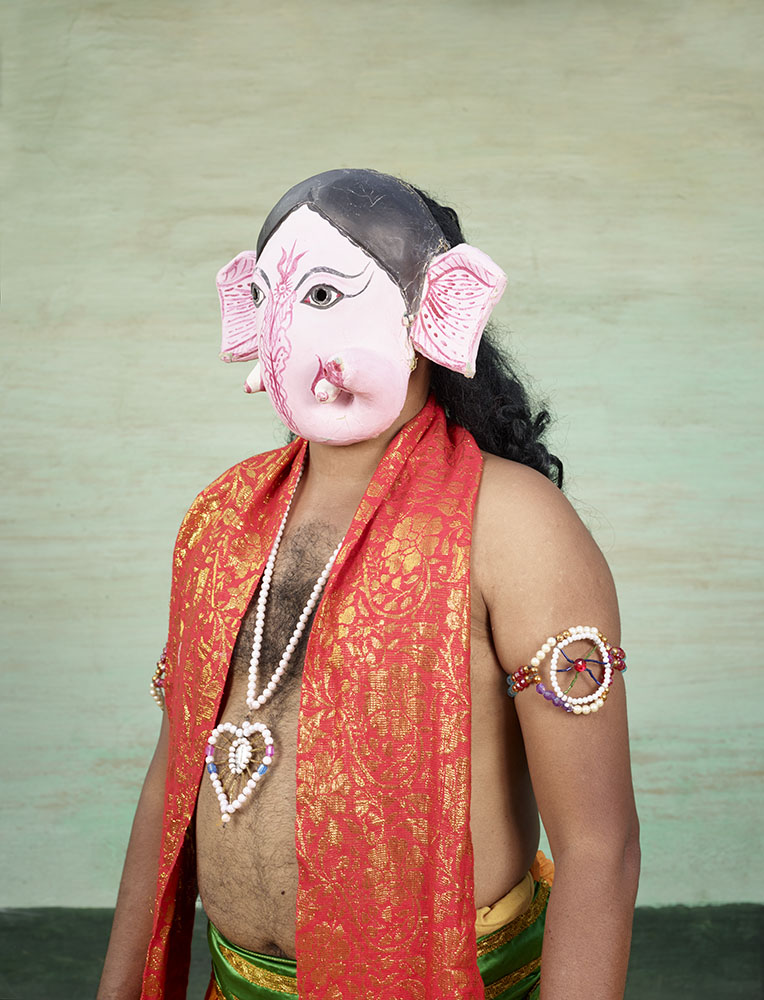
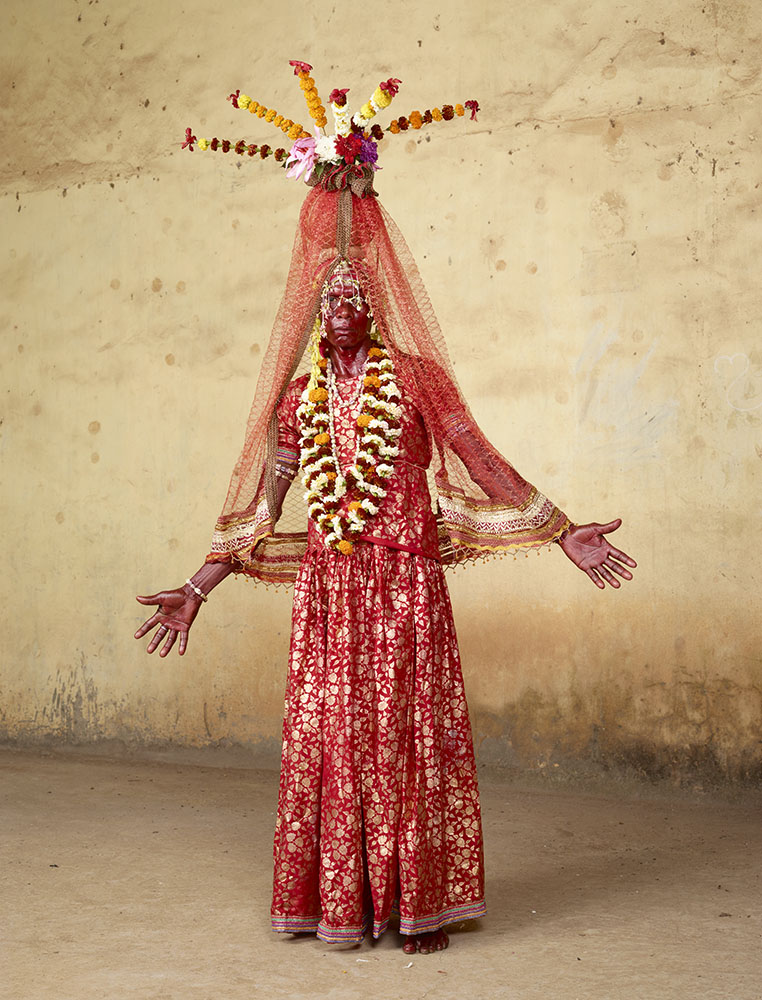
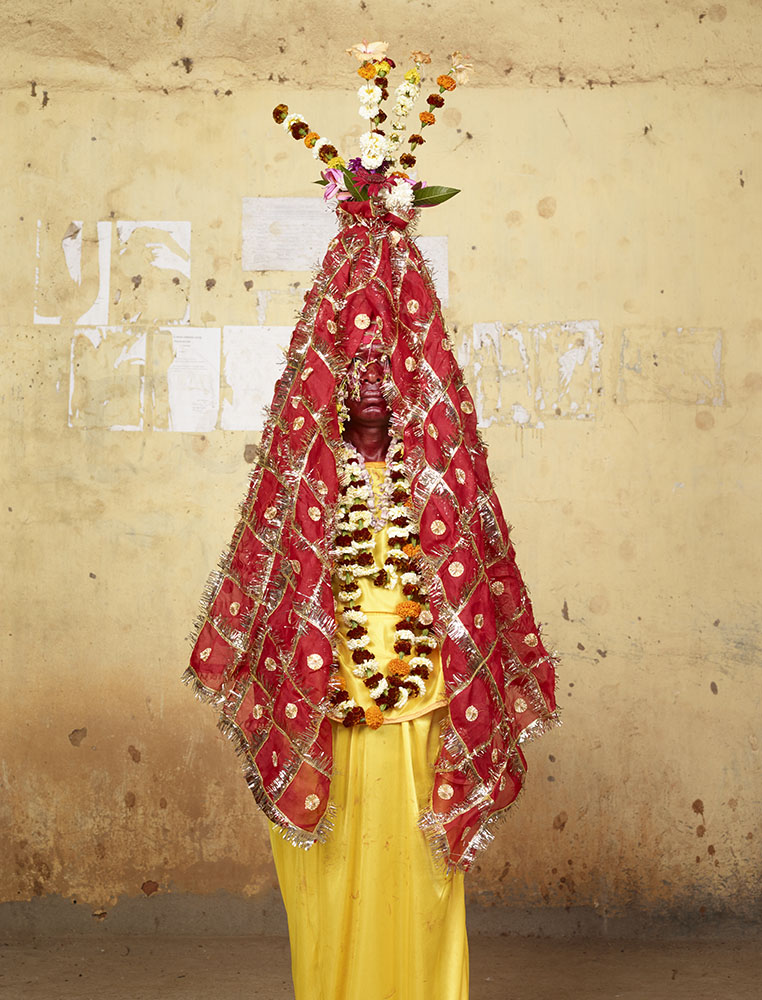
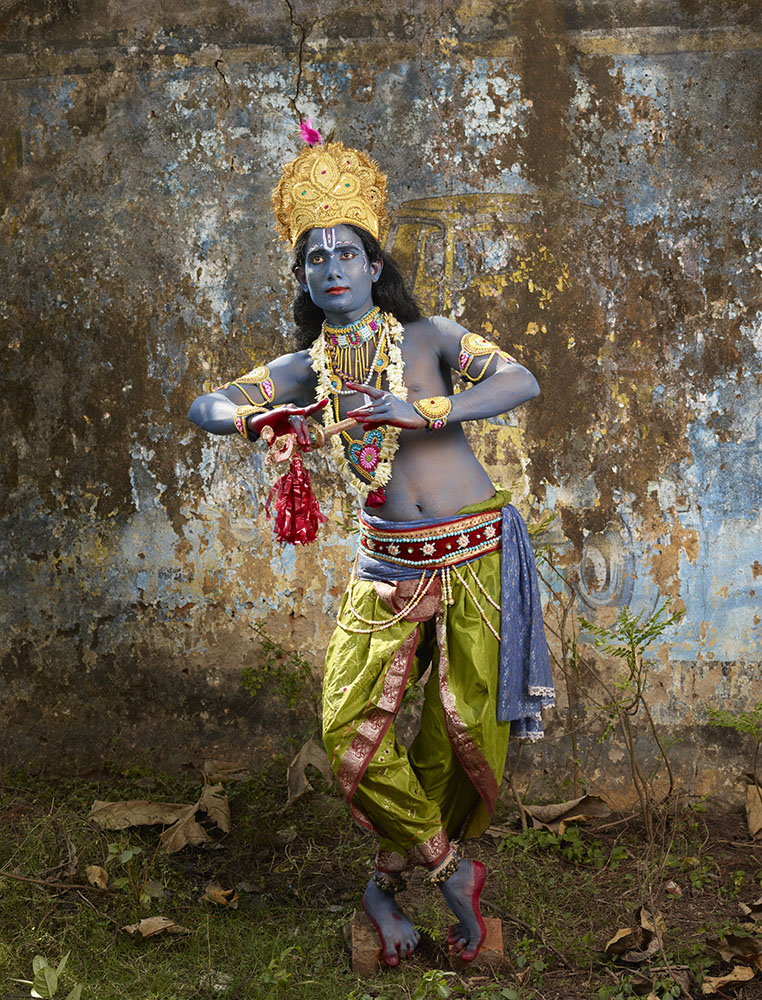
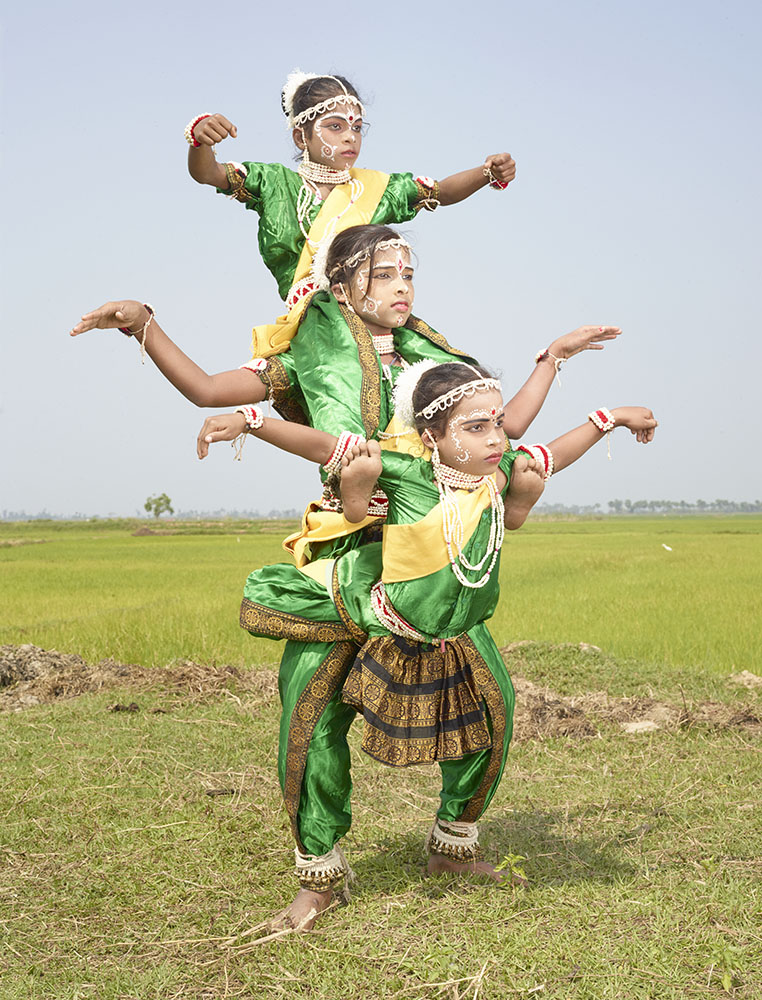
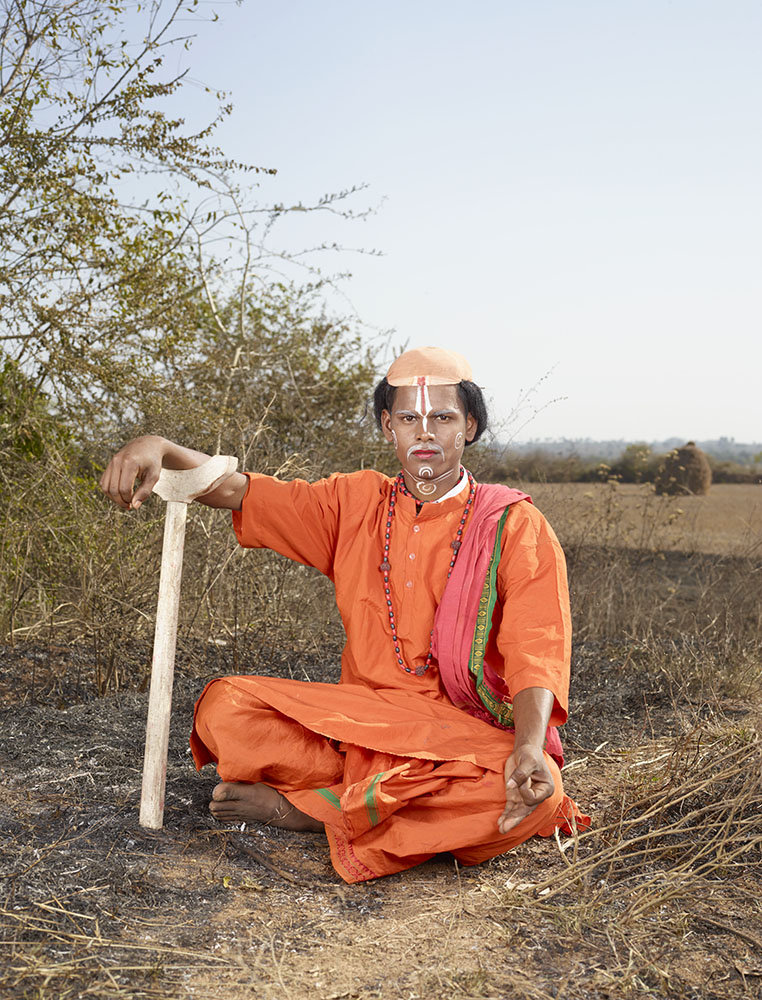
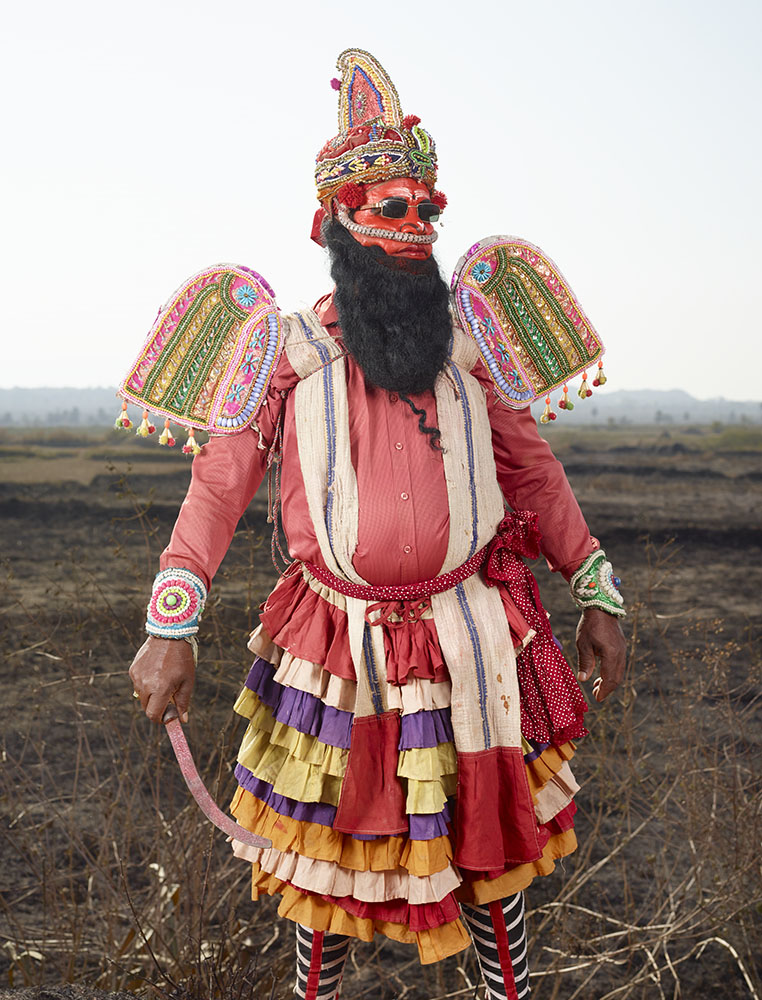
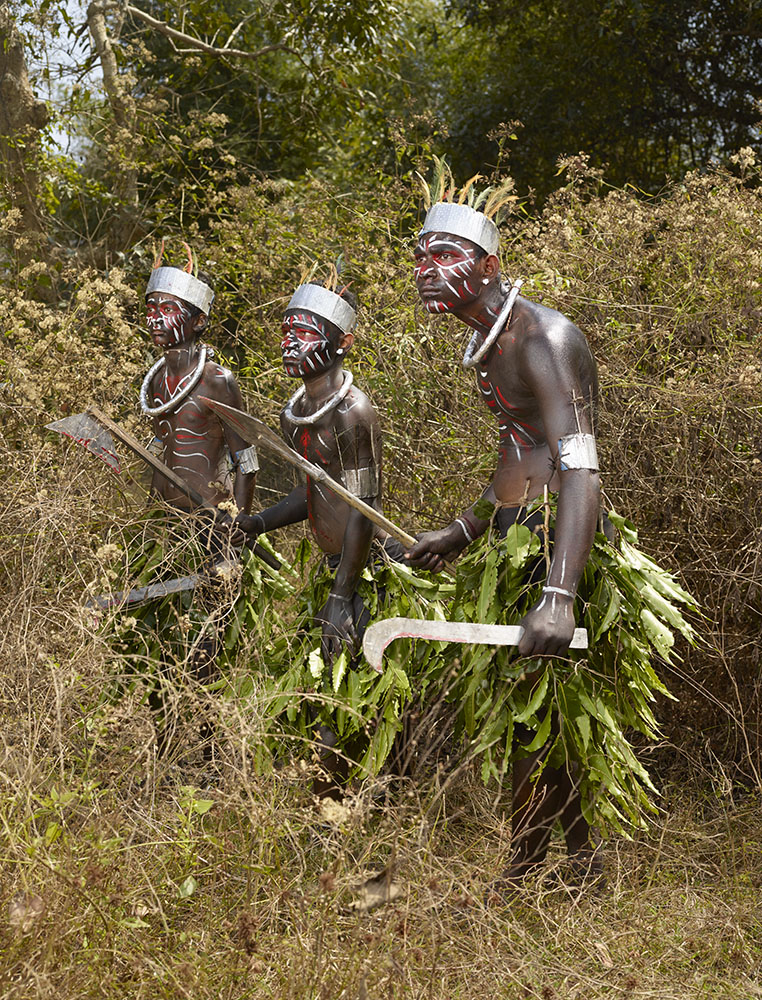
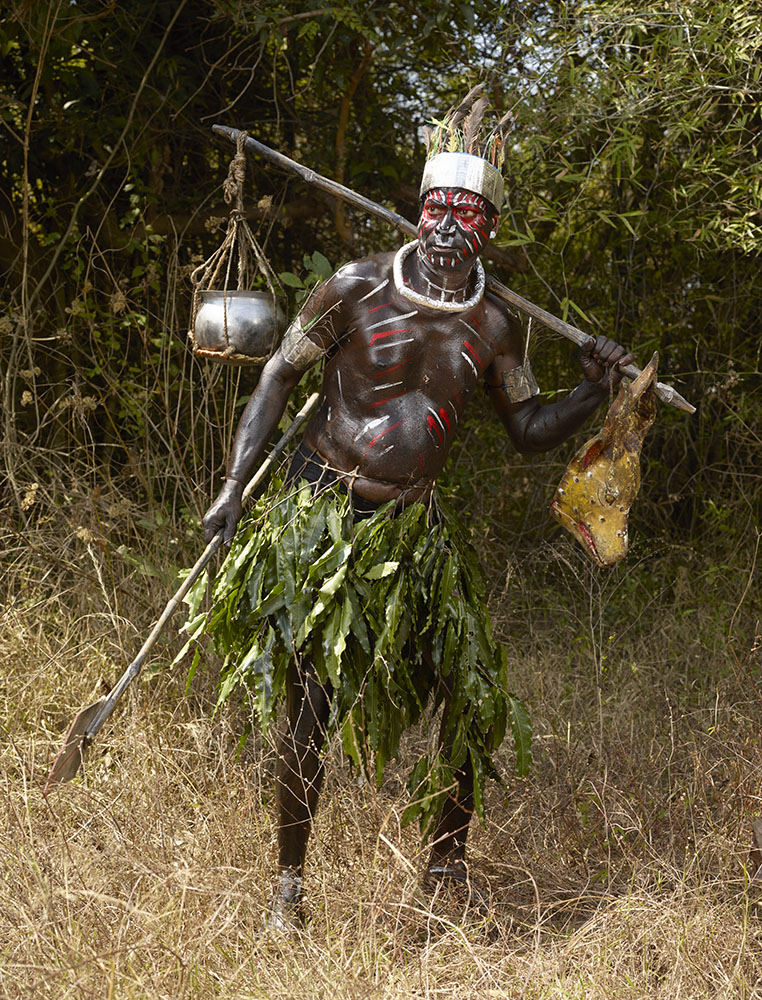
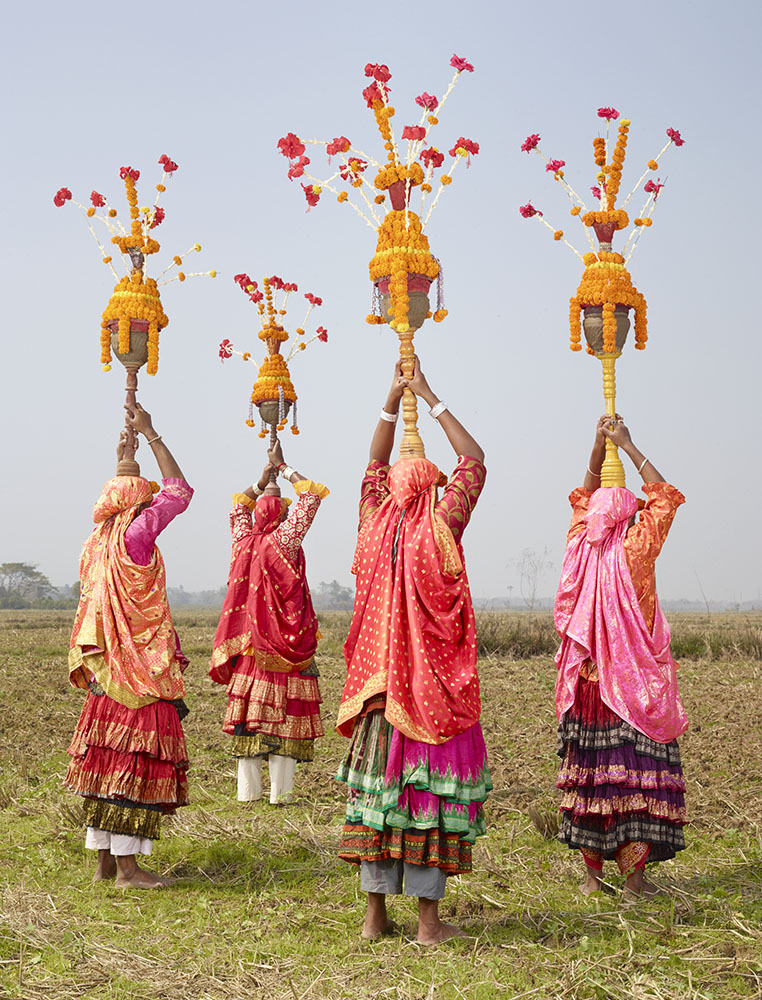
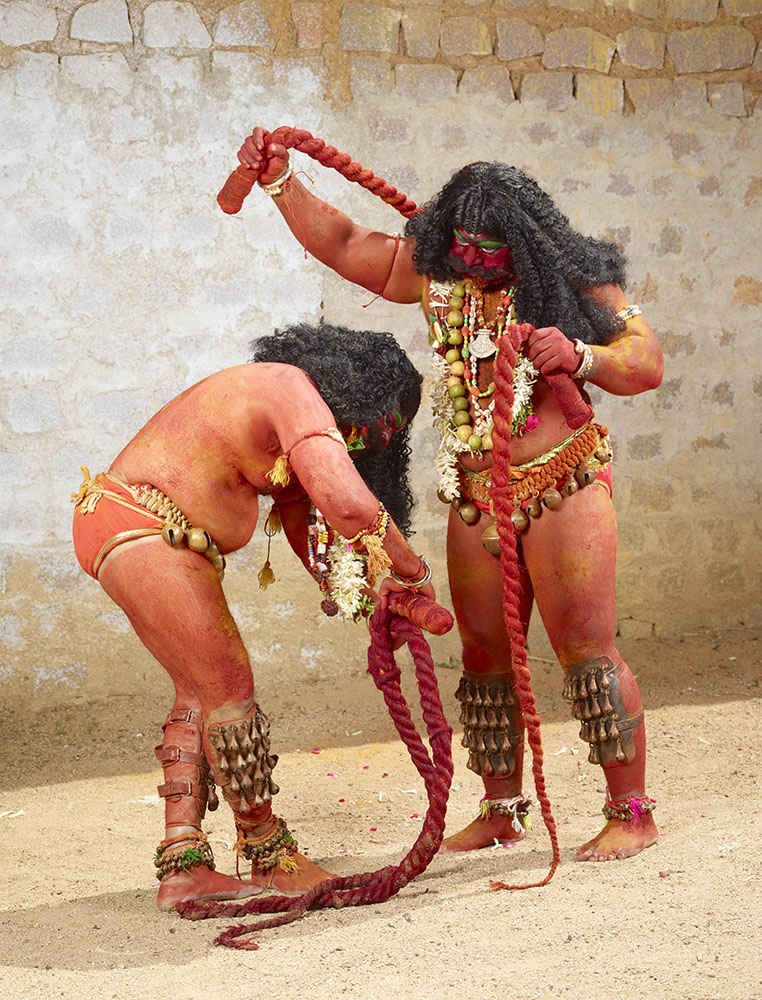
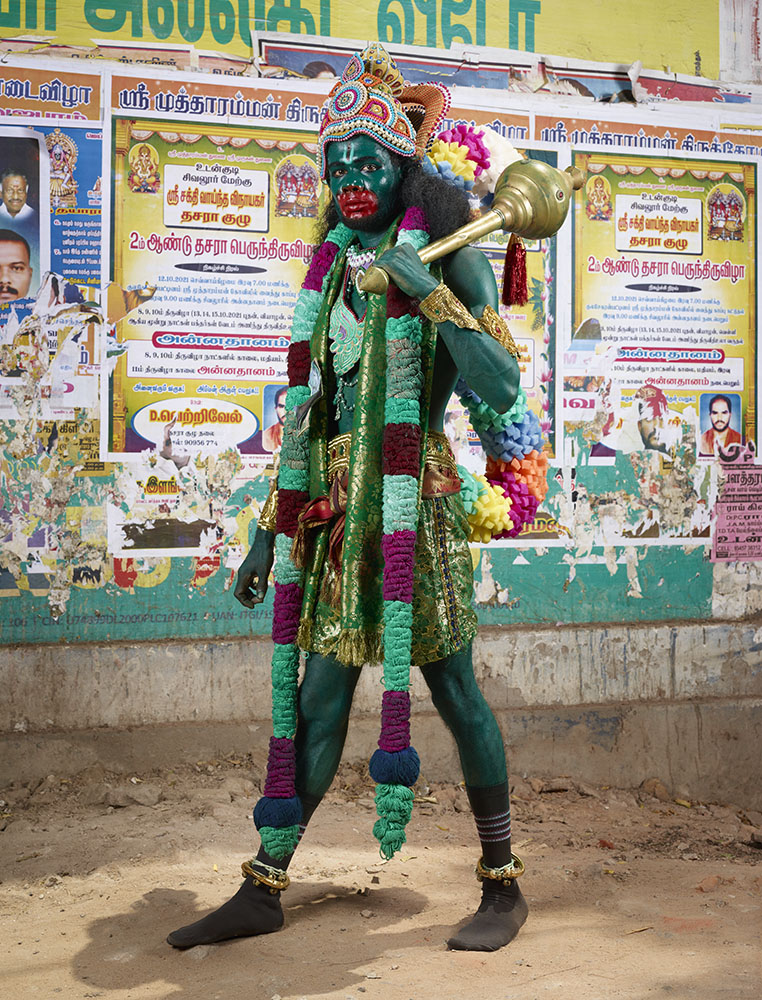
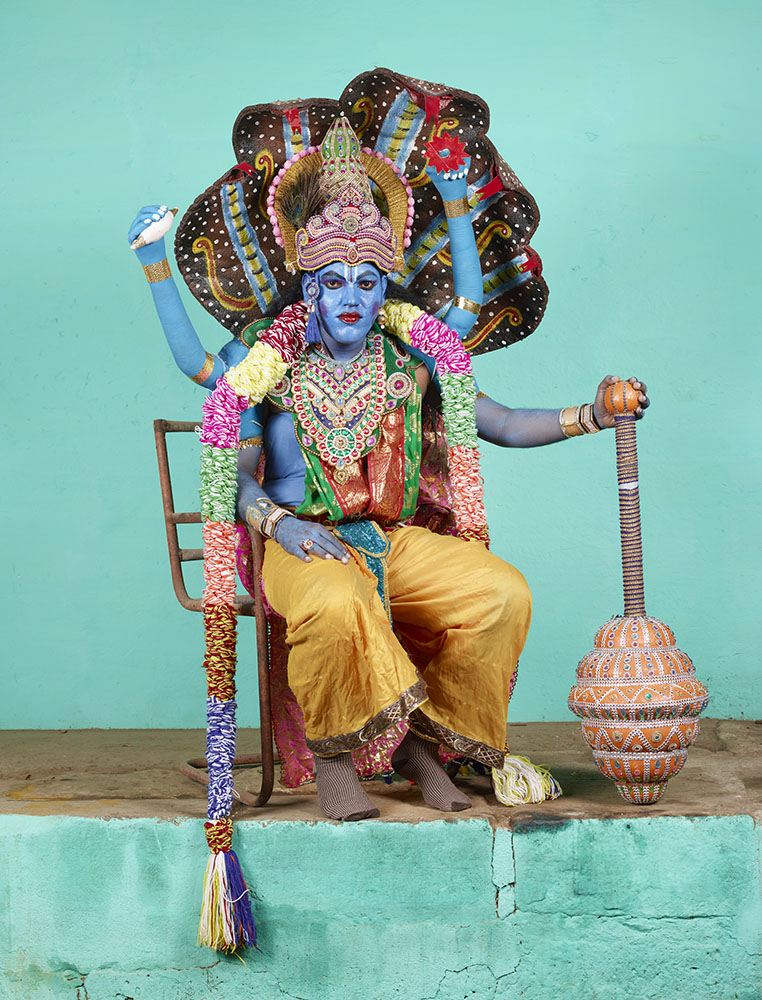
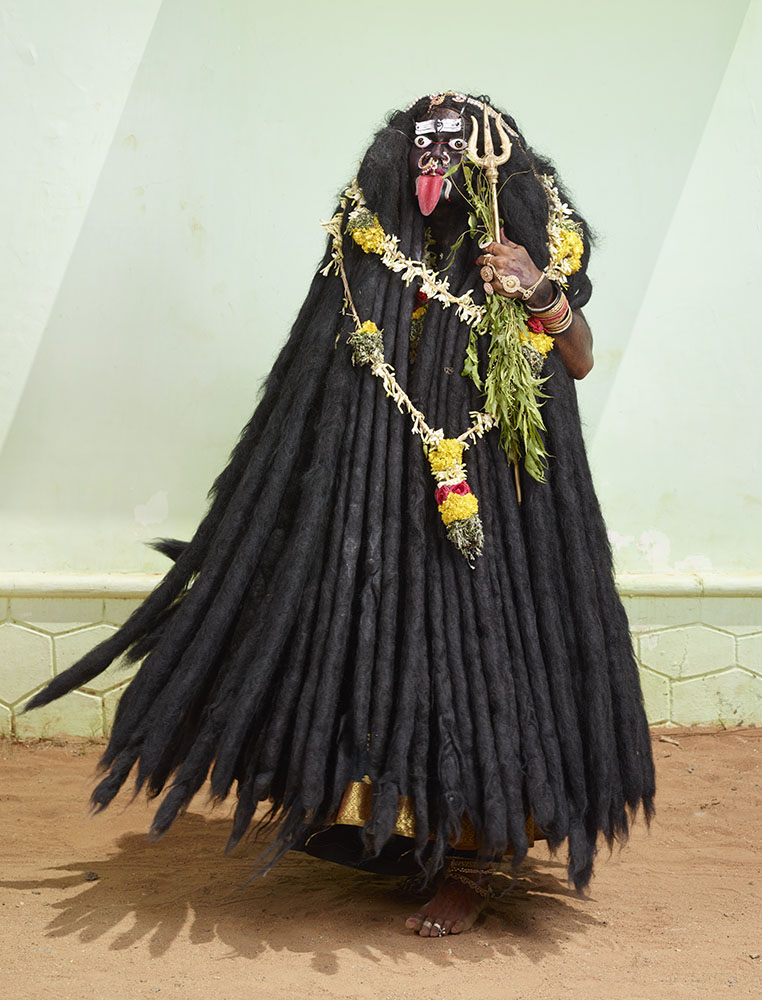
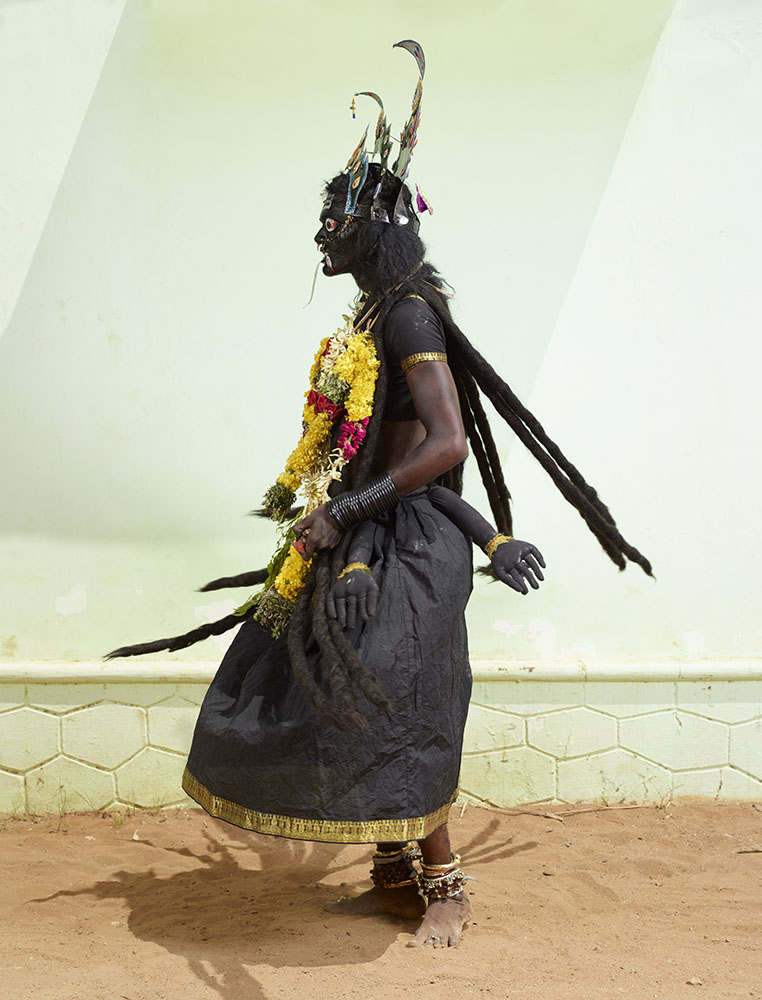
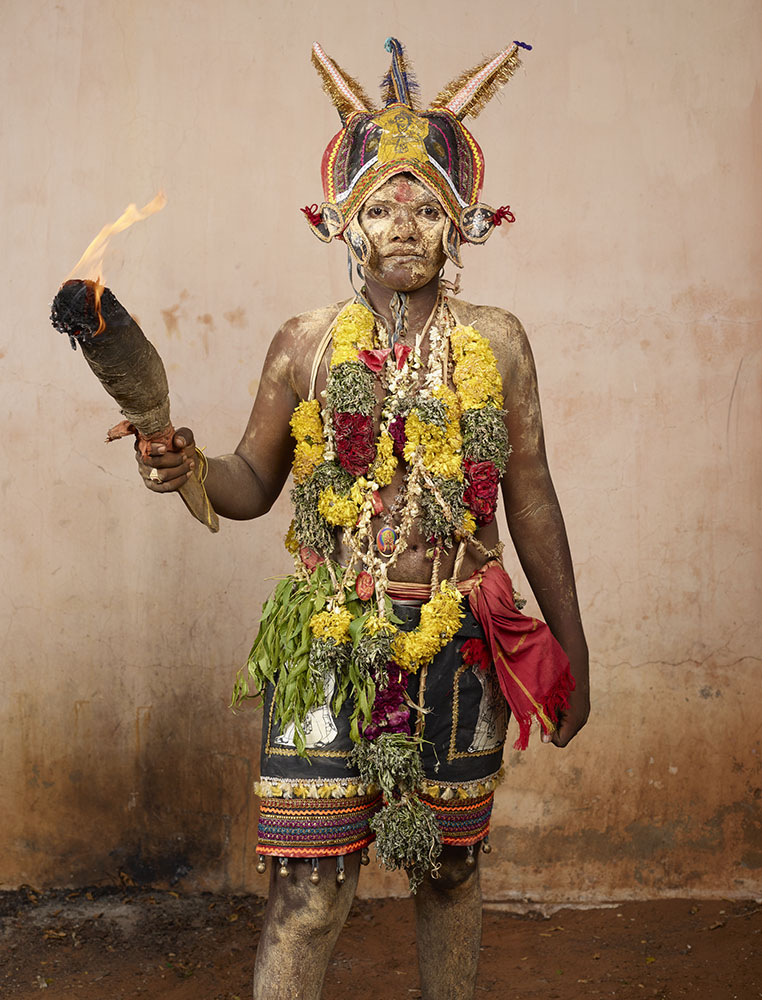
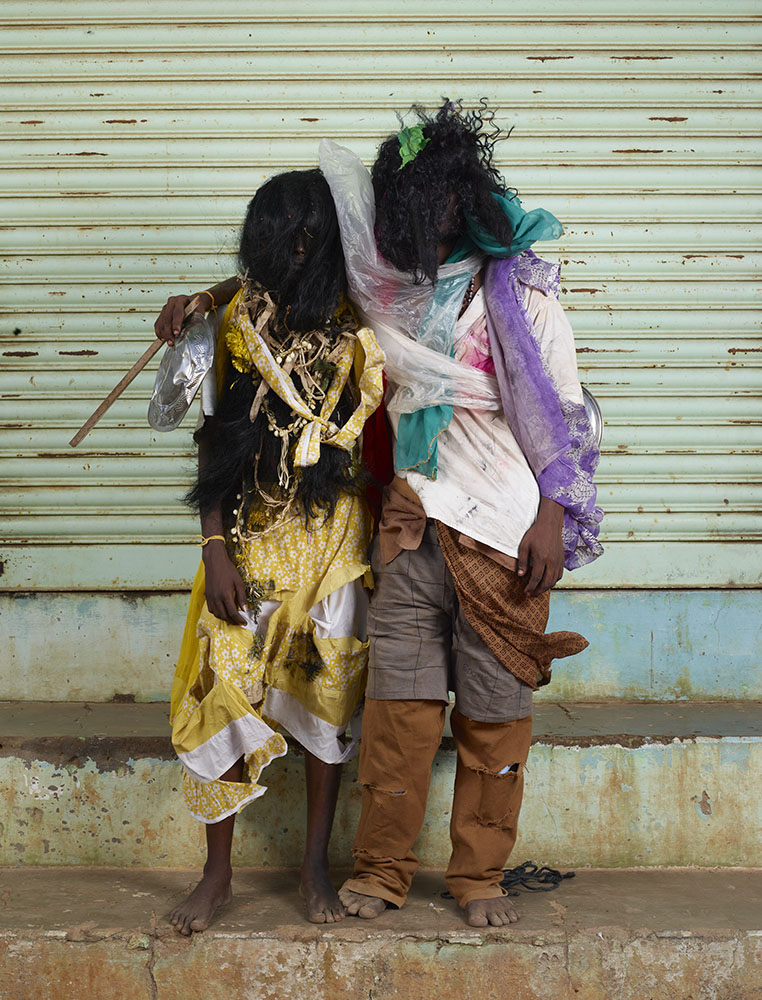
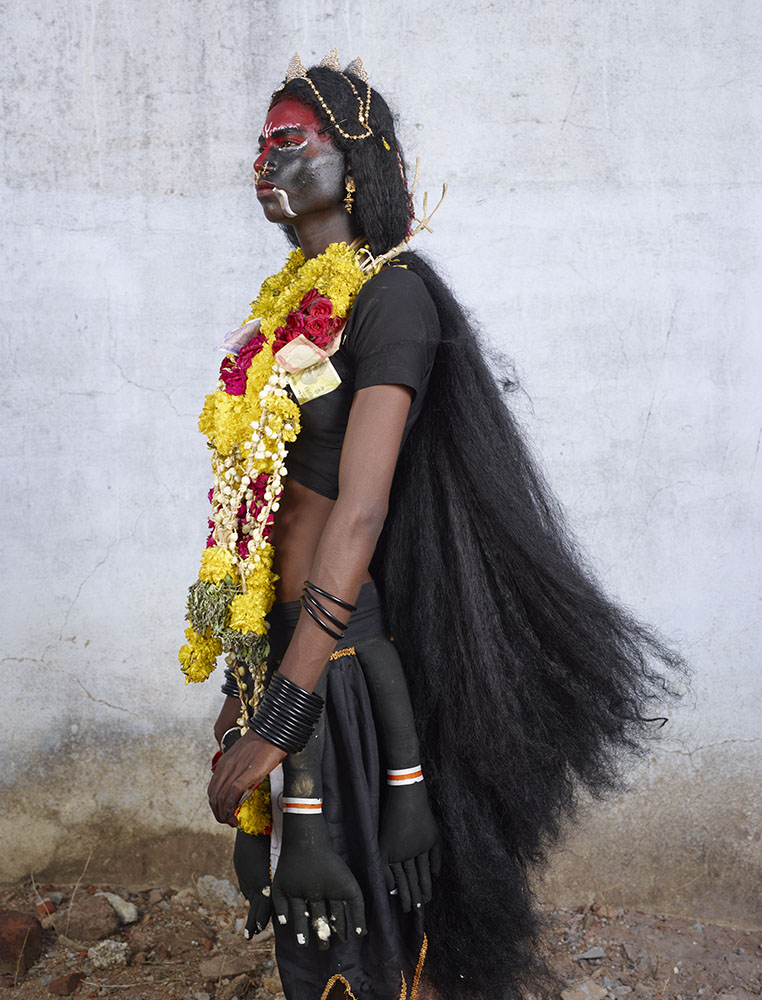
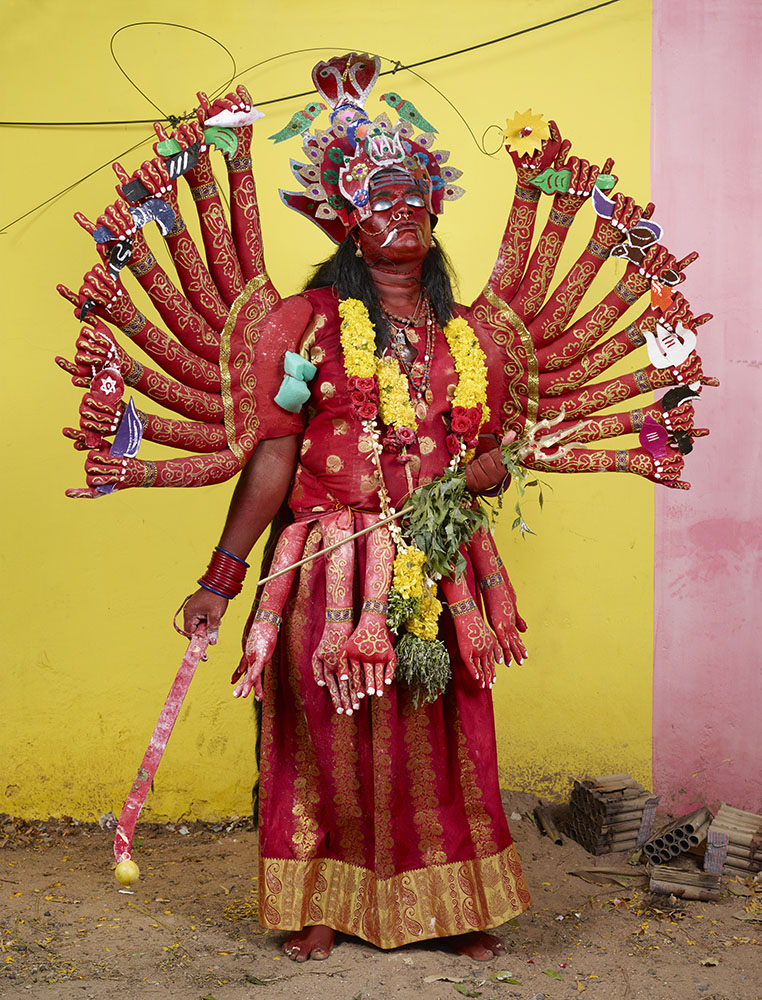
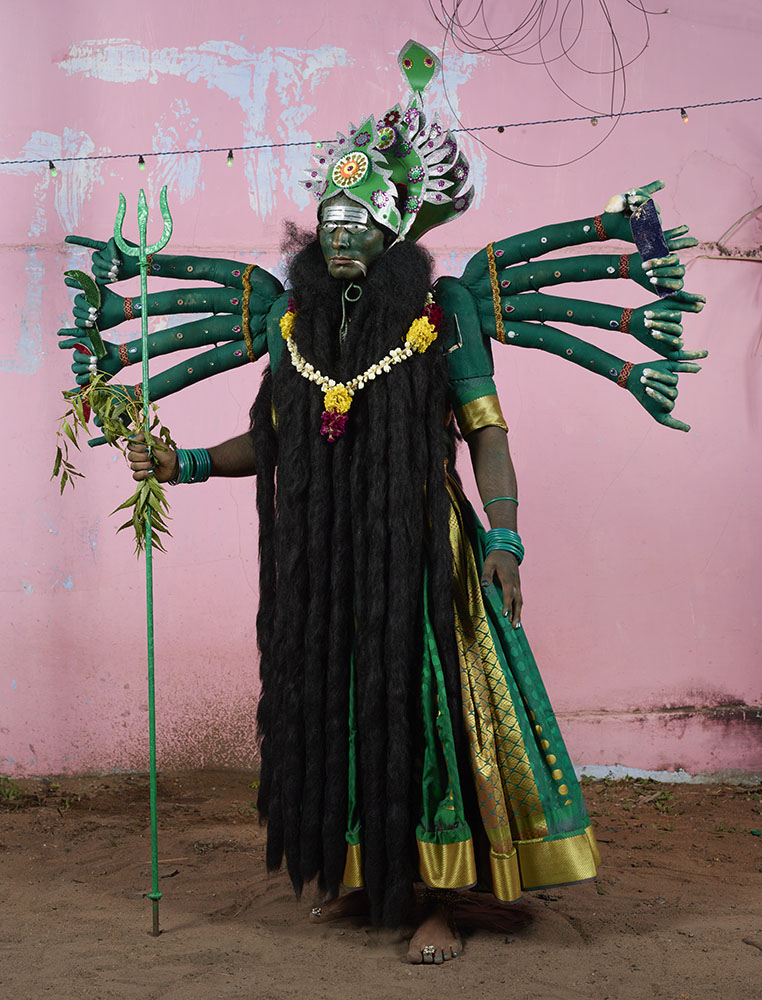
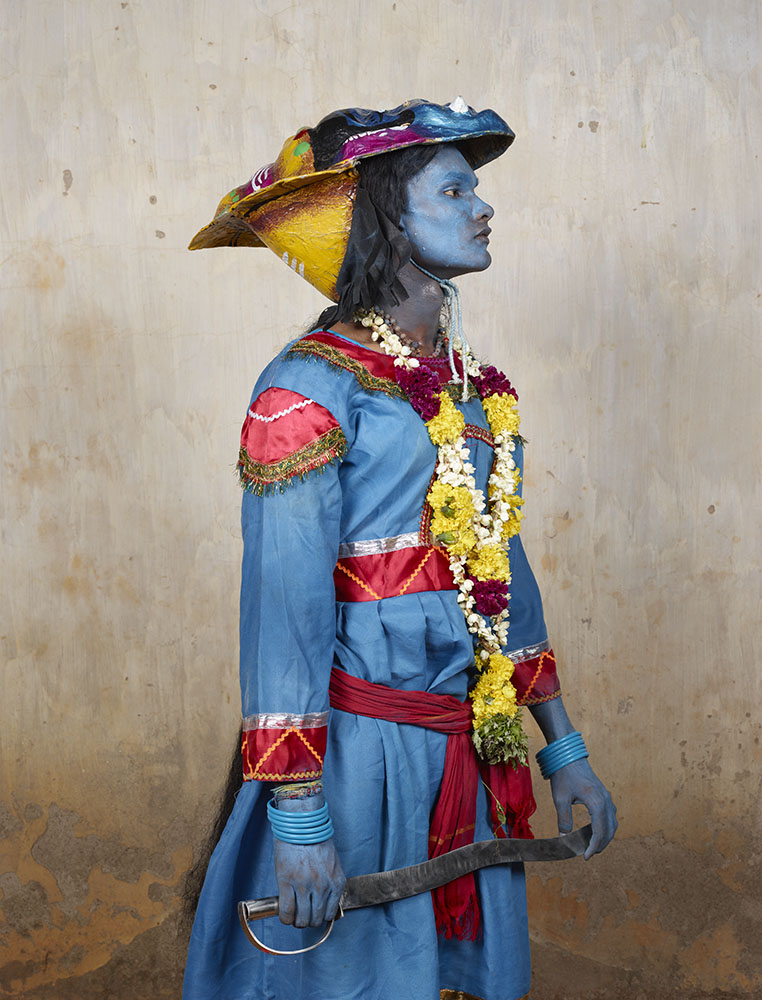
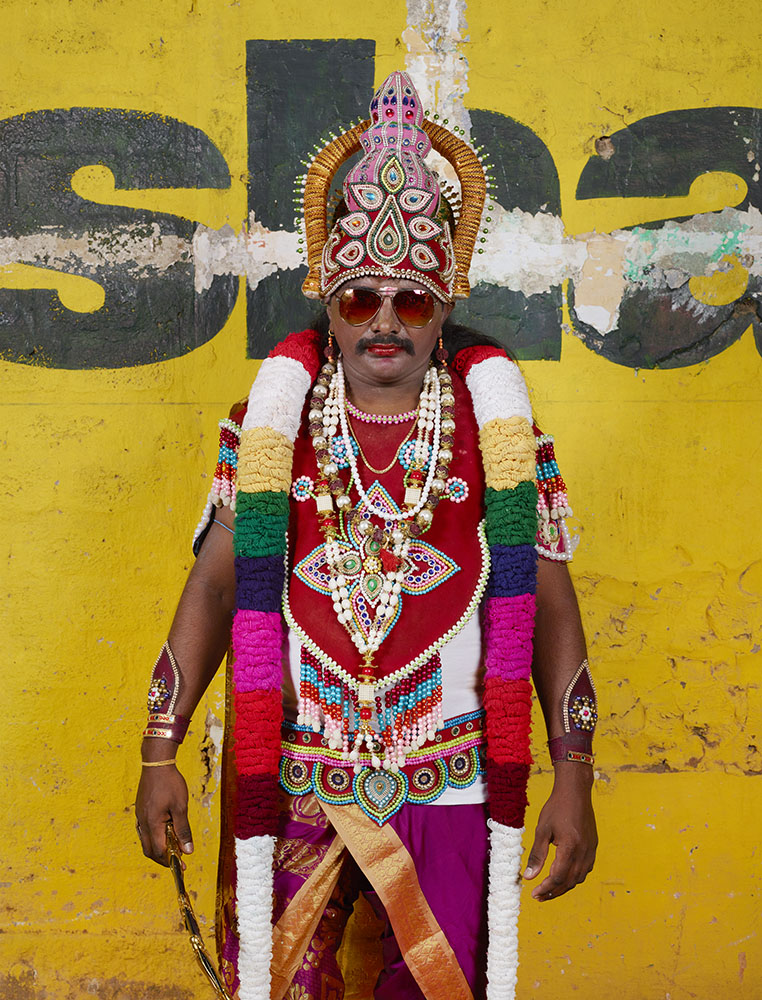
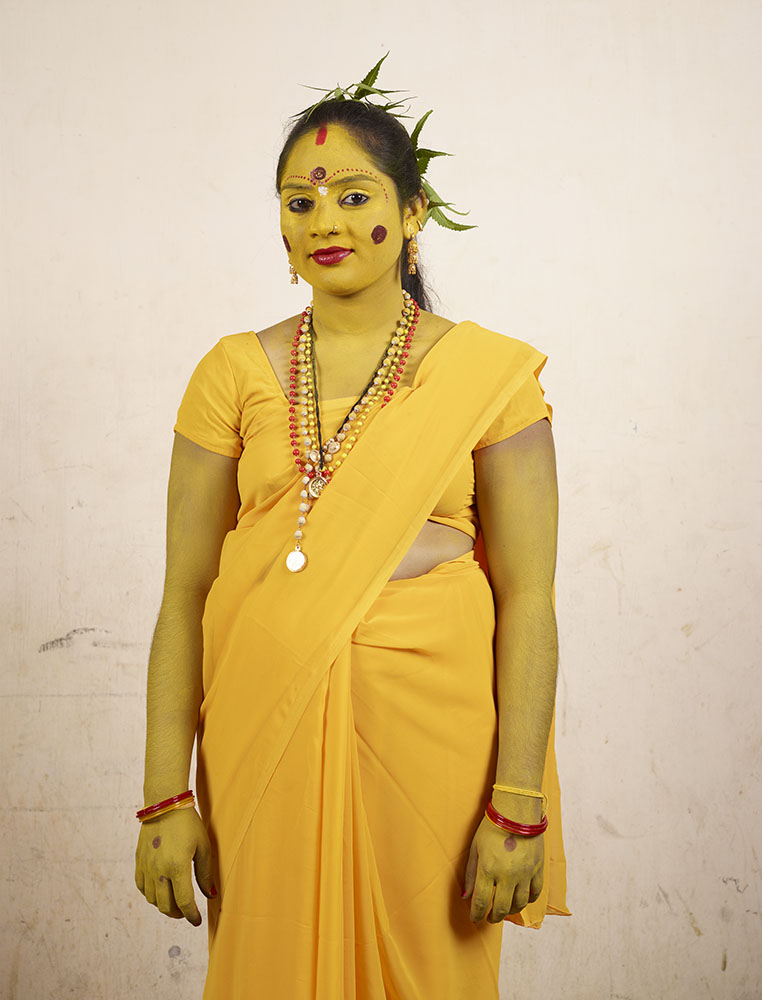
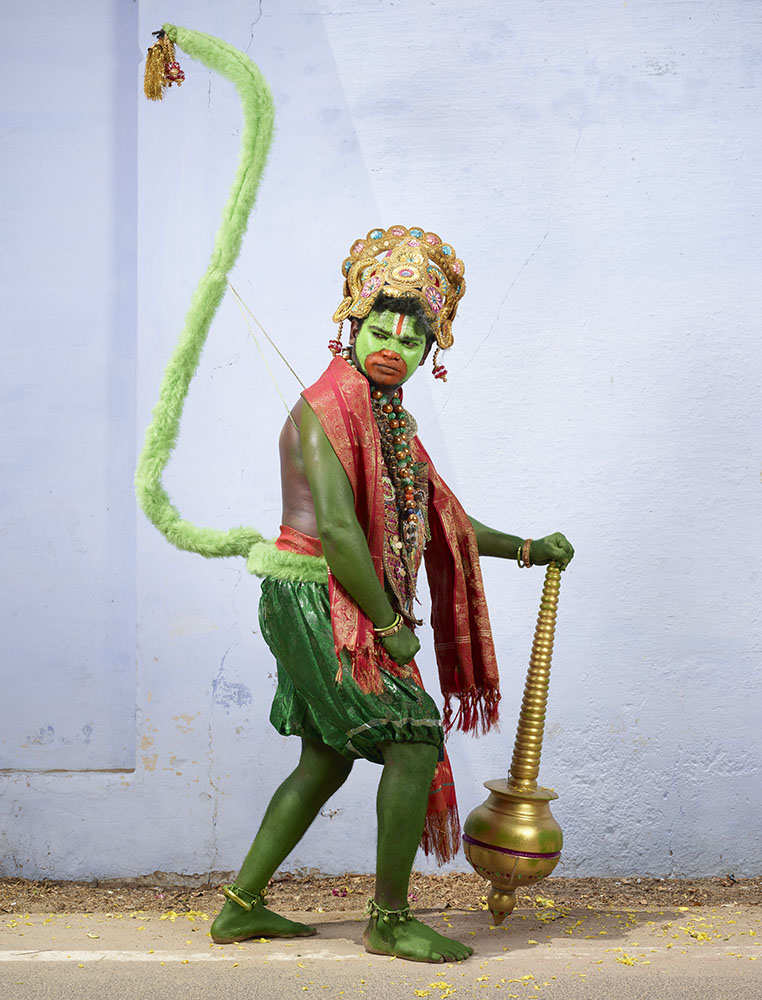
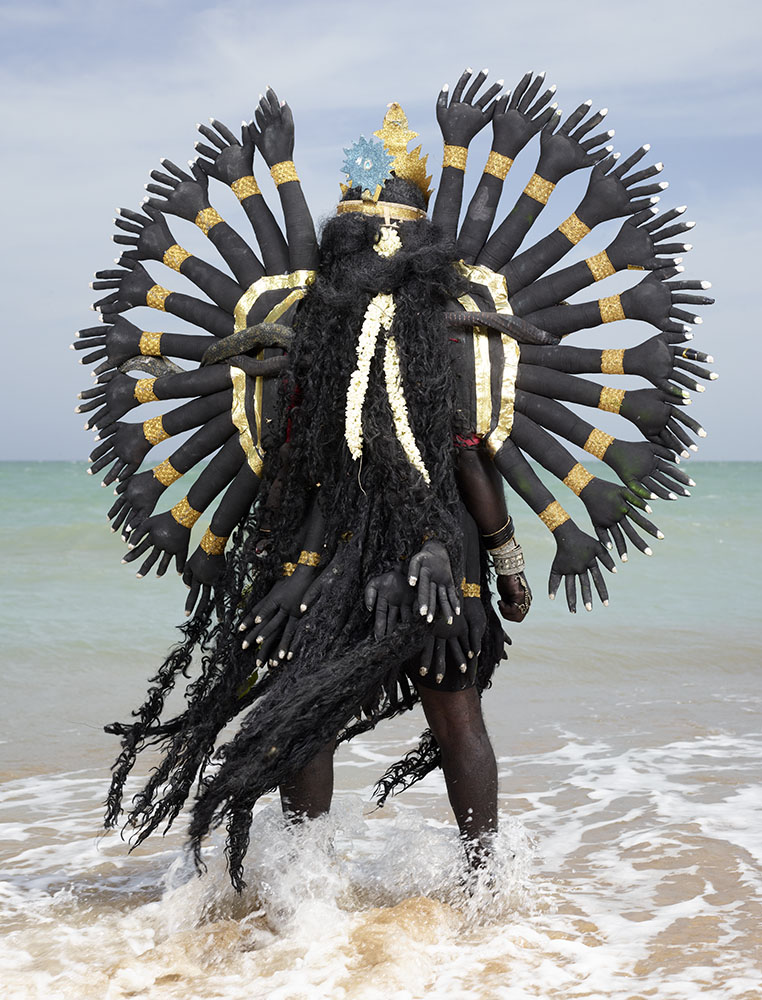
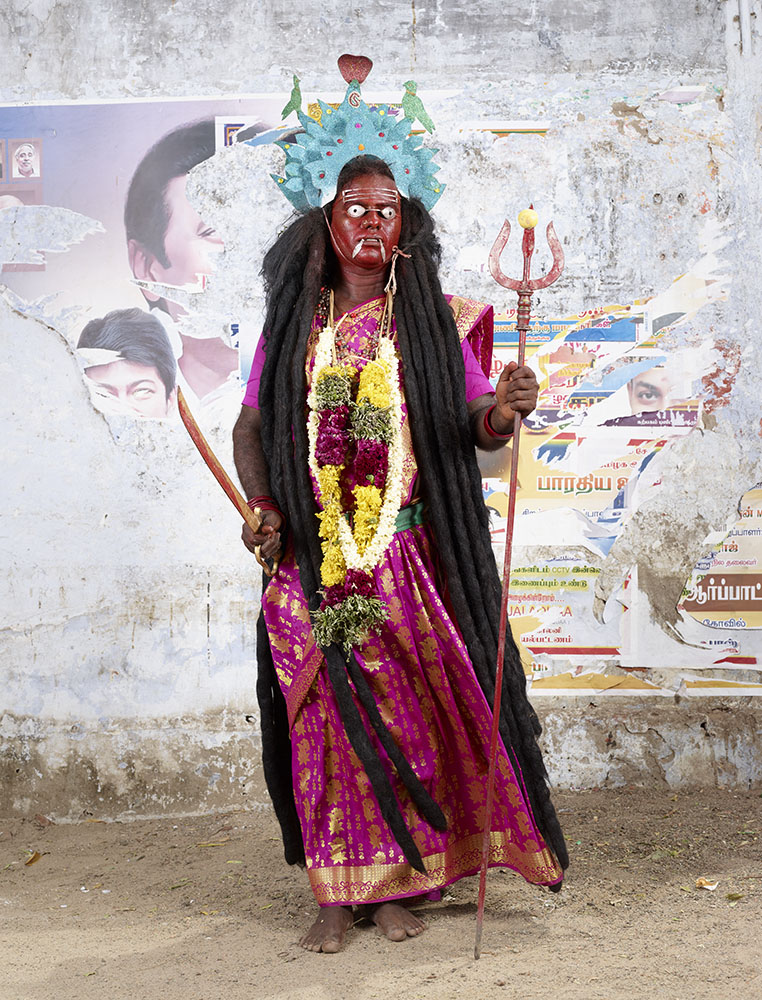
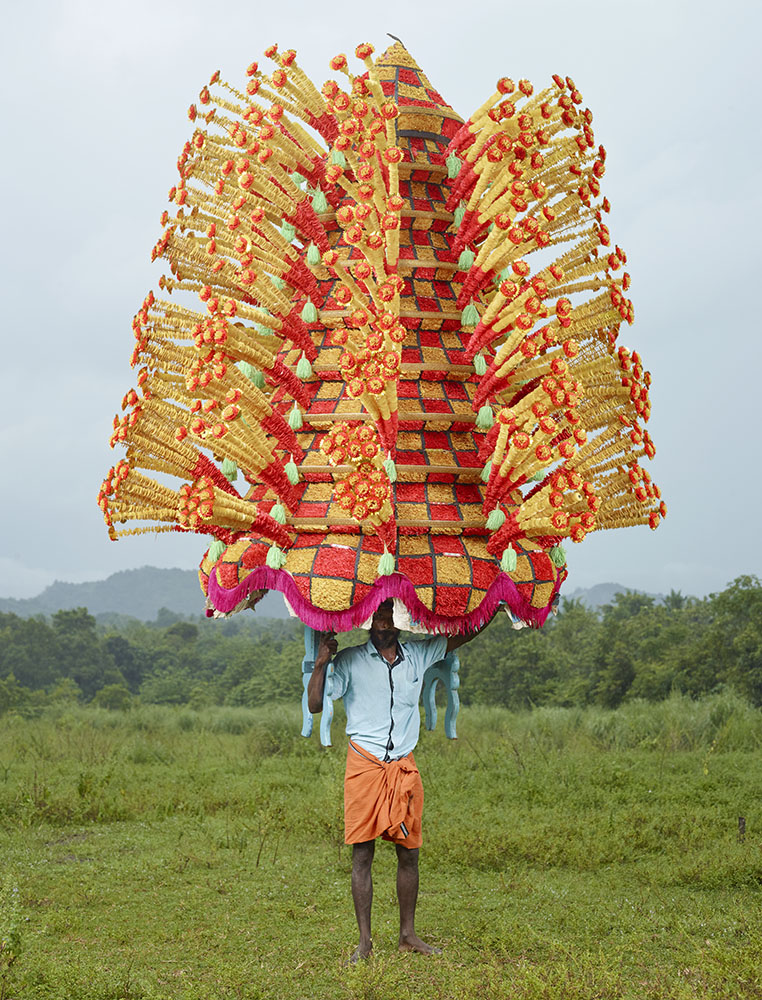
In India, the photographer encountered a pantheon with a thousand faces: here, deities are legion and are embodied during sacred performances taking place in temples, theatres and streets. Varying according to region, ethnic and religious communities, and current events, the representation of the gods redistributes assigned social roles for the duration of the masquerade. Through their costumes, the performers become the real and temporal incarnations of the god: a change in appearance is accompanied by a change in status. Aam Aastha, whose title refers to these ‘common devotions’, captures these striking avatars and reveals the masked game of representations, between reinforcement of power and subversion in a political context dominated by nationalist Hinduism, which tends to standardise ancestral practices.